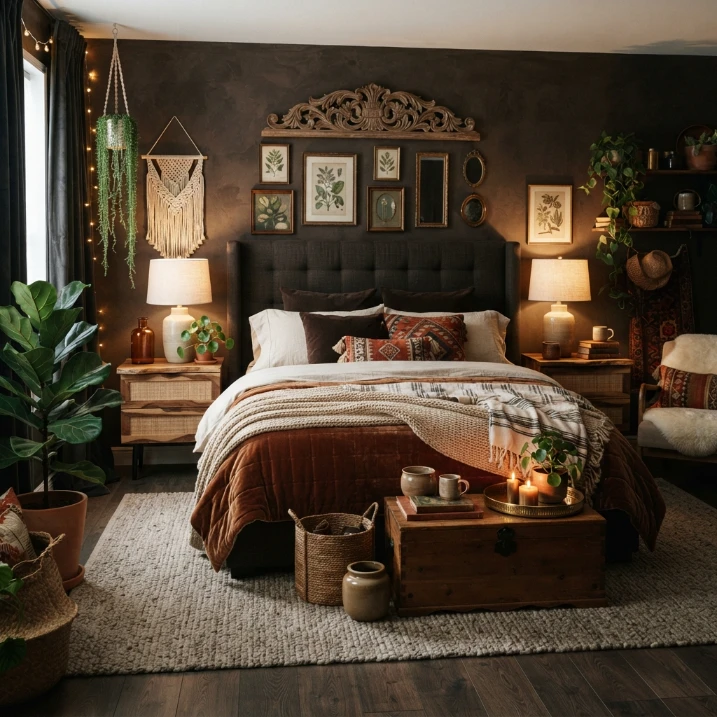
Moody Eclectic Bedroom Ideas That Blend Depth, Texture, and Personal Style
A dark bedroom can feel cozy and sophisticated, but color alone does not make the space interesting. The rooms that feel most inviting combine rich tones with texture, character, and objects that look as though they were collected over time.
That is where a Moody Eclectic Bedroom stands apart. It brings together darker colors, vintage influences, layered fabrics, expressive artwork, and contrasting materials without forcing everything to match.
The challenge is balance. Add too many unrelated pieces and the bedroom can feel cluttered. Keep everything too coordinated and you lose the relaxed personality that makes eclectic interiors appealing.
These ideas focus on creating that middle ground: a bedroom with depth and individuality that still feels comfortable enough for everyday living.
Why This Style Works When Done Right
Eclectic design gives you freedom to combine pieces from different periods and styles. A walnut bed can sit beside a modern lamp. An antique dresser can work with contemporary artwork. Linen bedding can be layered over a patterned vintage-style rug.
A moody palette helps connect those differences.
Charcoal, chocolate brown, muted olive, burgundy, smoky blue, aubergine, and warm black create a visual foundation. Once that foundation is established, materials such as aged wood, linen, velvet, brass, iron, wool, and ceramics can provide variation without making the bedroom feel disconnected.
The key is repetition.
If aged brass appears in a bedside lamp, you might repeat a similar warm metallic tone in a picture frame. If the rug contains muted rust, that color can appear again in a cushion or artwork.
You are not trying to create a matching furniture set. Instead, you are giving different pieces enough in common to make the room feel intentional. Moody Eclectic Bedroom Ideas That Blend Depth, Texture, and Personal Style
1. Choose Deep-Toned Walls with Warm Undertones

Wall color establishes the atmosphere of a Moody Eclectic Bedroom, so it deserves more consideration than simply choosing the darkest paint available.
Warm charcoal, smoky olive, espresso brown, muted aubergine, dark teal, and brown-based black can create richness while remaining comfortable.
Undertones matter because dark colors react strongly to lighting. A cool gray that looks sophisticated in a bright showroom may appear flat or slightly blue in a bedroom with limited daylight.
Before committing to a color, test a large sample on more than one wall. Look at it during the morning, afternoon, and evening with your lamps switched on.
For a particularly immersive effect, consider carrying the wall color onto the ceiling. This can reduce harsh visual boundaries and make the room feel intimate.
If that feels too dramatic, keep the ceiling in a warm off-white or muted cream rather than a brilliant white.
Natural wood, warm metals, woven materials, and lighter bedding can then provide enough contrast to keep the darker walls from dominating the room.
2. Layer Textiles in Complementary Tones
Texture is especially important when you are working with a restrained, darker color palette.

Instead of adding five unrelated accent colors, build variation through materials.
Start with breathable sheets and add a duvet or quilt in a slightly darker tone. A folded wool throw, velvet cushion, linen pillow, or woven blanket can introduce another surface without disrupting the color story.
For example, a charcoal bedroom might combine:
- Warm ivory sheets
- Mushroom linen duvet
- Chocolate velvet cushions
- Muted rust throw
- Taupe wool rug
These shades are different enough to create dimension but related enough to feel calm.
You also do not need to cover the bed with decorative cushions. A few carefully chosen layers usually look more sophisticated and are easier to manage every day.
Ask yourself: Does the room still look interesting when the decorative objects are removed?
If the answer is yes, your materials and textiles are doing enough of the visual work.
3. Pair a Vintage Wood Bed Frame with Iron Accents

A vintage or vintage-inspired wooden bed can immediately give an eclectic bedroom a sense of history.
Look for walnut, dark oak, mahogany-toned wood, or another warm finish with visible grain. The frame does not need elaborate carving. Even a simple wooden bed with slightly aged character can become a strong focal point.
Then introduce iron or blackened metal in smaller amounts.
A black curtain rod, iron bedside lamp, dark metal picture frame, or slim bench can create contrast against the warmth of the wood.
This combination works because the materials have different visual qualities. Wood feels organic and warm, while iron provides structure and definition.
Avoid trying to make every wooden item identical. A slightly lighter nightstand or darker dresser can actually support the eclectic look.
The important detail is undertone. Woods that share warm brown, reddish brown, or neutral undertones generally sit together more comfortably than finishes that strongly compete.
4. Build a Warm, Layered Lighting Plan

A beautifully decorated dark bedroom can lose much of its appeal under one bright ceiling fixture.
Instead, create several sources of light at different heights.
Your lighting plan might include:
- A dimmable ceiling pendant for general illumination
- Wall sconces or table lamps beside the bed
- A floor lamp near a reading chair
- Soft accent lighting around shelving or artwork
Warm light generally complements dark paint, aged wood, brass, and earthy textiles particularly well.
Placement matters too. Rather than flooding the entire room evenly, allow some areas to remain softer while important zones receive useful light.
Bedside lighting should be comfortable for reading. Wardrobes and dressers need enough visibility to be practical. Decorative lighting can then add atmosphere after those needs are covered.
If possible, place different light sources on separate controls. This gives you more flexibility than relying on one fixture for every activity.
A bedroom used for getting ready at 7 a.m. needs very different lighting from the same space before sleep.
5. Create a Gallery Wall with Mixed Frames

Artwork gives an eclectic bedroom a chance to feel genuinely personal.
Instead of buying a perfectly coordinated set, combine pieces that share a loose connection. Botanical prints, abstract artwork, landscapes, photography, sketches, and small textile pieces can work together when the overall composition has some restraint.
Frames do not need to match either.
Try combining dark wood, aged brass, matte black, and perhaps one lighter wood finish. Repeating each material at least once can make the arrangement appear deliberate rather than random.
Before putting holes in the wall, arrange the pieces on the floor or make paper templates.
Keep reasonably consistent spacing between frames even when their sizes and shapes vary. That small amount of structure allows the artwork itself to be more diverse.
For bedrooms with very dark walls, artwork containing cream, faded beige, rust, muted green, or warm white can provide gentle contrast.
Most importantly, choose pieces you actually enjoy looking at. Eclectic decorating works best when objects have personal relevance rather than simply fitting a trend.
6. Anchor the Room with a Bold Area Rug

An area rug can connect furniture, color, and texture in one move.
For a Moody Eclectic Bedroom, consider a Persian-inspired pattern, faded geometric design, distressed floral motif, or subtle abstract rug. The pattern can be noticeable without becoming the loudest element in the room.
Look for colors already present elsewhere, such as burgundy, olive, charcoal, faded navy, tobacco brown, cream, or muted terracotta.
Scale is just as important as pattern.
A rug that barely extends beyond the bed can make the arrangement feel undersized. Ideally, choose one large enough to extend beyond the accessible sides of the bed and provide a soft landing underfoot.
If the walls, bedding, and artwork already contain several patterns, choose a quieter rug.
On the other hand, if most of the room uses solid colors, the floor is an excellent place to introduce controlled pattern.
7. Use Open Shelving Instead of Bulky Closed Cabinets

Not every bedroom needs another heavy cabinet.
Open shelving can provide useful storage while giving you space to display books, ceramics, framed photographs, baskets, and a few collected objects.
Against dark walls, walnut, aged oak, black metal, or stained timber shelving can blend naturally with a moody palette.
However, open shelving comes with one important rule: leave some empty space.
Filling every inch with accessories quickly turns character into visual clutter.
Mix practical and decorative items instead. A short stack of books might sit beside a ceramic bowl, while another shelf holds a storage basket and small framed print.
Items with similar colors can be distributed across different shelves to create repetition.
If you have everyday belongings that are not attractive enough to display, use a few matching baskets or boxes rather than leaving everything exposed.
Open shelving works best when it looks lived-in but edited.
8. Add One Statement Antique Piece

You do not need to fill the bedroom with antiques to create an eclectic atmosphere.
Often, one substantial vintage piece has more impact.
An antique dresser, carved wardrobe, old wooden trunk, vintage writing desk, or distinctive bedside chest can become the object that gives the room its identity.
Allow that piece to look different from newer furniture.
For instance, an aged walnut dresser can sit comfortably beside a simple upholstered bed and contemporary lamp. The contrast between old and new is part of the appeal.
You can connect the antique to the rest of the bedroom through smaller details. If it has aged brass handles, repeat brass in a lamp or picture frame. If the wood has reddish undertones, introduce a muted rust cushion or patterned rug nearby.
Resist the temptation to refinish every mark or variation.
Normal signs of age can contribute warmth and individuality, provided the furniture itself is sturdy and functional.
9. Hang Floor-to-Ceiling Curtains in Heavy Fabric

Curtains can dramatically change the proportions and atmosphere of a bedroom.
Mounting the curtain rod or track close to the ceiling and allowing the fabric to fall almost to the floor creates stronger vertical lines. Extending the curtains beyond the sides of the window can also make the opening appear wider when they are drawn back.
For a moody room, consider velvet, heavyweight linen, lined cotton, or another fabric with enough body to hang well.
Suitable colors include:
- Mushroom
- Dark olive
- Espresso
- Charcoal
- Tobacco brown
- Smoky navy
- Muted burgundy
You do not necessarily need curtains darker than the walls. Tonal contrast can be more interesting.
For example, mushroom curtains against charcoal walls soften the transition without introducing a completely unrelated color.
Practical needs should guide the final fabric choice. If you need darkness for sleeping, use proper blackout lining. If privacy is the main concern but you still want daylight, combining sheer curtains with heavier outer panels provides more flexibility.
10. Mix Metal Finishes Intentionally

Mixing metals can make an eclectic bedroom feel collected rather than purchased as one coordinated set.
The difference between intentional mixing and random mixing is repetition.
Choose one dominant finish first. It might be aged brass, matte black, bronze, or blackened steel.
Then introduce one or two secondary finishes in smaller amounts.
For example, you could use aged brass bedside sconces, matte black curtain hardware, and a small bronze detail on an antique dresser.
Try to repeat each noticeable finish at least twice across the bedroom. This creates a visual relationship between objects even when they do not match exactly.
Finish also matters as much as color.
Highly polished chrome may feel disconnected from a room dominated by distressed wood, linen, and antique pieces, while brushed nickel or aged brass can provide a softer transition.
There is no need to replace existing hardware simply because it is different. Eclectic interiors can accommodate variation when the overall material palette remains controlled.
Common Mistakes and Fixes
A Moody Eclectic Bedroom should feel layered, but layering does not mean adding everything you like to the same space.
One common mistake is using too many dark surfaces without relief. If the walls, curtains, bedding, rug, and furniture are all nearly black, individual elements can disappear.
Fix: Introduce controlled contrast through warm cream bedding, lighter artwork, natural linen, medium-toned wood, or reflective metal details.
Another problem is excessive pattern.
A floral rug, patterned curtains, printed bedding, wallpaper, and a busy gallery wall may each look beautiful separately but compete when placed together.
Fix: Decide where pattern will have the greatest impact. Let one or two elements lead and keep surrounding surfaces quieter.
Too many small decorative objects can also make the room feel crowded.
Fix: Group a few objects together and leave visible negative space around them. One substantial ceramic vessel often has more presence than several tiny accessories.
Poor lighting is another frequent issue. Dark rooms require thoughtful illumination, particularly around wardrobes, mirrors, and bedside areas.
Fix: Use multiple warm light sources for different purposes rather than relying on a single overhead fixture.
Finally, avoid buying an entire “eclectic” room at once. The style becomes more convincing when old and new pieces, personal artwork, books, textiles, and useful objects are added thoughtfully.
Moody Isn’t Muddy—It’s Intentional
There is an important difference between a moody bedroom and a room that simply feels dark.
A successful moody interior still has definition.
You should be able to notice the shape of the bed against the wall, appreciate the texture of the bedding, see the grain in wooden furniture, and recognize individual pieces of artwork.
Contrast makes that possible.
It does not always have to come from white. Medium walnut against charcoal, antique brass against olive, oatmeal linen against chocolate brown, or muted terracotta against smoky blue can all create separation while maintaining the darker atmosphere.
Texture provides another layer of contrast. Matte walls, velvet curtains, woven wool, smooth ceramics, aged metal, and natural timber interact with light differently, preventing a limited palette from looking flat.
Before adding another decorative item, look around the room and ask: Does this space need another object, or does it need better contrast, texture, or lighting?
Often, the second answer leads to a more polished result.
Conclusion
Creating a Moody Eclectic Bedroom is less about following one decorating formula and more about building thoughtful relationships between color, texture, furniture, lighting, and personal objects.
Start with a controlled dark palette, then introduce warmth through natural wood, layered textiles, vintage pieces, artwork, rugs, and carefully chosen lighting. Allow different eras and finishes to coexist, but repeat enough colors and materials to keep everything visually connected.
Most importantly, give the room time to develop. You do not need to fill every wall, shelf, and corner immediately.
A bedroom with fewer meaningful pieces, comfortable lighting, useful furniture, and a consistent color story will usually feel more personal and inviting than one designed around trends alone.