How to Create Backyard Fire Pit Ideas to Ignite Fun
A backyard becomes much more enjoyable when it includes a welcoming place where friends and family can gather. A fire pit creates that kind of space. Whether you’re roasting marshmallows with the kids, enjoying a quiet evening under the stars, or hosting weekend get-togethers, a well-designed fire pit naturally becomes the center of attention.
The good news is that creating a beautiful backyard fire pit doesn’t require a huge budget or a complete landscape makeover. With thoughtful planning, the right materials, and a few creative design ideas, you can build an outdoor space that’s comfortable, practical, and attractive throughout the year.
In this guide, you’ll learn how to create a backyard fire pit that fits your space, complements your home’s style, and provides years of enjoyment.
Types of Fire Pits
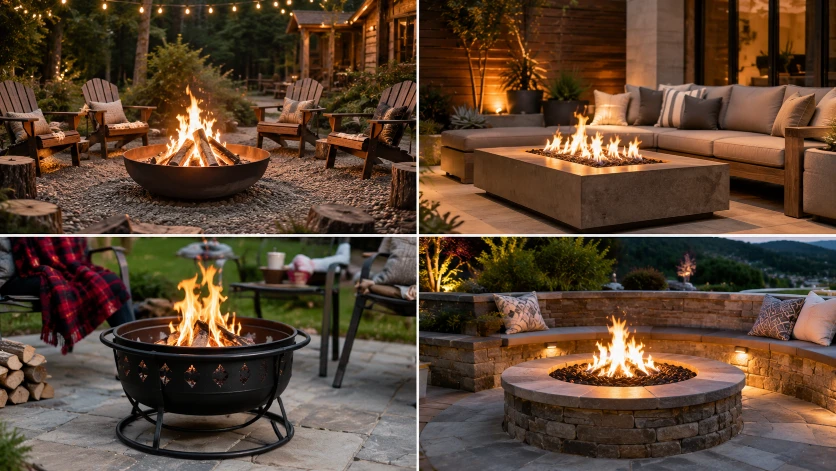
The first step is choosing the right type of fire pit. Each option offers different benefits depending on your budget, maintenance preferences, and outdoor lifestyle.
Wood-Burning Fire Pits
Traditional wood-burning fire pits create a warm atmosphere with natural flames and the familiar crackling sound many homeowners love. They’re ideal for roasting food and creating an authentic campfire experience.
Best for:
- Rustic backyards
- Large family gatherings
- Outdoor cooking
Gas Fire Pits
Gas fire pits use natural gas or propane, producing clean flames without smoke or ash. They ignite instantly and require very little cleanup.
Ideal for:
- Modern patios
- Smaller outdoor spaces
- Low-maintenance homeowners
Portable Fire Pits
Portable models allow you to move the fire pit wherever needed. They’re a great choice for renters or anyone who likes flexibility.
Built-In Fire Pits
Permanent fire pits become part of the landscape design. They often increase visual appeal and create a polished outdoor entertaining area.
Materials for Fire Pits
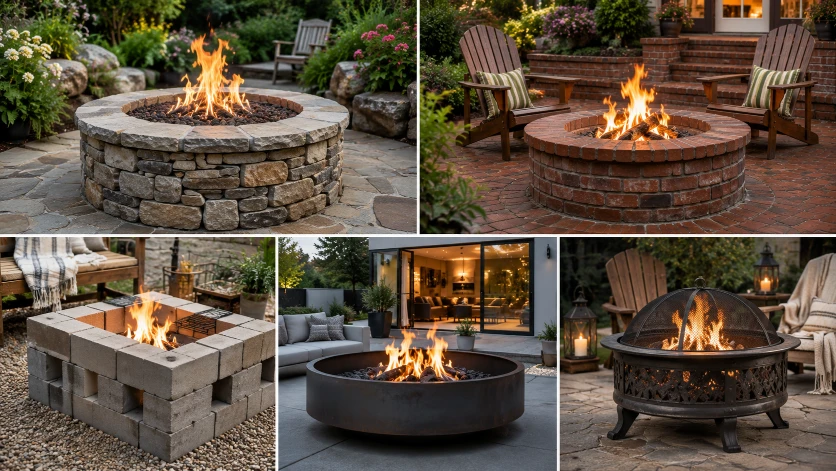
The materials you choose affect both appearance and durability.
Natural Stone
Stone creates a timeless look that blends beautifully with gardens and natural landscaping. It’s highly durable and withstands changing weather conditions.
Brick
Brick offers a classic appearance and works well with traditional homes. Different colors and patterns make customization easy.
Concrete Blocks
Concrete blocks are popular for DIY projects because they’re affordable, durable, and simple to install.
Steel
Steel fire pits offer a sleek, modern appearance while remaining lightweight and portable.
Cast Iron
Cast iron retains heat exceptionally well and provides outstanding durability with proper maintenance.
Fire Pit Placement Tips

Location plays a major role in both safety and comfort.
Before choosing a permanent location, consider how you’ll use the space throughout the year.
Some important placement tips include:
- Keep the fire pit away from your home and other structures.
- Avoid placing it beneath tree branches.
- Leave enough room for seating.
- Consider prevailing wind direction.
- Choose level ground.
- Ensure easy access for guests.
- Keep pathways clear.
A thoughtful location allows everyone to enjoy the warmth without smoke constantly blowing toward seating areas.
Creative Seating Arrangements
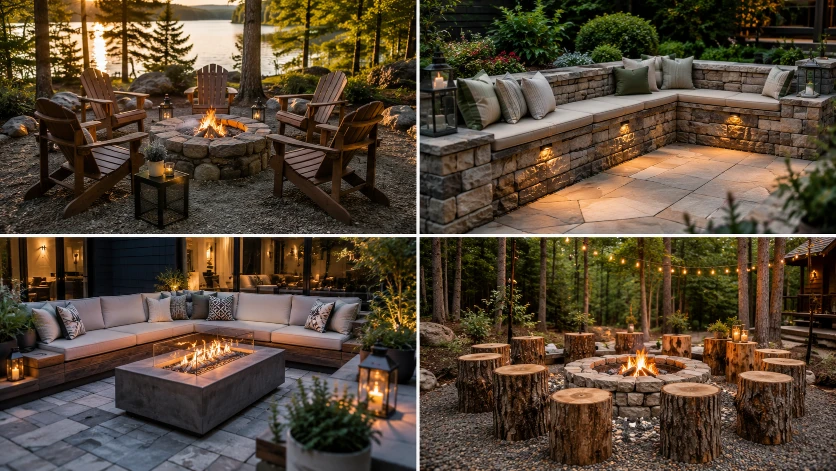
Comfortable seating encourages guests to stay longer.
Instead of simply placing a few chairs around the fire, think about creating an inviting conversation area.
Popular seating ideas include:
- Adirondack chairs
- Built-in stone benches
- Outdoor sectional sofas
- Wooden benches
- Tree stump seating
- Curved seating walls
- Weather-resistant lounge chairs
Add outdoor cushions and throw blankets for extra comfort during cooler evenings.
Ask yourself:
- Will guests have enough personal space?
- Can everyone comfortably see the fire?
Small adjustments often make a noticeable difference.
Enhancing Landscape Design

A fire pit should feel like a natural part of your backyard instead of an isolated feature.
You can improve the surrounding area with:
- Decorative gravel
- Stone pathways
- Flower beds
- Native plants
- Raised garden borders
- Large landscape boulders
- Potted plants
- Decorative edging
Mixing natural textures with greenery creates a balanced outdoor environment that feels welcoming year-round.
If space allows, consider adding a pergola nearby or creating separate seating zones for larger gatherings.
Important Safety Considerations
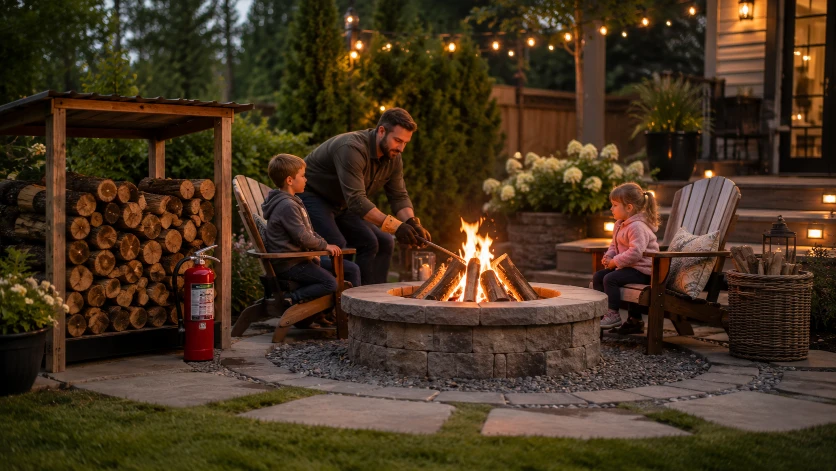
Safety should always come before design.
Following a few simple practices helps prevent accidents and keeps everyone comfortable.
Important safety reminders include:
- Keep a fire extinguisher nearby.
- Never leave a fire unattended.
- Supervise children at all times.
- Burn only approved materials.
- Keep extra wood away from flames.
- Avoid using flammable liquids.
- Extinguish the fire completely before leaving.
- Follow local fire regulations.
Regularly inspect your fire pit for cracks, loose stones, or damaged components.
Essential Fire Pit Accessories

The right accessories improve convenience and extend the life of your fire pit.
Useful additions include:
- Fire pit cover
- Spark screen
- Fire poker
- Ash bucket
- Wood storage rack
- Heat-resistant gloves
- Cooking grate
- Outdoor blanket basket
- Weatherproof storage box
These accessories help keep your outdoor space organized while making every gathering more enjoyable.
Seasonal Decoration Ideas
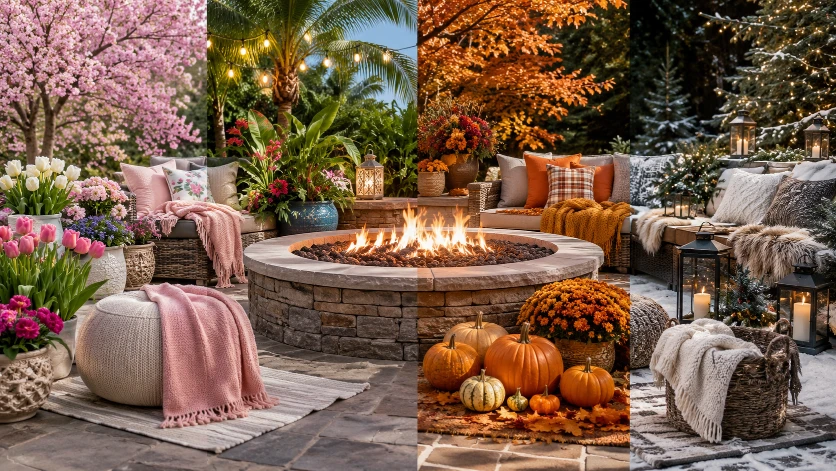
A fire pit can remain attractive throughout every season.
Spring
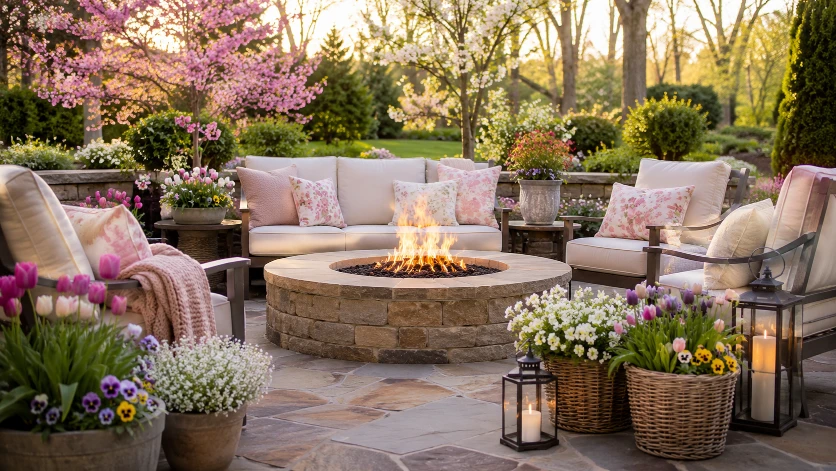
Decorate with colorful flowers, fresh planters, and light outdoor fabrics.
Summer
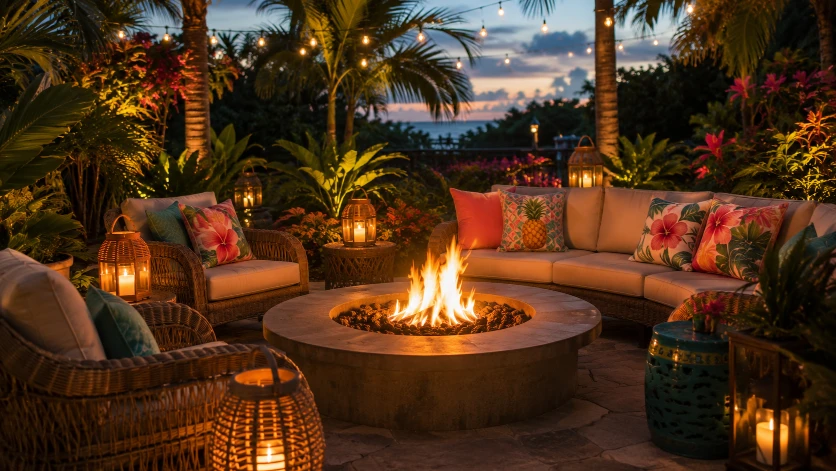
Use tropical plants, lanterns, and comfortable outdoor pillows.
Fall

Add pumpkins, hay bales, warm-colored cushions, and cozy blankets.
Winter
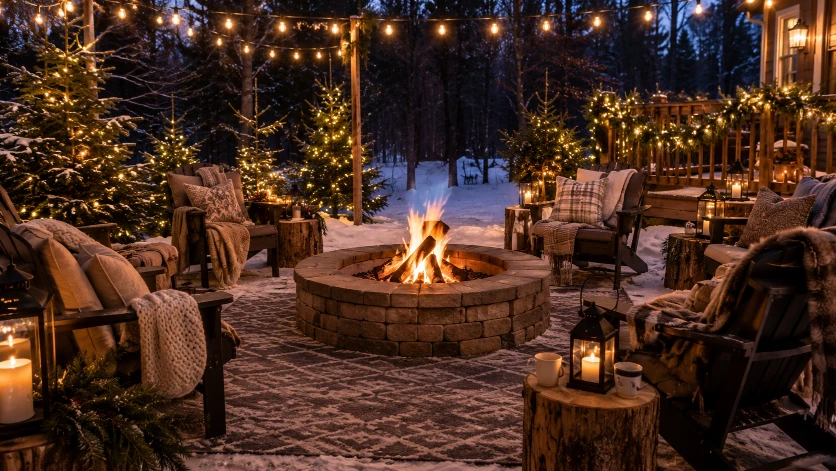
String lights, evergreen branches, outdoor rugs, and weather-resistant throws help create a comfortable cold-weather retreat.
Changing small decorative elements throughout the year keeps your backyard looking fresh without major renovations.
Effective Lighting Options

Good lighting improves both safety and atmosphere.
Layer different lighting sources instead of relying on a single bright fixture.
Popular options include:
- String lights
- Solar pathway lights
- LED landscape lighting
- Wall-mounted sconces
- Lanterns
- Recessed deck lights
- Post lights
- Candle lanterns
Soft lighting creates a welcoming environment while making walkways easier to navigate after dark.
Cooking Techniques Over Fire
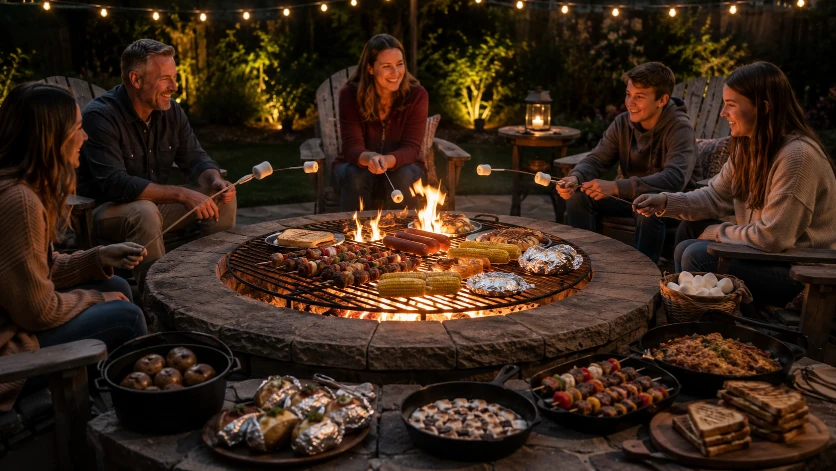
A backyard fire pit isn’t just for warmth—it can also become an outdoor cooking station.
Simple cooking ideas include:
- Roasting marshmallows
- Hot dogs
- Corn on the cob
- Foil packet vegetables
- Baked potatoes
- Grilled sandwiches
- Skewers
- Cast iron desserts
Using cast iron cookware allows you to prepare hearty meals while enjoying the outdoor experience.
Always use food-safe cooking grates designed for open flames.
DIY Fire Pit Projects
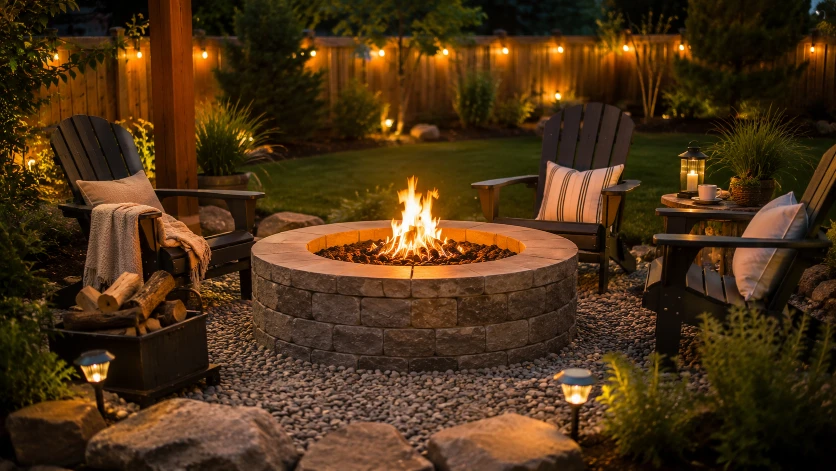
Building your own fire pit can be a rewarding weekend project.
A basic DIY project usually involves:
- Selecting a safe location.
- Marking the circle.
- Digging a shallow base.
- Adding gravel for drainage.
- Stacking fire-rated blocks.
- Installing a fire ring if desired.
- Leveling each layer carefully.
- Finishing with decorative stone.
Take your time during construction. A level, stable foundation improves both appearance and long-term durability.
Budget-Friendly Solutions
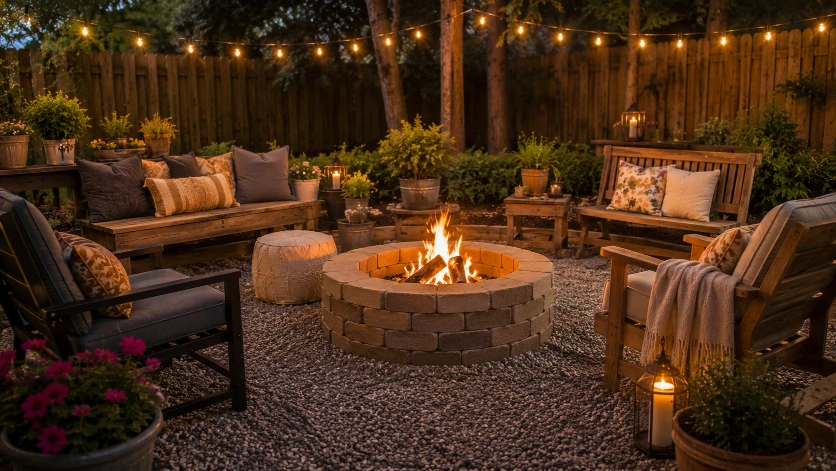
Creating a beautiful fire pit doesn’t always require a large investment.
Money-saving ideas include:
- Use concrete retaining wall blocks.
- Shop during seasonal sales.
- Repurpose leftover bricks.
- Build the project yourself.
- Add DIY benches.
- Use gravel instead of expensive pavers.
- Purchase portable fire pits.
- Reuse existing patio furniture.
Even simple improvements can completely change how your backyard feels.
Focus first on comfort and functionality before adding decorative upgrades.
Frequently Asked Questions
How Do I Choose the Right Fire Pit for My Needs?
Think about how often you’ll use it, your available space, maintenance preferences, local regulations, and whether you prefer wood-burning or gas. A portable model works well for flexibility, while a built-in design offers a more permanent outdoor feature.
What Is the Average Cost of Installing a Built-In Fire Pit?
Costs vary based on materials, size, and labor. A simple DIY installation may cost only a few hundred dollars, while professionally built stone fire pits with seating and landscaping can cost several thousand dollars.
Can I Use My Fire Pit During a Burn Ban?
No. During a burn ban, outdoor fires may be prohibited due to weather conditions and wildfire risks. Always check your local regulations before lighting any fire.
What Are the Best Fire Pit Fuels for Eco-Friendliness?
Natural gas produces fewer emissions than wood. If you prefer wood-burning fires, use dry, seasoned hardwood to reduce smoke and improve burning efficiency.
How Can I Incorporate My Fire Pit Into Winter Activities?
Create a cozy winter gathering space with insulated blankets, outdoor heaters, warm drinks, weather-resistant seating, and seasonal decorations. The fire pit becomes an excellent place for family conversations, holiday gatherings, or relaxing after snowfall.
Conclusion
Learning how to create a backyard fire pit is about more than building a place for flames. It’s about creating an outdoor space where people naturally come together to relax, share meals, and make lasting memories.
Whether you choose a simple DIY design or invest in a custom-built feature, careful planning makes all the difference. Select quality materials, prioritize safety, arrange comfortable seating, and add lighting and landscaping that complement your backyard.
Start with a design that fits your space and budget. As your outdoor area grows over time, you can continue adding features that make every evening outside more comfortable and enjoyable.