14 luxury Moody Bedroom Color Ideas for a Sophisticated & Modern Space
Introduction
A moody bedroom color palette can make an ordinary bedroom feel intimate, sophisticated, and surprisingly comfortable. Deep navy, forest green, charcoal, plum, burgundy, chocolate brown, and dark teal all bring a sense of depth that lighter palettes sometimes cannot create.
The secret is not simply painting every surface a dark shade. A successful moody bedroom balances rich color with warm lighting, lighter bedding, natural materials, and enough texture to keep the room inviting. Whether you want a modern hotel-inspired look or a cozy retreat, the right combination can make dark colors feel elegant rather than heavy.
Below are 14 practical moody bedroom color ideas, along with tips for choosing shades, balancing contrast, and making a darker room work with your existing furniture.
What Makes a Moody Bedroom Feel Sophisticated?
A sophisticated moody bedroom usually has a controlled palette rather than many competing colors. Choose one dominant deep shade, one supporting neutral, and one or two accents. For example, navy walls can work with cream bedding, walnut furniture, and brushed brass. Forest green can be paired with warm white, natural wood, and muted terracotta.
Texture is just as important as color. Linen, velvet, wool, boucle, wood, woven baskets, and softly patterned rugs give dark rooms dimension. Layered lighting also matters because a single bright ceiling fixture can flatten the atmosphere.
14 Moody Bedroom Color Ideas for a Sophisticated & Modern Space
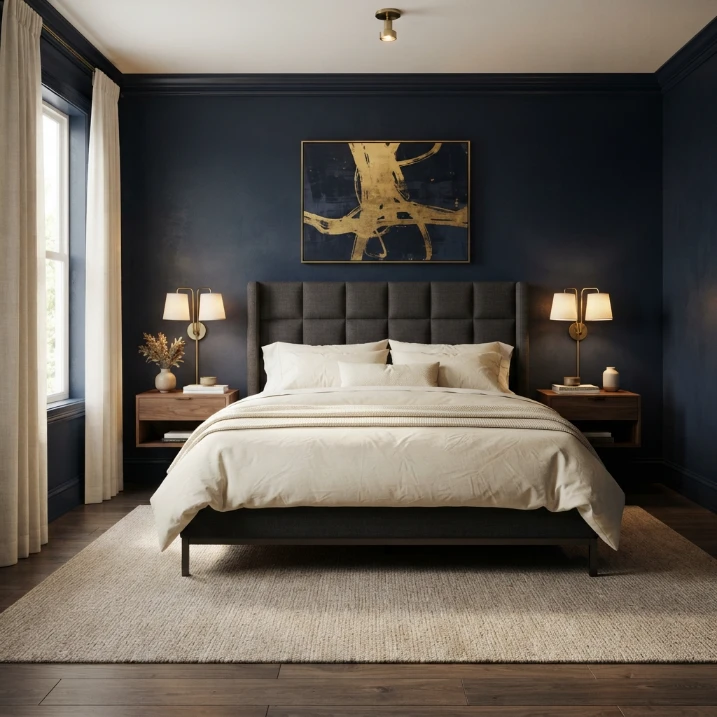
1. Deep Navy Blue Bedroom
Deep navy is one of the most versatile choices for a moody bedroom. It feels dramatic enough to create depth but remains calmer than black. Use navy on the walls behind the bed and keep the ceiling a soft warm white if you want the room to feel more open.
Pair the walls with cream or ivory bedding, medium-to-dark wood furniture, and small brass details. A textured rug in beige or oatmeal can soften the contrast and add warmth.
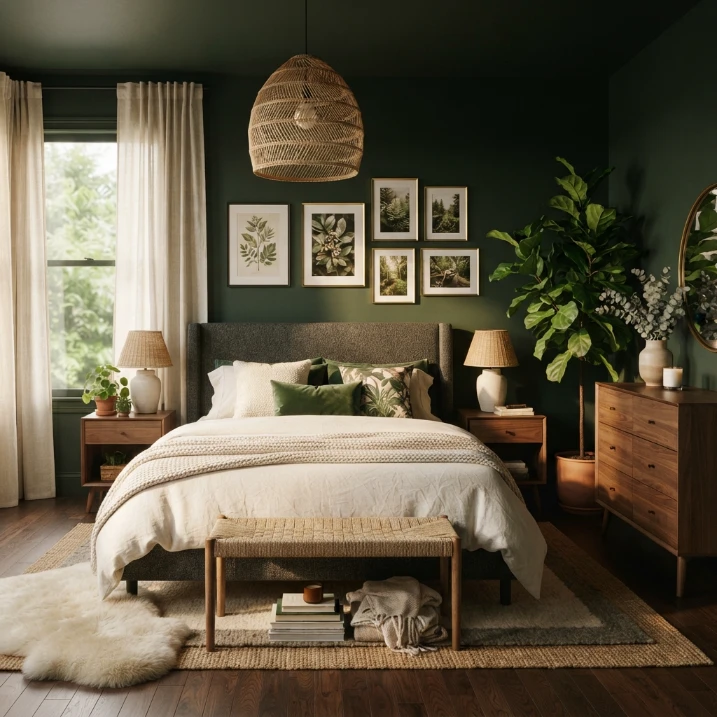
2. Forest Green Bedroom
Forest green brings a natural quality to a dark bedroom. It works particularly well with wood furniture, leafy plants, woven lighting, and cream textiles. For a modern result, choose a deep green with muted undertones instead of an extremely bright emerald.
Try forest green on all four walls in a well-lit room, or use it as an accent behind the bed when natural light is limited. Warm white bedding will keep the space from feeling too dense.

3. Charcoal Gray and Soft White
Charcoal gray is a strong option when you want a moody look without committing to a noticeable color hue. It creates a sophisticated backdrop for nearly any accent shade and works especially well in contemporary bedrooms.
Balance charcoal walls with soft white bedding, black furniture, and one warmer element such as walnut wood or tan leather. Add a patterned rug to prevent the room from looking flat.
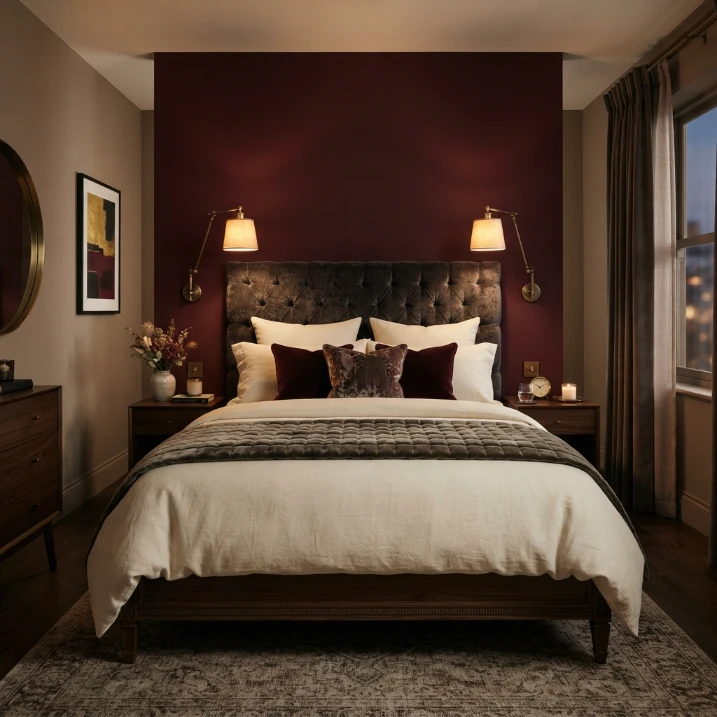
4. Burgundy and Warm Neutrals
Burgundy creates a rich, romantic atmosphere and can make a bedroom feel luxurious. Instead of using it everywhere, consider a burgundy feature wall behind the headboard with warm taupe or creamy neutral walls around it.
Gold or aged-brass lighting can complement the warmth, while ivory bedding keeps the room from becoming overly dark. Velvet cushions or a quilted throw can reinforce the sophisticated mood.

5. Plum and Dusty Rose
Plum is a beautiful choice for anyone who wants a dramatic bedroom with a softer edge. Pair deep plum walls with dusty rose, muted mauve, or warm beige through bedding and accessories.
Keep the furniture simple and let the wall color provide most of the visual drama. Warm lamps, cream curtains, and natural wood can stop the purple tones from feeling too cold.
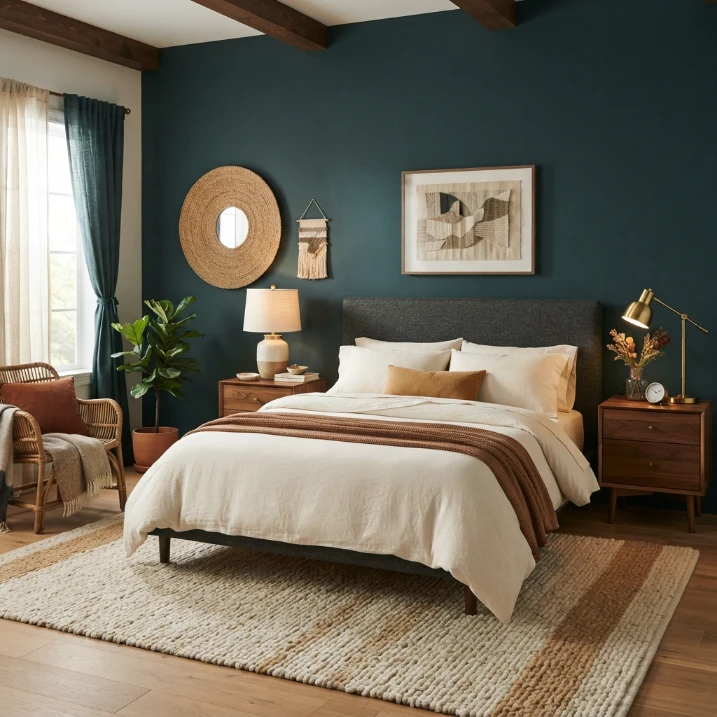
6. Dark Teal With Warm Wood
Dark teal sits between blue and green, making it a flexible moody bedroom color for modern and eclectic interiors. It looks especially good beside walnut, oak, or medium-toned wood.
Use cream bedding with small touches of rust, camel, or muted brass. The combination feels layered and sophisticated without requiring many decorative colors.
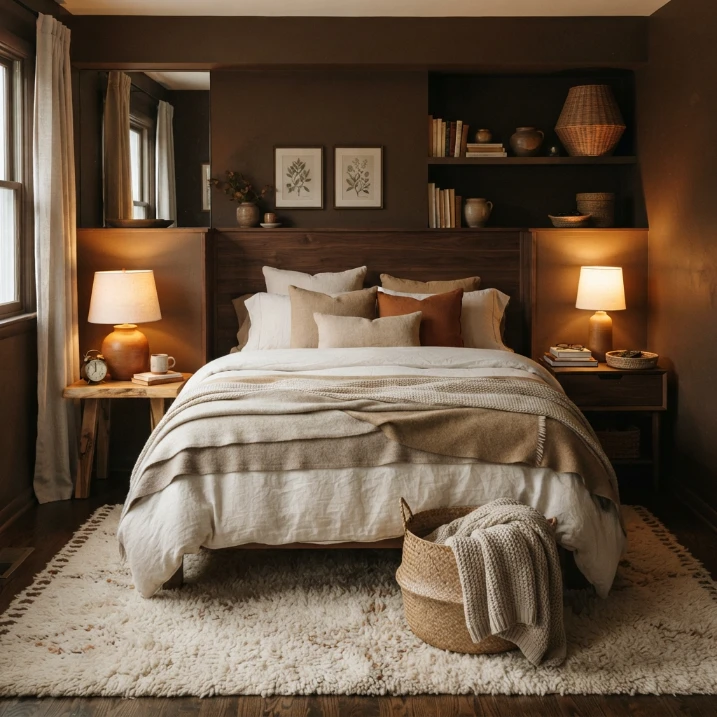
7. Chocolate Brown Cocoon Bedroom
Chocolate brown is ideal when your goal is warmth and comfort. A deep brown wall color can make the bedroom feel cocoon-like, especially when combined with soft lighting and plush textiles.
Pair it with creamy white, oatmeal, tan, or muted blue. Natural wood furniture and woven accessories reinforce the earthy character. If the room is small, use brown on one wall and keep the remaining surfaces lighter.

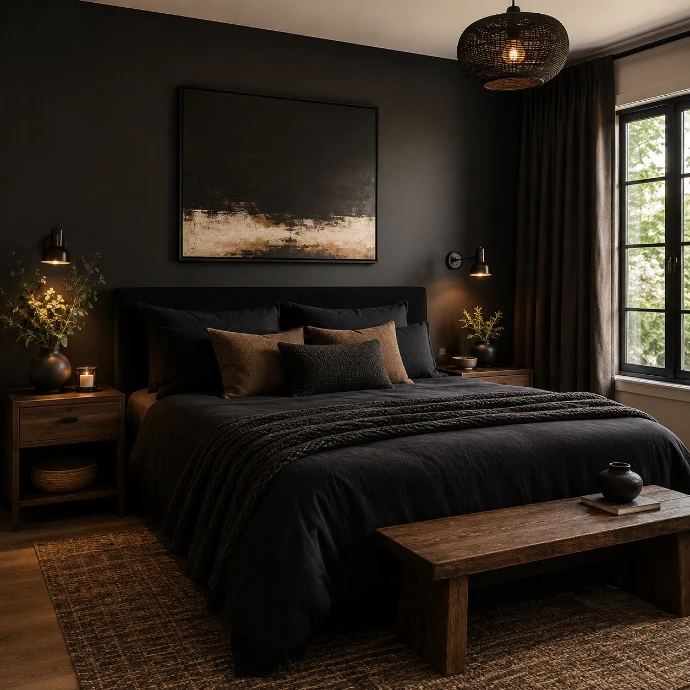
8. Matte Black Accent Wall
Black can create a striking modern bedroom when it is used with restraint. A matte black accent wall behind the bed gives the room a strong focal point without making every surface feel heavy.
Use crisp or warm white bedding, light wood, soft gray, or natural linen to create contrast. A few plants or artwork with lighter backgrounds can add visual relief.

9. Slate Blue and Warm Beige
Slate blue offers the moodiness of a darker color while feeling softer than navy. Combine it with warm beige bedding, natural wood furniture, and creamy curtains for a calm modern bedroom.
This palette works well if you want dark walls but still prefer a relaxed, understated look. Matte black hardware can add a sharper contemporary detail.

10. Olive Green and Terracotta
Olive green creates an earthy moody bedroom that feels connected to nature. Add terracotta through cushions, artwork, pottery, or a small accent chair for warmth.
Natural linen, rattan, oak, and woven textures fit this palette beautifully. Keep the brighter terracotta accents limited so the olive remains the dominant visual color.
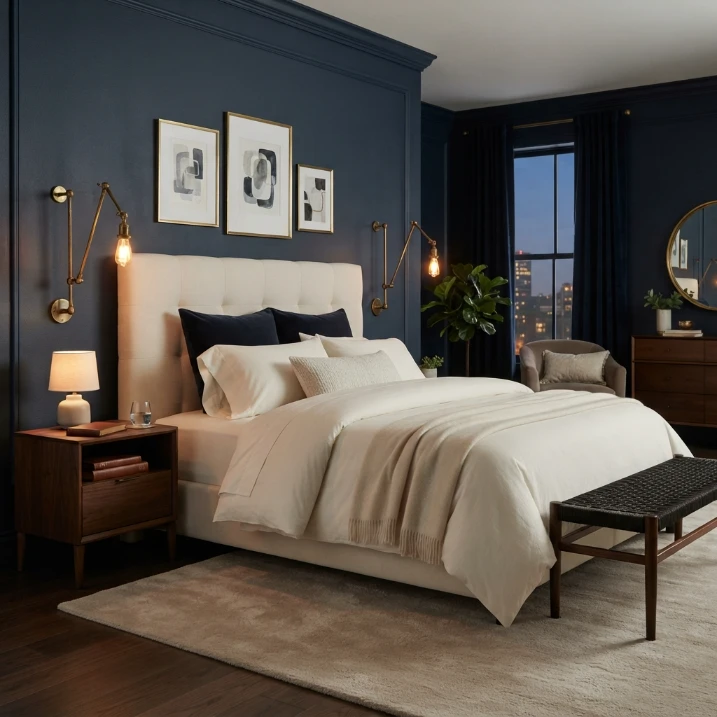
11. Midnight Blue With Brass Accents
Midnight blue gives a bedroom a polished, almost boutique-hotel character. Use it on the walls and introduce brass through sconces, picture frames, drawer pulls, or a bedside lamp.
Choose bedding in ivory, cream, or pale gray rather than stark white if you want a softer result. Layering several fabrics makes the dark palette feel comfortable rather than formal.

12. Moody Monochrome Gray
A monochrome gray bedroom can look extremely modern when several shades are layered together. Use a medium-dark gray on the walls, a slightly lighter upholstered headboard, and charcoal or soft-gray bedding.
The key is variation in texture. Combine linen, wool, boucle, matte ceramics, and a plush rug so the room has depth even though the color family stays narrow.

13. Deep Green With Blush Accents
Deep green and blush create an elegant contrast. The green supplies depth while blush adds warmth and softness. This combination is especially useful when you want a moody bedroom that still feels feminine.
Keep blush to bedding, cushions, artwork, or a small upholstered bench. Cream and light wood can bridge the two colors and make the room feel balanced.

14. Warm Taupe With Deep Accent Colors
If fully dark walls feel intimidating, start with warm taupe as the main wall color and bring in one deeper shade through the bed, curtains, artwork, or cabinetry. Burgundy, navy, forest green, and chocolate brown all work well.
This approach gives you the sophisticated character of a moody palette while preserving more light. It is also an easy option for renters or anyone who wants a flexible bedroom scheme.
How to Choose the Best Moody Bedroom Color
Consider Natural Light First
Before choosing paint, observe how much daylight reaches the bedroom and when it arrives. A color that looks soft and rich in afternoon light may appear much darker in the evening. North-facing rooms often benefit from warmer supporting tones, while brighter rooms can handle deeper colors more easily.
Test Large Paint Samples
Never judge a dark paint color from a tiny swatch alone. Place large samples on more than one wall and look at them in morning, afternoon, and evening light. Keep nearby flooring, curtains, and furniture in view because surrounding colors can change how the paint appears.
Use the 60-30-10 Approach
A simple way to balance a moody palette is to use the dominant color across roughly 60% of the visual space, a supporting shade for around 30%, and a smaller accent for about 10%. It does not need to be mathematically exact; the purpose is to prevent every element from competing equally.
How to Keep a Dark Bedroom From Feeling Too Heavy
Dark walls do not automatically make a bedroom uncomfortable. The surrounding materials determine how the color feels. Use lighter bedding, reflective accents, natural wood, warm lamps, and layered fabrics to create contrast
- Add warm lighting: Bedside lamps, wall sconces, and dimmable fixtures make deep colors feel softer at night.
- Keep some surfaces light: Cream bedding, pale rugs, or light curtains can visually break up dark walls.
- Bring in natural materials: Wood, rattan, linen, stone, and woven fibers prevent the room from looking flat.
- Repeat your accent color: Use the same brass, blush, terracotta, or beige tone in several small places.
- Use mirrors carefully: A large mirror can reflect daylight and add depth without introducing another major color.
Moody Bedroom Color Ideas for Small Rooms
Small bedrooms can absolutely use dark colors. The safest approach is to create one strong focal wall behind the bed and keep the remaining surfaces lighter. Another option is to use a deep shade throughout the room but balance it with a light ceiling, pale bedding, and good layered lighting.
Furniture scale also matters. Choose pieces with visible legs or open bases when possible, and avoid filling every wall with bulky storage. For more space-conscious ideas, see our small room decorating ideas.
Moody Bedroom Color Ideas for a Modern Look
For a modern bedroom, keep the palette simple and let clean lines do the work. Deep charcoal, navy, dark green, slate blue, and warm taupe pair well with streamlined furniture, simple artwork, and minimal accessories.
If you enjoy hands-on decorating, you can also use small projects to update the room without replacing everything. Our DIY bedroom decor ideas can help you add custom details while keeping the main palette consistent.
Common Mistakes to Avoid
One common mistake is choosing a dark color without considering its undertone. A blue-gray can feel very different from a warm charcoal, and a green with yellow undertones can change the appearance of wood and cream fabrics around it.
Another mistake is using only one light source. A moody room needs layers so you can create a brighter atmosphere when getting dressed and a softer atmosphere when relaxing. Finally, avoid adding too many accent colors. Two or three supporting tones are usually enough.
Frequently Asked Questions About Moody Bedroom Colors
Is a moody bedroom color a good idea for a small bedroom?
Yes. A deep color can add depth and make a small bedroom feel intentional and cozy. Use one accent wall or balance all-over dark walls with ligght bedding, a pale ceiling, and good layered lighting.
What is the best moody bedroom color?
There is no single best shade. Deep navy, forest green, charcoal, burgundy, dark teal, chocolate brown, and plum are all strong choices. The best option depends on natural light, furniture, undertones, and the atmosphere you want.
What colors make a moody bedroom feel warmer?
Cream, beige, tan, terracotta, warm wood, brass, muted blush, and soft caramel can warm up a dark bedroom. Warm light bulbs also make a noticeable difference.
Can dark bedroom colors look modern?
Absolutely. Deep charcoal, navy, green, and teal can look very contemporary when paired with clean-lined furniture, restrained decor, simple artwork, and a limited color palette.
How do I balance dark walls?
Use contrast through bedding, rugs, curtains, furniture, lighting, and natural materials. You do not need to make everything light; a few strategically placed lighter elements are enough to keep the room visually balanced.
Final Thoughts
The right moody bedroom color can turn a bedroom into a calm, stylish retreat with real character. From deep navy and forest green to chocolate brown, charcoal, burgundy, and dark teal, there are plenty of ways to create depth without making the space feel gloomy.
Start with the room’s natural light, choose a shade that works with your existing furniture, and build the palette with warm lighting and varied textures. When dark color is balanced with comfortable materials and thoughtful contrast, the result can feel both modern and deeply inviting.