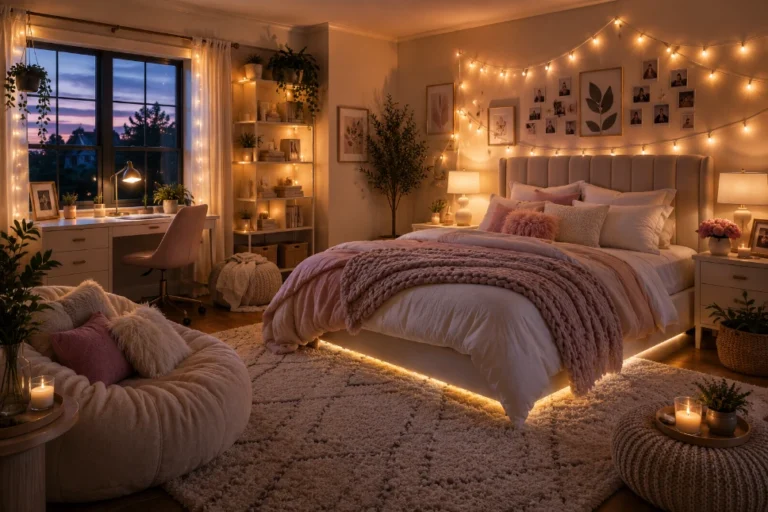
Teen Bedroom Ideas That Respect Growing Independence
A teen bedroom is no longer simply a place to sleep. It can become a study zone before an exam, a quiet retreat after a busy day, a place to talk with friends, and one of the first spaces where a teenager gets to make meaningful design choices.
That is why the best teen bedroom ideas balance personality with practical needs. Instead of designing a room entirely around what looks stylish today, it makes sense to create a flexible foundation that can change as interests, routines, and tastes develop.
A successful teen room should provide enough storage to control clutter, a comfortable place for schoolwork, privacy when needed, and room for personal expression. It does not have to be enormous or expensive. Thoughtful furniture placement and a few adaptable design choices can make even a modest bedroom work surprisingly well.
The following ideas focus on creating a bedroom that feels more mature without becoming overly formal or losing the personality of the person who actually lives there.
1. Sophisticated Teen Bedroom Ideas With a Neutral Color Base

A neutral foundation is one of the easiest ways to create a bedroom that can grow with a teenager.
Instead of covering every wall in a very specific color, consider warm white, soft beige, light greige, muted taupe, or a gentle gray. These shades create a calm background while leaving plenty of room for personality through bedding, artwork, rugs, and accessories.
Neutral does not have to mean plain.
Imagine warm ivory walls paired with a light oak bed, oatmeal curtains, textured cream bedding, and a walnut bedside table. A teen could then introduce forest green, dusty blue, lavender, terracotta, or another favorite shade through smaller pieces.
This approach has a practical advantage too. If their favorite color changes next year, you do not have to repaint and replace everything.
To prevent the space from looking flat, mix different materials such as:
- Washed cotton or linen bedding
- Bouclé or textured cushions
- Natural wood furniture
- Woven baskets
- A soft wool-blend rug
- Matte metal accessories
You can also let the teen choose one or two stronger accent colors. This gives them ownership of the design while the neutral foundation keeps everything visually balanced.
Practical tip: Before buying paint, test samples on different walls and look at them in both daylight and artificial light. The same neutral can appear warmer or cooler depending on the room.
2. Organized Teen Bedroom Ideas With a Modular Study Desk

Homework, online research, creative projects, reading, and hobbies can quickly turn a small desk into a cluttered surface.
A modular study area makes it easier to adapt the workspace instead of relying on one fixed setup.
Start with a desk that provides enough usable surface without dominating the bedroom. Then build storage vertically using floating shelves, a pegboard, small wall organizers, or stackable drawers.
Frequently used supplies should remain within easy reach, while less-used items can go into closed storage.
A practical setup might include:
- One comfortable desk chair
- A focused task lamp
- A drawer for stationery
- Vertical file storage
- A small shelf for books
- A pinboard or magnetic board
- A container for everyday pens and pencils
Cable management also deserves attention. Chargers hanging across the desk or disappearing behind furniture can make an otherwise organized workspace frustrating to use.
Attach cable clips beneath or along the back of the desk and keep frequently used charging cables in one accessible location.
The goal is not to create a perfectly styled desk that looks untouched. It should be a workspace a teenager can actually use.
Ask one simple question before arranging it: What activities happen at this desk most often?
A teen who draws needs a different setup from someone who mainly uses a laptop. Designing around real habits usually works better than copying a generic study-space layout.
3. Creative Teen Bedroom Ideas With a Personal Gallery Wall

A gallery wall gives teenagers an easy way to make the bedroom feel like their own without changing expensive furniture.
Instead of choosing all the artwork for them, provide an area where photographs, illustrations, postcards, personal artwork, certificates, favorite memories, or other meaningful pieces can be displayed.
The arrangement can be polished or intentionally relaxed.
For a cleaner appearance, use frames in two or three related finishes. Black, white, natural wood, and brushed metal are easy to combine.
For a more casual room, picture ledges, pinboards, grids, and removable display systems make it easier to change the collection.
This flexibility matters because interests during the teen years can change quickly.
Rather than permanently building the room around one hobby, musician, sport, or aesthetic, give those interests a dedicated display area that can evolve.
You could even divide the wall into sections for photographs, artwork, achievements, and changing inspiration.
Keep some empty space around the display. Covering every inch of the wall can make a small bedroom feel visually crowded.
4. Modern Teen Bedroom Ideas With Statement Ceiling Lighting

Lighting has a much bigger effect on a bedroom than many decorating changes.
One well-chosen ceiling fixture can immediately give a basic room more character.
Depending on the overall style, consider a sculptural pendant, contemporary globe fixture, woven shade, sleek flush mount, or understated modern chandelier.
The ceiling light should not work alone, though.
Teenagers use bedrooms for several activities, and each one benefits from a different type of lighting. A good arrangement combines general, task, and softer ambient lighting.
For example, use the main ceiling fixture for overall brightness, a desk lamp for studying, and a bedside lamp or wall sconce for relaxed evening lighting.
LED strips can also work when used carefully. Instead of outlining every edge of the room, consider placing concealed lighting behind a headboard, under a shelf, or beneath a desk for a cleaner appearance.
If possible, choose dimmable lighting. Being able to move from bright study lighting to a softer evening atmosphere makes the bedroom considerably more versatile.
5. Cozy Teen Bedroom Ideas With a Lounge and Social Space

If the room has enough space, a small seating area can make it feel more independent and multifunctional.
It does not require a full sofa.
A compact armchair, beanbag, floor cushion, small upholstered bench, or window-side seat may be enough to create somewhere to read, listen to music, relax, or talk with a friend.
Placement is important.
Try to keep lounge seating away from the main walkway between the door, bed, wardrobe, and desk. An unused corner near a window often works particularly well.
Add a small side table if space allows. It provides somewhere for a book, drink, or phone without adding much visual weight.
In a smaller bedroom, look for furniture that performs two jobs. A storage ottoman, for example, provides seating while hiding extra blankets or seasonal items.
A lounge zone also helps separate activities. Instead of doing everything from the bed, a teenager has another comfortable place to spend time.
6. Stylish Teen Bedroom Ideas With a Bold Accent Wall

A bold accent wall is a simple way to introduce stronger personality without overwhelming the entire bedroom.
The wall behind the bed is usually a natural location because it already acts as a focal point.
Color is the simplest option. Depending on the room, muted navy, forest green, clay, charcoal, dusty blue, burgundy, or another deeper shade can add contrast.
Paint is not the only possibility.
An accent wall could also use:
- Removable wallpaper
- Vertical wood slats
- Painted geometric shapes
- Subtle wall paneling
- Textured finishes
- A large-scale mural
When the accent wall is visually strong, keep some of the surrounding elements quieter.
For example, a dark green feature wall can pair beautifully with warm white bedding, natural oak furniture, cream curtains, and a few black accents.
This creates contrast without turning every feature into a competing focal point.
For teenagers whose tastes change frequently, removable wallpaper or a painted wall may be more practical than an expensive permanent treatment.
7. Space-Saving Teen Bedroom Ideas With a Built-In Window Seat

The area beneath a bedroom window is often underused.
Turning it into a window seat can provide seating and storage without requiring another large piece of furniture.
A built-in design can include drawers beneath the seat for spare bedding, books, hobby supplies, bags, or less frequently used clothing.
Add a fitted seat cushion and a few comfortable pillows to create a reading or relaxation spot.
The design does not necessarily need to be custom built.
A sturdy low storage bench can create a similar effect for a smaller budget. Choosing a piece close to the width of the window helps it look intentional rather than randomly placed.
Keep the styling relatively simple. Two or three cushions and one soft throw are usually enough.
If the window receives strong sunlight, blinds or curtains can make the area more comfortable during different times of day.
A window seat is especially useful in compact bedrooms because it turns an otherwise awkward area into functional square footage.
8. Practical Teen Bedroom Ideas With a Full-Length Mirror

A full-length mirror is both functional and decorative.
It allows someone to see an entire outfit while also reflecting light around the room, which can make a smaller bedroom appear brighter and more open.
There are several ways to incorporate one.
A leaning floor mirror can create a relaxed contemporary look in a larger room. A wall-mounted mirror saves floor space, while a mirrored wardrobe door can work particularly well in compact bedrooms.
Positioning deserves some thought.
Placing a mirror where it reflects daylight can increase brightness, but avoid positioning it where strong direct sunlight creates uncomfortable glare.
The frame can become part of the room’s design too. Light wood suits warm neutral interiors, slim black frames work with modern rooms, and softly rounded frames can make a space feel less rigid.
Always make sure larger mirrors are securely installed according to the manufacturer’s instructions.
9. Sporty Teen Bedroom Ideas With Dedicated Equipment Storage

Sports equipment can quickly become bedroom clutter when it does not have a specific home.
Instead of hiding every item, consider making frequently used or visually interesting equipment part of an organized display.
Wall-mounted racks can hold certain lightweight items, while open cubbies can provide space for shoes, bags, balls, or protective gear. Hooks near the wardrobe or door can help keep everyday items off the floor.
The important distinction is between display and clutter.
A carefully arranged collection can show personality. Random equipment scattered across the room simply makes the space harder to use.
Use baskets or closed bins for smaller accessories and reserve open display areas for a few meaningful pieces.
If sports equipment is regularly brought in from outdoors, consider keeping dirty or damp items outside the sleeping area when possible. This makes the bedroom easier to keep clean and comfortable.
The same idea can be adapted for other hobbies. Musical instruments, photography equipment, craft materials, books, and gaming accessories all benefit from having clearly defined storage.
10. Tech-Friendly Teen Bedroom Ideas With a Charging Station

Phones, tablets, headphones, smartwatches, laptops, and other electronics can lead to chargers appearing on almost every available surface.
A dedicated charging station keeps these items together.
Choose one convenient location near an existing electrical outlet, such as a desk, shelf, or small section of a dresser. Cable organizers can prevent cords from becoming tangled or falling behind furniture.
A simple charging zone might have separate spaces for a phone, headphones, and other regularly used devices.
Keep electrical safety in mind. Avoid overloading outlets, and use charging equipment that is appropriate for the devices.
It is also worth considering whether every device needs to stay beside the bed overnight.
Placing the charging station at the desk or across the room can keep the bedside area less cluttered and make the sleeping zone feel calmer.
The charging area does not need to look technical either. A small organizer box or tray can integrate cables into the overall bedroom design.
11. Private Teen Bedroom Ideas With Blackout Window Treatments

Privacy becomes increasingly important as children get older, making window treatments an important part of teen bedroom design.
Blackout curtains or shades can provide privacy while also reducing outside light when needed.
They are particularly useful for rooms facing streetlights or receiving strong early-morning sunlight.
However, the bedroom should not feel dark throughout the day.
Layering window treatments gives more control. For example, combine lightweight curtains with blackout panels or pair a blind with decorative curtains.
During the day, the lighter layer can allow natural light into the room while maintaining some privacy. At night, the blackout layer can be closed completely.
Curtains can also introduce texture and softness.
For a neutral bedroom, consider warm white, oatmeal, taupe, soft gray, or muted beige. In a more colorful room, curtains can repeat one of the secondary shades used in the bedding or accent wall.
Measure the window carefully before purchasing. Curtains that are too short or narrow can make an otherwise polished bedroom feel unfinished.
Whenever practical, hanging curtains slightly above the window frame and allowing them to extend close to the floor can create a taller, more balanced appearance.
Conclusion: Creating Teen Bedroom Ideas Around Real Life
The most successful teen bedroom ideas are not necessarily the most expensive or fashionable. They are the ones that reflect how the room is actually used.
A teenager may need somewhere to study, somewhere to relax, enough storage to manage belongings, privacy, good lighting, and freedom to show changing interests. When those needs guide the design, decorating decisions become much easier.
Start with the parts that are expensive or difficult to change, such as the bed, desk, storage, window treatments, and main color palette. Keep these relatively adaptable.
Then allow more personality through artwork, bedding, cushions, lighting, photographs, hobby displays, and smaller accessories.
Most importantly, involve the teenager in meaningful decisions.
Instead of presenting a completely finished room, discuss colors, furniture placement, storage needs, and the things they genuinely want to display. A bedroom designed together is more likely to remain useful and feel personal.
You do not need to transform everything at once. Start with one problem—perhaps poor storage, an uncomfortable study area, or inadequate lighting—and improve that first.
A good teen bedroom should have room to change, because the person living in it is changing too.