15 Cozy Cottagecore Aesthetic Bedroom Ideas for a Relaxing Retreat
A Cottagecore Aesthetic Bedroom has a special kind of charm. It feels warm, personal, slightly nostalgic, and connected to nature without needing to look perfectly styled.
Think soft linen bedding, weathered wooden furniture, tiny floral patterns, old books, woven textures, warm lamps, and a few leafy details. Instead of filling the bedroom with trendy decorations, cottagecore focuses on pieces that look collected gradually and actually make the room comfortable.
The good news is that you do not need an old countryside cottage to create this atmosphere. Even a modern or small bedroom can take on cottagecore character with thoughtful choices.
So, what actually makes a bedroom feel cottagecore rather than simply rustic? And how can you add vintage character without making the space look cluttered?
These 15 ideas will help you create a bedroom that feels cozy, romantic, and naturally lived-in.
1. Create Cozy Warmth With Rustic Charm

Start with warmth rather than decoration.
A successful Cottagecore Aesthetic Bedroom usually has a soft, earthy foundation. Cream, warm white, oatmeal, beige, dusty rose, muted sage, and gentle brown are all useful starting colors.
From there, introduce rustic materials such as aged wood, linen, wicker, ceramic, and woven fibers.
For example, a bedroom with warm cream walls could include an oak bed, linen bedding, a small vintage-style lamp, and dried flowers on a wooden nightstand. None of these elements are especially dramatic alone, but together they establish the relaxed cottage feeling.
Small imperfections can actually help. Wood grain, slightly wrinkled linen, handmade pottery, and vintage pieces often look more natural than glossy, perfectly matching furniture.
Practical tip: Choose two or three main materials and repeat them throughout the bedroom. Wood, linen, and wicker are an easy combination that keeps the space visually connected.
2. Bring Character With Rustic Wooden Furniture

Wooden furniture is one of the easiest ways to establish a cottagecore look.
Instead of sleek furniture with shiny finishes, consider pieces that show natural grain and traditional craftsmanship. Oak, pine, walnut, and reclaimed-looking wood can all work depending on the color palette.
Useful pieces may include:
- A wooden bed frame
- A small bedside table
- A vintage-style dresser
- An old writing desk
- A wooden bench
- Open wall shelves
You do not need every piece to come from the same furniture collection.
In fact, cottagecore interiors often feel more convincing when the furniture looks as though it was gathered over time. A darker antique-style dresser can sit comfortably beside a lighter wooden bed when other elements connect the colors.
Secondhand furniture can also be useful if it is sturdy and appropriate for your room.
In a small bedroom, avoid filling every wall with heavy wooden furniture. One beautiful dresser or bed frame can provide enough rustic character while lighter pieces keep the room open.
3. Add Texture With Woven Tapestries

Bare walls can make an otherwise cozy bedroom feel unfinished.
Woven tapestries provide softness and texture while introducing the handmade quality commonly associated with cottagecore interiors.
Botanical designs, countryside scenes, woodland imagery, traditional florals, and subtle geometric patterns are especially suitable.
Placement matters.
A medium or large tapestry can work above the bed as an alternative to framed artwork. A narrower textile may look better above a dresser or reading chair.
Try coordinating its colors with your bedding rather than introducing an entirely separate palette.
For instance, a tapestry containing muted green, cream, and faded rust could be paired with cream bedding, sage cushions, and a rust-colored throw.
The result feels intentional without looking overly matched.
Keep it balanced: If your tapestry contains a detailed pattern, use simpler bedding and curtains nearby so the bedroom has areas where the eye can rest.
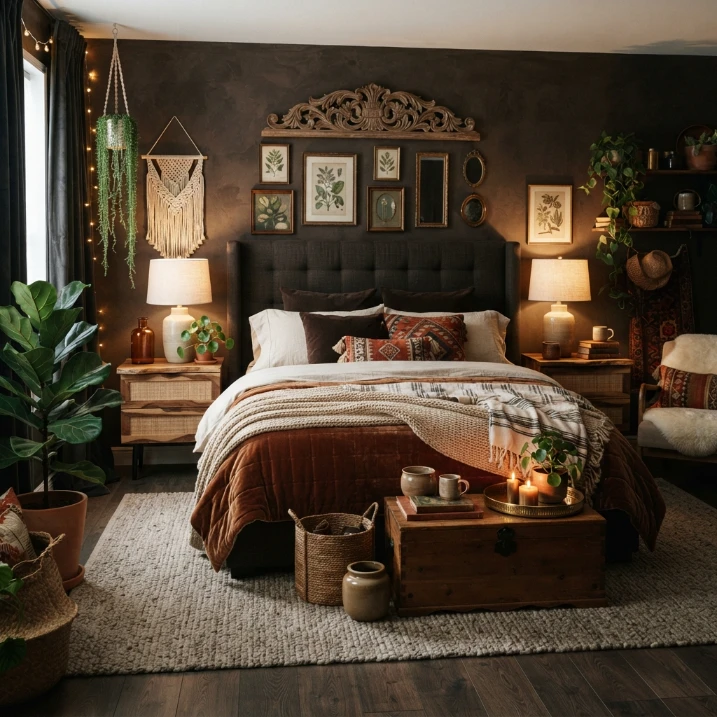
4. Introduce a Velvet Bedspread in Rich Tones

Cottagecore is often associated with light floral bedrooms, but richer colors can make the aesthetic feel particularly cozy.
Velvet is useful because its texture changes subtly as light moves across it. A velvet quilt, throw, or bedspread can add visual richness without requiring lots of extra accessories.
Consider shades such as:
- Forest green
- Burgundy
- Rust
- Muted plum
- Chocolate brown
- Dusty rose
You do not necessarily need an entirely velvet-covered bed.
A velvet throw folded across the foot of a bed may be enough, particularly if you already have patterned wallpaper or floral curtains.
Combine velvet with breathable, softer-looking materials such as cotton or linen. This contrast prevents the bedroom from becoming visually heavy.
A cream linen duvet with a moss-green velvet throw, for example, creates a beautiful balance between relaxed and refined.
5. Bring Nature Indoors With Ivy and Greenery

Nature plays an important role in cottagecore interiors.
However, creating a nature-inspired bedroom does not mean covering every wall and shelf with plants. A few carefully placed green elements can make a stronger impression.
Trailing plants can look attractive on high shelves, bookcases, or near windows where their growing requirements are met.
You might also use:
- Potted herbs or small houseplants
- Pressed botanical artwork
- Dried wildflowers
- Floral branches in ceramic vases
- Botanical-patterned fabrics
- Nature-inspired wallpaper
If you use live plants, select varieties appropriate for the actual light and humidity conditions in your bedroom.
Artificial greenery can be an alternative when natural light is limited, but choose realistic-looking pieces and use them sparingly.
For a subtle approach, place one trailing plant on a wooden shelf and repeat its green tone through a cushion or blanket.
That small connection can make the entire room feel more cohesive.
6. Create a Literary Retreat With Vintage Flair

Books naturally suit the quiet, nostalgic atmosphere of cottagecore.
Instead of treating them purely as decoration, create a small reading area that you can actually use.
An unused bedroom corner could hold a comfortable chair, warm reading lamp, small side table, and a basket containing a blanket.
A few books can sit on a shelf nearby.
Vintage-style hardcovers can contribute character, but your reading corner does not need to contain only old books. Mixing favorite modern books with secondhand editions makes the arrangement feel more personal.
If space is limited, the bedside table can perform the same function. Keep your current book beside a warm lamp and add a small ceramic dish or vase.
The goal is not to create a staged library. It is to create a bedroom where reading naturally feels inviting.
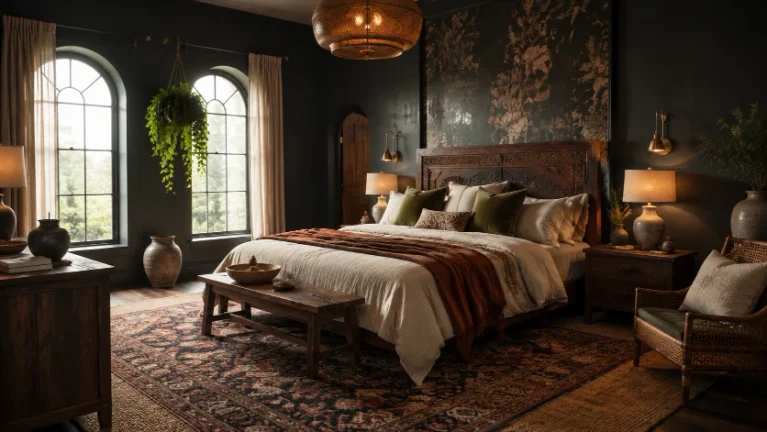
7. Try Floral Elegance With a Darker Palette

Floral patterns are central to many cottage-inspired bedrooms, but they do not always need to be pastel.
Dark floral patterns can give a Cottagecore Aesthetic Bedroom a moodier, more romantic character.
Look for floral designs with backgrounds or accents in forest green, charcoal, burgundy, muted navy, or brown.
There are several ways to introduce them.
A dark floral wallpaper behind the bed can become the main focal point. For a smaller commitment, use floral curtains, cushions, an upholstered chair, or patterned bedding.
The important part is controlling the amount of pattern.
If you select detailed floral wallpaper, consider plain bedding in cream, beige, muted green, or another color taken directly from the design.
This allows the flowers to stand out without making the room feel visually crowded.
Design tip: Before buying a large floral pattern, view a sample in your bedroom during both daylight and evening lighting. Dark colors can change significantly depending on the room’s light.
8. Add Timeless Romance With Vintage Quilts

A vintage-inspired quilt can change the entire appearance of a simple bedroom.
Patchwork, faded florals, botanical prints, gingham, and traditional stitched patterns all fit comfortably within cottagecore design.
Layering is particularly effective.
Start with simple sheets and a neutral duvet, then place the quilt across the entire bed or fold it at the foot.
During colder months, the extra layer is practical as well as decorative.
You can also use a quilt as the source for the room’s color palette.
Imagine a quilt containing faded rose, sage green, cream, and warm brown. Instead of adding several unrelated colors, repeat those shades through a lampshade, cushion, artwork, or rug.
This creates harmony without making everything identical.
Family quilts and genuinely old textiles may require special care, so delicate pieces may be better displayed rather than used as everyday bedding.
9. Use Nostalgic Red With Victorian-Inspired Accents

Red can bring surprising warmth to cottagecore bedrooms when it is used thoughtfully.
Rather than bright primary red, consider muted shades such as brick, cranberry, wine, faded cherry, or earthy red.
These tones pair particularly well with warm wood, cream, antique brass, and small floral patterns.
For a Victorian-influenced cottage bedroom, you might combine:
- A dark wooden bed or dresser
- Cream bedding
- A faded red floral throw
- Antique-style brass lighting
- An ornate mirror
- Small framed botanical prints
The key is restraint.
Too many ornate pieces can make the room feel themed rather than comfortable. Choose one or two Victorian-inspired details and let simpler cottage elements surround them.
For example, an ornate mirror above a plain wooden dresser can make a stronger statement than several elaborate accessories competing in the same area.
10. Create a Soft Glow With Layered Lighting

Lighting can completely change how a cottagecore bedroom feels after sunset.
A single bright ceiling light often creates harsh shadows and removes much of the cozy atmosphere. Instead, use several softer light sources around the room.
Consider combining bedside lamps, a floor lamp, wall sconces, and subtle string lights where appropriate.
Warm-toned lighting usually works well with wood, cream textiles, and vintage-inspired decor.
Fairy lights can add a whimsical detail, but placement makes a difference. Rather than covering every wall, use one controlled arrangement around a canopy, headboard, shelf, or architectural feature.
For a more grown-up cottagecore bedroom, vintage-inspired lamps with fabric, pleated, ceramic, or glass details can provide the same warmth without relying heavily on string lights.
And remember functionality. Your bedside lamp should provide enough light for reading, while softer accent lighting can create atmosphere.
11. Choose Organic Textiles and Natural Fabrics

Texture is often more important than expensive decoration in cottagecore interiors.
Natural-looking textiles help create the relaxed, tactile quality that makes these bedrooms so inviting.
Linen and cotton are particularly useful for bedding, while wool and woven fibers can add warmth through blankets and rugs.
Consider layering different textures rather than several competing patterns.
For example:
Base layer: Soft cotton sheets
Main bedding: Cream or oatmeal linen duvet
Accent layer: Knitted or woven throw
Floor: Jute or wool-blend rug
Windows: Light linen or cotton curtains
This creates visual interest even when the entire bedroom uses a restrained neutral palette.
Natural fabrics also tend to look attractive when slightly relaxed rather than perfectly pressed, which suits cottagecore’s informal character.
When choosing bedding, comfort should still come before appearance. Check fabric composition, care instructions, climate suitability, and how the material feels against your skin.
12. Make a Black Iron Bed the Focal Point

A black iron bed can provide useful contrast in a bedroom dominated by soft fabrics and warm neutrals.
Its slim lines keep it visually lighter than many large upholstered or wooden beds, making it suitable for both spacious and relatively small bedrooms.
Pair it with softer elements to prevent the black frame from feeling severe.
Cream linen bedding, a floral quilt, vintage cushions, a woven rug, and warm wooden nightstands can soften the contrast.
You could also place botanical wallpaper behind the bed to turn that wall into a stronger focal point.
A simple iron frame works particularly well when you want cottagecore character without making the bedroom excessively decorative.
13. Style Dark-Stained Bookshelves

Dark wood introduces age and richness to a light cottage bedroom.
A walnut, mahogany-toned, or dark-stained bookshelf can become an attractive anchor, especially against cream, muted green, or faded floral walls.
The styling should remain practical.
Instead of filling every shelf with tiny ornaments, leave enough room for books and a few meaningful objects.
Try combining books with:
- A small ceramic vase
- Framed artwork
- A woven basket
- Dried flowers
- A vintage-style clock
- A candle or decorative holder
Vary the height of objects to create a relaxed arrangement.
Some books can stand vertically while a small stack lies horizontally beside a decorative item.
Most importantly, leave a little empty space. Cottagecore can be layered without becoming cluttered.
How to Make a Cottagecore Bedroom Look Cohesive
When you love several cottagecore ideas at once, it is easy to add too many of them.
A simple design plan can prevent that problem.
Choose a base palette of three or four colors first. For example, you could use cream and warm wood as your foundation, sage as the main accent, and dusty rose in smaller amounts.
Next, choose one dominant pattern. It might be floral wallpaper, a vintage quilt, or patterned curtains.
Then use quieter materials around it.
You can follow a simple formula:
| Element | Cottagecore Option |
|---|---|
| Walls | Warm white, cream, sage, muted floral |
| Bed | Wood or black iron |
| Bedding | Linen, cotton, quilted fabrics |
| Accent colors | Sage, dusty rose, rust, burgundy |
| Lighting | Warm bedside and accent lamps |
| Furniture | Natural or vintage-style wood |
| Decor | Books, ceramics, botanicals, baskets |
| Artwork | Florals, landscapes, botanical prints |
This gives you enough variety to make the bedroom interesting while maintaining a clear visual direction.
Frequently Asked Questions
What Is a Cottagecore Aesthetic Bedroom?
A Cottagecore Aesthetic Bedroom takes inspiration from romantic countryside living, traditional cottages, nature, handmade details, and vintage interiors.
Common elements include natural wood, floral patterns, soft bedding, woven textures, botanical decor, warm lighting, vintage-style furniture, and earthy colors.
However, the room does not need to contain every cottagecore feature. A few carefully selected elements can establish the aesthetic.
What Colors Work Best in a Cottagecore Bedroom?
Warm, nature-inspired colors generally work well.
Cream, oatmeal, beige, sage green, dusty rose, faded blue, warm brown, rust, burgundy, and muted yellow can all suit cottagecore interiors.
Choose colors according to the mood you want. Lighter shades create an airy cottage feeling, while forest green, burgundy, and darker wood produce a moodier interpretation.
Can I Create Cottagecore Style in a Small Bedroom?
Yes. In fact, cottagecore can make a small bedroom feel especially comfortable when decoration is controlled.
Use one or two statement elements, such as a wooden bed and floral bedding, rather than filling the room with small accessories.
Wall shelves, under-bed storage, baskets, and furniture with multiple purposes can help maintain the cozy appearance without sacrificing useful space.
How Can I Create a Cottagecore Bedroom on a Budget?
Start with textiles and secondhand pieces rather than replacing all your furniture.
A floral pillowcase, vintage-inspired quilt, thrifted wooden nightstand, framed botanical print, or woven basket can introduce the style gradually.
Rearranging objects you already own can also make a difference.
Old books, ceramic dishes, baskets, wooden boxes, and simple glass vases may already fit the cottagecore look when grouped thoughtfully.
Does Cottagecore Have to Be Feminine?
No. Cottagecore can be adapted to many personal styles.
For a less floral appearance, focus on warm wood, earthy green, brown, cream, linen bedding, landscape artwork, iron furniture, plaid or subtle botanical patterns, and vintage books.
The underlying idea is comfort, nature, craftsmanship, and nostalgic character rather than one specific color or pattern.
Conclusion
Creating a beautiful Cottagecore Aesthetic Bedroom is less about following a strict decorating formula and more about building a room that feels warm, comfortable, and personal.
Start with a calming color palette and introduce natural materials such as wood, linen, cotton, wicker, and wool. From there, add character through floral patterns, vintage quilts, books, botanical artwork, warm lighting, and a few meaningful objects.
You also do not need to transform the entire bedroom at once.
Begin with one area—perhaps the bed, a reading corner, or the wall behind your headboard. Add a few well-chosen cottagecore details, live with them for a while, and build the room gradually.
The most convincing cottagecore spaces rarely look perfectly coordinated. They feel as though their favorite pieces were collected over time, and that comfortable, lived-in quality is exactly what gives the style its lasting charm.