25 Beautiful Christmas Decor Ideas for a Cozy and Elegant Home
Christmas decorating can quickly turn into a collection of ornaments, greenery, ribbons, and lights that look beautiful individually but do not quite work together.
The secret to a well-decorated Christmas home is not adding more. It is choosing a clear style and repeating a few colors, materials, and festive details from room to room.
These Christmas decor ideas cover everything from the tree and fireplace mantel to bedrooms, kitchens, entryways, and small spaces. Whether you prefer traditional red and green, sophisticated neutrals, natural greenery, or a clean modern look, you can adapt these ideas to suit your home and budget.
Beautiful Christmas Decor Ideas for Every Space
You do not need to decorate every surface to make your home feel festive. Start with the areas you use most, create a consistent color palette, and layer in seasonal details gradually.
Here are 25 ways to create a cozy, polished Christmas home without making it feel overcrowded.
1. Choose a Coordinated Christmas Color Palette
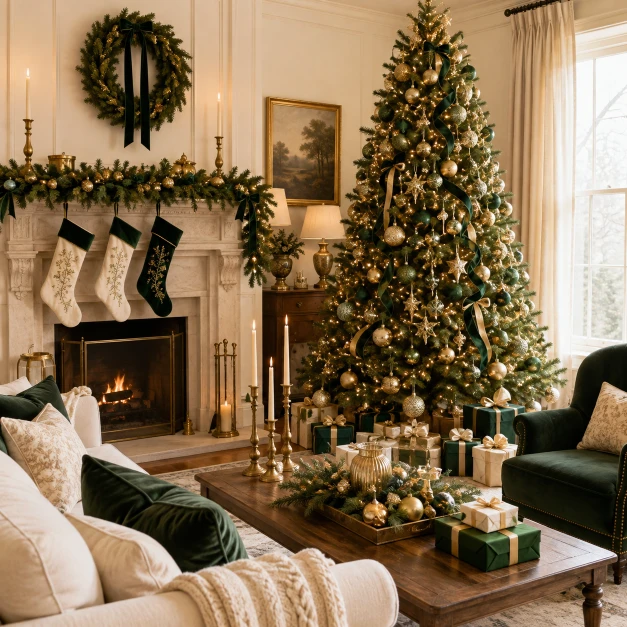
Before bringing out the ornaments, choose two or three main colors for your Christmas decorations.
A defined palette makes different rooms feel connected and also makes shopping easier because you know which pieces will actually work with what you already own.
Classic combinations include:
- Red, green, and gold
- Ivory, champagne, and warm metallics
- Forest green, cream, and brass
- Burgundy, brown, and gold
- White, silver, and soft blue
- Beige, wood tones, and muted green
Consider your existing furniture and wall colors as well. If your home already contains warm woods and creamy neutrals, forest green and antique gold may blend more naturally than icy silver and bright blue.
You do not have to use each color equally. Choose one dominant shade, a supporting color, and a smaller accent that appears through ornaments, ribbon, candles, or tableware.
2. Create an Elegant Christmas Tree

The Christmas tree is often the visual center of holiday decorating, so give it a little planning before hanging every ornament you own.
Start with lights if your tree is not pre-lit. Next, add ribbon or garland, followed by larger ornaments. Fill smaller gaps with medium and small ornaments, then finish with special pieces and a tree topper.
For a sophisticated look, combine different finishes rather than using identical ornaments. Matte, glossy, glass, metallic, and textured decorations create dimension even when they share the same color palette.
Try repeating three or four materials throughout the tree, such as:
Velvet ribbon + glass baubles + brass bells + natural pinecones
Do not overlook the base. A woven tree collar, fabric tree skirt, or simple basket can hide the stand and give the entire arrangement a more finished appearance.
3. Decorate the Living Room with Festive Layers
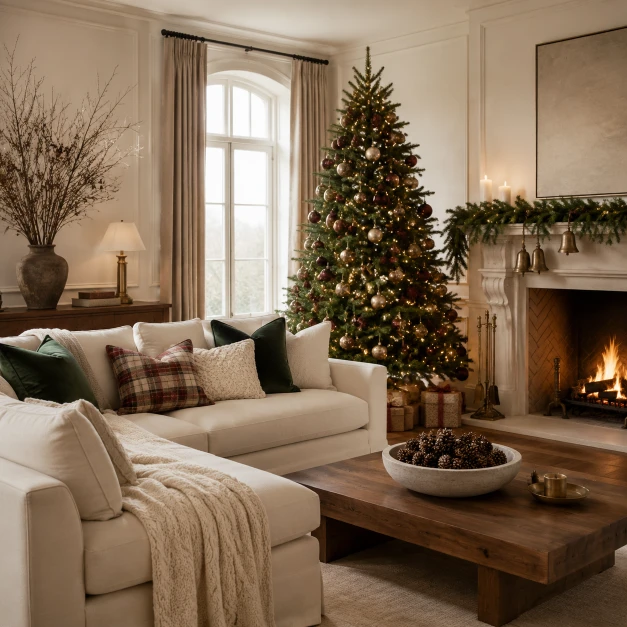
Instead of filling the living room with small Christmas objects, work with the pieces already there.
Replace a few everyday cushion covers with velvet, plaid, boucle, or knitted options in your chosen seasonal colors. Add a soft throw to the sofa and introduce greenery on a mantel, shelf, or console.
A bowl filled with pinecones, a few brass bells, or a vase of winter branches can provide another seasonal detail without taking over the room.
The aim is to create layers rather than clutter.
If your Christmas tree is already colorful and heavily decorated, keep nearby surfaces quieter. This gives the eye somewhere to rest and allows the tree to remain the main attraction.
4. Style a Cozy Christmas Fireplace Mantel
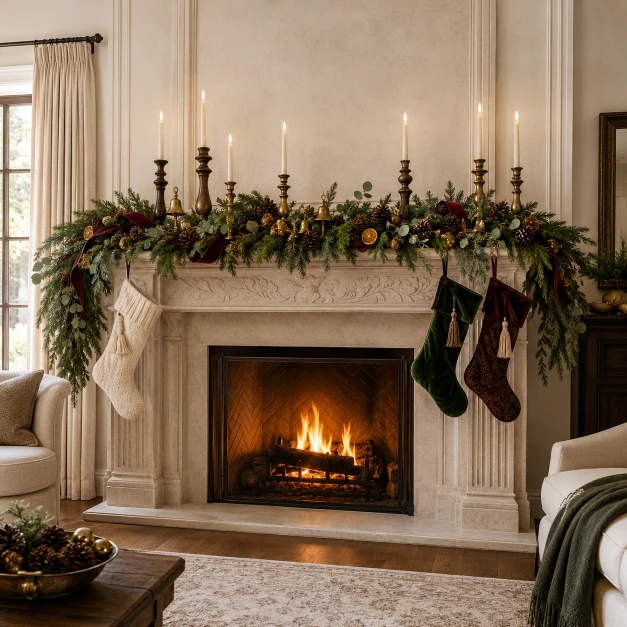
A fireplace naturally becomes a Christmas focal point, even with fairly simple decorations.
Begin with a garland of pine, cedar, eucalyptus, or realistic faux greenery. Let it drape naturally instead of arranging every branch symmetrically.
Then layer in a few decorative elements such as:
- Brass or wooden candleholders
- Velvet ribbon
- Pinecones
- Small ornaments
- Dried orange slices
- Stockings
- Bells
If you hang stockings, choose materials and colors that complement the rest of the room.
For homes with a working fireplace, keep combustible decorations, fabric, and candles safely away from flames and hot surfaces.
5. Add a Beautiful Garland to the Staircase

A staircase gives you a long architectural line that is perfect for Christmas greenery.
Attach garland along the handrail or the outside edge of the banister, depending on how you use the stairs. Add velvet bows, bells, pinecones, berries, or ornaments at intervals rather than covering every inch.
For a natural appearance, mix more than one type of greenery. Cedar and pine, for example, create richer texture than a single uniform garland.
Most importantly, keep handrails and walking areas usable. Christmas decorations should never make stairs difficult or unsafe to navigate.
6. Create a Welcoming Christmas Entryway

Your entryway sets the mood before guests reach the living room.
A small arrangement can be enough: place winter branches in a ceramic vase, add a bowl for ornaments or bells, and introduce a battery-operated candle or small lamp for warmth.
If you have a larger foyer, a miniature tree can look beautiful beside a console or bench.
Keep practical needs in mind. Leave enough room for coats, bags, shoes, and keys so the space continues to function during a busy season.
7. Hang an Elegant Christmas Front-Door Wreath

A wreath brings Christmas character to the exterior without requiring an elaborate outdoor display.
Traditional evergreen wreaths work with almost any home, but you can personalize yours with pinecones, eucalyptus, berries, brass bells, dried citrus, or ribbon.
A wide velvet ribbon in burgundy, forest green, navy, or warm brown can instantly make a simple wreath feel more refined.
Choose a wreath that is proportional to your door. An undersized wreath can disappear visually, while one that is too large may interfere with the handle, knocker, or door operation.
8. Decorate the Front Porch for Christmas
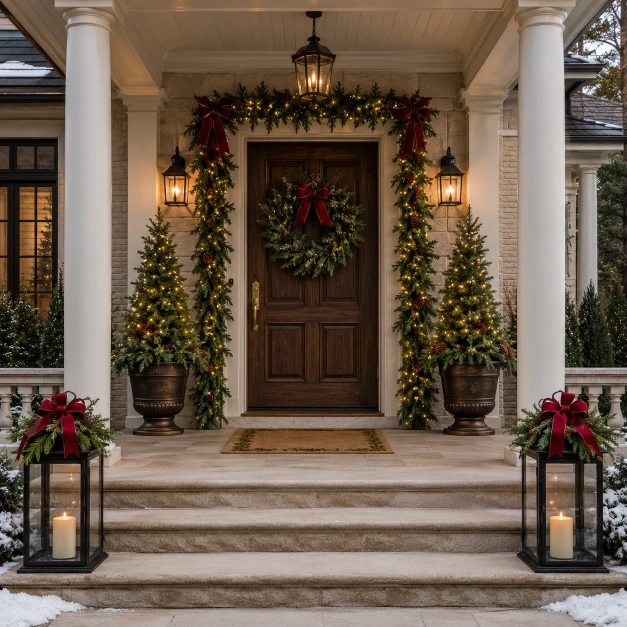
Carry your interior decorating style outside by repeating one or two elements from your indoor palette.
Place small evergreen trees in weather-resistant planters beside the door. Add lanterns, a seasonal doormat, greenery, or a simple outdoor garland.
For a traditional porch, combine green foliage with red ribbon and warm-white lights. For a quieter look, try natural greenery, pinecones, wood, and brass-colored accents.
Use only lights and electrical decorations specifically rated for outdoor use.
9. Style a Festive Console Table

Console tables are ideal for creating a concentrated Christmas display.
Start with one tall anchor, such as a mirror, framed artwork, or vase of evergreen branches. Add two or three smaller items at different heights.
For example:
Evergreen branches + brass candlesticks + ceramic trees + a small bowl of ornaments
Leave some empty surface visible. Negative space is particularly important on narrow furniture because too many small decorations can quickly make a console look messy.
10. Create a Christmas Coffee-Table Display
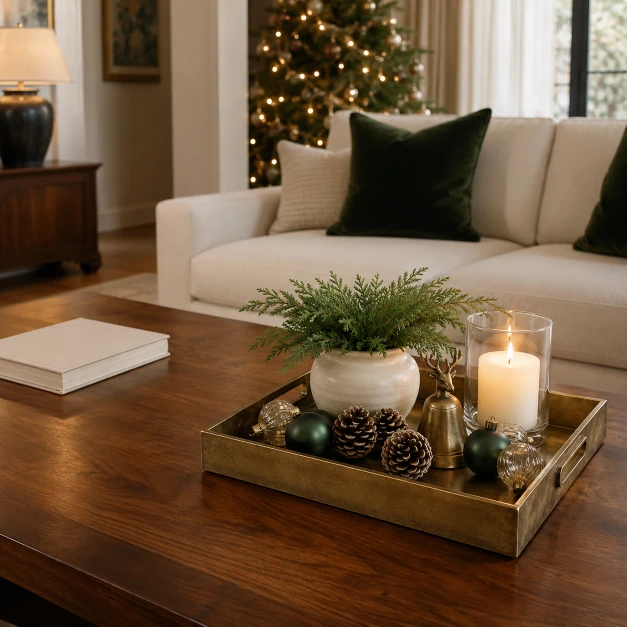
Your coffee table needs to remain useful, so choose decorations that are attractive but easy to move.
A tray is one of the simplest solutions. Group a small vase of greenery, a candle, a decorative object, and a few pinecones or ornaments inside it.
Keeping everything contained creates a deliberate arrangement and allows you to remove the entire display when you need more table space.
Avoid very tall centerpieces that block conversation or television views.
11. Add Christmas Details to the Bedroom

Bedrooms can feel festive without looking like extensions of the living room.
Change one or two textiles rather than replacing everything. A plaid throw, velvet cushion, warm quilt, or knitted blanket can introduce Christmas color while remaining practical.
Add a small wreath above a dresser, greenery on a bedside table, or a miniature tree in an empty corner.
Warm bedside lighting also contributes significantly to the cozy seasonal atmosphere.
Keep decorations away from bedding and other areas where heat, candles, or electrical cords could create a safety concern.
12. Style Open Kitchen Shelves for Christmas

Open shelves can take on a festive character using everyday kitchen items.
Mix white or cream dishes with wooden cutting boards, mugs, glassware, copper pieces, and a few sprigs of greenery. A small ceramic tree or miniature wreath can add an obvious Christmas detail.
Rather than removing useful objects to make room for decorations, work seasonal pieces around what you already use.
This keeps the kitchen practical and prevents open shelving from becoming overcrowded.
13. Create a Festive Christmas Coffee Bar
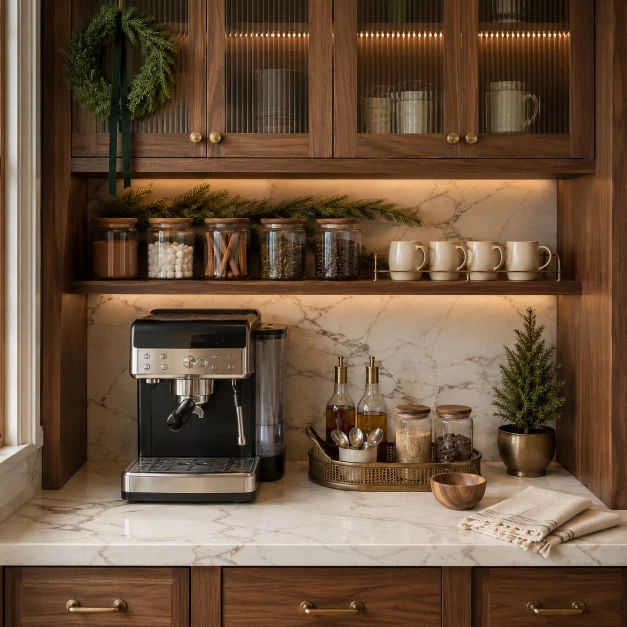
If coffee is part of your daily routine, turn that small corner into a seasonal feature.
Arrange favorite mugs near the coffee machine and store cocoa, marshmallows, cinnamon sticks, or tea in attractive containers. Add a miniature tree, tiny wreath, or strand of greenery nearby.
A tray can help keep syrups, spoons, and toppings organized.
The best Christmas coffee stations feel festive while remaining genuinely useful—especially on busy holiday mornings.
14. Decorate an Elegant Christmas Dining Table
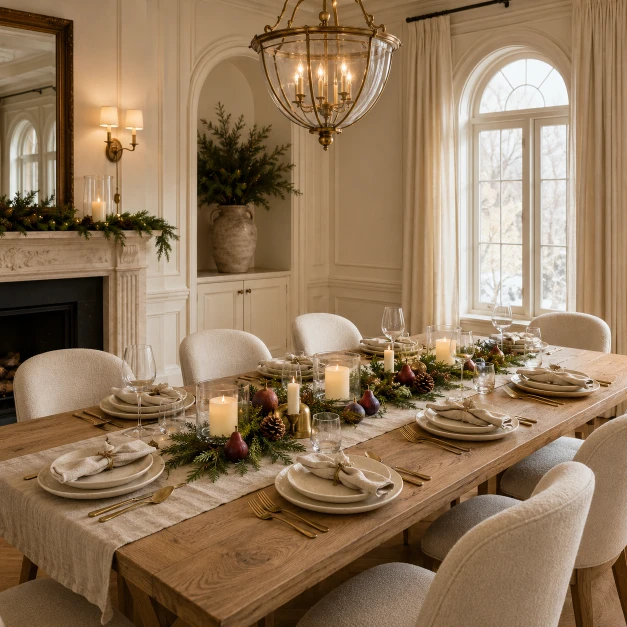
A beautiful Christmas table does not require elaborate place settings.
Begin with a tablecloth or runner, then add simple dinnerware, cloth napkins, glassware, and a low centerpiece.
You could combine:
Cream plates + linen napkins + brass flatware + evergreen branches + ivory candles
Natural textures help formal tables feel warmer. Wood, linen, greenery, fruit, and pinecones balance polished metallic finishes particularly well.
Keep centerpieces low enough that guests can comfortably see and talk to one another across the table.
15. Make a Natural Christmas Centerpiece
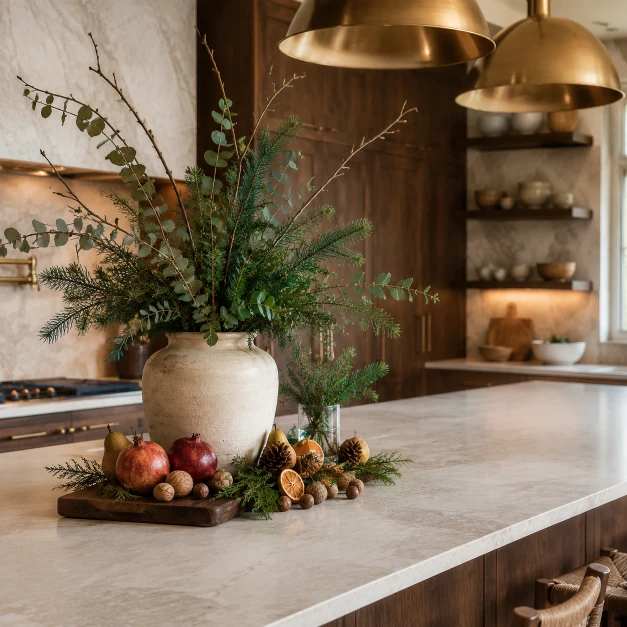
Some of the most attractive Christmas centerpiece materials can come from nature.
Evergreen cuttings, pinecones, winter branches, dried citrus, nuts, pomegranates, pears, and eucalyptus can all be incorporated into seasonal arrangements.
For a dining table, arrange greenery loosely along the center and add candles at varying heights where safe.
For a kitchen island or console, place branches in a substantial ceramic or glass vase and surround the base with a few natural elements.
The imperfect shapes and textures keep the arrangement from looking overly staged.
16. Introduce Warm and Layered Christmas Lighting

Lighting can change the mood of Christmas decor more than another box of ornaments.
Rather than relying entirely on ceiling lights, use several softer sources throughout the room.
Consider:
- Christmas tree lights
- Table lamps
- Wall sconces
- Flameless candles
- Lanterns
- Garland lights
- Window lights
Warm-white lighting generally creates a softer, cozier appearance than very cool white light.
For real candles, keep flames away from greenery, curtains, ribbons, children, and pets, and never leave them unattended.
17. Decorate Windows with Garland and Greenery
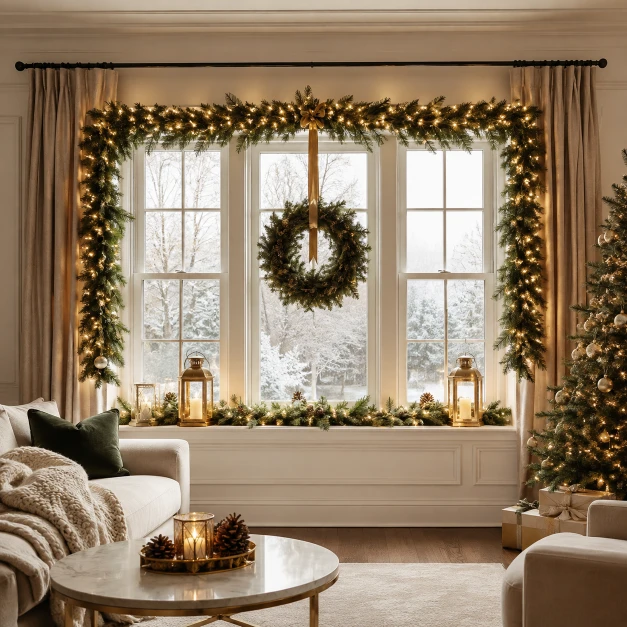
Windows provide an opportunity for Christmas decorations without taking up floor or furniture space.
Drape a lightweight garland across the top of a window, hang a small wreath from ribbon, or place greenery along a deep windowsill.
Small battery-operated lights can add warmth after dark.
Avoid blocking too much natural light during the daytime. A restrained arrangement around the frame usually works better than covering the entire window.
18. Use Natural Greenery Throughout the Home
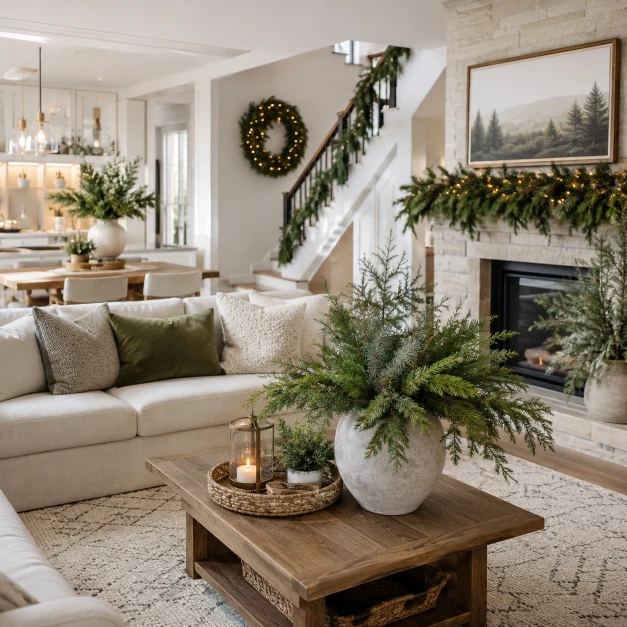
Greenery is one of the easiest elements to repeat from room to room.
Pine, cedar, fir, eucalyptus, juniper, and other seasonal foliage can work in wreaths, garlands, vases, and tabletop arrangements.
Fresh greenery offers beautiful fragrance and texture, while quality faux foliage is reusable and easier to maintain.
You can also combine the two. Use faux garlands as the foundation and insert a few fresh cuttings to create a fuller, more natural-looking arrangement.
Always check whether particular plants are appropriate around pets and young children before bringing them indoors.
19. Add Metallic Gold and Brass Accents

Metallic accents reflect Christmas lights beautifully and can make simple arrangements feel more polished.
You do not need many.
Introduce gold or brass through candleholders, bells, ornament caps, frames, trays, napkin rings, or small decorative objects.
A little contrast is often more effective than covering an entire room in metallic finishes. Antique or brushed finishes tend to create a softer look than highly reflective gold.
Pair them with wood, greenery, linen, or velvet to keep the room feeling warm.
20. Create Sophisticated Neutral Christmas Decor
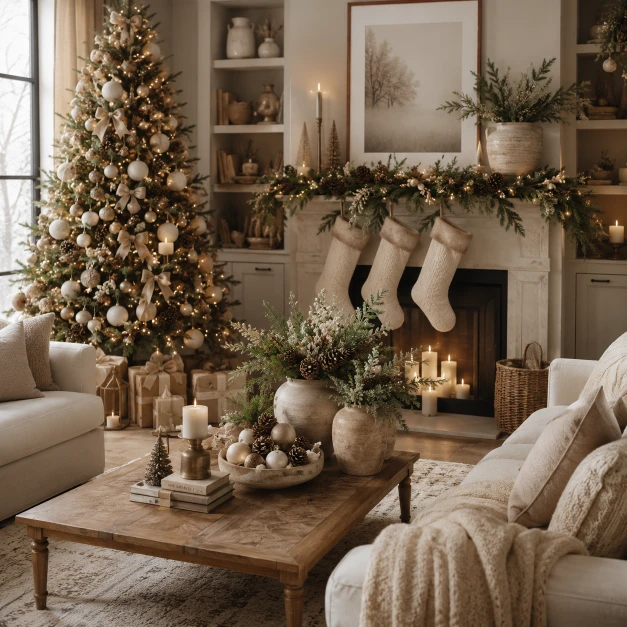
Christmas decorations do not have to be bright red or green.
For a calm neutral scheme, build your palette around cream, ivory, beige, taupe, warm brown, and natural wood. Then add seasonal identity through greenery, ornaments, ribbons, and texture.
Materials become particularly important when colors are restrained.
Combine elements such as:
- Velvet
- Linen
- Wood
- Paper
- Glass
- Stoneware
- Knitted textiles
- Natural greenery
Add a small amount of black, dark brown, or aged brass if the arrangement needs stronger contrast.
21. Try a Traditional Red and Green Christmas Scheme
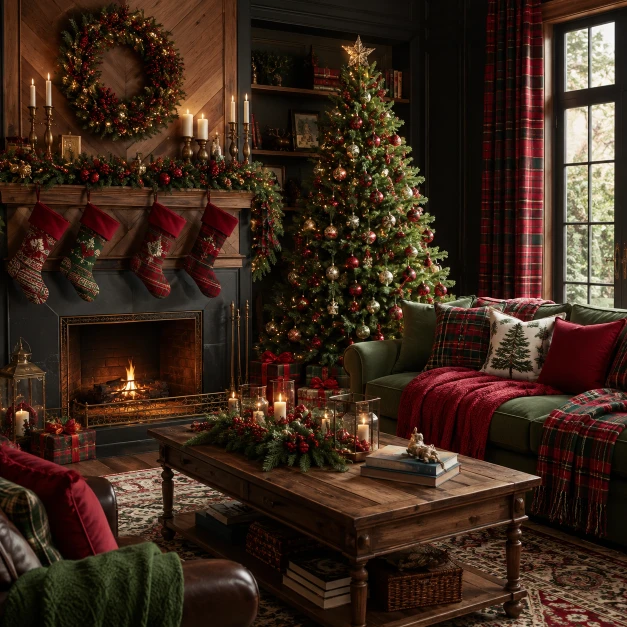
There is a reason red and green Christmas decor remains popular: it immediately feels festive and familiar.
The trick is controlling the shades and patterns.
Instead of mixing every possible red and green, select specific tones. Deep cranberry, burgundy, and forest green can create a richer look, while bright red and classic green feel cheerful and nostalgic.
Use the palette through plaid ribbons, stockings, ornaments, berries, cushions, and table linens.
Natural wood and warm metallic accents can help soften the stronger colors.
22. Create Modern Minimalist Christmas Decor

Minimalist Christmas decorating is about intentional choices, not an undecorated home.
Choose a restrained palette and use fewer, larger decorative pieces.
A simple evergreen tree with warm lights and carefully selected ornaments may be all the living room needs. Add one garland, a few sculptural candleholders, and perhaps a ceramic tree elsewhere.
Repeat similar shapes and materials to maintain continuity.
When each decoration has visual space around it, even inexpensive pieces can have greater impact.
23. Decorate a Small Home Without Creating Clutter
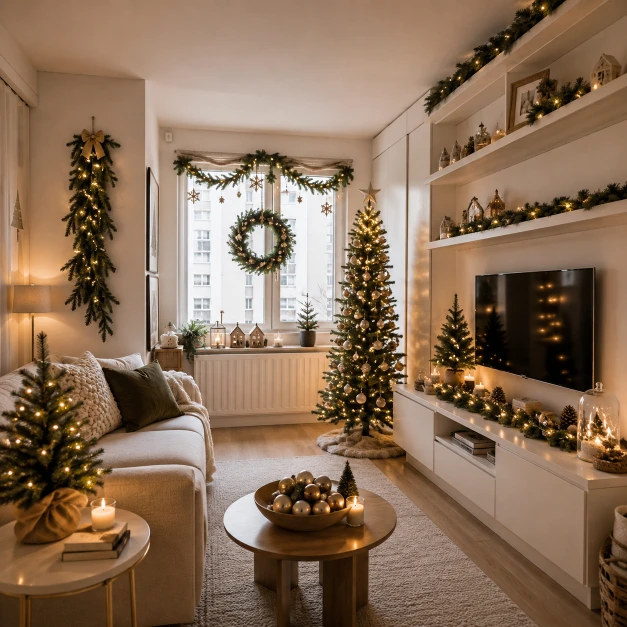
In a small home or apartment, concentrate Christmas decorations vertically rather than filling limited surfaces.
Use doors, windows, walls, shelves, and existing furniture.
Try:
- A slim Christmas tree
- Wall-mounted wreaths
- Window garlands
- A tabletop tree
- Hanging ornaments
- Greenery above cabinets
- A bowl of ornaments instead of multiple figurines
You can also temporarily store a few everyday decorative objects while Christmas decorations are displayed. Swapping rather than adding keeps the room from becoming visually crowded.
24. Make Christmas Decor Look Elegant on a Budget

A beautiful Christmas home does not depend on buying an entirely new collection every year.
Start by sorting what you already own by color rather than by set. Decorations purchased years apart can suddenly look coordinated when grouped within the same palette.
Then spend selectively.
Affordable ways to refresh Christmas decor include using ribbon on existing ornaments, collecting pinecones, adding fresh greenery, framing printable seasonal artwork, reusing glass jars as candleholders, and updating cushion covers instead of buying new pillows.
One particularly useful approach is to invest in versatile basics—quality warm-white lights, neutral stockings, realistic greenery, and simple glass ornaments—and change inexpensive accents from year to year.
25. Add Personal and Meaningful Christmas Decorations

A home can look beautifully styled and still feel impersonal if everything was chosen simply because it matched.
Leave room for decorations that tell your family’s story.
Display children’s handmade ornaments, souvenirs from memorable trips, inherited decorations, family photographs, or ornaments collected over the years.
They do not have to perfectly match your palette.
You could reserve one section of the tree for sentimental ornaments or place meaningful pieces in a decorative bowl or glass cabinet.
These details are often what guests remember—and what makes decorating enjoyable year after year.
How to Choose a Christmas Decorating Theme
Before deciding on a theme, look at your permanent interiors.
What colors, materials, and architectural details are already present?
A warm neutral home with oak furniture may suit natural, Scandinavian-inspired, or neutral Christmas decor. A traditional interior with dark wood could work beautifully with burgundy, forest green, plaid, and antique brass.
You can narrow your options by considering three things:
- Color: Choose two or three dominant shades.
- Material: Select recurring finishes such as wood, brass, glass, velvet, or natural greenery.
- Mood: Decide whether you want the home to feel traditional, elegant, rustic, nostalgic, minimalist, or playful.
Create a simple reference before shopping. Even a small collection of saved images can help you notice recurring colors and styles.
Ask yourself: Would this decoration still look appropriate beside the items I already own?
If not, it may be beautiful on its own but wrong for your overall scheme.
When Should You Start Decorating for Christmas?
There is no universal date when Christmas decorating should begin.
Many households start after Thanksgiving, while others begin earlier in November to enjoy the decorations for longer. Personal traditions, schedules, and whether you use fresh greenery can all influence the timing.
A practical approach is to decorate in stages.
Start with outdoor lights, basic greenery, and non-specific winter decor. Add the Christmas tree, stockings, ornaments, and more obvious festive pieces closer to the holiday.
Fresh greenery may need to be added later than artificial decorations because its appearance and longevity depend on the plant type and indoor conditions.
Ultimately, the best decorating date is the one that works with your household and gives you enough time to enjoy the result.
How to Make Christmas Decor Look Cohesive
Cohesion comes from repetition.
You do not need identical decorations in every room. Instead, repeat a few recognizable elements.
If your living room uses forest green velvet, antique brass, and natural wood, introduce one or two of those details in the dining room or entryway.
The same principle applies to greenery and lighting.
For example, using similar warm-white lights on the tree, mantel, and staircase creates a subtle visual connection.
A simple formula is:
2–3 main colors + 2 recurring materials + similar lighting = a more cohesive Christmas home
Also consider sightlines. Stand in the doorway between rooms and look at what you can see simultaneously. If neighboring spaces compete strongly in color or style, remove or adjust a few pieces until they relate more comfortably.
Common Christmas Decorating Mistakes to Avoid
Even beautiful decorations can lose their impact when too many ideas compete for attention.
One common mistake is decorating every available surface. Empty space gives seasonal arrangements room to stand out and keeps functional areas usable.
Other issues to watch for include:
- Using too many unrelated colors
- Buying decorations without considering existing furniture
- Mixing noticeably different light temperatures
- Choosing ornaments that are too small for a large tree
- Ignoring the base of the Christmas tree
- Blocking walkways with seasonal displays
- Overcrowding dining and coffee tables
- Using indoor electrical decorations outdoors
- Placing candles too close to greenery or fabrics
- Following trends that do not suit your home
Before buying anything else, remove one or two objects from an arrangement and look again. Sometimes editing is all that is needed.
Frequently Asked Questions
What are the most popular Christmas decorating colors?
Red, green, white, gold, and silver remain familiar Christmas colors, but there are many attractive alternatives.
Forest green with champagne gold creates an elegant look, while cream, beige, brown, and natural greenery work well for neutral interiors. Burgundy is another sophisticated alternative to bright red.
Rather than choosing colors purely because they are popular, select shades that complement your permanent furniture and finishes.
How can I decorate my home for Christmas on a budget?
Reuse existing decorations in different combinations before buying new pieces.
Ribbon, natural greenery, pinecones, dried citrus, branches, printable artwork, and inexpensive cushion covers can refresh familiar decorations without requiring a large budget.
Concentrate your spending on high-impact areas such as the tree, mantel, front door, or dining table instead of purchasing small decorations for every room.
How can I make simple Christmas decorations look elegant?
Limit your color palette, vary textures, and pay attention to scale.
For example, a plain evergreen garland can look sophisticated when paired with wide velvet ribbon and two substantial brass candleholders.
Grouping decorations also tends to look more intentional than scattering many small objects across a room.
Most importantly, leave some breathing space around your displays.
How do I decorate a small home for Christmas?
Prioritize decorations that use vertical space.
A slim tree, door wreath, window garland, hanging ornaments, and greenery placed above cabinets provide seasonal character without consuming valuable floor space.
Replace some everyday decorations instead of adding Christmas pieces beside them.
This allows a small room to feel festive while remaining comfortable and functional.
Which rooms should I decorate for Christmas?
Start with the rooms where you spend the most time.
For many homes, that means the living room, entryway, kitchen, and dining area. Bedrooms can receive smaller seasonal touches such as a festive throw, greenery, or miniature tree.
You do not need to decorate every room.
Ask yourself: Which spaces will my household actually use and enjoy during the Christmas season?
Focusing on those areas usually creates a better result than spreading your budget and decorations too thinly.
Final Thoughts
The best Christmas decor ideas are not necessarily the most expensive or elaborate. A coordinated palette, warm lighting, natural greenery, comfortable textiles, and a few thoughtfully chosen decorations can completely change the atmosphere of a home.
Begin with the spaces that matter most, then repeat a few colors and materials throughout adjoining rooms. Edit surfaces instead of filling them, work with your existing interior style, and leave space for decorations that carry personal meaning.
Your Christmas home does not need to resemble a showroom. It should feel warm, welcoming, and unmistakably yours.