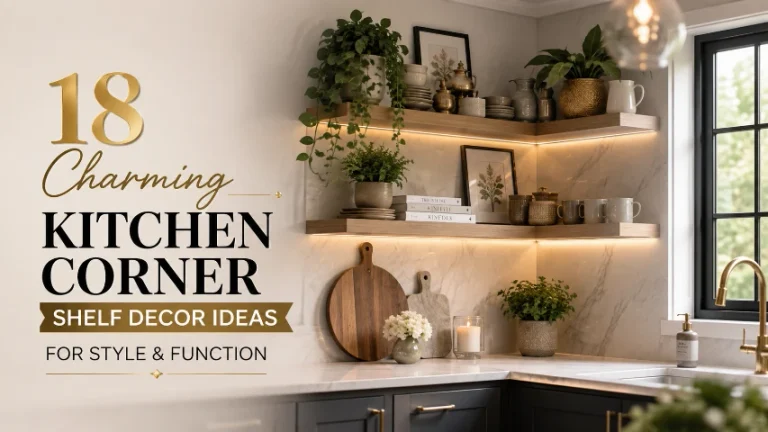
18 Brick Kitchen Backsplash Ideas for Rustic Modern Style
A brick backsplash can make a kitchen feel warmer before you add a single decorative accessory. Its texture, imperfect surface, and natural color variation bring character that smooth tile often cannot replicate.
But brick does not automatically mean an old-fashioned farmhouse kitchen.
Pair it with flat-panel cabinets, streamlined lighting, stone countertops, or black metal details, and the same material can feel surprisingly modern. You can also soften brick with whitewash, paint it a completely different color, or change the installation pattern to suit your kitchen.
If you are considering brick for your renovation, these brick kitchen backsplash ideas show how to use it in rustic, farmhouse, transitional, industrial, and modern spaces without making the room feel overly heavy.
Your Guide to Brick Kitchen Backsplash Ideas
Before choosing a brick style based only on appearance, think about the practical side of the backsplash as well.
Traditional brick is porous and has an uneven surface, so splashes and grease can be more difficult to clean than they are on glass or glazed tile. Brick used around cooking and food-preparation areas may require appropriate sealing and ongoing care.
Thin brick veneer can provide a similar visual effect with less thickness, making it useful when a full masonry installation is impractical.
Once those details are considered, you can focus on the fun part: choosing the color, pattern, cabinetry, lighting, and accessories that make brick work with your kitchen.
1. Choose Rustic Red Brick for Farmhouse Character

Classic red brick is one of the easiest ways to give a kitchen a warm, established appearance.
Instead of trying to make every brick look identical, allow slight variations in red, terracotta, brown, and faded orange to become part of the design. These differences create the character that makes exposed brick interesting.
Red brick looks especially natural beside warm materials such as oak, walnut, butcher block, aged brass, and creamy stone.
For a farmhouse-inspired kitchen, try pairing it with:
- Warm white or cream cabinets
- Natural wood shelving
- Apron-front sinks
- Aged brass or matte black hardware
- Soft beige or off-white countertops
Be careful about adding too many other rustic finishes. Brick already provides considerable texture, so simpler cabinets and countertops can keep the room balanced.
Design tip: Bring home brick samples and view them beside your cabinets in morning and evening light. Red brick can look considerably warmer under artificial lighting.
2. Use Whitewashed Brick for a Light, Airy Kitchen
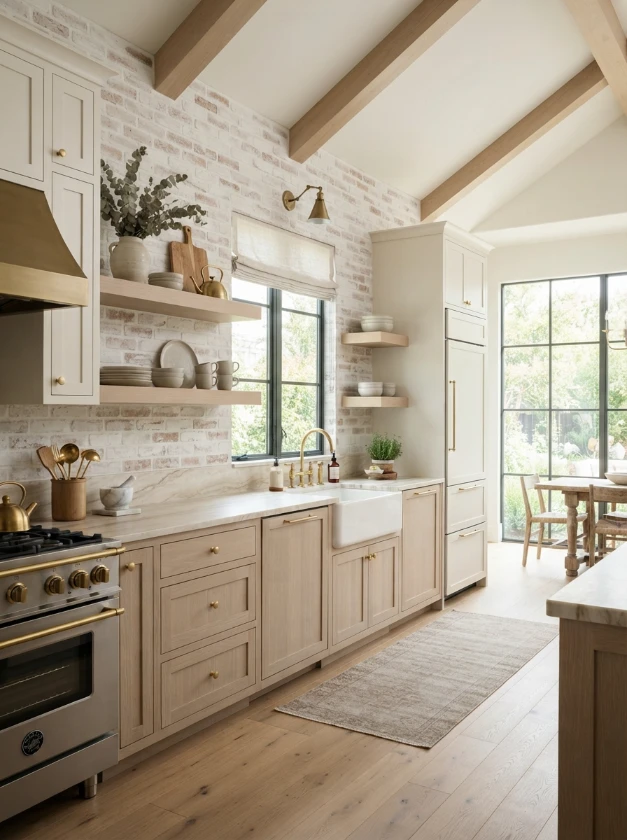
Love brick texture but worry that traditional red will make your kitchen feel dark? Whitewashing can provide a useful middle ground.
A translucent white finish softens the original brick color while allowing some of its natural variation and texture to remain visible.
This works beautifully in kitchens with white, ivory, pale gray, light oak, or soft greige cabinetry.
Whitewashed brick is also useful in smaller kitchens because it can create texture without introducing a large area of dark color.
Rather than making every brick completely white, consider an intentionally uneven finish. Small areas of the original warm tones showing through can make the wall feel more authentic and relaxed.
Pair it with pale oak shelves, warm-white walls, woven accents, and understated metal hardware for a bright rustic-modern scheme.
3. Lay Brick in a Herringbone Pattern for Visual Movement
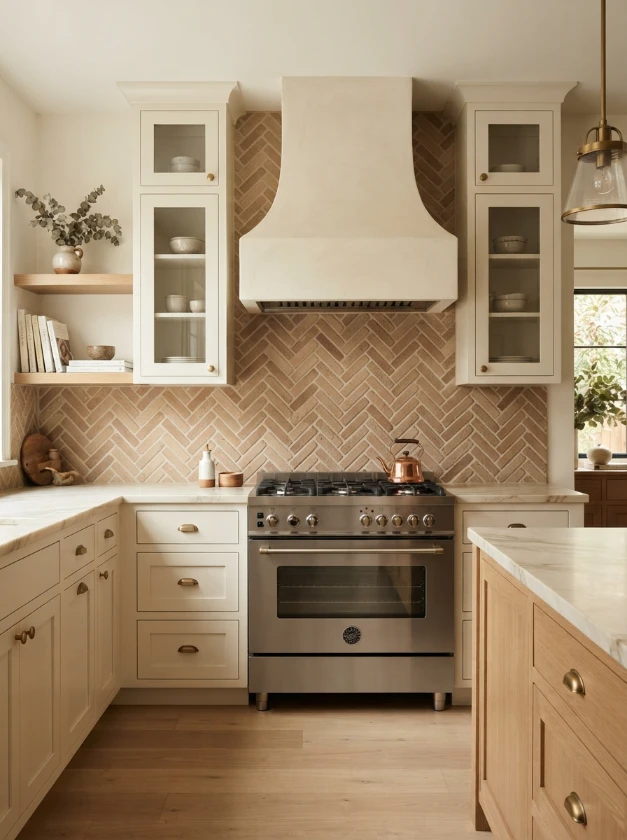
Brick does not have to follow a standard horizontal running bond.
A herringbone layout places rectangular pieces at angles, producing a repeated zigzag effect. It gives the backsplash more movement and can turn relatively simple brick into an architectural feature.
Because the pattern itself is visually active, it usually works best with restrained surrounding finishes.
Think simple cabinet fronts, uncomplicated countertops, and minimal countertop accessories.
You can use herringbone throughout the backsplash or reserve it for a smaller focal area, such as behind the range.
The second approach is particularly useful if you like the pattern but do not want it competing with the rest of the kitchen.
Practical tip: Patterned installations involve more cuts and careful alignment. Discuss material quantities and installation complexity with your installer before ordering.
4. Pair Brick with Dark Grout for Modern Contrast
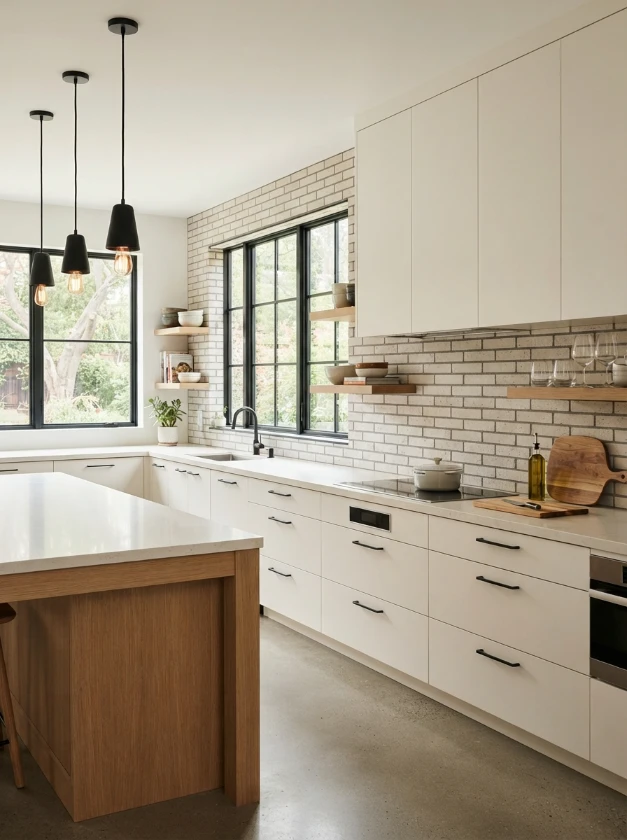
Grout can change the appearance of a brick backsplash almost as much as the brick itself.
A grout shade close to the brick color creates a quieter, more unified surface. Darker grout emphasizes the joints and makes the individual brick shapes more noticeable.
For a contemporary look, consider light or white brick with charcoal or dark gray grout.
This combination works especially well with black hardware, modern pendant lights, dark-framed windows, and streamlined cabinetry.
Before committing, create a sample board. Grout occupies a surprising amount of visible space in a brick installation, and the final result may look very different from a single loose brick sample.
5. Add Reclaimed Brick for Authentic, Aged Character
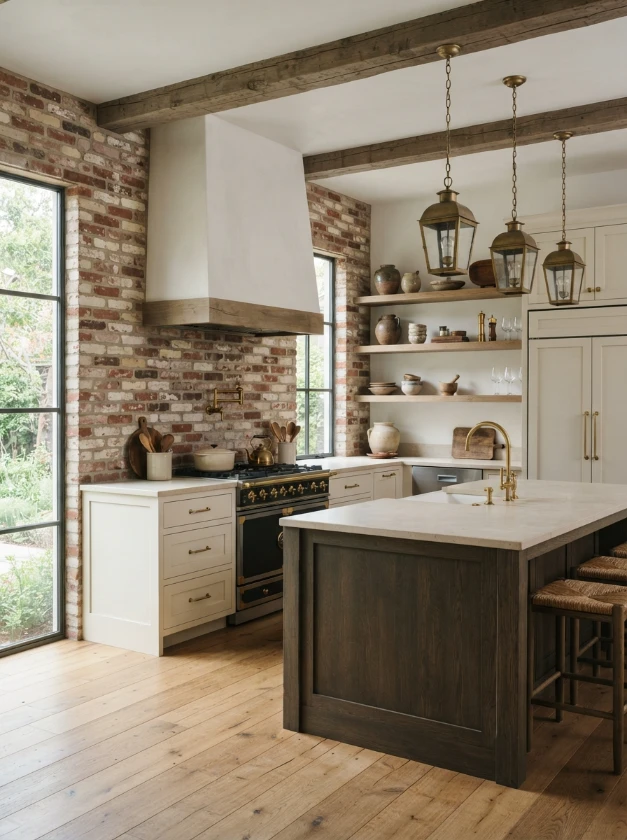
Reclaimed brick can bring genuine history and irregularity into a new kitchen.
Weathered surfaces, faded colors, chipped edges, and small variations help prevent the backsplash from looking overly manufactured.
It can be particularly effective in renovated farmhouses, loft-style kitchens, and homes where you want new cabinetry to sit comfortably beside older architectural details.
Reclaimed materials also give existing building products another use, although suitability matters more than appearance alone.
Ask the supplier about the brick’s origin, condition, dimensions, and intended application. Material used in a kitchen should be appropriate for the location and installed correctly.
Since reclaimed brick already makes a strong statement, surround it with relatively simple finishes. Warm white cabinets and quiet stone countertops allow its character to remain the focus.
6. Combine a Brick Backsplash with Open Shelving

Open shelving and brick make an attractive combination because each adds a different type of visual interest.
The brick creates texture behind the shelves, while wood or metal shelves provide horizontal lines that organize the wall.
Use them for items you actually reach for regularly rather than filling every inch with decorations.
For example, you might display:
- Everyday ceramic dishes
- Drinking glasses
- A few cookbooks
- Wooden cutting boards
- Small bowls
- One or two plants or decorative objects
Thick reclaimed-wood shelves create a rustic effect, while slim floating oak shelves feel cleaner and more contemporary.
Keep enough open brick visible around the objects. If every shelf is crowded, the backsplash can disappear behind visual clutter.
7. Create a Full Brick Feature Wall
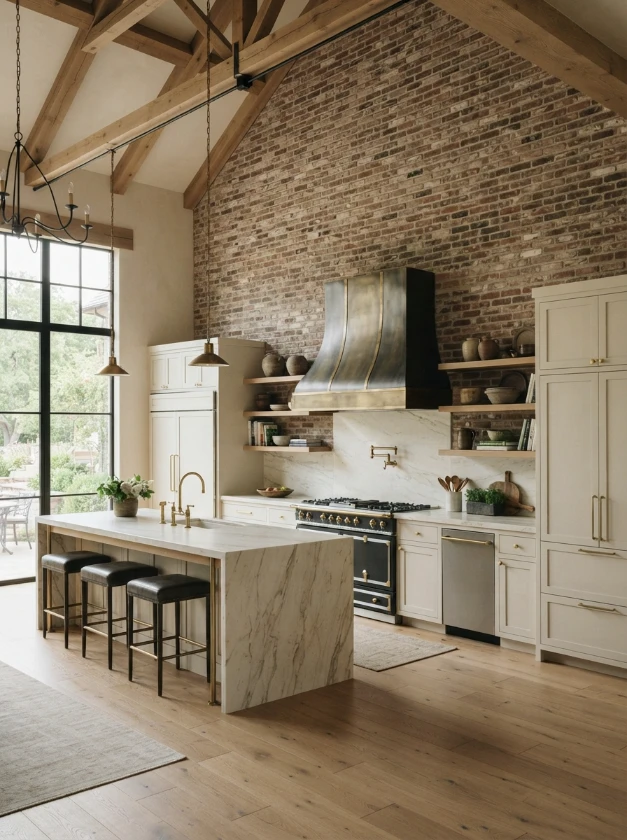
Why stop the backsplash at the upper cabinets?
Extending brick higher can transform an ordinary kitchen wall into a major architectural feature.
This approach is particularly effective on a range wall, around a large window, or in kitchens with high ceilings where a short backsplash could feel visually disconnected.
A full brick wall introduces considerable color and texture, so balance becomes important.
If the brick is dark or strongly colored, lighter cabinets and countertops can keep the room from becoming visually heavy. If the brick is pale or whitewashed, you have more freedom to introduce deeper cabinet colors.
In an open-plan home, a full-height installation can also help visually define the kitchen from adjacent spaces.
8. Select Warm Brick Tones for a Cozy Atmosphere
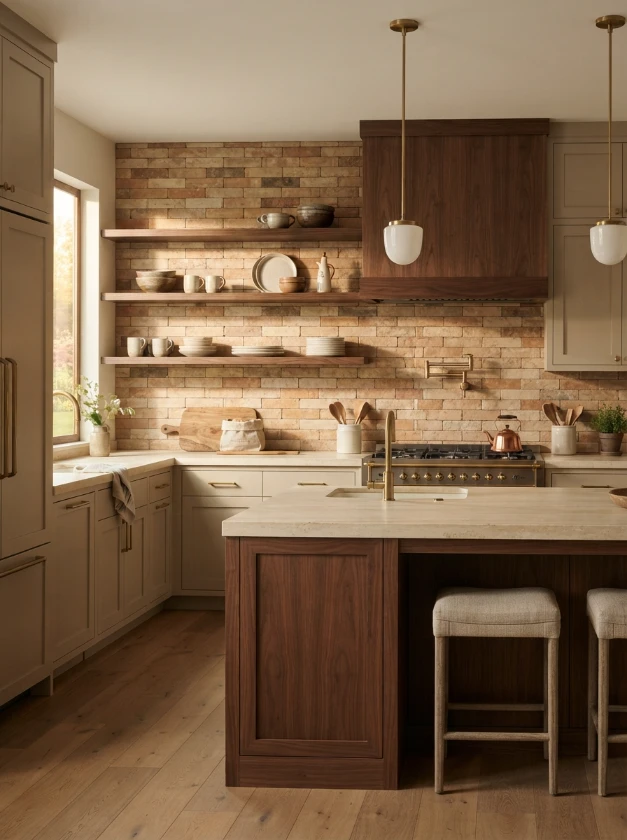
Brick is not limited to strong red.
Terracotta, muted clay, dusty orange, soft brown, and sand-colored brick can produce a gentler, earthier kitchen palette.
These shades work especially well with warm neutrals.
Imagine clay-colored brick behind mushroom cabinets, a creamy quartz or stone countertop, and aged-brass hardware. The result feels warm without relying on obvious farmhouse styling.
Natural woods can reinforce the palette, but pay attention to undertones. Very orange wood beside orange-red brick may become overwhelming.
A slightly quieter oak or medium walnut can create better separation.
9. Paint Brick for a Custom Look
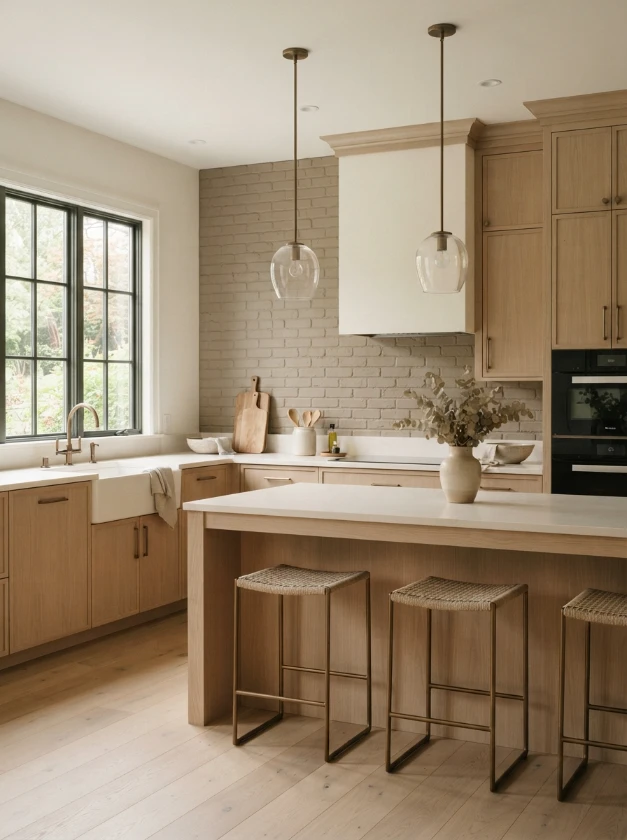
If you appreciate brick texture more than its natural color, paint can completely change its role in the kitchen.
White painted brick can feel clean and relaxed. Soft taupe or greige creates a warmer neutral background, while charcoal can turn brick into a dramatic architectural surface.
Painted brick can also help an existing backsplash work with new cabinetry when replacing the masonry would be unnecessarily disruptive.
Preparation is important. Brick must be properly cleaned and the coating system should be suitable for masonry and the conditions of the installation.
Remember that painting brick hides much of its natural color variation, even though the texture and mortar lines remain.
Choose this treatment because you genuinely prefer the painted appearance rather than simply following a temporary color trend.
10. Contrast Brick with Cabinet Color
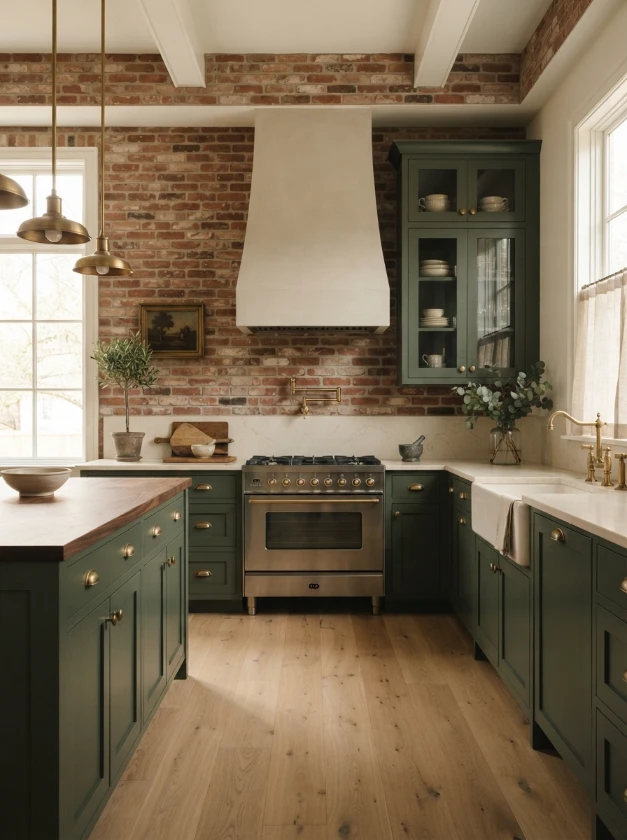
Cabinetry can either blend with brick or deliberately stand apart from it.
For a strong contrast, pair warm red brick with dark green, navy, black, or creamy white cabinets.
For something quieter, use colors that relate to the tones already present in the brick, such as warm taupe, mushroom, beige, or muted brown.
You can even use two cabinet finishes.
For example, warm white perimeter cabinets can lighten a red-brick backsplash while a dark green island introduces depth elsewhere in the room.
The key is deciding which material should command attention. If both the brick and cabinets are extremely bold, simplify the flooring, counters, and decorative details.
11. Consider Thin Brick Veneer
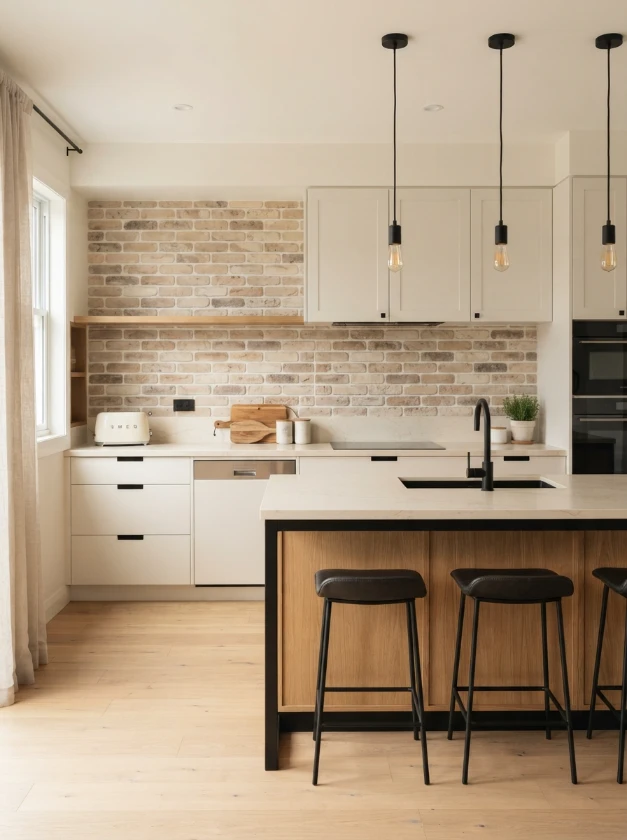
You do not necessarily need full-size masonry units to create the appearance of a brick backsplash.
Thin brick veneer provides the face and texture of brick without the same depth as traditional full brick.
That can make it more practical for certain backsplash renovations, especially where you do not want a thick material projecting significantly from the wall.
Veneer is available in numerous colors and finishes, including traditional red, aged brown, pale neutral, and whitewashed styles.
However, “thin” does not mean installation can be treated casually. The substrate, adhesive or mortar system, grout, sealing requirements, edges, outlets, and transitions all need proper planning.
Check the manufacturer’s installation requirements for the specific product you select.
12. Use Brick Around Arched Openings
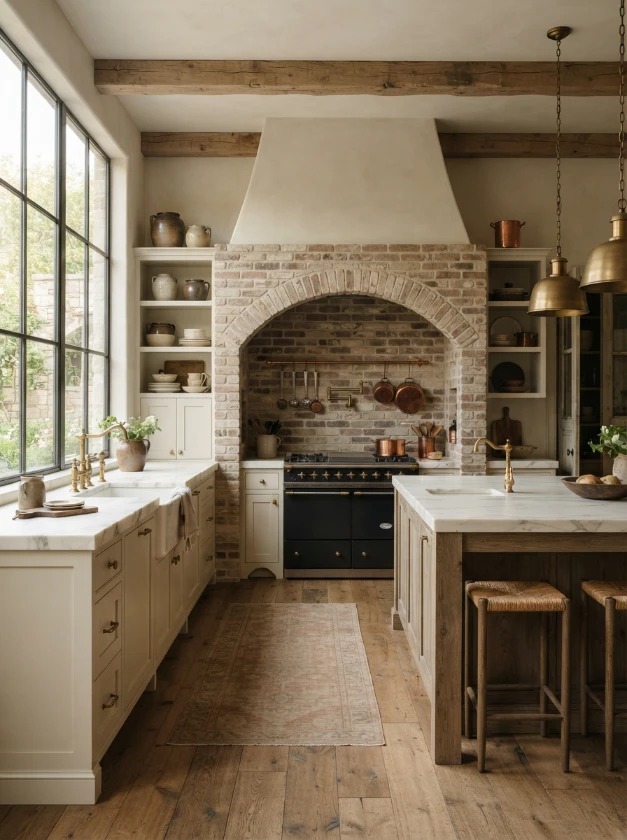
Curves provide an interesting contrast to brick’s straight lines.
If your kitchen already includes an arched doorway, niche, range opening, or architectural recess, brick can emphasize its shape beautifully.
This combination can suit Mediterranean, European farmhouse, Spanish-inspired, and rustic-modern interiors.
Avoid adding decorative arches purely for the sake of following a trend if they do not relate to the home’s architecture.
The strongest result usually occurs when the shape feels like a natural part of the room rather than an isolated decorative feature.
Keep nearby cabinetry relatively straightforward so the arch and masonry have enough visual space to stand out.
13. Add Metal Accents for an Industrial Edge
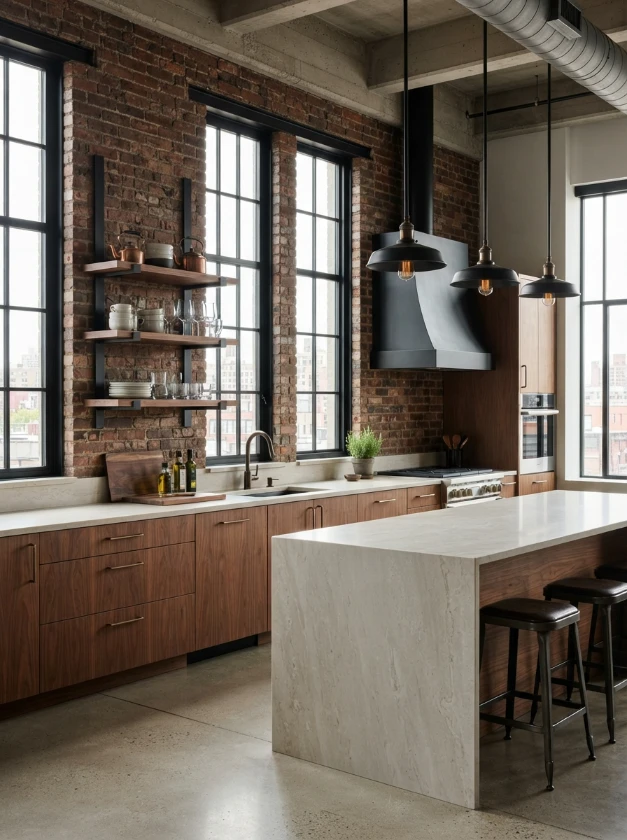
Brick and metal naturally complement one another.
Black steel, aged iron, stainless steel, bronze, and dark metal frames can shift a brick backsplash away from farmhouse style and toward an industrial or urban look.
You do not need large amounts of metal to achieve the effect.
Try repeating it through:
- Pendant lights
- Cabinet handles
- Shelf brackets
- Range hood details
- Bar stools
- Window frames
Warm red brick with matte black metal creates a stronger industrial contrast, while aged brass or bronze produces a softer and more refined result.
Choose one dominant metal finish and use additional finishes selectively so the kitchen still feels cohesive.
14. Install Brick in a Vertical Stack
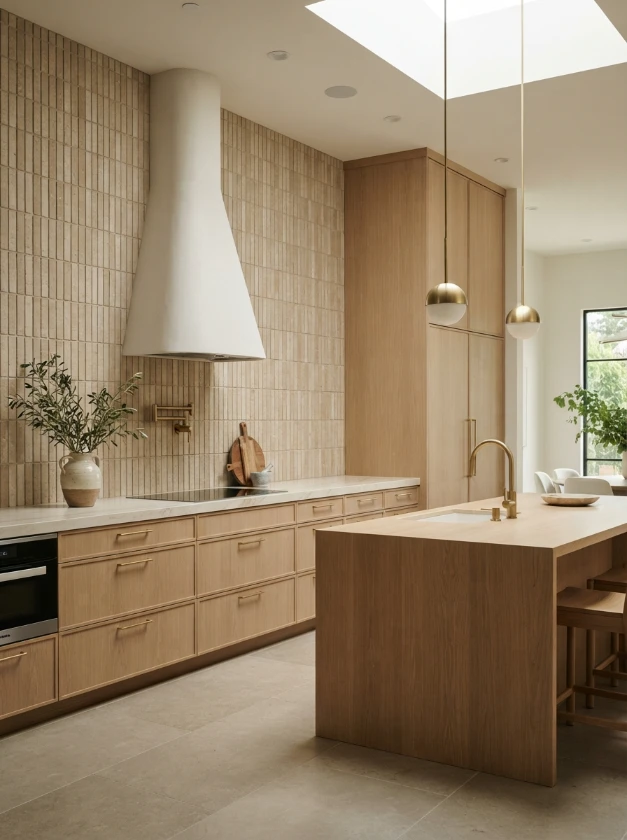
Turning rectangular brick vertically can immediately make the backsplash feel less traditional.
A vertical stacked arrangement draws the eye upward and introduces clean repeating lines, making it particularly compatible with contemporary cabinetry.
It can be an interesting option between the countertop and upper cabinets, where the vertical direction visually stretches the relatively short backsplash area.
For a minimal look, choose slim brick or brick-look material in a consistent neutral tone.
If you use highly varied reclaimed brick instead, the combination of vertical lines and irregular surfaces creates a more eclectic result.
Either can work—the surrounding kitchen determines which approach feels appropriate.
15. Pair Brick with Glass-Front Cabinets
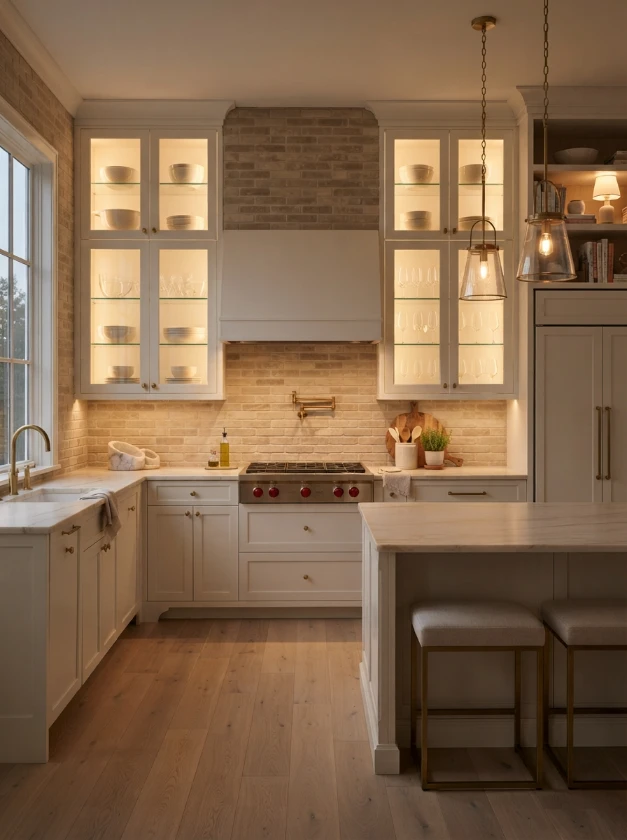
Glass-front cabinets allow the texture behind and around them to remain part of the room’s visual story.
They can also lighten the appearance of a wall that might otherwise feel dominated by solid cabinetry and masonry.
Use them selectively rather than replacing every upper door with glass.
A pair of glass-front cabinets beside a window or range can be enough.
Since the contents remain visible, display coordinated pieces you genuinely use, such as white dishes, glassware, or simple ceramics.
Integrated cabinet lighting can make the arrangement particularly attractive in the evening while adding another layer of illumination to the kitchen.
16. Choose Dark Brick for a Moody Kitchen
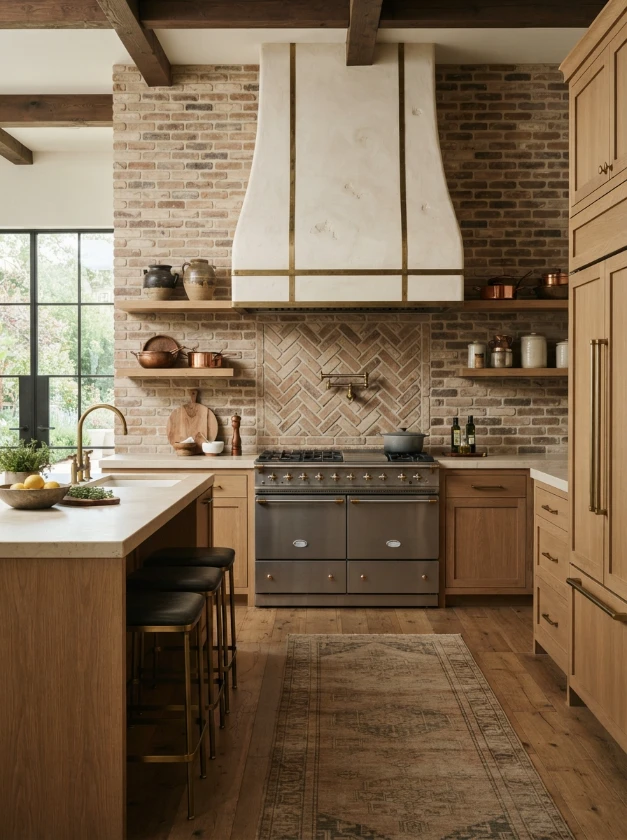
For a kitchen with more drama, consider charcoal, dark brown, blackened, or smoke-toned brick.
Dark masonry can create an intimate, sophisticated backdrop, especially when paired with walnut, black, deep green, or muted taupe cabinetry.
The challenge is maintaining enough visual relief.
Introduce lighter countertops, reflective metal details, warm under-cabinet lighting, or pale flooring to prevent every surface from absorbing light.
Natural daylight is also valuable when using a large amount of dark brick.
Rather than assuming dark materials make a small kitchen impossible, consider how much light the room receives and how the other surfaces interact. Thoughtful contrast often matters more than room size alone.
17. Make Brick a Focal Point Behind the Range

The range wall is a natural location for a feature backsplash.
Using brick here can visually anchor the cooking zone and give a freestanding range or substantial hood a stronger backdrop.
You might use standard brick across the entire wall or create a distinct herringbone section directly behind the range.
A plaster, metal, or wood-look hood can then provide another layer of contrast above it.
Practical considerations are especially important in this location because cooking produces grease, moisture, heat, and frequent splashes.
Confirm that your selected brick, finish, sealant, substrate, and installation method are suitable for the cooking area and follow the appliance manufacturer’s required clearances.
A beautiful backsplash still needs to function safely in a working kitchen.
18. Combine Brick with Plenty of Natural Light

Natural light reveals the texture of brick in a way flat artificial illumination often cannot.
Sunlight moving across an uneven masonry surface creates small highlights and shadows that make the wall feel more dimensional.
If your kitchen has large windows, skylights, or glazed doors, consider positioning brick where daylight can reach it.
In darker kitchens, you can create a similar layered effect with thoughtful artificial lighting.
Under-cabinet lights are particularly useful because they illuminate both the work surface and the backsplash.
For brick with strong red or brown tones, warm or neutral lighting usually feels more comfortable than extremely cool lighting.
The goal is not simply to make the room brighter. It is to let the natural texture become visible without creating harsh glare or overly dark corners.
How to Choose the Right Brick Backsplash
With so many brick kitchen backsplash ideas, it is easy to focus entirely on appearance. A few practical decisions can narrow the options considerably.
Start with your kitchen’s existing style. Traditional red or reclaimed brick works naturally in farmhouse and rustic interiors, while pale, painted, vertically stacked, or uniform brick can suit contemporary rooms.
Consider maintenance. Brick and mortar are textured and porous compared with many conventional backsplash materials. Ask about suitable sealing, cleaning, and maintenance for the specific product.
Check the depth. Full brick can project farther from the wall than typical tile. Thin brick may be a better choice when outlets, window trim, counters, and cabinets leave limited space.
Test the combination. Look at brick, grout, cabinetry, countertop, flooring, and hardware samples together. Materials that look beautiful separately do not always have compatible undertones.
Think beyond today’s trend. Brick is a visually strong material. Choose a color and layout you can imagine living with after your current accessories and paint colors change.
Frequently Asked Questions
Is brick a good material for a kitchen backsplash?
Brick can create a durable and visually distinctive kitchen backsplash when the chosen product is appropriate for the application and correctly installed. Its porous, textured surface requires different care than smooth glazed tile, so cleaning and sealing requirements should be considered before installation.
Does a brick backsplash need to be sealed?
Many natural brick installations benefit from an appropriate sealer because masonry can absorb moisture, grease, and stains. However, requirements vary according to the brick, mortar, finish, and product manufacturer. Follow the manufacturer’s recommendations or consult a qualified installer.
Is brick backsplash difficult to clean?
An uneven brick surface and recessed mortar joints can take more effort to clean than smooth tile. Regularly removing cooking residue and using cleaning products appropriate for your brick and sealer can make maintenance easier.
Can you use brick backsplash in a modern kitchen?
Yes. The surrounding finishes determine much of the overall style. Thin brick, painted brick, vertical layouts, restrained colors, flat-panel cabinets, simple counters, and streamlined lighting can make brick feel contemporary rather than traditionally rustic.
What cabinet colors look good with brick?
Warm white, cream, black, navy, muted green, taupe, natural wood, and charcoal can all work with brick. The best choice depends on whether the brick has red, orange, brown, gray, or neutral undertones.
Is thin brick suitable for a kitchen backsplash?
Thin brick veneer can be a useful backsplash option when you want masonry character without the depth of full-size brick. Always confirm that the specific product and installation system are approved for your intended location.
What countertop works with a brick backsplash?
Simple countertops often complement textured brick best. Cream, white, warm beige, subtle gray stone, quartz, soapstone-style surfaces, and some natural woods can work well. Avoid combining too many strongly patterned materials in one small area.
Conclusion
The most successful brick kitchen backsplash ideas use brick as part of the kitchen’s overall material palette rather than treating it as an isolated decorative feature.
Traditional red brick can add farmhouse warmth, while whitewashed or painted brick creates a lighter interpretation. Herringbone layouts add movement, dark brick introduces drama, and thin veneer can make the look possible in spaces where full brick would be impractical.
Before making a final decision, compare samples with your cabinets and countertops, examine them under your actual kitchen lighting, and consider maintenance as carefully as appearance.
When the color, pattern, grout, cabinetry, and lighting work together, a brick backsplash can give a kitchen the warmth of an established home while still feeling clean, practical, and current.