12 Stunning Wood Cabinets Kitchen Backsplash Ideas to Transform Your Space
Wood cabinets bring something special to a kitchen that painted cabinetry often cannot replicate: natural warmth, visible grain, and a timeless connection to organic materials. But once the cabinets are chosen, another design decision quickly follows—what backsplash should you pair with them?
The right backsplash can brighten dark wood, soften strong grain patterns, add character to pale oak, or create contrast against warm walnut cabinets. The wrong combination, however, can leave the kitchen feeling too busy, overly dark, or visually disconnected.
These Wood Cabinets Kitchen Backsplash Ideas cover everything from simple white subway tile to richly textured stone, colorful zellige, and statement geometric patterns. Whether your kitchen leans modern, rustic, traditional, organic, or coastal, there is an option here that can complement the natural beauty of your cabinetry.
Your Guide to Kitchen Backsplash Ideas With Wood Cabinets
Before focusing on a particular tile, look carefully at the wood already present in your kitchen.
Wood is not simply “brown.” White oak may have pale golden undertones, walnut can range from medium brown to chocolate, cherry often carries reddish warmth, and stained cabinetry can introduce everything from honey and caramel to espresso.
Your backsplash does not have to match those colors exactly. In many cases, contrast creates a more interesting kitchen.
A few factors are worth considering:
- Wood tone: Light, medium, or dark cabinetry will react differently to the same backsplash.
- Undertone: Look for golden, red, orange, gray, or neutral notes in the wood.
- Countertop: The backsplash should work with both the cabinets and countertop.
- Natural light: Dark kitchens may benefit from reflective or lighter materials.
- Cabinet grain: Highly figured wood often looks best beside a quieter backsplash.
- Overall style: Rustic stone creates a different atmosphere from polished marble or geometric porcelain.
Bring home physical samples whenever possible. Tile can look dramatically different under kitchen lighting than it does in a showroom or online photograph.
1. Choose White Subway Tile for Classic Appeal
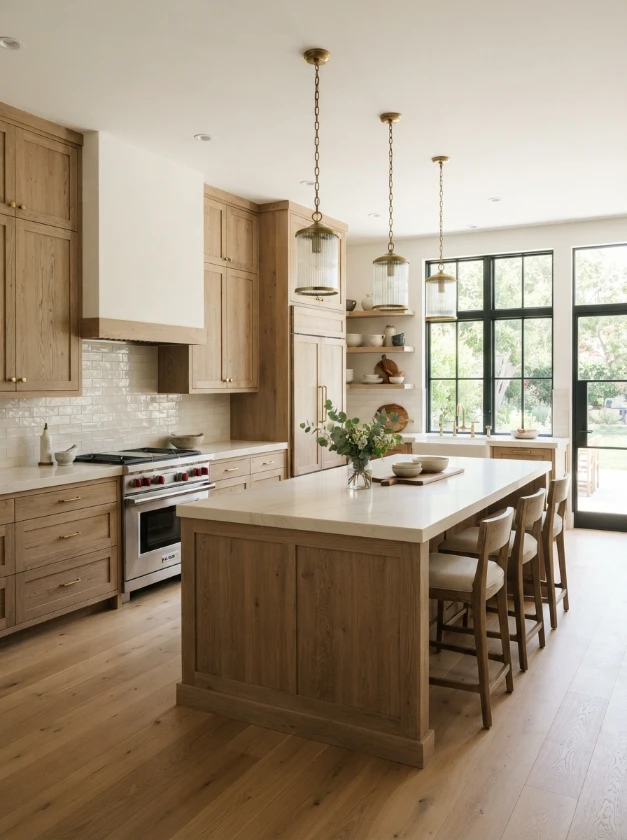
White subway tile remains one of the easiest backsplash choices to pair with natural wood cabinetry.
Its clean surface creates visual breathing room around the grain and warmth of the cabinets. This is particularly useful when the wood itself has plenty of movement or when you want cabinetry to remain the main feature.
The combination is also surprisingly flexible.
White tile with pale oak cabinets can create a bright Scandinavian-inspired kitchen, while the same backsplash beside walnut cabinets produces stronger contrast and a more sophisticated appearance.
You can change the overall effect through grout.
White or off-white grout keeps the backsplash quiet and seamless. Soft gray grout defines the individual tiles without becoming too dramatic. Dark grout creates stronger lines and can suit industrial or modern farmhouse interiors, although it makes the tile pattern much more noticeable.
For a softer appearance, consider warm white rather than brilliant blue-white tile, especially beside honey, oak, or other warm woods.
Design tip: Pair warm white subway tile, white oak cabinetry, pale quartz countertops, and aged brass hardware for an inviting modern kitchen that still feels timeless.
2. Add Movement With a Herringbone Pattern

If ordinary rectangular tile feels too simple, a herringbone layout can provide additional movement without requiring bold color.
The pattern uses rectangular tiles arranged at angles to create repeating V-shaped lines. This immediately gives the backsplash more visual energy.
A white or cream herringbone backsplash works particularly well with simple flat-panel wood cabinets because the pattern introduces detail while the cabinetry provides warmth.
For a more tonal design, try beige, greige, or stone-colored tiles alongside medium oak.
Herringbone can be used across the entire backsplash, but it does not have to be. Another approach is to install it only behind the range and use a quieter tile elsewhere. This creates a focal point without overwhelming the kitchen.
Remember that herringbone involves more cuts and alignment than a straightforward horizontal layout, so accurate installation matters.
Practical tip: Keep grout close to the tile color if you want texture without making every line of the pattern visually dominant.
3. Pair Green Zellige Tile With Natural Wood

Green and natural wood make an especially convincing combination because both colors are strongly associated with nature.
Zellige-style tile adds another layer through its irregular surface, subtle tonal variation, and handmade character.
Instead of one perfectly uniform green, you might see variations of sage, olive, moss, or muted forest tones across the backsplash. Those small differences can make a kitchen feel more layered and individual.
Light oak cabinets look beautiful with soft sage or muted olive tile. Darker walnut cabinetry can handle richer greens, particularly when balanced with pale countertops.
Because glossy zellige reflects light from slightly different angles, it can also bring dimension to kitchens that otherwise rely heavily on matte wood and stone surfaces.
Keep surrounding finishes controlled so the tile has room to stand out.
For example:
Natural oak + olive zellige + cream quartz + aged brass
This palette feels warm and earthy without becoming overly rustic.
4. Introduce Modern Geometry With Hexagon Mosaic
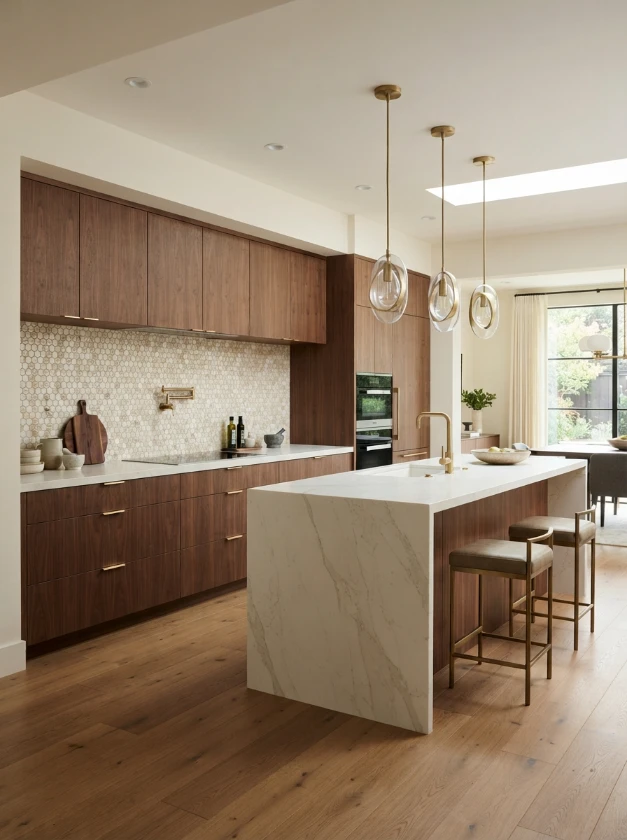
Hexagonal tile offers a contemporary alternative to traditional rectangular backsplash formats.
Small hexagon mosaics can add detail and texture, while larger hexagonal tiles create a cleaner and more architectural look.
When paired with wood cabinets, neutral hexagon tile is often the easiest option to integrate. Consider warm white, ivory, taupe, pale gray, or subtle stone finishes.
The geometry provides enough visual interest on its own, so strong colors are not always necessary.
If your kitchen has sleek slab-front oak cabinets, a large-format hexagon backsplash can reinforce the modern character of the room. In a more traditional wood kitchen, smaller mosaics can introduce a slightly vintage influence.
Pay attention to grout because hexagonal tile creates many visible joints. A high-contrast grout makes the honeycomb pattern much stronger, while a tonal grout creates a calmer surface.
5. Create Dramatic Contrast With Dark Slate
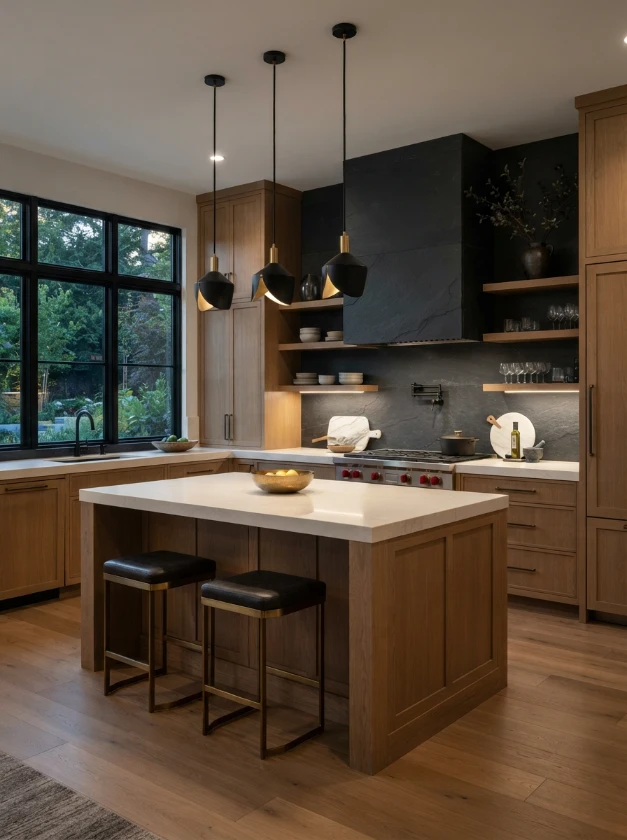
Not every wood kitchen needs a light backsplash.
Dark slate can create an impressive backdrop for warm wood cabinetry, particularly in kitchens with plenty of daylight.
Charcoal and nearly black slate bring out golden, caramel, and reddish tones in natural wood. The combination can feel grounded, architectural, and slightly moody.
For example, medium oak cabinets against charcoal slate can look striking when paired with a pale countertop and simple black hardware.
Texture matters here as well.
Natural cleft slate has visible variation and a more rustic appearance, while smoother slate creates a cleaner contemporary finish.
Because both wood and slate can have strong natural characteristics, avoid adding too many competing finishes elsewhere.
Keep in mind: A very dark backsplash combined with dark cabinetry and dark countertops may absorb considerable light. Introduce pale worktops, under-cabinet lighting, or lighter walls if the room needs visual balance.
6. Elevate the Kitchen With Marble Subway Tile

Marble offers an elegant way to introduce natural pattern while staying within a relatively neutral palette.
Marble subway tile can be especially attractive with wood cabinets because its cool or creamy stone surface provides contrast to the organic warmth of timber.
With white oak cabinets, look at creamy marble with subtle beige or gray veining. Walnut can pair beautifully with brighter white marble, creating a richer contrast.
The size and layout of the tile also influence the final appearance.
Traditional subway proportions feel familiar, while elongated marble tiles create a more contemporary look. A vertical installation can visually draw the eye upward and work well in kitchens with tall ceilings.
Since marble is a natural stone, pieces vary. View several tiles together before making a final selection rather than choosing based on one sample.
Also consider maintenance. Natural marble may require sealing and appropriate cleaning products, particularly around cooking areas where oils and acidic ingredients are common.
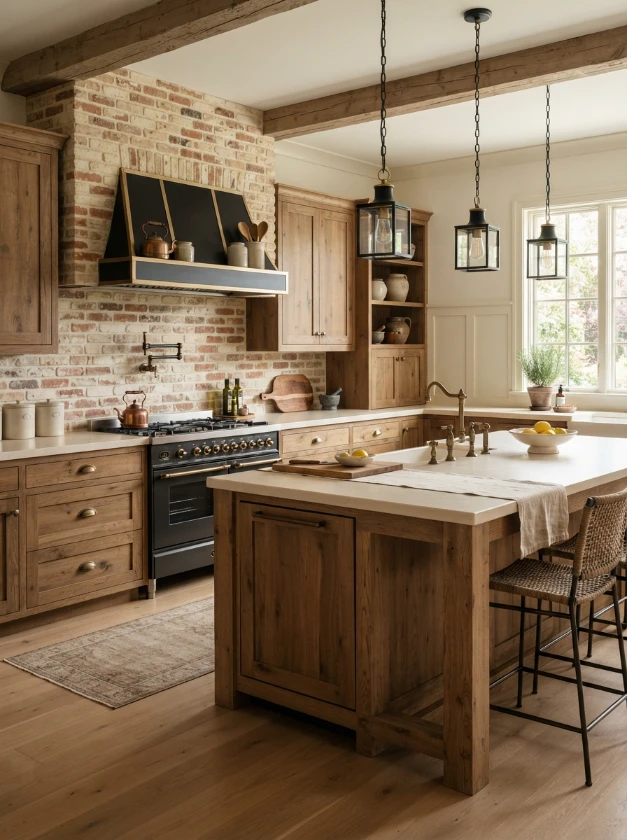
7. Add Rustic Character With Brick Tile
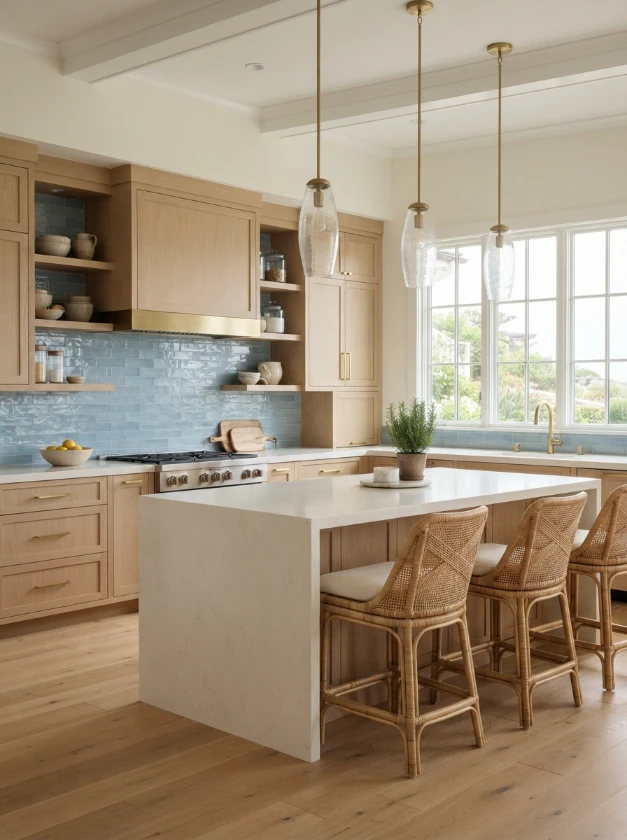
Brick and wood naturally belong together.
Both materials introduce warmth, texture, and slight imperfections, making them suitable for farmhouse, cottage, industrial, and rustic-inspired kitchens.
You do not necessarily need traditional red brick.
Whitewashed brick can brighten medium or dark wood cabinetry, while warm beige or reclaimed-style brick creates a softer earthy palette. Deep red brick works particularly well when you intentionally want a richer, heritage-inspired kitchen.
The surrounding materials determine whether the finished room feels rustic or contemporary.
For example, brick paired with reclaimed wood cabinets and heavy iron details can feel strongly farmhouse. Use similar brick with streamlined oak cabinetry, simple countertops, and minimalist lighting, and the result becomes much more modern.
If using real brick or porous brick veneer near cooking and food-preparation areas, check the appropriate sealing and cleaning requirements for the material.
8. Freshen Wood Cabinets With Blue Glass Tile
Blue may not be the first color that comes to mind when choosing a backsplash for wood cabinetry, but it can provide a beautiful counterpoint to warm timber.
Muted ocean blue, smoky blue, blue-gray, and soft aqua can create a relaxed coastal influence without turning the kitchen into an obvious theme.
Glass tile has another advantage: reflection.
Its surface catches both daylight and artificial light, which can help a backsplash feel brighter. This is particularly useful when working with medium or darker cabinets.
For a sophisticated coastal palette, consider:
- Light oak cabinetry
- Muted blue glass backsplash
- Warm white countertop
- Brushed nickel or aged brass hardware
- Natural woven or linen details
Avoid adding too many nautical decorations. The relationship between blue, wood, and light neutrals is usually enough to establish a subtle coastal mood.
9. Give the Kitchen Personality With Penny Tile
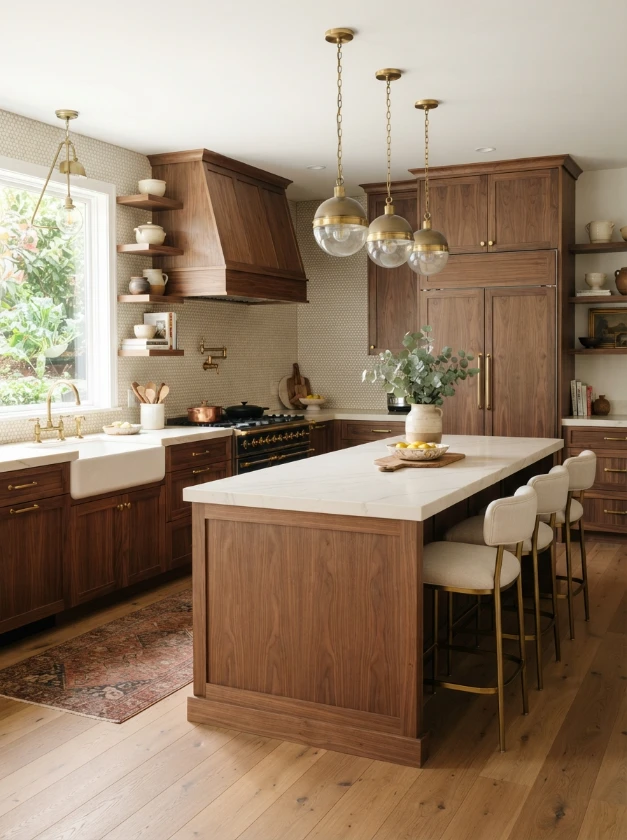
Penny tile brings a playful retro influence to a wood kitchen while remaining versatile enough for modern spaces.
The small circular tiles create plenty of texture, even when you choose a single neutral color.
Cream or white penny tile can soften medium-tone wooden cabinets. Muted green or blue adds more personality, while charcoal penny tile can provide dramatic contrast beside pale oak.
Because there are so many grout lines, both grout color and maintenance deserve consideration.
Matching grout produces a more unified background. Contrasting grout highlights every circle and creates a stronger graphic effect.
Penny tile is particularly effective in smaller backsplash areas, coffee stations, or butler’s pantries where you want to introduce character without committing to a bold pattern throughout the entire kitchen.
10. Introduce Organic Texture With Stacked Stone
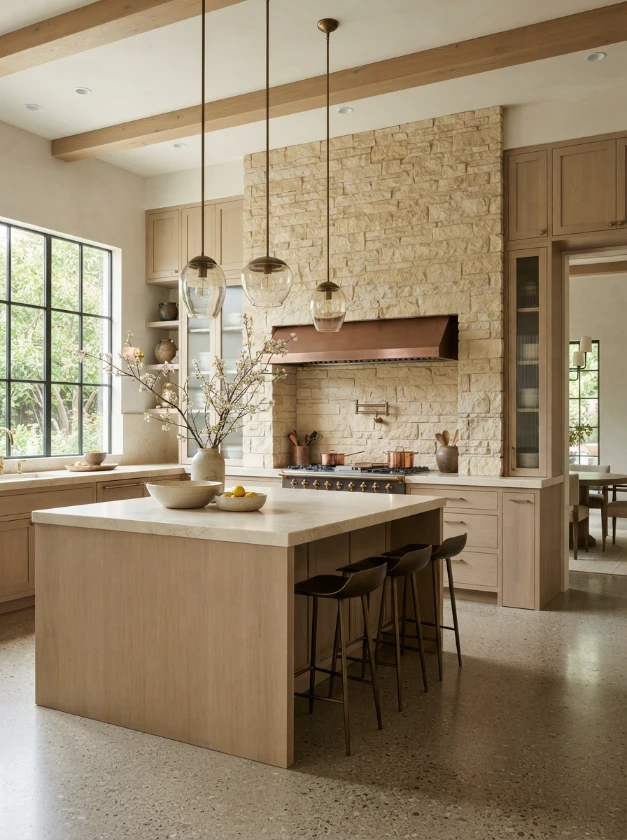
For a kitchen inspired by natural materials, stacked stone can create an impressive textural backdrop.
Its uneven surfaces and color variation pair naturally with wood cabinetry, especially in rustic, mountain, lodge, Mediterranean, or organic interiors.
However, restraint is important.
Wood already has grain, while stacked stone contains plenty of movement. Choose stone whose colors relate naturally to the cabinetry rather than competing with it.
Pale limestone-style stone can complement white oak beautifully. Taupe and warm gray stone can balance medium brown cabinets, while deeper charcoal stone can create contrast with lighter woods.
Consider using stacked stone selectively, such as around a range wall, rather than covering every backsplash surface.
Also think practically. Highly textured surfaces around a busy cooktop may require more effort to clean than smooth tile. Ask the supplier whether the specific product is suitable for kitchen backsplash use and what maintenance it requires.
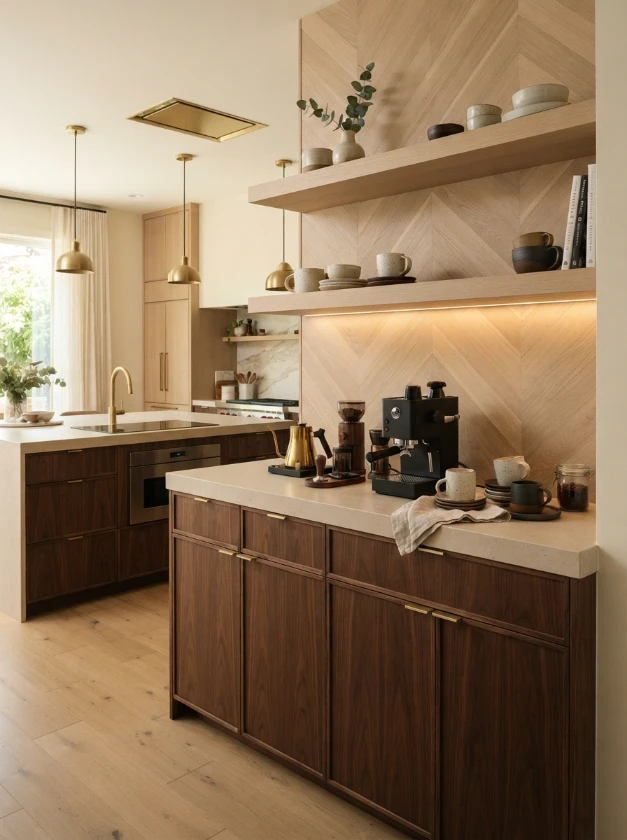
11. Continue the Warmth With a Chevron Wood Backsplash

Using wood behind wood cabinetry is an unconventional choice, but it can work when texture and tone are carefully controlled.
A chevron wood backsplash creates repeating directional lines while maintaining a warm, natural material palette.
The key is contrast.
If the cabinets are medium walnut, copying exactly the same wood on the backsplash can make everything merge together. Instead, vary the tone or grain direction.
Light oak cabinetry might be paired with a slightly darker chevron wood surface, for example. Dark cabinetry could benefit from a pale wood treatment.
This approach works especially well in dry areas such as a coffee station or beverage bar.
For areas around sinks and cooktops, practicality becomes more important. Wood and wood-look materials differ considerably in moisture, heat, stain, and cleaning performance. Confirm that the chosen product and finish are approved for the exact location where you intend to install them.
If you want the visual effect with easier care, wood-look porcelain tile can provide a similar pattern without using actual timber.
12. Make a Statement With Geometric Tile
If the rest of your kitchen is relatively restrained, the backsplash can become the place where you introduce a stronger pattern.
Geometric tiles work particularly well with simple wood cabinetry because the natural grain provides warmth while the tile contributes structure and personality.
Patterns might incorporate:
- Cream and black
- Beige and white
- Terracotta and ivory
- Muted green and cream
- Soft blue and warm gray
Try to connect at least one backsplash color with another permanent kitchen finish. For example, a cream detail within the tile might relate to the countertop, while a warm beige shape echoes the wood cabinetry.
This small connection can make even a bold pattern feel intentional.
Scale also matters. Large patterns generally need enough uninterrupted wall space to be appreciated. Tiny, highly detailed designs may look busy beside strongly grained cabinetry.
Before purchasing, arrange several sample tiles together. A single patterned tile rarely shows how dramatic the full repeat will become across an entire wall.
How to Choose the Right Backsplash for Your Wood Cabinets
With so many possibilities, it helps to decide what role you want the backsplash to play.
If your cabinetry has beautiful knots, grain, or variation that you want to emphasize, keep the backsplash relatively quiet. White subway, subtle marble, or simple neutral tile allows the wood to remain the focal point.
If the cabinets are streamlined and understated, you have more freedom to introduce herringbone, geometric patterns, colorful zellige, or penny tile.
Here is a simple starting point:
| Wood Cabinet Style | Backsplash Direction | Overall Effect |
|---|---|---|
| White oak | Warm white, sage, marble | Light and organic |
| Honey oak | Cream, warm white, muted green | Warm and balanced |
| Walnut | White marble, ivory, blue-gray | Rich and sophisticated |
| Dark wood | Cream, white, reflective glass | Strong contrast |
| Rustic wood | Brick, stone, handmade tile | Textured and relaxed |
| Modern slab wood | Geometric, large-format, herringbone | Clean and contemporary |
Do not choose the backsplash in isolation.
Place samples next to your cabinet door, countertop, flooring, hardware, and wall color. Look at them during the morning, afternoon, and evening because changing light can reveal undertones you may not notice in a showroom.
Frequently Asked Questions
What color backsplash looks best with wood cabinets?
There is no single best color because wood cabinetry varies significantly. Warm white, cream, beige, muted green, soft gray, and natural stone tones are versatile choices. The best option should coordinate with both the wood undertone and countertop.
Should a backsplash be lighter or darker than wood cabinets?
Either can work. A lighter backsplash creates contrast and can make the kitchen feel brighter, particularly with dark cabinets. A dark backsplash can create a dramatic, sophisticated look beside light or medium wood. Consider room size and natural light before choosing a very dark combination.
What backsplash works well with oak cabinets?
Warm white subway tile, creamy stone, soft green zellige, subtle marble, and neutral geometric tiles can all work well with oak. Pay particular attention to the specific oak finish because pale white oak and golden honey oak have noticeably different undertones.
Can you use a patterned backsplash with wood cabinets?
Yes. Patterned tile can look excellent with wood cabinetry, especially when cabinet fronts are simple. To prevent the kitchen from feeling overly busy, choose a pattern containing colors that connect with the wood, countertop, or other permanent finishes.
Is marble backsplash suitable for wood cabinets?
Marble and wood make a naturally elegant pairing. The stone introduces brightness and subtle movement while wood adds warmth. However, natural marble can be porous and may require sealing and careful cleaning, so maintenance should be considered before installation.
Should the backsplash match the countertop or cabinets?
It does not need to match either one exactly. A more successful approach is to create a visual relationship between all three surfaces. A backsplash may pick up a subtle tone from the countertop while contrasting with the cabinets, allowing the kitchen to feel coordinated without looking overly matched.
Conclusion
Choosing among different Wood Cabinets Kitchen Backsplash Ideas becomes much easier when you start with the character of the wood itself.
Simple white subway tile can give natural cabinetry a timeless background, while herringbone and geometric designs introduce movement. Green zellige emphasizes an earthy palette, marble adds refinement, brick and stacked stone contribute texture, and blue glass can bring a lighter coastal character.
The strongest combination is not necessarily the trendiest one. It is the backsplash that works with your cabinet undertones, countertop, lighting, kitchen style, and everyday maintenance needs.
Before committing to an entire wall, bring several samples into your kitchen and view them beside the actual cabinetry throughout the day. That small step can help you see how color, texture, grout, and natural light interact—and make it much easier to choose a backsplash you will enjoy living with.