19 Kitchen Backsplash Ideas with Dark Cabinets for a Stunning Kitchen
Dark cabinets can make a kitchen feel sophisticated, grounded, and beautifully dramatic—but the wrong backsplash can leave the same space looking heavy or visually crowded.
The backsplash is one of the easiest places to create balance. A pale marble slab can brighten espresso cabinetry, handmade tile can soften modern black cabinets, while an earthy stone backsplash can make dark wood feel warm and organic.
The best choice isn’t always the lightest material, either. Color, texture, grout, finish, pattern, countertop, and lighting all influence how a backsplash works beside darker cabinetry.
If you’re planning a renovation or simply collecting ideas for a future kitchen, these kitchen backsplash ideas with dark cabinets offer options for modern, traditional, rustic, farmhouse, and transitional spaces.
Your Complete Guide to Kitchen Backsplash Ideas with Dark Cabinets
Before choosing a backsplash, look at your cabinets in both natural and artificial light. Black, charcoal, navy, walnut, espresso, and dark green cabinetry each interact with backsplash colors differently.
Also consider your countertop. If it already contains strong veining or movement, a quieter backsplash may create better balance. With a simple countertop, you have more freedom to introduce texture or pattern behind it.
Ask yourself: Do you want the backsplash to brighten the cabinetry, blend with it, or become the focal point?
That answer can make narrowing down the following options much easier.
1. Use Subway Tile for Classic Appeal
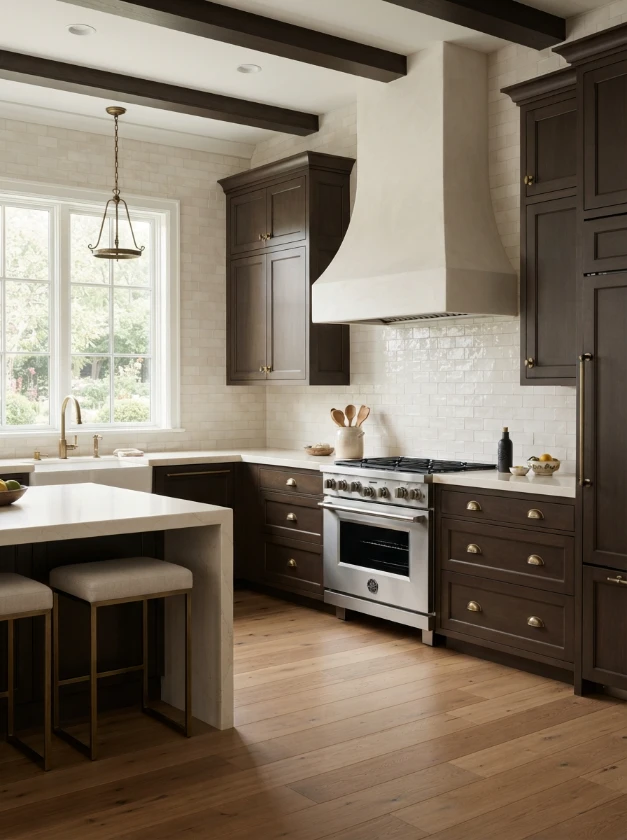
Subway tile remains a practical choice because its simple rectangular shape works with almost every cabinet style.
Against black, espresso, navy, or charcoal cabinets, white or warm ivory subway tile creates a crisp contrast. If pure white feels too sharp, try cream, greige, pale taupe, or softly textured off-white tile.
The finish matters too.
Glossy subway tiles reflect more light, which can be helpful in a kitchen with limited daylight. Matte tile creates a softer, more understated appearance.
Grout can subtly change the result. A close tonal match keeps the wall quiet, while darker grout emphasizes the rectangular pattern.
Design tip: For dark wood cabinetry, try warm white rather than icy white. It tends to complement the natural brown undertones more comfortably.
2. Try a Herringbone Pattern for Visual Interest
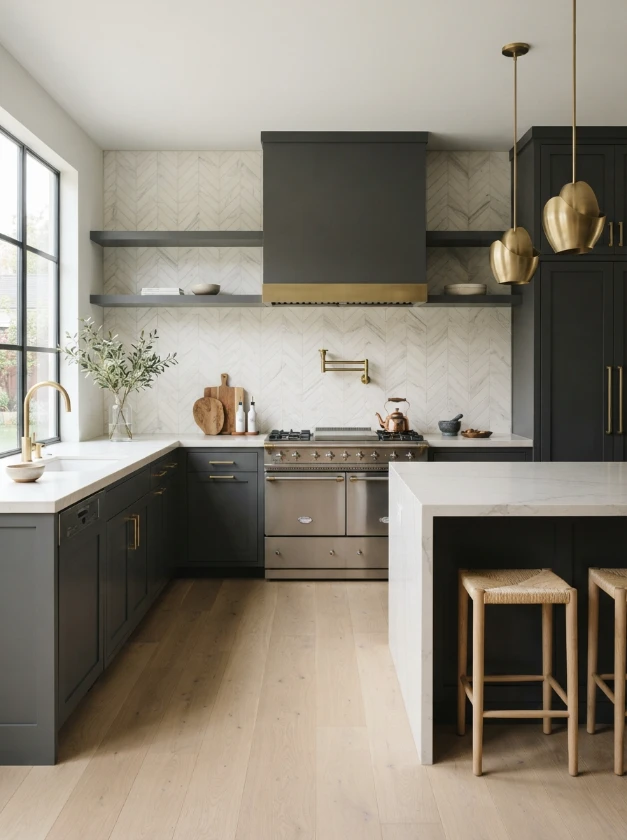
Herringbone gives simple rectangular tile considerably more movement without requiring highly decorative colors.
The angled arrangement works particularly well behind a range, where it can create a natural focal point.
For an elegant combination, pair dark cabinets with ivory, cream, pale gray, or marble-look herringbone tile. A slightly textured handmade tile can make the pattern feel less rigid.
You can also limit herringbone to the cooking area and use a simpler layout elsewhere.
This approach is useful when you like patterned backsplashes but don’t want every wall competing for attention.
3. Choose Glass Tile for Modern Shine
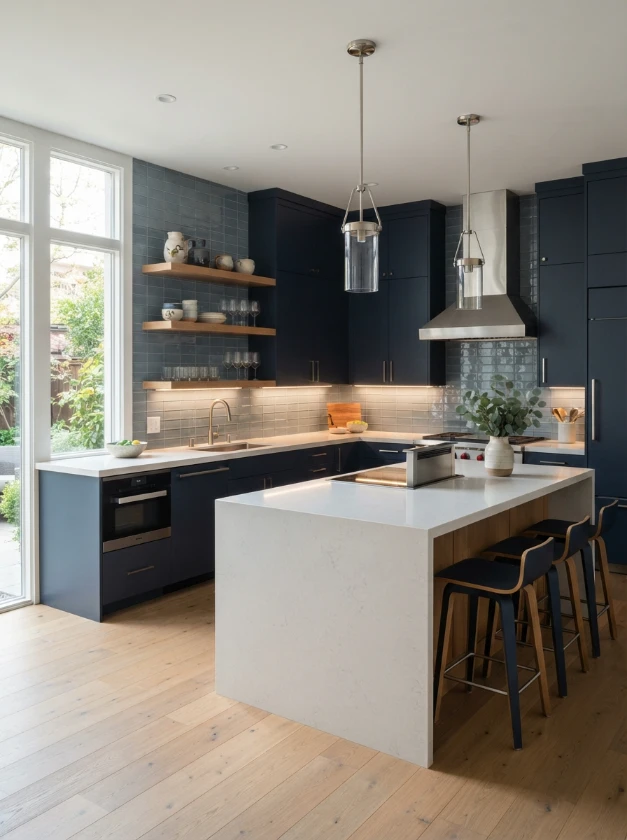
Glass tile can bring reflectivity into kitchens where dark cabinetry absorbs a significant amount of light.
Smoky gray, pale blue, warm white, or subtle green glass can work particularly well with contemporary cabinetry.
Rather than choosing highly reflective tile automatically, consider how it will interact with windows, pendant lights, and under-cabinet lighting. Too many glossy surfaces can create unwanted glare.
For a calmer modern kitchen, look for glass with a softened or frosted finish.
Glass can also be relatively easy to wipe clean, making it worth considering behind food-preparation areas.
4. Add Hexagon Tile for Geometric Charm
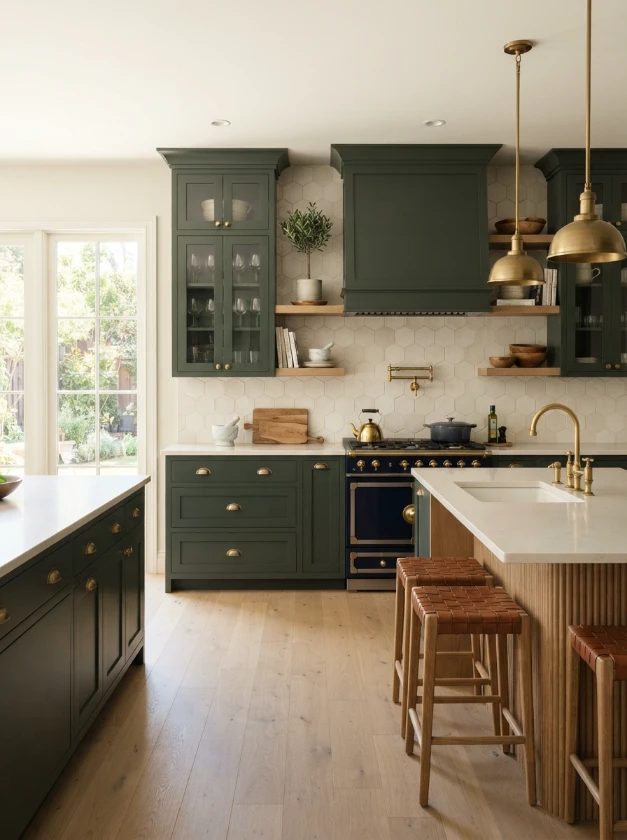
Hexagonal tile introduces geometry without necessarily making a kitchen feel overly busy.
Large hexagons generally look cleaner and more contemporary, while smaller hex tiles can create a more detailed appearance.
Try soft white hexagon tile with charcoal cabinets for contrast, or muted gray tile with dark navy cabinetry for a more tonal scheme.
If your countertop already has dramatic veining, keep the hexagon tile fairly simple.
For quieter countertops, a subtle marble or stone variation within the hexagons can provide welcome movement.
5. Use Stone for Natural Texture
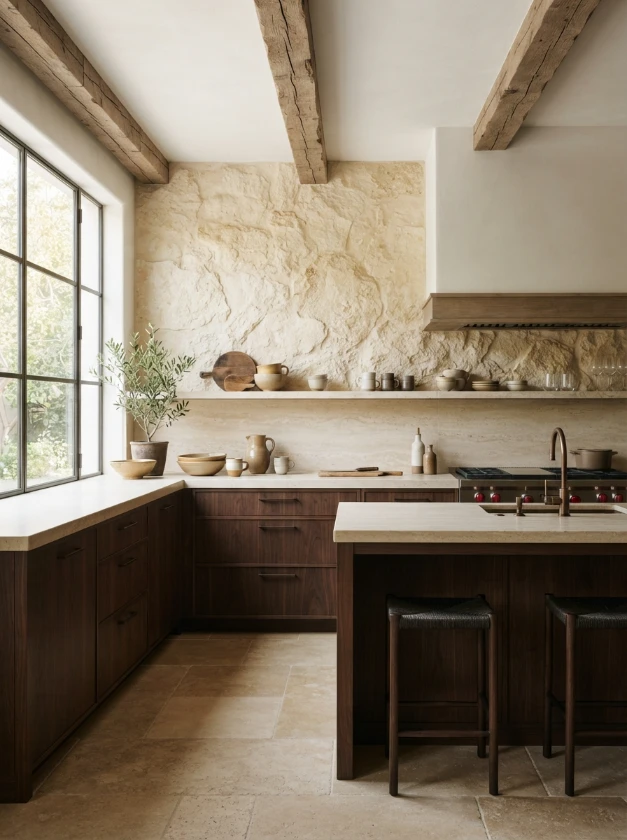
Natural stone can prevent a dark kitchen from feeling flat by adding irregular texture and organic color variation.
Depending on the kitchen style, options might include limestone, quartzite, slate, or other suitable stone products.
Dark wood cabinets can look especially attractive beside warm beige, sandy, mushroom, or creamy stone.
Instead of creating a sharp black-and-white contrast, these shades form a softer transition between cabinetry and countertop.
Stone is not maintenance-free, however. Different stones have different levels of porosity and stain resistance, so confirm sealing and cleaning requirements with your supplier before installation.
6. Introduce Metal for an Industrial Edge
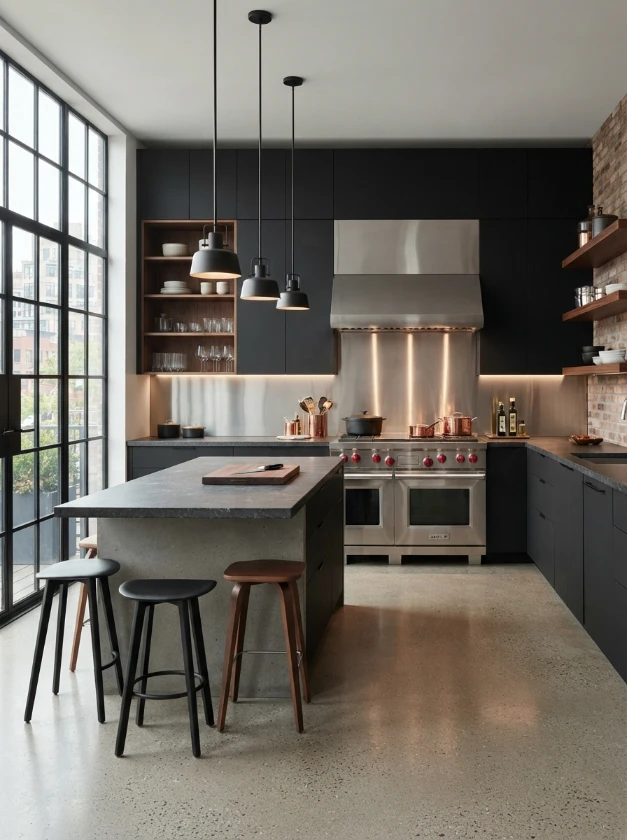
Metal backsplashes can suit contemporary and industrial kitchens particularly well.
Stainless steel creates a professional appearance and naturally coordinates with many kitchen appliances. Aged brass, copper, or other metal finishes can introduce warmth beside black or deep charcoal cabinetry.
You don’t necessarily need metal across the entire backsplash.
A metal panel behind the range can create an effective focal feature while tile covers the surrounding walls.
Keep fingerprints, cleaning requirements, heat exposure, and potential changes to the finish in mind when selecting a particular metal.
7. Add Brick for Rustic Warmth
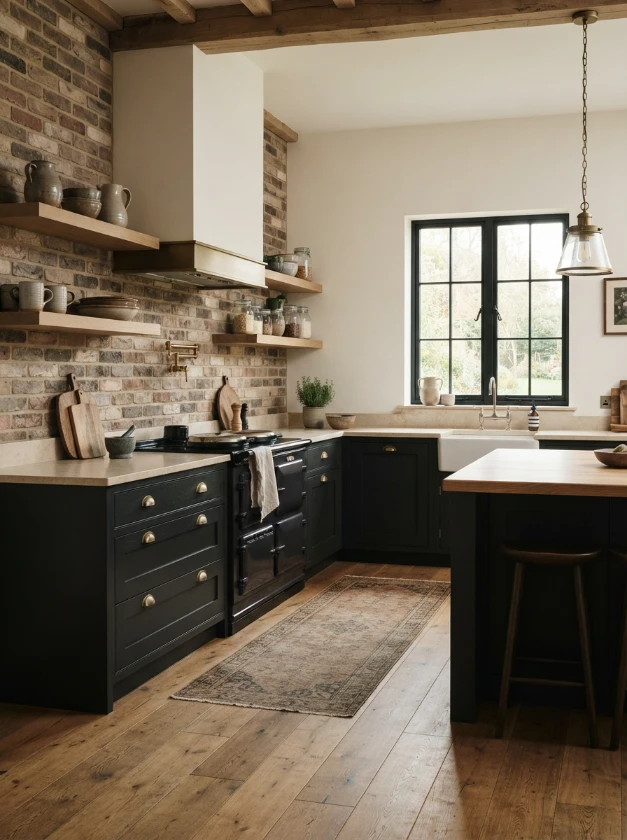
Brick brings character to dark cabinetry, particularly when the kitchen includes timber, aged metal, or farmhouse-inspired elements.
Red brick creates a rich, traditional palette alongside black or dark wood cabinets. Whitewashed brick offers a lighter interpretation, while pale reclaimed-looking brick can work beautifully in transitional kitchens.
Because brick already has strong texture, keep nearby finishes restrained.
For example:
Dark cabinets + warm brick + simple stone countertop + understated hardware
This combination allows the material itself to provide the personality.
If you’re considering real brick or brick veneer near cooking and preparation areas, check the product’s sealing, cleaning, and installation requirements first.
8. Bring in Marble for Elegant Luxury

Few backsplash materials create the same sense of refinement as marble.
White or cream marble with soft gray veining can brighten dark cabinetry while connecting visually with a pale countertop. More pronounced veining creates a stronger statement.
A slab backsplash produces a particularly streamlined result because there are fewer visible grout lines.
Marble tile offers another route if you want the material at a different price point or prefer a more traditional tiled appearance.
Remember that natural marble can etch and stain. Before installing it in a hard-working kitchen, understand its maintenance requirements and decide whether natural aging is something you’re comfortable with.
9. Use Pattern for a Bold Statement
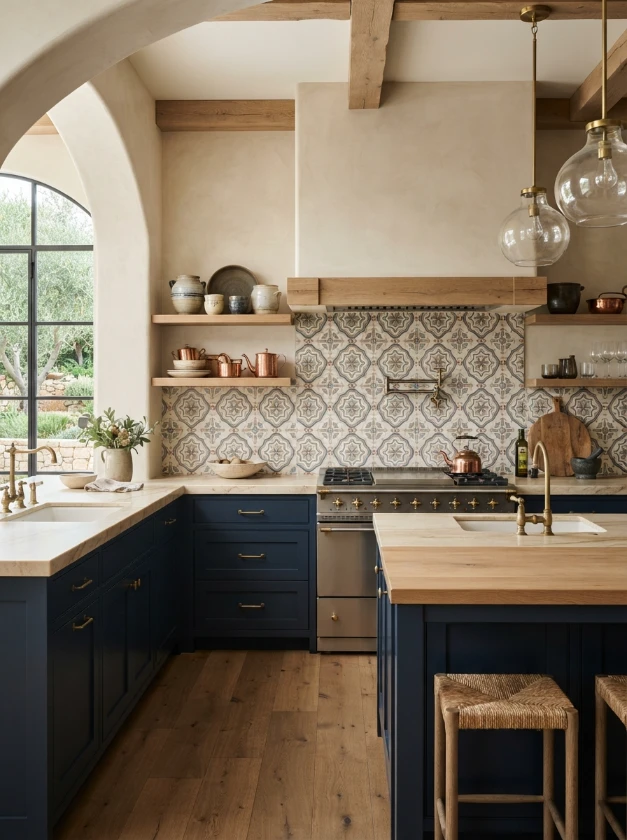
A patterned backsplash can turn otherwise simple dark cabinetry into the background for a striking focal point.
Geometric motifs, restrained florals, Mediterranean-inspired patterns, and encaustic-style designs can all work depending on the architecture of the room.
The key is controlling the number of competing elements.
If your backsplash has a strong pattern, consider simpler countertops, hardware, and accessories.
You could also use patterned tile only behind the range and choose a coordinating plain tile for the remaining backsplash.
Practical tip: Bring a sample tile home before committing. Patterns often appear much stronger across several square feet than they do on a single sample.
10. Create Artistic Detail with Mosaic Tile

Mosaic tile can add detail, color, and texture to a kitchen without requiring a large-scale pattern.
Stone, ceramic, glass, and mixed-material mosaics provide very different effects.
With dark cabinets, a pale mosaic can create brightness while maintaining more visual detail than standard rectangular tile.
Mosaic can be particularly effective inside a range niche or another small feature area.
Because mosaics contain many grout joints, think carefully about grout color and maintenance. In cooking areas, stain-resistant grout options may be worth discussing with your installer.
11. Add Chevron for Dynamic Lines

Chevron and herringbone are sometimes confused, but they create different visual effects.
Chevron tiles are cut so their angled ends meet to form continuous V-shaped lines. This creates a cleaner, more directional pattern.
Beside dark cabinetry, cream, pale stone, muted gray, or marble-look chevron tile can add movement without introducing another strong color.
Chevron works particularly well when you want the backsplash to feel decorative while maintaining a relatively limited palette.
12. Choose Stacked Tile for Clean Lines
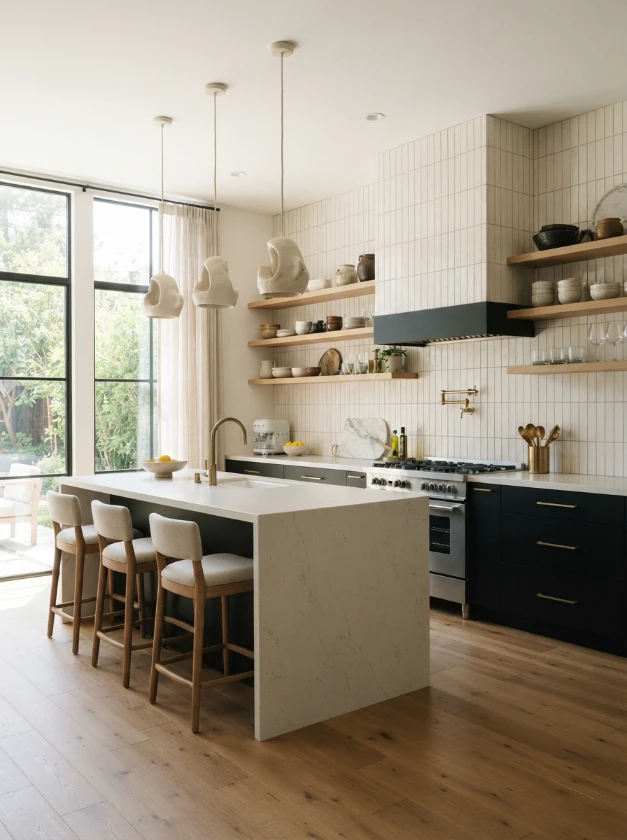
Stacked tile is an excellent alternative to traditional offset subway tile.
Instead of staggering the joints, tiles align in neat rows or columns. Vertical stacking can make the backsplash appear taller, while horizontal stacking emphasizes width.
Pair vertically stacked off-white tile with matte-black cabinets for a contemporary look.
Alternatively, use muted sage, warm gray, or clay-colored tile with dark wood cabinetry for a softer scheme.
This layout proves that you don’t always need unusual tile to create an interesting backsplash—the installation pattern itself can change the overall character.
13. Define the Kitchen with Contrast
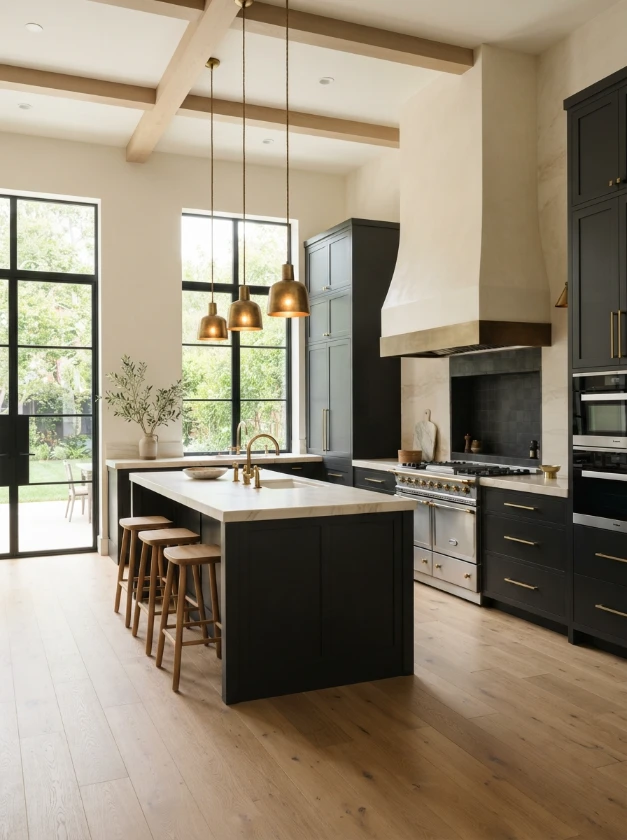
Sometimes the most effective backsplash decision is also the simplest: create intentional contrast.
Dark cabinets paired with white, ivory, cream, or very pale gray backsplash materials naturally produce visual separation.
This can be particularly valuable in a small kitchen or a room with limited natural light.
However, contrast doesn’t have to mean stark white against black.
Consider:
- Espresso cabinets with warm ivory
- Navy cabinets with soft gray
- Charcoal cabinets with creamy stone
- Dark green cabinets with warm beige
- Black cabinets with lightly veined marble
The undertones should relate to one another, even when the overall colors contrast.
14. Introduce Wood for Warmth and Texture
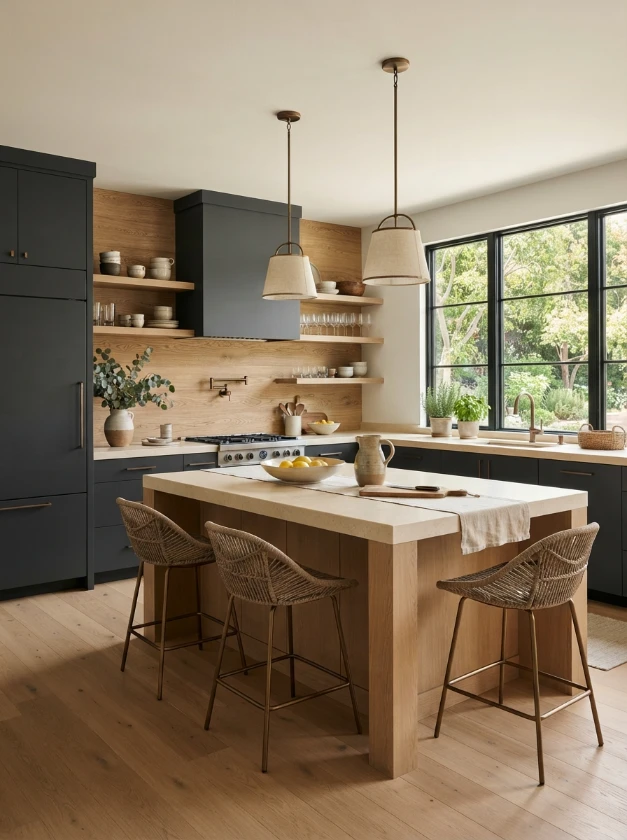
Wood can create an unexpectedly warm backdrop for dark cabinetry.
A light oak or natural-toned wood backsplash can soften matte-black cabinets and connect them with wood flooring, open shelving, or furniture elsewhere in an open-plan room.
However, this material requires careful planning.
A backsplash is exposed to water, grease, heat, and frequent cleaning. If you’re considering real timber or a wood-based product, make sure it is specifically appropriate for the proposed location and properly finished.
For areas directly behind a cooktop, follow local building requirements and the appliance manufacturer’s clearance and material guidance.
If maintenance is a concern, wood-look porcelain tile can provide a similar visual effect with different practical characteristics.
15. Add Beadboard for Cottage Charm

Beadboard can give dark cabinetry a relaxed cottage or farmhouse character.
Cream or warm white beadboard creates an attractive contrast against navy, forest green, charcoal, and dark wood cabinets.
Its vertical lines also introduce subtle texture without the complexity of a patterned tile.
Traditional wood or MDF products are not appropriate for every wet or high-heat location, so material selection matters.
Consider moisture-resistant products designed for kitchen use, and confirm whether a different backsplash material is needed directly behind the sink or cooking surface.
Pair it with simple hardware, natural wood accents, and warm-toned surfaces for an inviting cottage-inspired kitchen.
16. Ground the Space with Terracotta

Terracotta is an excellent companion for dark cabinetry when you want warmth rather than sharp contrast.
Its earthy orange, clay, rust, and brown tones can complement black, dark green, and rich wood cabinets.
Handmade or intentionally irregular terracotta tiles create particularly appealing variation because no two pieces look exactly identical.
To keep the kitchen from becoming too dark, balance the combination with lighter countertops, good task lighting, and perhaps pale walls.
Terracotta products vary significantly in porosity and maintenance requirements. Check whether your chosen tile needs sealing and what cleaners are suitable.
17. Use Penny Tile for Vintage Flair
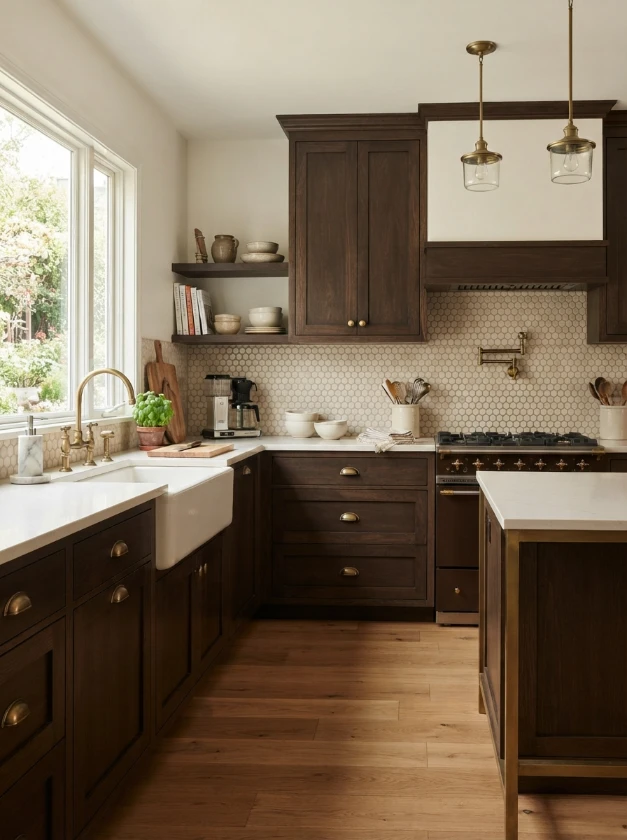
Small round penny tiles bring a subtle vintage quality to a kitchen.
White penny tile with black cabinetry creates a graphic but familiar combination. Cream, gray, muted green, and marble versions offer softer alternatives.
Grout has an especially noticeable effect because penny tile contains so many joints.
Matching grout creates a more unified surface. Contrasting grout makes every circle visible and creates a much stronger pattern.
Would you rather notice the tile color first or the circular pattern first?
Answering that question can help you choose the grout.
18. Choose Large-Format Tile for a Seamless Look
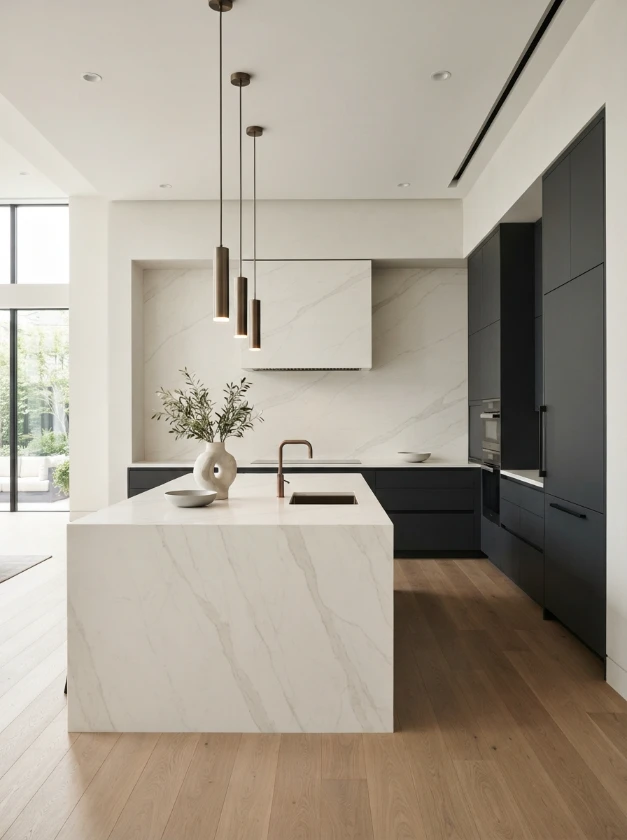
Large-format tile is well suited to kitchens where you want the backsplash to appear calm and expansive.
Because fewer individual tiles are required, there are generally fewer grout lines interrupting the surface.
Large porcelain slabs and tiles can imitate marble, concrete, or natural stone, giving you a broad range of visual styles.
For dark contemporary cabinets, consider warm white stone-look porcelain with restrained veining. The lighter backdrop can offset the cabinetry without making the kitchen feel overly decorative.
Accurate installation is particularly important with large pieces, so wall preparation and professional installation may be necessary depending on the material and dimensions.
19. Finish with Zellige for Artisan Beauty
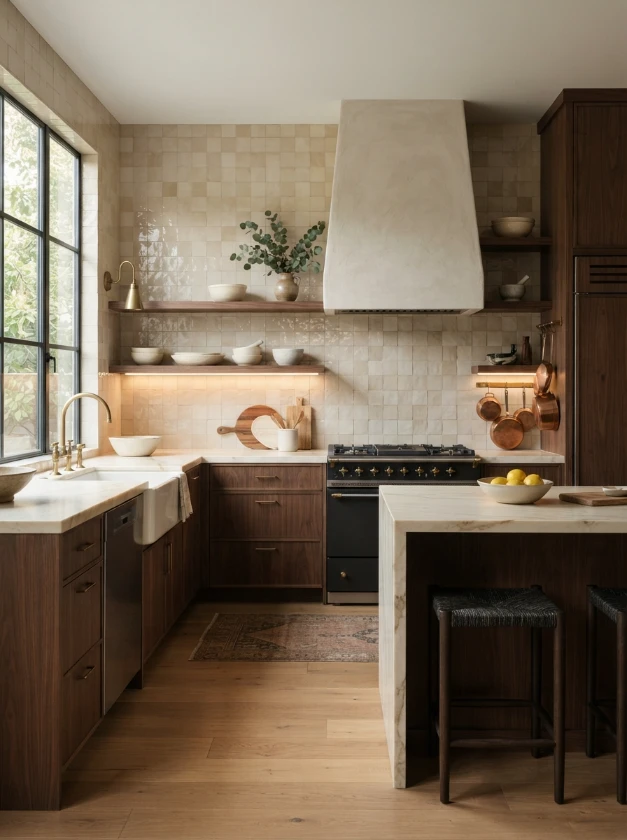
Zellige-style tile works particularly well when dark cabinetry needs softness and subtle movement.
Its appeal comes from variation. Slight differences in tone, surface, edges, and light reflection create a backsplash that changes character throughout the day.
Warm white or ivory zellige can brighten dark brown and black cabinets, while sage, muted blue, or earthy neutral shades can create a richer palette.
A glossy finish reflects under-cabinet lighting beautifully, but the intentionally irregular surface creates a very different effect from perfectly uniform machine-made tile.
Use simpler countertops and accessories if you want the handmade character of the backsplash to remain noticeable.
How to Choose the Right Backsplash for Dark Cabinets
With so many possibilities, choosing one material can become overwhelming. Start with the permanent features you already have rather than looking at backsplash tile in isolation.
Consider the cabinet undertone first. Some dark cabinets lean warm, such as walnut and espresso, while charcoal and certain blacks may appear cooler. Navy and green cabinetry introduce another color relationship entirely.
Then evaluate:
- Natural light: Dark kitchens often benefit from reflective or lighter backsplash surfaces.
- Countertops: Busy countertops usually pair more easily with restrained backsplashes.
- Kitchen size: Large patterns may dominate a very compact backsplash.
- Cleaning: Cooking zones need surfaces that can tolerate regular cleaning.
- Grout: Both its color and quantity affect appearance and maintenance.
- Finish: Gloss reflects light; matte finishes tend to appear softer.
- Overall style: Let the backsplash support the architecture rather than following a trend that doesn’t suit the room.
Most importantly, view samples beside your actual cabinet and countertop materials.
A tile that appears warm white in a showroom can look gray, yellow, or much brighter under your kitchen lighting.
Frequently Asked Questions
What color backsplash looks best with dark cabinets?
White, cream, warm beige, light gray, and pale natural stone are popular because they provide contrast and can prevent dark cabinetry from visually overwhelming the room.
However, there is no single best color. Dark green, navy, terracotta, and even darker backsplash materials can work when the kitchen has sufficient light and the other finishes are carefully balanced.
Should a backsplash be lighter than dark cabinets?
Not necessarily.
A lighter backsplash is one of the easiest ways to create contrast, especially in smaller kitchens. However, a medium or dark backsplash can create a sophisticated tonal look in a spacious, well-lit kitchen.
The countertop and lighting should be considered at the same time.
What backsplash works with black cabinets?
Warm white subway tile, marble, zellige, pale stone, large-format porcelain, and geometric tiles can all complement black cabinetry.
For a warmer look, consider cream, beige, clay, or lightly textured stone instead of pure white.
What backsplash works with dark brown cabinets?
Dark brown cabinetry generally pairs beautifully with warm neutrals.
Cream, ivory, beige stone, travertine-style surfaces, warm marble, terracotta, and muted handmade tile can reinforce the warmth of the wood rather than creating an overly sharp contrast.
Can I use a dark backsplash with dark cabinets?
Yes, particularly if you want a dramatic or moody kitchen.
Good natural light, under-cabinet lighting, reflective finishes, and lighter countertops can prevent the combination from feeling visually heavy.
Should the backsplash match the countertop?
It doesn’t need to match exactly.
Instead, aim for a relationship between them. A backsplash might repeat one subtle color from the countertop, share similar undertones, or provide a quiet background for dramatic stone veining.
Trying to match two different stone patterns exactly can sometimes make the kitchen look busier rather than more coordinated.
Which backsplash is easiest to keep looking clean?
Smooth surfaces with fewer grout joints are generally simpler to wipe than highly textured materials or very small mosaic tiles.
Large-format porcelain and other suitable nonporous surfaces can therefore be practical choices. Maintenance still varies by product, finish, grout, and installation, so always check manufacturer care instructions.
Conclusion
The best kitchen backsplash ideas with dark cabinets aren’t simply about choosing something light enough to create contrast. A successful backsplash connects your cabinetry, countertops, lighting, hardware, flooring, and overall kitchen style.
Subway and stacked tiles offer simplicity. Marble and large-format surfaces can create a refined finish. Brick, stone, wood-look materials, and terracotta introduce warmth and texture, while herringbone, chevron, mosaics, and patterned tiles provide stronger visual interest.
Before making your final decision, bring several samples into your kitchen and view them at different times of day. Place each one directly beside the cabinet and countertop rather than judging it on its own.
The right backsplash should do more than look attractive in a photograph—it should suit your kitchen, your lighting, and the way you actually use the space.