18 Charming Kitchen Corner Shelf Decor Ideas for Style & Function
Meta Description: Try these kitchen corner shelf decor ideas to turn unused corners into stylish, practical storage with plants, dishes, mugs, and more.
Primary Keyword: Kitchen Corner Shelf Decor Ideas
Related Keywords: kitchen corner shelves, kitchen shelf decor, corner kitchen storage, open kitchen shelving, kitchen corner ideas, floating kitchen shelves, kitchen shelf styling, small kitchen storage ideas, kitchen corner organization
A kitchen corner can be surprisingly difficult to decorate. Leave it empty and the space may feel unfinished; fill it with too many things and suddenly the kitchen looks cluttered.
The good news is that even a small corner can become one of the most useful and attractive parts of your kitchen.
The best Kitchen Corner Shelf Decor Ideas combine storage with personality. Think warm wooden shelves holding everyday dishes, a compact coffee station beside the counter, trailing greenery softening hard surfaces, or neatly arranged cookware that is always within reach.
Whether you have a tiny apartment kitchen or a spacious cooking area, these 18 ideas can help you make better use of an overlooked corner without sacrificing style.
1. Add Three-Tiered Corner Shelves for Easy Organization
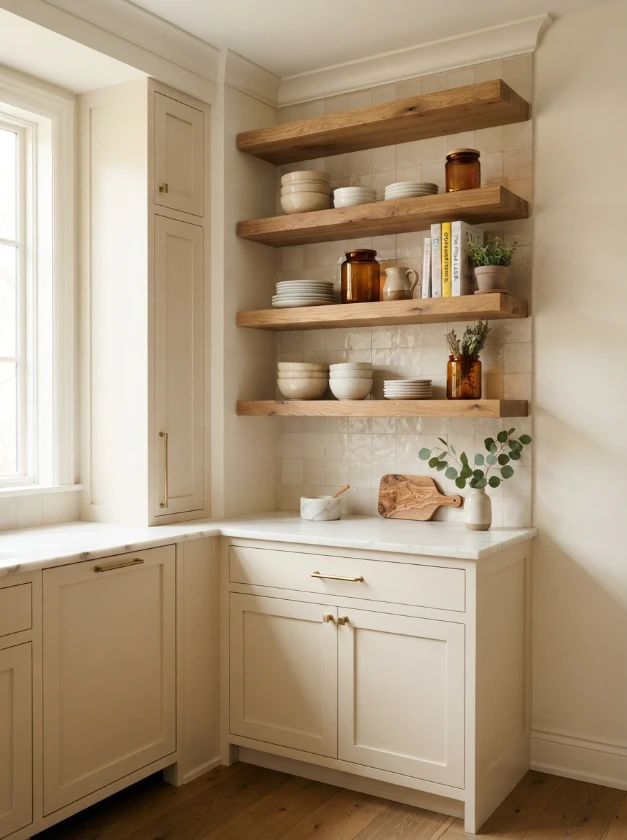
Three-tiered shelving is a practical choice when you have a narrow corner but need more vertical storage.
Instead of spreading small items across the countertop, use each level for a different purpose. Everyday pieces can stay on the easiest-to-reach shelf while decorative items sit higher.
For example, you could arrange:
- Bottom shelf: mugs, bowls, or frequently used jars
- Middle shelf: plates, glasses, or tea supplies
- Top shelf: plants, cookbooks, pottery, or decorative pieces
Keep some breathing room between objects. Open shelving tends to look more polished when every available inch isn’t filled.
If your kitchen already contains warm wood tones, wooden corner shelves can help create continuity. Black metal brackets, on the other hand, can introduce subtle contrast in a modern or industrial kitchen.
Practical tip: Before installing shelves, place your tallest item on the counter and measure above it. This prevents the lowest shelf from interfering with appliances or workspace.
2. Keep the Counter Clean and Let the Shelves Add Character

One of the easiest ways to make a kitchen feel calmer is to keep the countertop relatively clear.
Corner shelving gives smaller decorative and functional objects somewhere to live without taking away valuable food-preparation space.
Rather than placing a toaster, utensil crock, several jars, plants, and decorative accessories in the same corner, decide what actually needs to remain on the counter.
Then move lighter items upward.
A simple arrangement might include ceramic containers and a small framed print on the first shelf, glassware on the second, and a trailing plant at the top.
The result feels intentional instead of crowded.
This approach is especially helpful in small kitchens where every section of countertop matters.
3. Display Pretty Dishes on Warm Wooden Shelves

Why hide your favorite dishes behind cabinet doors?
Open wooden corner shelves can turn attractive dinnerware into part of the room’s decoration.
White stoneware looks beautiful against natural oak or walnut. Handmade pottery can introduce subtle color and texture, while vintage plates can give a traditional kitchen more personality.
Try stacking similar items rather than placing every dish separately.
For example:
White bowls + cream plates + amber glasses + natural wood shelves
This creates a cohesive palette while still keeping everyday dishes accessible.
You don’t need an enormous collection. Two or three neat stacks are often more visually effective than shelves packed with mismatched pieces.
4. Turn a Corner Shelf Into a Functional Coffee Station

A forgotten kitchen corner may be exactly where your morning coffee setup belongs.
Position the coffee maker or espresso machine on the counter and use shelves above it for the smaller essentials.
Store mugs where they’re easy to reach, then organize coffee beans, tea, sugar, or filters in attractive containers.
A small tray can keep loose accessories together.
You could include:
- Favorite coffee mugs
- Coffee beans
- Tea bags
- Sugar container
- Small spoons
- Coffee filters
- Syrups
- A compact plant or decorative object
Keep the most frequently used supplies closest to the machine.
A coffee corner should make your routine easier, not simply look attractive in photographs.
5. Soften Kitchen Shelves With Fresh Greenery

Kitchens contain plenty of hard surfaces: stone counters, metal appliances, tile, glass, and cabinetry. Plants provide a simple way to soften those materials.
A small potted herb on a lower shelf can be both useful and decorative. Trailing plants placed higher can add movement without taking up much shelf space.
For a kitchen with sufficient natural light, consider herbs such as basil, mint, or rosemary where growing conditions are appropriate.
Not every kitchen corner receives enough sunlight, however. Choose plants according to the actual light conditions rather than appearance alone.
High-quality faux greenery is also an option for dark corners or difficult-to-reach upper shelves.
Avoid allowing plants to interfere with cooking surfaces, and keep them away from areas exposed to excessive heat.
6. Pair White Cabinets With Natural Wooden Corner Shelves

White cabinetry provides a clean backdrop, but an all-white kitchen can sometimes benefit from a little warmth.
Natural wooden shelves are an easy way to introduce it.
Oak, maple, walnut, or similarly warm finishes can break up large areas of white while maintaining a light and timeless appearance.
Keep the shelf styling fairly restrained to preserve that balance.
White dishes, clear glassware, a wooden cutting board, a small plant, and perhaps one piece of handmade pottery may be enough.
You can also repeat the wood elsewhere through stools, serving boards, bowls, or flooring so the corner shelves feel connected to the rest of the kitchen.
7. Build a Cozy Coffee Bar Corner

If you have slightly more space, take the coffee-station concept a step further and create a dedicated coffee bar.
Start with the coffee machine on the counter. Install two or three shelves above it and divide supplies by frequency of use.
Place everyday mugs and coffee containers within easy reach. Less frequently used serving pieces can sit higher.
A framed coffee print or decorative sign can add personality, but don’t allow decorative pieces to compete with the actual purpose of the area.
Want the corner to feel especially inviting?
Add warm under-shelf lighting. It can provide gentle illumination during early mornings while highlighting the shelving after dark.
8. Store Attractive Pots and Pans on Open Corner Shelves

Cookware doesn’t always have to disappear inside a cabinet.
If you own attractive cast-iron cookware, copper pans, enamel pieces, or matching pots, displaying selected items can give the kitchen a functional, lived-in character.
Strong open shelving can work particularly well near the cooking zone.
Keep weight in mind. Cookware is considerably heavier than mugs or decorative accessories, so shelving and wall fixings must be appropriate for the expected load.
Don’t place every pot you own on display either.
Choose a few pieces that you use frequently and store the rest elsewhere. This keeps the corner practical without creating visual clutter.
9. Combine Marble and White for a Calm, Refined Corner

For a light and elegant kitchen, continue a marble-and-white palette into your corner shelving.
White floating shelves against a pale wall can almost disappear visually, allowing a marble countertop or backsplash to remain the main feature.
Introduce small amounts of contrast through glass, light wood, stainless steel, or subtle metallic details.
Try:
White shelves + marble counter + clear glassware + pale wood + one green plant
The limited palette helps the area feel spacious.
This style is particularly useful when you’re decorating a small kitchen and don’t want shelving to make the corner visually heavy.
10. Create an Old-Fashioned Hutch-Inspired Corner

Not every kitchen needs to look ultra-modern.
If you enjoy farmhouse, cottage, vintage, or traditional interiors, take inspiration from an old kitchen hutch.
Use painted or natural wooden shelves to display collected ceramics, pitchers, plates, glass jars, and small vintage pieces.
The trick is making the collection feel curated rather than random.
Choose a loose color story—perhaps cream, warm brown, faded blue, and soft green—and repeat those tones across the shelves.
You can also lean a small decorative plate or framed artwork against the wall behind shorter objects.
A little imperfection suits this style. Handmade ceramics, weathered wood, and pieces collected over time often create more character than perfectly matching accessories.
11. Create an Abundant Wooden Shelf Display

Minimalism isn’t your only option.
If you enjoy layered interiors, several wooden corner shelves can provide space for dishes, plants, cookbooks, baskets, jars, and decorative objects.
The key is controlled abundance.
Start with larger functional pieces and then fill smaller gaps selectively. Repeat colors and materials so the collection still feels connected.
For instance, warm wood can appear in cutting boards and bowls, cream can repeat through dishes and pottery, while greenery adds a consistent natural accent.
Leave a little visible wall between groups.
Even a fuller display benefits from negative space.
12. Style Three Wooden Shelves With Plants and Ceramics

Three floating wooden shelves create a simple framework for combining practical storage with greenery.
Instead of placing a plant on every shelf in exactly the same position, vary the arrangement.
You might place a trailing plant on the upper shelf, dishes and a tiny herb pot in the middle, and frequently used bowls on the lowest level.
Variation in height also matters.
Combine taller objects such as pitchers and vases with lower stacks of plates or bowls. This prevents the arrangement from looking flat.
Use similar planters or a coordinated palette if you want the overall display to remain calm.
13. Put Your Favorite Mugs and Cups on Display

A mug collection can quickly consume cabinet space, so why not make selected pieces part of your kitchen corner shelf decor?
Arrange your most attractive mugs on one or two shelves above the counter.
You can line them up neatly for a clean appearance or group them by color for something more playful.
If you own many different mugs, rotate the display seasonally instead of trying to fit every cup on the shelves at once.
For example, warmer earthy mugs could appear during autumn while simple white or pastel pieces could take their place in spring.
Keep enough space around each group to make grabbing a mug easy.
14. Elevate the Decor While Protecting Counter Space
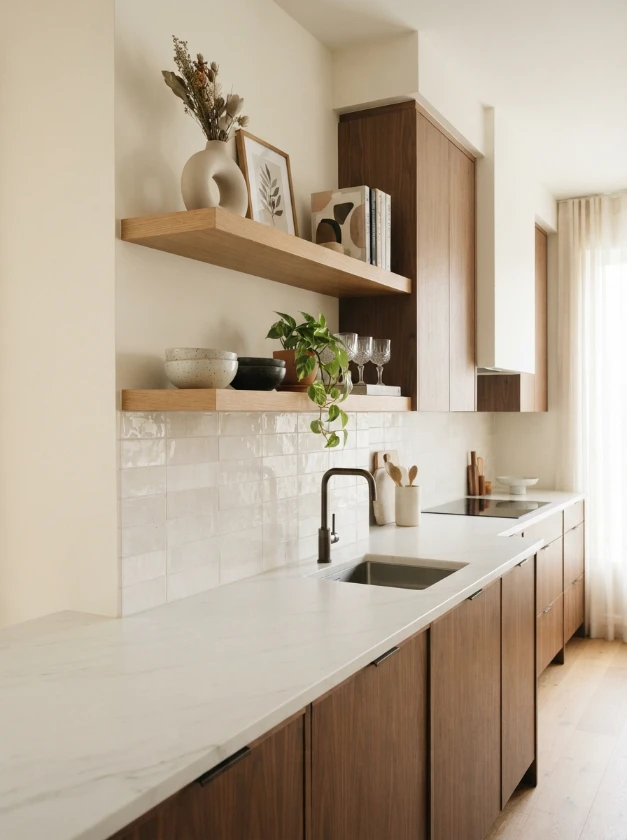
A small kitchen often requires every available surface to work harder.
Installing shelves higher in an unused corner allows you to decorate vertically without sacrificing counter space.
Use the counter primarily for tasks and appliances. Let shelves carry attractive but less essential pieces such as cookbooks, vases, framed art, plants, serving bowls, and special glassware.
This visual separation can make a compact kitchen appear tidier.
Just remember accessibility.
Objects used every day shouldn’t require a stool. Reserve upper shelves for lightweight pieces that you only need occasionally.
15. Warm Up Marble Counters With Wooden Shelves

Marble and wood make a naturally appealing combination because the two materials provide different visual qualities.
Marble feels cool, smooth, and refined. Wood brings warmth, texture, and an organic element.
If your kitchen has marble or marble-look counters, try medium or light-toned wooden shelves above an unused corner.
Then connect the materials with simple accessories:
- Wooden bowls
- Neutral ceramics
- Clear glasses
- Linen napkins
- Small plants
- Stoneware containers
Avoid introducing too many additional finishes.
Allow the marble and natural wood to remain the dominant materials.
16. Use Three Wooden Shelves to Create a Warm Focal Point

A blank corner can become a subtle focal point with three well-proportioned wooden shelves.
Rather than making every shelf identical, create a visual rhythm.
Place a tall vase or plant on one side of the upper shelf. Balance it with several smaller objects on the shelf below. Keep the lowest level more functional with dishes or jars.
You can use the classic design principle of grouping objects in odd numbers, but don’t treat it as a strict rule. The overall balance matters more.
Step back after styling each shelf.
Does one side feel unusually heavy? Are all your tall pieces grouped together? Is there enough empty space?
Small adjustments often make a bigger difference than buying additional decor.
17. Turn an Awkward Kitchen Nook Into Smart Storage
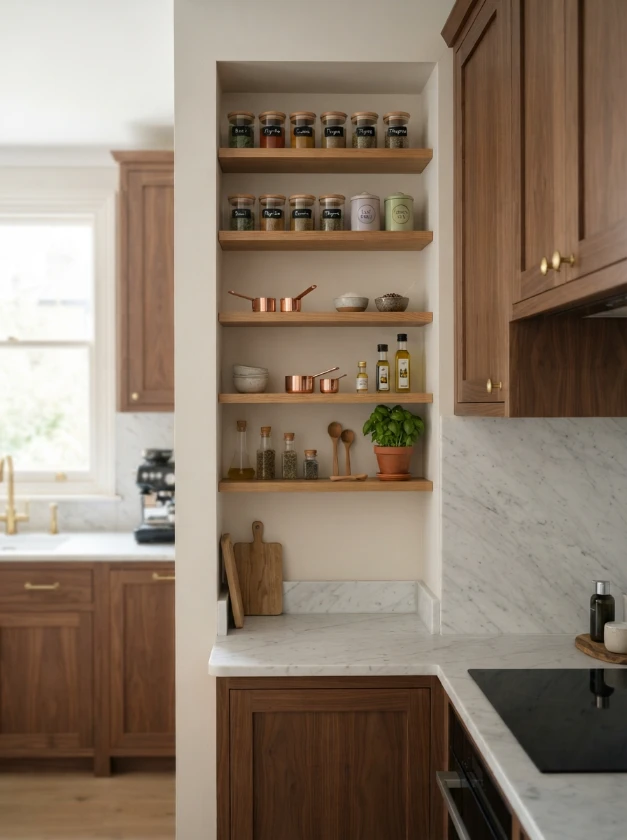
Some kitchens have corners that seem almost impossible to use: a narrow section beside a cabinet, an awkward recess, or a tiny wall between the countertop and a window.
Custom-sized floating shelves can make these spaces useful.
Measure the available width and depth carefully before choosing shelving. In particularly tight spaces, shallow shelves may work better than standard-depth options.
Use them for smaller objects such as:
- Spice jars
- Tea and coffee containers
- Small bowls
- Measuring cups
- Mini plants
- Frequently used seasonings
For a tiny nook, function should come first. A couple of carefully selected decorative pieces are enough to make it attractive.
18. Style Your Kitchen Corner Shelf Step by Step
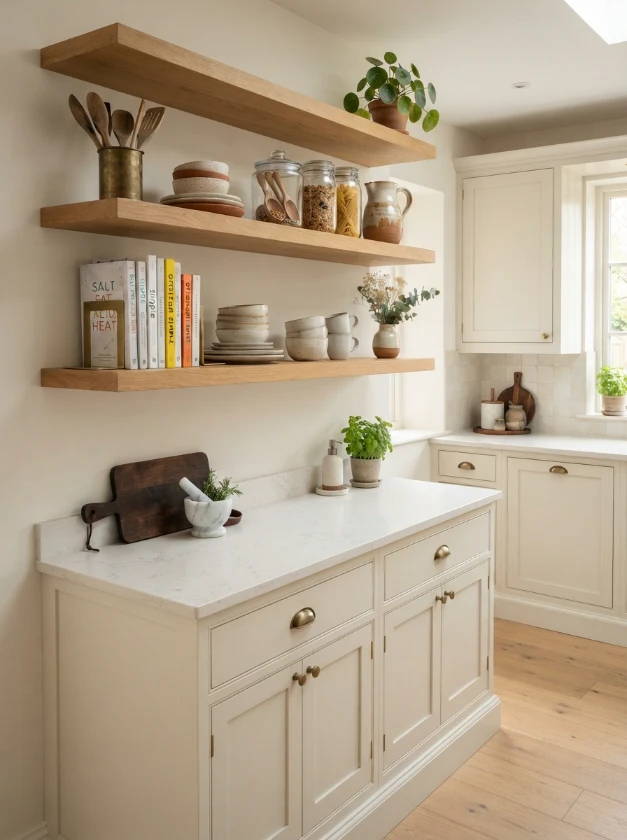
If you’re unsure where to begin, don’t buy decor immediately.
Start with what you already own.
First, remove everything from the corner and decide what function the space should serve. Is it primarily storage, a coffee station, a display area, or a combination?
Next, choose a simple palette that relates to the kitchen.
Then arrange larger objects before smaller ones.
A useful sequence is:
- Place everyday functional items.
- Add one or two taller anchor pieces.
- Introduce smaller accessories.
- Add greenery or another natural element.
- Leave intentional empty space.
- Remove anything that feels unnecessary.
Take a photo when you’re finished.
Seeing the arrangement on a screen can make awkward spacing or overcrowding much easier to notice.
The most successful shelf isn’t necessarily the one with the most beautiful accessories. It’s the one that makes your kitchen easier to use while still looking good.
Frequently Asked Questions
What should I put on kitchen corner shelves?
Start with useful items such as plates, bowls, mugs, glasses, jars, cookbooks, or coffee supplies. Then add a limited number of decorative elements, such as a plant, vase, artwork, or attractive pottery.
The exact combination depends on where the shelves are located and how frequently you need the objects.
How do I decorate kitchen shelves without making them look cluttered?
Avoid filling the entire shelf. Group related objects together, repeat a limited palette, vary object heights, and leave visible empty space between arrangements.
Removing one or two unnecessary objects can often improve the display more than adding something new.
Are floating corner shelves good for small kitchens?
They can be very useful because they take advantage of vertical wall space while leaving the countertop and floor open. Shallow shelves are particularly practical in tight kitchens.
Make sure shelves don’t interfere with cabinet doors, windows, appliances, or normal movement through the kitchen.
How many shelves should I put in a kitchen corner?
Two or three shelves work well in many kitchens, but the right number depends on ceiling height, available wall space, and what you plan to store.
Three closely spaced shelves may suit mugs and small bowls, while two generously spaced shelves may work better for taller pitchers and plants.
How can I make open kitchen shelves look expensive?
Focus on materials and restraint rather than filling them with decorative objects.
Natural wood, attractive stoneware, clear glass, handmade ceramics, linen, and a small amount of greenery can create a sophisticated look. Keeping the surrounding countertop clean also makes the shelves appear more intentional.
What is the best material for kitchen corner shelves?
Wood is versatile and introduces warmth, while painted shelves can blend seamlessly with cabinetry. Metal and glass can work in contemporary kitchens.
More important than appearance is choosing a shelf material, bracket system, and wall fixing suitable for the weight you intend to store.
Conclusion
An empty kitchen corner doesn’t need a complicated makeover to become useful. A few thoughtfully positioned shelves can provide extra storage, clear crowded counters, and give everyday dishes or favorite objects a place to shine.
The best Kitchen Corner Shelf Decor Ideas balance appearance with practicality. Start with the purpose of the corner, choose materials that complement your existing kitchen, and add only the objects that deserve to be there.
You may already have everything you need. Move a few mugs onto an open shelf, add a plant beside your dishes, or turn an unused nook into a simple coffee station. Sometimes a small corner is enough to make the entire kitchen feel more organized and complete.