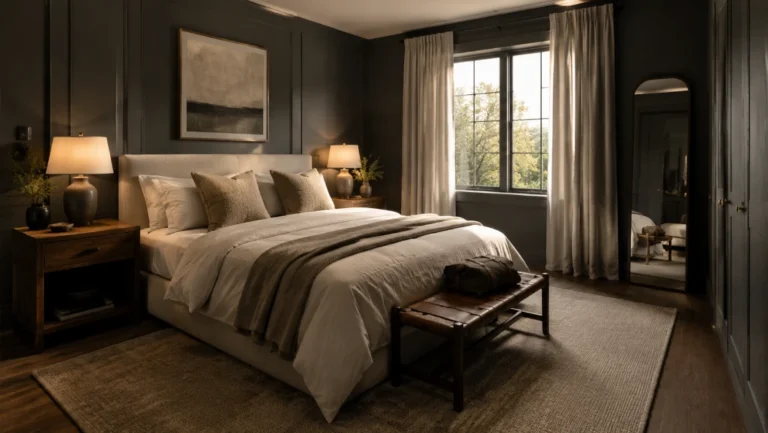
12 Dark Elegant Bedroom Ideas That Feel Cozy, Not Heavy
Dark bedrooms can feel sophisticated, intimate, and wonderfully cocooning when the palette is balanced with warm light, soft textures, and carefully chosen contrast. The goal is not to make every surface black. Instead, designers use deep colors as a backdrop and introduce materials that make the room feel layered and inviting.
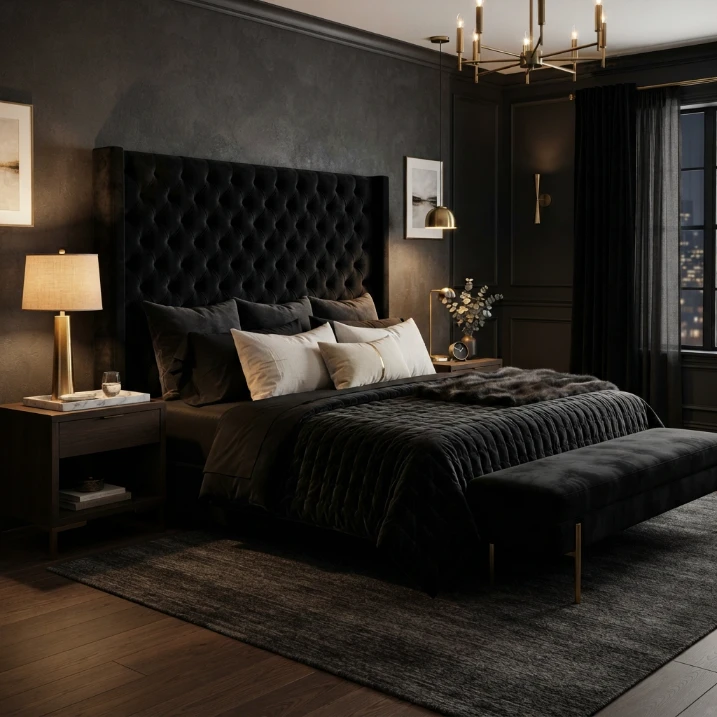
Inspired by the reference design approach, these ideas focus on charcoal, deep green, warm wood, creamy textiles, brass accents, architectural details, and lighting that creates pools of glow. The result is a bedroom that feels luxurious rather than gloomy.
What Makes a Dark Bedroom Feel Cozy Instead of Heavy?
The difference usually comes down to balance. Dark walls need lighter textiles, warm lighting, tactile surfaces, and enough negative space to keep the room from feeling visually crowded. A restrained palette also helps: charcoal, espresso, deep navy, olive, cream, taupe, walnut, and aged brass can work together without making the room look busy.
1. Warm Charcoal for a Dark Elegant Bedroom
Charcoal is one of the easiest ways to create a dramatic backdrop without the severity of pure black. Choose a shade with a warm or slightly brown undertone, then pair it with creamy bedding, walnut furniture, and soft beige textiles. Keeping the palette close in value makes the room feel sophisticated and calm.
For extra depth, use a matte or low-sheen wall finish so the light is absorbed softly instead of bouncing harshly around the room.
2. Layer Warm Lighting in a Dark Elegant Bedroom
Lighting is the fastest way to soften a dark room. Instead of depending on one ceiling fixture, combine bedside lamps, wall sconces, concealed LED strips, and a dimmable overhead light. Warm bulbs create a golden glow that makes charcoal and brown surfaces feel richer.
Keep bedside light around eye level and use indirect illumination to highlight architectural features. This creates several small pools of light instead of one intense source.
3. Add a Plush Headboard to a Dark Elegant Bedroom
A large upholstered headboard gives the bed a softer visual presence against deep walls. Boucle, velvet, linen, and textured woven upholstery all work well because they introduce tactile contrast without adding another loud color.
Try cream, oatmeal, taupe, muted olive, or smoky beige. A slightly lighter headboard can become the visual anchor that keeps the room from looking flat.
4. Add Rich Wood for Natural Warmth
Dark wood is especially effective in moody bedrooms because it adds warmth without breaking the sophisticated palette. Walnut nightstands, an espresso bed frame, or a medium-dark wood floor can create continuity between the furniture and the walls.
Use one dominant wood tone rather than mixing several competing finishes. The controlled repetition makes the room feel more custom and expensive.
5. Soften a Dark Elegant Bedroom With Cream Bedding
Light bedding provides the contrast that a dark room needs. Instead of bright white, try ivory, oatmeal, warm beige, or stone. These shades soften the transition between the dark walls and the bed while keeping the atmosphere restful.
Layer a duvet, quilt, lumbar pillow, euro shams, and a textured throw. The variation in fabric is more important than adding lots of colors.
6. Use Classic Wall Molding for Quiet Luxury
Wall molding gives deep paint architectural structure. Simple rectangular panels behind the bed can create rhythm and catch subtle shadows, making the wall feel designed rather than simply painted.
For a timeless look, keep the molding the same color as the wall. A low-sheen finish will reveal the shapes as light changes throughout the day.
7. Create a Dark Feature Wall Behind the Bed
If painting the whole room feels too dramatic, start with one feature wall. A deep charcoal, black-brown, forest green, or midnight blue backdrop can frame the bed beautifully while the surrounding walls remain softer.
Keep the rest of the furniture simple so the feature wall becomes the hero. This approach works particularly well in smaller rooms where a fully dark palette may feel too enclosed.
8. Add Aged Brass to a Dark Elegant Bedroom
Warm metals can make dark interiors glow. Aged brass sconces, antique-gold hardware, or a small brass-framed mirror can add refined highlights without turning the room flashy.
Use metallic details selectively. Two or three repeated brass accents are usually more elegant than a collection of unrelated shiny finishes.
9. Add a Soft Rug to Ground the Bed
A rug helps visually connect the bed, nightstands, and surrounding floor while adding another layer of softness. Choose wool, plush pile, or a subtle woven design in taupe, cream, warm gray, or muted brown.
For the most polished result, choose a rug large enough to extend beyond the sides and foot of the bed. This makes the furniture grouping feel intentional.
10. Keep an Open, Minimal Layout
Dark colors already carry visual weight, so clutter can make the bedroom feel heavier very quickly. Give furniture breathing room and avoid filling every empty surface with accessories.
A low bed, streamlined nightstands, one large artwork piece, and a comfortable chair can be enough. Negative space is part of the design, not wasted space.
11. Introduce Deep Green or Earthy Accents
Deep forest green, olive, tobacco, terracotta, and chocolate brown can warm up a charcoal palette. Use these shades through a velvet cushion, throw, ceramic lamp, artwork, or upholstered bench.
Earthy colors work especially well because they connect the darker palette with natural materials such as wood, linen, stone, and clay.
12. Frame a View in a Dark Elegant Bedroom
Dark walls can make a bright window or dramatic view feel more intentional. Treat the exterior view like artwork and keep the furniture low enough to preserve sightlines.
Use soft curtains, minimal decor, and warm bedside lighting so the room still feels intimate after sunset. The contrast between the dark interior and a brighter view creates a cinematic finish.
How to Balance a Dark Elegant Bedroom
The most successful dark elegant bedroom designs are built around a simple formula: deep architectural color, warm layered lighting, tactile fabrics, natural wood, and one or two lighter contrast points. You do not need expensive furniture or dozens of accessories.
Start with the wall color, then choose the bed and lighting. After that, layer textiles and introduce only a few decorative accents. This order keeps the room cohesive and prevents the darker palette from becoming visually overwhelming.
Final Thoughts
A dark bedroom does not have to feel gloomy. When deep colors are balanced with warm lighting, soft bedding, natural wood, subtle metallic details, and plenty of breathing room, the result can feel calm, luxurious, and deeply comfortable.
If you already love moody interiors, explore our dark moody bedroom ideas and moody neutral bedroom ideas for more ways to build a sophisticated retreat.
FAQs About Dark Elegant Bedrooms
How do you make a dark bedroom feel cozy?
Use warm lighting, layered bedding, soft rugs, natural wood, and a few lighter accents such as cream or oatmeal. Texture is especially important because it prevents deep colors from looking flat.
What colors work best with dark bedroom walls?
Charcoal, deep navy, forest green, chocolate brown, and soft black pair beautifully with ivory, taupe, oatmeal, walnut, muted olive, and aged brass.
Can a small bedroom use dark colors?
Yes. Use a controlled palette, keep furniture streamlined, avoid clutter, and add enough warm layered lighting. A single dark feature wall can also create drama without making the entire room feel enclosed.