12 Moody Attic Bedroom Ideas for a Cozy, Dramatic Retreat
Attic bedrooms have something ordinary rooms often lack: character from the very beginning. Sloped ceilings, awkward corners, exposed beams, low walls, and unusual windows may seem challenging at first, but these features can become the best parts of the room.
A moody attic bedroom works especially well because darker colors and warm textures naturally complement the enclosed, cozy shape of an attic. Instead of trying to make every unusual angle disappear, you can use it to create a bedroom that feels intimate, stylish, and intentionally designed.
The trick is balance. Too many dark surfaces can make an attic feel heavy, while too much furniture can quickly consume limited floor space. Thoughtful lighting, compact furniture, practical storage, and layered materials can make a major difference.
Here are 12 ways to turn an attic into a dramatic yet comfortable bedroom.
Why Moody Attic Bedrooms Work So Well
Attics already have a naturally tucked-away atmosphere. Unlike a standard rectangular bedroom, they often feature pitched ceilings, recessed corners, exposed structural details, and interesting changes in height.
A moody design builds on those characteristics rather than fighting against them.
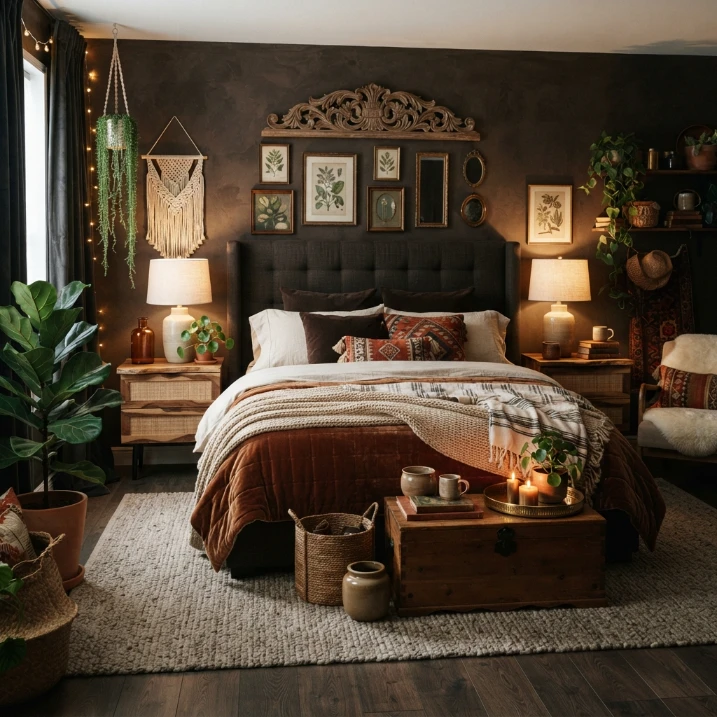
Charcoal, deep navy, forest green, espresso brown, and muted black can emphasize the architecture and give the room a cocoon-like quality. Warm wood, linen, wool, velvet, and soft lighting prevent those darker shades from becoming cold.
There is another advantage: attic imperfections can actually contribute to the design.
An exposed beam does not always need to be hidden. A chimney breast can become a focal point. Even a low section beneath the roof can become useful when it is fitted with storage or a comfortable seating area.
The result can feel less like an unused space at the top of the house and more like a private retreat.
Moody Attic Bedroom Ideas for a Cozy, Character-Filled Space
1. Paint Sloped Ceilings Dark

Sloped ceilings are one of the most recognizable features of an attic, so there is little reason to pretend they are not there.
A dark paint color can turn those angles into an intentional design feature.
Consider shades such as:
- Charcoal gray
- Smoky navy
- Deep olive
- Chocolate brown
- Muted plum
- Soft black
You do not necessarily have to paint every surface the same shade. For example, charcoal slopes paired with warm greige knee walls can create definition without making the room overwhelmingly dark.
A matte or low-sheen finish is often particularly attractive in a moody room because it absorbs light softly rather than creating distracting reflections.
Before committing, test the paint on several walls. Attic rooms can receive very different amounts of daylight depending on the position of skylights and dormer windows.
A color that appears almost black in one corner may look noticeably lighter beside a window.
Practical tip: Pair dark ceilings with warm bedding and a lighter rug to keep the room visually balanced.
2. Keep Furniture to the Essentials

Attic bedrooms can become crowded surprisingly quickly.
A large bed, two oversized nightstands, a dresser, armchair, bench, desk, and shelving may work in a spacious primary bedroom, but the same arrangement can make an attic difficult to move around.
Start with what you actually need.
For many rooms, that means a bed, compact bedside surfaces, storage, and one additional functional piece.
Low-profile furniture is especially useful because it sits comfortably beneath sloped ceilings without making the architecture feel cramped.
Try a platform bed with a simple headboard, slim nightstands, and a low dresser rather than tall, bulky furniture.
Placement matters too. Put taller pieces where the ceiling reaches its full height and reserve lower sections for furniture that does not require standing space.
Ask yourself: Does this piece make the bedroom more useful, or is it simply filling an empty corner?
Leaving some open floor area can make even a dark attic feel calmer and more intentional.
3. Make Skylights or Dormer Windows a Feature

Natural light is extremely valuable in a dark attic bedroom.
If your attic already has a skylight or dormer window, arrange the room so it becomes part of the design rather than hiding it behind furniture.
A skylight above or near the bed can provide beautiful daytime illumination, while a dormer can create a natural focal point.
Window areas are also ideal places for lighter materials. Cream linen, warm wood, pale upholstery, or a small plant can soften the transition between the dark interior and bright outdoor light.
If you are considering installing a new skylight or dormer, remember that this is more than a decorating project. Roof structure, waterproofing, local building requirements, and professional installation all need to be considered.
For an easier update, work with the windows you already have and keep their surroundings visually uncluttered.
4. Highlight Exposed Beams and Rafters

Exposed timber can be one of the most attractive elements in an attic bedroom.
Instead of covering beams, make them part of the room’s personality.
Natural or stained timber provides warmth against dark walls. Old beams with knots, grain, and slight imperfections can be particularly effective because they add texture without requiring additional decoration.
For a more contemporary look, beams can be finished in a darker stain that coordinates with the walls while still allowing the wood grain to remain visible.
The contrast can also work in reverse.
Imagine soft charcoal walls, off-white bedding, and honey-toned beams running across the ceiling. The wood immediately warms the palette and prevents the darker colors from becoming flat.
Avoid surrounding impressive architectural beams with excessive ceiling decorations. When the structure is visually interesting, it can often act as artwork on its own.
5. Use Built-In Storage Under Sloped Ceilings

The lowest parts of an attic are often the hardest areas to furnish.
They are also excellent places for storage.
Custom cabinets, drawers, and cupboards can fit beneath knee walls where a standard wardrobe would never work. This allows you to use awkward space while keeping the central part of the room open.
Consider incorporating:
- Pull-out drawers
- Low cabinets
- Built-in bookshelves
- Shoe storage
- Blanket compartments
- Small bedside niches
If custom cabinetry is beyond your budget, modular low cabinets can create a similar effect when carefully measured.
For a seamless appearance, paint storage fronts in a color close to the surrounding wall. If you prefer contrast, dark cabinetry with warm brass or aged bronze hardware can add a subtle luxury touch.
Good storage is particularly important in moody bedrooms because clutter becomes more noticeable against a carefully controlled color palette.
6. Layer Warm Ambient Lighting

Lighting can determine whether a dark attic feels sophisticated or gloomy.
One bright ceiling fixture rarely provides enough balance.
Instead, use several light sources at different heights. You might combine a pendant with bedside lamps, wall sconces, and a small floor lamp in a reading corner.
Warm light usually complements a moody palette better than very cool white light.
Think about where illumination is actually needed. Bedside lights should make reading comfortable, while indirect lighting can brighten darker corners and highlight beams or textured walls.
Wall-mounted sconces are particularly useful in small attics because they free up bedside surfaces.
Dimmable fixtures can also be valuable. Brighter lighting is practical while getting dressed or cleaning, while softer illumination creates a relaxed atmosphere in the evening.
The goal is not to make every corner equally bright. Gentle differences between light and shadow are part of what gives a moody room its character.
7. Bring in Velvet and Rich Textiles

Dark paint creates the backdrop, but texture makes the room comfortable.
A bedroom filled only with smooth dark surfaces can appear flat. Layering tactile materials adds depth while making the space feel warmer.
Velvet is an obvious choice, but you do not need a large velvet bed to achieve the effect.
Try it through:
- An upholstered headboard
- Accent cushions
- A small ottoman
- Curtains
- A bedroom bench
Then combine it with linen bedding, a wool throw, a textured rug, or woven accessories.
Mixing finishes is often more effective than matching everything perfectly.
For example, deep green velvet cushions can sit against oatmeal linen bedding, while a brown wool throw introduces another layer of warmth. Against charcoal walls, these materials stand out beautifully without needing bright colors.
Keep the palette controlled so the textures remain sophisticated rather than busy.
8. Create a Low Seating Nook

That awkward corner beneath the lowest part of the roof may not be useless after all.
It could become one of the coziest areas in the bedroom.
A low upholstered bench, floor cushion, compact lounge chair, or built-in window seat can transform an underused corner into a place for reading or relaxing.
Keep the furniture close to the floor so it fits naturally beneath the slope.
Add one or two cushions, a soft throw, and a nearby wall-mounted reading light. If there is a dormer window, the nook can become even more appealing during the day.
You could also incorporate drawers beneath a built-in bench to gain extra storage.
Just remember to consider head clearance. A seating area should feel cozy, not uncomfortable every time someone stands up.
9. Choose Dark Wood Flooring for Warmth

Flooring has a major influence on the atmosphere of a bedroom.
Dark hardwood or wood-look laminate can anchor a moody attic and create a strong connection with exposed beams or wooden furniture.
Walnut, smoked oak, espresso, and medium-to-dark brown finishes are all suitable options.
However, avoid creating a room where the floor, walls, bed, and rug are all almost identical in color.
Contrast gives the eye somewhere to rest.
If you choose dark flooring, try adding a medium or light-toned rug beneath the bed. Beige, faded taupe, muted gray, or a subtle vintage pattern can soften the floor while introducing another texture.
In a compact attic, laying floorboards in the direction of the longest sightline may also help create a more continuous visual flow.
10. Use Blackout Shades Without Blocking Daylight Permanently

Attic windows can let in a surprising amount of early morning light, especially skylights positioned directly above sleeping areas.
Blackout shades provide privacy and better control over brightness at night.
During the day, however, you want to make the most of available natural light.
Choose shades that can retract neatly rather than covering the window permanently. For dormers, curtains can be mounted to frame the opening without making it appear narrower.
Color matters as well.
Black or charcoal window treatments create a dramatic look, while chocolate, taupe, or dark olive can feel slightly softer. The best choice depends on the rest of your palette.
If the walls are already very dark, a warmer curtain may introduce useful variation.
11. Turn a Brick or Stone Chimney Into a Focal Point

Some attic bedrooms contain old chimney breasts, exposed brick, or sections of stonework that initially seem inconvenient.
These features can add significant personality.
Rather than automatically covering them with drywall, consider whether the existing material is worth showcasing.
Brick brings warm reddish and brown tones into charcoal or black interiors, while stone introduces an earthy texture that works beautifully with timber beams.
Keep surrounding decoration relatively simple so the material has room to stand out.
A bed positioned near an attractive chimney wall can make it a natural focal point. Alternatively, subtle accent lighting can emphasize the texture in the evening.
Older masonry should be checked for moisture, deterioration, or other maintenance issues before being treated as a decorative feature.
Character is valuable, but the underlying structure still needs to be in good condition.
12. Add One Statement Pendant Light

An unusual ceiling shape creates an opportunity for memorable lighting.
A carefully positioned pendant can draw attention toward the highest section of the attic and add a polished finishing touch.
For a moody bedroom, consider fixtures featuring:
- Aged brass
- Smoked glass
- Black metal
- Warm bronze
- Textured fabric
- Natural woven materials
Scale is important.
An enormous chandelier can overwhelm a small attic, while a tiny pendant may disappear visually. Choose something proportionate to both the room and the ceiling height.
Also pay attention to where people walk. A pendant hanging beautifully over the bed may work perfectly, while the same fixture in a low circulation area could become inconvenient.
Used correctly, one statement fixture can provide more impact than several unnecessary decorative objects.
Common Moody Attic Bedroom Mistakes to Avoid
A moody attic should feel cozy and atmospheric, but that does not mean every surface needs to be dark or every corner needs furniture.
One common mistake is using a single dark shade everywhere without introducing variation. Even an intentionally monochromatic bedroom benefits from differences in texture and tone. Charcoal paint, walnut furniture, cream linen, and bronze hardware can create much more dimension than using flat black throughout.
Overcrowding is another problem. Attics already contain strong architectural lines, so too much furniture can make them visually confusing. Keep clear walking routes and place tall pieces only where ceiling height allows.
Lighting deserves equal attention. A beautiful dark color can look dull if the room depends on one overhead bulb. Combine natural daylight with several warm artificial light sources.
Comfort should also come before appearance. Proper insulation and ventilation can be especially important in rooms directly beneath a roof, where temperatures may vary more than elsewhere in the house. Decorative updates should not replace necessary improvements to the room itself.
Finally, avoid fighting every architectural irregularity.
Sloped walls, beams, dormers, and unusual corners are what distinguish an attic bedroom from an ordinary room. Designing around them usually creates a more convincing result than attempting to hide them.
Frequently Asked Questions About Moody Attic Bedrooms
Do Dark Colors Make a Small Attic Feel Smaller?
Not necessarily.
Dark colors can reduce the visual contrast between walls and sloped ceilings, sometimes making awkward boundaries feel more cohesive. The result can feel intimate rather than cramped when the room also has adequate lighting and some lighter elements.
Balance dark walls with materials such as warm wood, cream bedding, reflective surfaces, or a lighter rug.
How Do You Keep a Moody Attic From Feeling Like a Cave?
Use several layers of light and create contrast.
Keep skylights and windows unobstructed during the day, then use bedside lamps, sconces, pendants, and indirect lighting after sunset.
Texture also helps. Linen, timber, velvet, woven rugs, and natural materials break up large areas of dark color and give the room more visual depth.
What Furniture Works Best With Sloped Ceilings?
Low-profile furniture is generally the easiest to position beneath sloping roofs.
Platform beds, low dressers, compact nightstands, benches, and built-in storage make good use of reduced-height areas. Taller wardrobes and shelving should be positioned where the ceiling reaches its greatest height.
Measure both floor dimensions and vertical clearance before purchasing furniture. A piece may fit perfectly on the floor plan but still clash with a roof slope.
Creating Your Moody Attic Sanctuary
A successful moody attic bedroom is not simply an attic painted black. It is a carefully balanced room where darker colors, warm lighting, useful furniture, natural textures, and unusual architecture work together.
Start with the feature your attic already does best.
If you have exposed beams, emphasize them. If there is a beautiful dormer, build a small seating nook around it. If low walls create awkward empty areas, turn them into practical storage.
Then introduce your darker palette gradually and balance it with warm wood, comfortable textiles, and multiple light sources.
Most importantly, do not try to make the attic behave like a conventional bedroom. Its slopes, corners, beams, and unusual proportions are exactly what can give the space its character.
With thoughtful choices, those quirks can become the reason the room feels so inviting.