Sage Green and Cream Bedroom Ideas for a Serene Retreat
A bedroom should feel like the one place where the day naturally slows down. If your current space feels too plain, too busy, or simply lacks warmth, the right color combination can make a noticeable difference.
Sage green and cream work beautifully together because neither color demands too much attention. Sage brings a soft connection to nature, while cream adds warmth and keeps the room feeling light and welcoming.
The best part is that this palette isn’t limited to one decorating style. It can feel romantic with a canopy bed, classic with vintage furniture, organic with botanical details, or sleek with a minimalist layout.
These sage green and cream bedroom ideas will help you create a restful space while still giving the room plenty of character.
Designing Your Perfect Sage Green and Cream Bedroom
Before choosing furniture or accessories, think about how you want the room to feel. A pale sage paired with warm ivory creates an airy atmosphere, while a slightly darker green combined with rich cream can make a large bedroom feel more intimate.
You also don’t need to split the two colors evenly. In many rooms, the most attractive approach is to let cream form the neutral foundation and use sage green as a secondary color.
For example, you could choose cream walls and bedding, then introduce sage through pillows, curtains, an upholstered bed, or an accent wall.
Natural materials are especially effective with this palette. Oak, walnut, linen, cotton, rattan, wool, and stone add texture without competing with the gentle colors.
1. Make a Statement With a Sage Green Canopy Bed

A canopy bed can instantly give a bedroom a more finished and luxurious appearance. Instead of choosing an overly ornate design, consider a slim wooden or upholstered frame that allows the soft color palette to remain the focus.
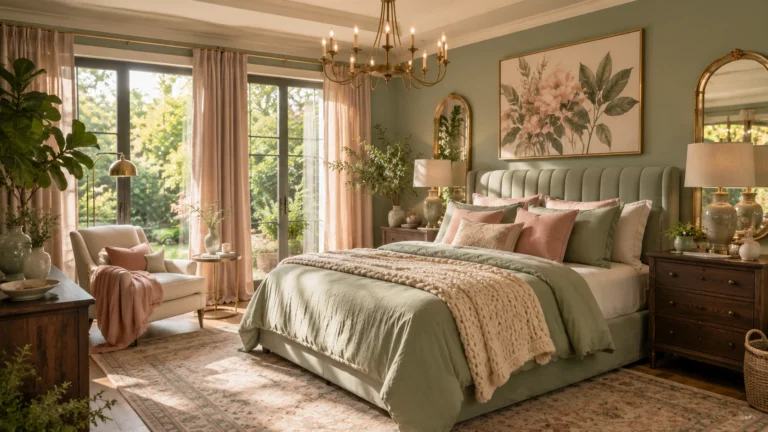
A sage green upholstered canopy bed looks especially elegant against warm cream walls. Dress it with ivory sheets, a cream duvet, and a few pillows in slightly different shades of green.
The trick is to avoid making every element perfectly match.
Try combining muted sage with olive-gray or eucalyptus-toned accessories. These subtle variations add dimension while keeping the bedroom calm.
For an elegant finishing touch, place matching nightstands on either side and use simple ceramic lamps with warm fabric shades.
Quick tip: If a full canopy bed feels too large for your room, choose a tall sage upholstered headboard instead. You’ll still create a strong focal point without visually crowding the space.
2. Add Character With Textured Accent Walls

Color isn’t the only way to make a bedroom interesting. Texture can give even a simple sage and cream palette much more personality.
Consider creating a sage green accent wall behind the bed using vertical paneling, beadboard, limewash-style paint, or decorative wall molding.
Keep the remaining walls cream or warm off-white so the feature wall stands out without making the room feel dark.
Texture is particularly helpful in minimalist bedrooms where there aren’t many decorative objects. A paneled wall creates architectural interest while allowing the space to stay clean and uncluttered.
You can repeat the texture elsewhere through linen curtains, a woven bench, knitted throws, or a wool rug.
Ask yourself: Does your bedroom need more decoration, or does it simply need more texture?
Often, adding texture is enough to make a simple room feel thoughtfully designed.
3. Create Comfort With Layered Linens

Few things make a bedroom feel more inviting than a beautifully layered bed.
Start with breathable cream or ivory sheets. Add a soft cream duvet, then introduce sage green through a quilt, coverlet, throw, or decorative pillows.
Instead of using one fabric throughout, mix several textures, such as:
- Washed linen sheets
- Cotton bedding
- Quilted coverlets
- Chunky knitted throws
- Velvet accent cushions
- Bouclé decorative pillows
Keep the shades slightly varied rather than perfectly identical.
For example, an ivory duvet can sit alongside oatmeal pillows, pale sage cushions, and a muted olive throw. The subtle tonal differences make the bed feel relaxed rather than overly coordinated.
Layering also makes it easy to change the room seasonally. Use lightweight linen and cotton during warmer months, then add wool or velvet when you want the room to feel cozier.
4. Add Personality With Vintage Furniture

Sage green and cream can easily become too polished if every piece of furniture is brand new and perfectly coordinated.
One or two vintage-inspired pieces can solve that problem.
Consider pairing a cream bed with an antique-style wooden dresser, a vintage bedside table, or a traditional upholstered chair. Warm oak and medium walnut finishes work particularly well because they add contrast without overpowering the soft colors.
You don’t need an entire matching vintage furniture set.
In fact, a single distinctive piece often looks better. An old wooden dresser beneath a simple mirror, for example, can give the bedroom a collected-over-time appearance.
Brass drawer pulls or aged metal hardware can tie older furniture into the rest of the decor.
If you’re refreshing an existing piece, painting a small bedside cabinet muted sage green can also give it a new purpose while connecting it to the room’s palette.
5. Ground the Room With a Large Area Rug

The floor is sometimes forgotten when planning bedroom colors, yet it takes up a significant amount of visual space.
A large area rug can bring cream and sage elements together while making the bedroom feel warmer underfoot.
For a calm, timeless look, consider a cream, beige, or oatmeal rug with a subtle sage pattern. A faded botanical or traditional design works well if you prefer something with more detail.
Choose a rug large enough to extend beyond the sides of the bed. A tiny rug placed only at the foot of a large bed can make the furniture feel disconnected.
Texture matters too.
A thick wool rug creates a cozy feel, while a flatter woven rug works nicely in warmer climates or bedrooms with a more relaxed aesthetic.
If you already have patterned curtains or wallpaper, keep the rug relatively simple. This gives the eye somewhere to rest and prevents different patterns from competing.
6. Bring Nature Indoors With Botanical Prints

Sage green already has a natural quality, so botanical artwork is an easy way to strengthen that connection.
You don’t need to cover every wall with leaves and flowers. A pair of framed botanical prints above the bed or dresser may be enough.
Choose artwork featuring muted greens, warm whites, beige, and small touches of brown. These colors will blend naturally with cream walls and wooden furniture.
Frames can influence the overall style as well.
Light wood frames create a relaxed Scandinavian feel, dark wood adds traditional contrast, and slim brass frames introduce understated elegance.
You could also place one or two real or realistic-looking plants around the room. A plant near a sunny window or on a dresser adds freshness without turning the bedroom into a jungle.
The goal is balance. Botanical elements should support the peaceful atmosphere rather than become the entire theme.
7. Center the Room Around an Upholstered Headboard

An upholstered headboard offers a practical way to introduce color without painting the walls.
Choose a muted sage headboard in linen, velvet, or textured fabric and place it against a warm cream wall. The contrast is gentle but still strong enough to establish the bed as the room’s focal point.
For a modern bedroom, consider a wide, simple headboard with clean lines.
For something more traditional, a curved or lightly tufted design adds softness and elegance.
Continue the cream shade through bedding and curtains, then repeat sage in only a few smaller accessories. This prevents the room from becoming overly green.
A simple combination might include:
- Cream walls
- Sage upholstered headboard
- Ivory bedding
- Natural oak nightstands
- One sage throw
- Warm brass lamps
This approach is especially useful if you rent or simply don’t want to commit to green walls.
8. Make the Most of Natural Light

Natural light can completely change how sage green appears.
In a bright bedroom, sage can look fresh and airy. In a darker space, the same shade may appear grayer and more subdued. That’s why it’s worth testing paint or fabric samples in the actual room before making a final decision.
If your bedroom receives plenty of daylight, use sheer cream curtains to soften the brightness without blocking it completely.
Floor-length curtains can also make windows appear taller and give the bedroom a more elegant finish.
Keep large furniture from blocking the windows whenever possible. Positioning the bed or dresser thoughtfully can help daylight travel farther into the room.
Mirrors are useful in darker bedrooms. Place one where it can reflect natural light rather than directly facing a cluttered area.
Actionable tip: Look at your sage paint sample in the morning, afternoon, and evening. The undertone can change noticeably as the light shifts.
9. Add Contrast With Dark Wood Accents

A room made entirely from pale cream and sage can sometimes lack definition.
Dark wood provides an effective contrast.
Walnut nightstands, an espresso-toned dresser, dark wooden picture frames, or a rich wood bench can give the softer colors more visual weight.
You don’t need much.
Imagine a bedroom with cream walls, sage bedding, light curtains, and a single walnut dresser. That darker piece immediately gives the eye a place to land and prevents the room from looking washed out.
Dark wood also works particularly well when you want a sophisticated or slightly traditional bedroom rather than a purely airy look.
Balance is important, though. If the bed, dresser, flooring, nightstands, and shelving are all very dark, the room may lose the gentle character that makes this palette appealing.
Use dark wood as an accent rather than the dominant finish.
10. Elevate Cream Walls With Elegant Molding

If plain cream walls feel unfinished, decorative molding can add character without introducing another bold color.
Picture-frame molding behind the bed creates a refined backdrop and works beautifully in both classic and transitional interiors.
You can paint the molding the same cream as the wall for subtle dimension or use sage inside selected panels to create gentle contrast.
Another option is sage green wainscoting on the lower portion of the wall with warm cream above it.
This works particularly well in rooms with high ceilings because it breaks up large expanses of wall while keeping the palette cohesive.
Keep the rest of the decor restrained if the wall treatment is detailed. Simple bedding and understated furniture allow the architecture to become the feature.
11. Create a Cozy Reading Nook

Have an unused corner near a window? Turn it into a small reading area rather than filling it with unnecessary furniture.
Start with a comfortable cream or oatmeal armchair. Add a sage cushion, a soft throw, and a small wooden side table.
A slim floor lamp provides useful evening light without occupying much floor space.
If the corner is large enough, add a small ottoman or footstool. A woven basket beside the chair can hold blankets or books while adding natural texture.
This small setup makes a bedroom more functional without disturbing its restful purpose.
For compact rooms, you don’t even need a large chair. A narrow upholstered bench beneath a window with two comfortable cushions can create a simple alternative.
The key question is: What would make you actually use this corner?
Design it around comfort first rather than filling the space simply because it is empty.
12. Create a Soft Glow With Ambient Lighting

Even a beautifully decorated bedroom can feel uncomfortable when the only lighting comes from a harsh ceiling fixture.
A layered lighting plan is much more suitable for sage green and cream interiors.
Begin with a main ceiling light, then add softer sources around the room.
Consider:
- Bedside table lamps
- Wall sconces
- A floor lamp beside a reading chair
- Small accent lamps on a dresser
- Warm LED lighting placed discreetly
- A dimmable ceiling fixture
Choose warm light rather than very cool white lighting. Warm illumination complements cream fabrics and prevents sage green from appearing overly cold.
Lampshades made from linen, pleated fabric, or frosted glass can further soften the light.
For a balanced appearance, place matching lamps on both sides of the bed. If you prefer a more relaxed look, use different fixtures that share a similar material or finish.
The goal isn’t to make the bedroom extremely bright. It’s to provide enough light for different activities while maintaining a comfortable evening atmosphere.
How to Balance Sage Green and Cream
The right balance depends on the mood you’re trying to create.
| Desired Look | Main Color | Best Supporting Elements |
|---|---|---|
| Light and airy | Cream | Pale sage, light oak, linen |
| Cozy and natural | Sage + cream | Walnut, wool, woven textures |
| Modern | Warm cream | Muted sage, black details, clean lines |
| Elegant | Cream | Sage velvet, brass, dark wood |
| Cottage-inspired | Sage | Cream textiles, vintage wood, botanical prints |
| Minimalist | Cream | Small sage accents, simple furniture |
If you’re unsure where to begin, make cream the dominant color and introduce sage gradually. It’s easier to add another green cushion, throw, or piece of artwork than to correct a room where the color feels overwhelming.
Simple Styling Tips for a Cohesive Bedroom
You don’t need to buy everything at once to create a well-designed bedroom.
Start with the largest visual elements: walls, bed, bedding, curtains, and rug. Once those pieces work together, add smaller decorative details.
A few useful rules can help:
- Repeat sage green in two or three areas rather than concentrating it in one corner.
- Mix warm cream shades instead of relying on stark white.
- Include natural wood to prevent the palette from feeling flat.
- Combine smooth and textured fabrics.
- Leave some surfaces intentionally uncluttered.
- Use darker accents sparingly to create definition.
- Choose decor because it adds beauty or function, not simply to fill empty space.
Remember that a serene bedroom doesn’t have to be bare. It simply needs enough visual breathing room for each element to feel intentional.
Frequently Asked Questions
Do sage green and cream go together in a bedroom?
Yes. Sage green and cream complement each other particularly well because both have a soft, understated quality. Cream adds warmth and brightness, while sage introduces gentle color and a natural feel. Together, they can suit modern, traditional, farmhouse, cottage, Scandinavian, and transitional bedrooms.
What color furniture looks best with sage green and cream?
Natural wood is one of the easiest choices. Light oak creates an airy look, while walnut and other darker woods provide richer contrast. Cream upholstery, muted sage furniture, and small black or brass details can also work well.
What accent colors work with a sage green and cream bedroom?
Warm neutrals are particularly easy to incorporate. Beige, taupe, tan, oatmeal, and soft brown maintain a calm palette. For a little more contrast, muted terracotta, dusty rose, charcoal, or restrained brass details can work beautifully.
Should sage green be used on every wall?
Not necessarily. You can use sage on all walls if you want a more enveloping room, but an accent wall is often enough. Cream walls with sage bedding, curtains, furniture, or an upholstered headboard can create the same color story with less commitment.
How can I make a sage and cream bedroom look luxurious?
Focus on materials and proportion rather than adding excessive decoration. Floor-length curtains, a large rug, quality bedding, an upholstered headboard, warm lighting, substantial nightstands, and a few brass or dark wood details can make the room feel more refined.
Is sage green suitable for a small bedroom?
Yes. Choose a lighter, muted sage and combine it with plenty of cream to maintain brightness. Keeping furniture proportional to the room, using simple window treatments, and allowing natural light to enter can help the space feel open and comfortable.
Conclusion
The most successful sage green and cream bedroom ideas aren’t about matching every object to the same two colors. They’re about creating a balanced environment where soft color, comfortable textures, natural materials, and thoughtful lighting work together.
Start with cream as a warm foundation, then decide how strongly you want sage green to feature. It might appear on an entire accent wall, an upholstered headboard, curtains, bedding, or simply a few carefully chosen accessories.
From there, bring in wood, layered fabrics, botanical details, and warm lighting to give the room personality.
Most importantly, build the bedroom around how you actually live. A reading nook is worthwhile if you enjoy quiet evenings with a book; elaborate decor isn’t necessary if a simple, uncluttered space helps you relax.
With a few intentional choices, sage green and cream can create a bedroom that feels calm, comfortable, elegant, and easy to enjoy for years.