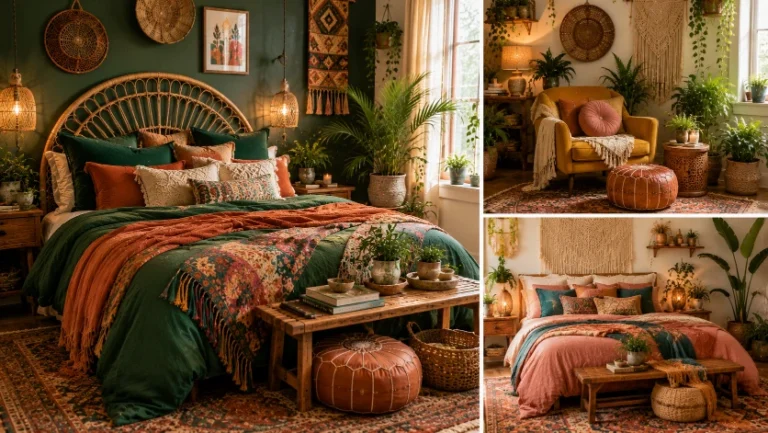
Moody Green Bedroom Color Palettes That Create Calm, Depth, and Earthy Serenity
Moody green can make a bedroom feel calm without making it look plain. From rich forest tones to muted moss and gray-green shades, green brings the quiet character of nature indoors while still allowing a room to feel polished and sophisticated.
The best moody green bedroom color palettes are not simply about painting every surface dark green. They balance deeper shades with warm neutrals, natural wood, soft textiles, and carefully chosen accents. That contrast gives the room depth while keeping it comfortable enough for everyday living.
If you want a bedroom that feels restful, earthy, and visually interesting, these ten palettes offer plenty of ways to work with green while maintaining a balanced atmosphere.
Why Moody Green Bedroom Color Palettes Work So Well for Restful Spaces
Green has a natural connection with landscapes, leaves, forests, and other outdoor environments. In bedroom design, muted and darker greens can create a grounded visual effect, especially when they are paired with warm materials and gentle lighting.
The key is choosing the right undertone.
A forest green with a warm undertone can feel inviting alongside walnut furniture, while a cooler gray-green may look more refined with pale wood and soft gray textiles. Very saturated greens can create more energy, so muted shades are often easier to use across larger bedroom surfaces.
Lighting also changes the way green appears throughout the day. A dark green wall may look rich and earthy in daylight but significantly deeper at night. This makes testing paint samples particularly important before committing to the entire room.
For a comfortable bedroom, think beyond wall color. Your overall palette can include:
- Green walls, bedding, or upholstered furniture
- Cream, oat, ivory, or linen for visual relief
- Walnut, oak, or other natural woods for warmth
- Black or charcoal for structure
- Brass or bronze for subtle contrast
- Layered lighting to soften darker surfaces
The result should feel balanced rather than overwhelmingly dark.
10 Moody Green Bedroom Color Palettes for Calm, Earthy Interiors
1. Forest Green, Warm Oat, and Walnut Moody Green Bedroom Color Palette

Forest green and walnut have a natural relationship because both colors are strongly associated with earthy interiors. Adding warm oat prevents the combination from becoming too heavy.
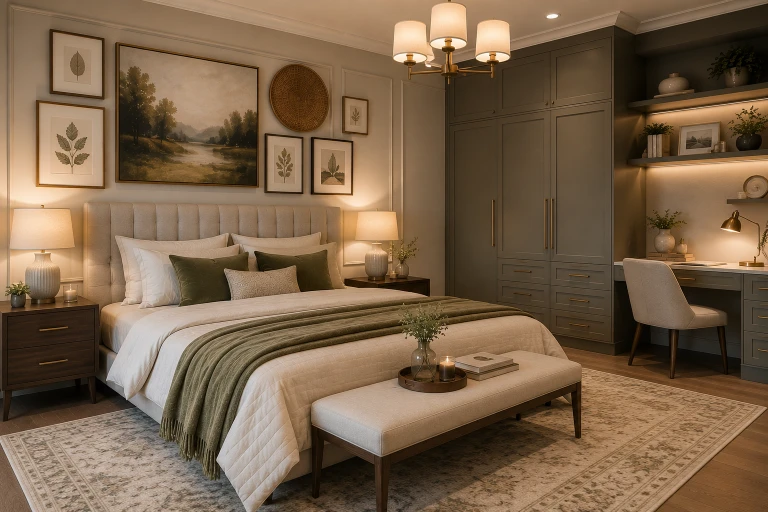
Consider using forest green on the wall behind the bed while keeping the remaining surfaces slightly lighter. A walnut bed frame or pair of bedside tables can introduce warmth and visible wood grain.
Oat-colored bedding works especially well between these two darker elements. Linen sheets, a textured throw, or an upholstered bench can provide the lighter layer the palette needs.
A balanced arrangement might include:
- Forest green feature wall
- Walnut bed or nightstands
- Oatmeal linen bedding
- Warm ivory rug
- Aged brass lighting
- Small amounts of black in frames or hardware
If the bedroom receives limited daylight, use forest green more selectively. A single feature wall can provide plenty of mood without reducing the sense of openness.
2. Olive Green, Cream, and Blackened Steel Moody Green Bedroom Color Palette

Olive green has warmer, slightly yellow undertones that make it particularly suitable for relaxed and organic bedrooms.
Cream gives olive room to breathe, while blackened steel adds a sharper architectural element. Together, the colors can suit modern, industrial, rustic, and contemporary bedrooms.
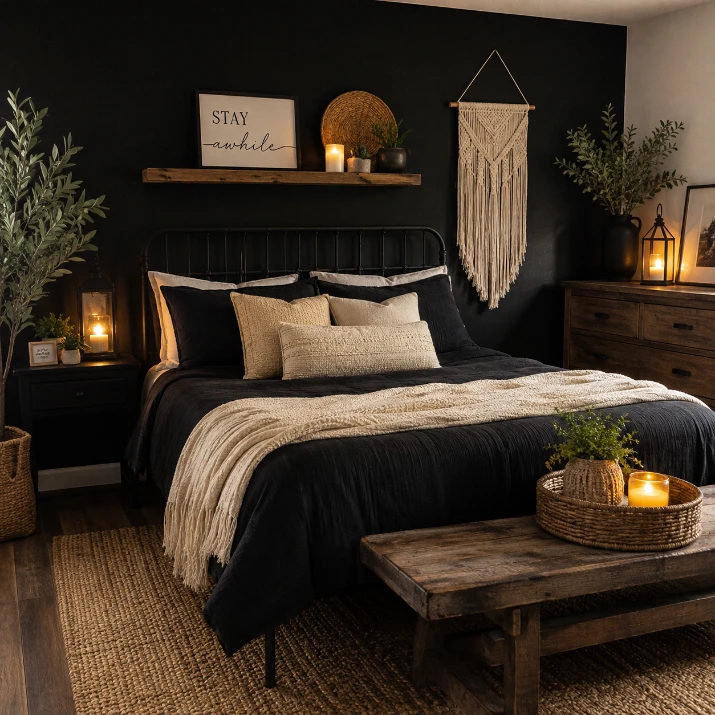
Try olive-painted walls with a cream upholstered bed and black metal sconces. A slim black bed frame can also work, although adding warm textiles will prevent the combination from feeling too stark.
Texture matters here. Consider washed linen, wool, woven baskets, natural timber, or a slightly irregular ceramic lamp.
Instead of repeating black throughout the entire room, use it as an outline. Lamp arms, curtain rods, furniture legs, and picture frames may be enough to establish definition.
3. Charcoal Green, Soft Charcoal, and Brass Moody Green Bedroom Color Palette

For a darker and more dramatic bedroom, charcoal green paired with charcoal creates a sophisticated tonal scheme.
The challenge is separation.
If the green walls, bed, flooring, and curtains are almost identical in darkness, their shapes can visually merge. Introduce different values and textures so each surface remains recognizable.
For example, pair charcoal-green walls with a medium-charcoal upholstered headboard rather than another nearly black surface. Add warm gray bedding and an ivory or stone rug beneath the bed.
Brass works beautifully as a small finishing detail because its warmth contrasts with the cooler dark tones.
Use it selectively through bedside lamps, drawer handles, a mirror frame, or a pendant light. Too many shiny metallic pieces can compete with the quiet character of the palette.
Warm bulbs are also important. Cooler lighting may emphasize the gray undertones, while warm illumination makes charcoal green appear softer and more comfortable.
4. Sage Green, Warm White, and Light Oak Moody Green Bedroom Color Palette

A moody bedroom does not always need extremely dark paint.
Muted sage can create a softer interpretation of the look, particularly when used with warm white and light oak. This combination is useful for small bedrooms or rooms where you want an earthy atmosphere without dramatically reducing brightness.
Choose a sage with noticeable gray or earthy undertones rather than a bright pastel green.
Warm white can cover the ceiling, bedding, curtains, or surrounding walls. Light oak furniture then brings a gentle natural warmth into the scheme.
For example, you could combine a muted sage wall with a low oak bed, warm-white linen bedding, a woven wool rug, and simple ceramic bedside lamps.
Want the room to feel moodier without repainting it?
Add a darker sage throw, olive cushions, or one charcoal accessory. These small layers create additional depth while maintaining the light foundation.
5. Pine Green, Terracotta, and Cream Moody Green Bedroom Color Palette

Pine green and terracotta create one of the warmest combinations on this list.
The contrast works because green and earthy orange-red tones naturally bring different types of warmth and depth into the same space. Cream acts as a quiet bridge between them.
Pine green is strong enough to work beautifully on a feature wall, paneled headboard wall, or built-in cabinetry. Terracotta is usually more effective in smaller amounts.
Try incorporating it through:
- A rust-colored throw
- Terracotta ceramic lamps
- One or two accent cushions
- Artwork with muted clay tones
- A small upholstered chair
Keep the main bedding cream or ivory so the bed remains a visual resting point.
Natural materials make this palette even more convincing. Walnut, aged oak, linen, wool, clay, and woven fibers all complement its earthy character.
6. Deep Teal-Green, Oat, and Walnut Moody Green Bedroom Color Palette

Somewhere between blue and green, deep teal-green provides a slightly more dramatic alternative to traditional forest shades.
It can change noticeably depending on lighting. Daylight may reveal more green, while evening lighting can emphasize its blue undertones. Testing the color in your actual bedroom is therefore especially worthwhile.
Walnut introduces warmth that balances the cooler side of teal-green. Oat-colored textiles soften both colors and keep the room approachable.
One practical layout is a deep teal-green headboard wall with a walnut platform bed, oat linen bedding, warm beige curtains, and an off-white rug.
For accessories, choose restrained finishes such as aged brass, dark bronze, or matte black.
You do not need many decorative colors here. Allow the variation in wood grain, fabric, and natural materials to provide most of the visual interest.
7. Moss Green, Charcoal, and Natural Linen Moody Green Bedroom Color Palette

Moss green is ideal when you want an organic bedroom that feels slightly rustic without looking overly themed.
Its muted character pairs naturally with charcoal, while linen provides a softer neutral layer.
Use moss green across walls or cabinetry and introduce charcoal through smaller grounding pieces, such as a bench, bedside table, lamp, or bed frame.
Then bring in natural linen through curtains and bedding.
The slight variations found in linen are valuable in a moody room because they create texture without requiring additional patterns or colors.
You could also introduce untreated or medium-toned wood, handmade ceramics, and a woven rug.
One mistake to avoid is adding too many obviously nature-themed decorations. You do not need leaf prints on every cushion or botanical artwork across every wall. Let the color and materials create the earthy feeling instead.
8. Bottle Green, Cream, and Black Iron Moody Green Bedroom Color Palette

Bottle green has a rich, classic appearance that can work particularly well in bedrooms with traditional architectural details or modern furniture.
Cream prevents it from becoming visually dense, while black iron provides crisp definition.
If you have wall molding or paneling, bottle green can emphasize those architectural details beautifully. Keep the ceiling cream or warm white to provide contrast above the darker walls.
A cream bed against bottle-green walls creates an immediate focal point. Add black iron through pendant lights, sconces, a narrow bed frame, or curtain hardware.
The secret is restraint.
If you already have a black bed frame, you probably do not need black nightstands, black bedding, black curtains, and black flooring as well.
Instead, repeat the black in two or three small areas and let cream occupy more visual space.
A medium-toned wood floor or natural rug can complete the transition between the dark walls and lighter furniture.
9. Eucalyptus Green, Warm White, and Light Wood Moody Green Bedroom Color Palette

Eucalyptus green offers a quiet, dusty quality that works well in Scandinavian-inspired, minimalist, and contemporary bedrooms.
Although lighter than forest or bottle green, it can still feel moody when you choose a muted shade and layer it with slightly deeper greens.
Warm white keeps the bedroom fresh, while pale oak or ash introduces subtle natural character.
Consider eucalyptus-painted walls with a light wood bed, warm-white bedding, and a slightly darker green blanket folded across the foot of the bed.
The palette is particularly useful for smaller rooms because it provides color without requiring very dark surfaces.
Keep decorative objects limited and purposeful. A ceramic vase, textured rug, simple framed artwork, and one comfortable chair can be enough.
Rather than filling empty areas, allow some open wall and floor space to remain. That breathing room can make the green feel intentional instead of busy.
10. Army Green, Warm Oat, and Cognac Leather Moody Green Bedroom Color Palette

Army green can feel surprisingly sophisticated when it is separated from military-themed décor and paired with warm residential materials.
Oat softens its utilitarian character, while cognac or medium-brown leather adds warmth.
This combination works particularly well in modern bedrooms with clean furniture lines.
An army-green feature wall can sit behind an oatmeal upholstered bed, while a cognac leather bench or reading chair introduces a richer accent. Medium walnut can also be incorporated through nightstands or a dresser.
Avoid using too many dark brown pieces at once. Leather is visually strong, so one substantial element is often enough.
For a softer finish, add:
- Cream or oatmeal curtains
- Textured neutral bedding
- A warm wool rug
- Bronze or black lighting
- Natural wood furniture
- Minimal abstract artwork
The finished room can feel grounded and mature without becoming overly masculine or severe.
Common Mistakes When Creating Moody Green Bedroom Color Palettes and How to Fix Them
A moody green bedroom can look beautifully layered when each color has a clear role. Problems usually begin when every surface is treated as an opportunity to add another dark shade.
Using too many dark colors: If the walls, curtains, bedding, floor, and furniture are all extremely dark, individual features can disappear. Introduce cream, oat, linen, warm gray, or another lighter neutral to create separation.
Ignoring undertones: Not every green works with every wood or neutral. Yellow-based olive may react differently beside cool gray than a blue-based teal-green would. Compare samples together before buying larger quantities.
Depending on one light source: A single ceiling fixture can leave dark bedrooms feeling flat. Combine ambient lighting with bedside lamps, wall sconces, or another task light where needed.
Choosing paint before checking daylight: Green can change dramatically between morning and evening. Paint sample areas on more than one wall and observe them at different times.
Adding too many accent colors: Green already provides personality. Two or three supporting colors are often enough for a cohesive bedroom.
Forgetting texture: A limited palette does not have to look boring. Linen, velvet, wool, timber, leather, woven fibers, and subtle wall finishes can create variation without introducing unnecessary colors.
A useful rule is to establish one dominant green, one main neutral, and one grounding or warming accent. Additional shades can then appear in smaller quantities.
Let Moody Green Bedroom Color Palettes Ground the Entire Room
The most successful moody green bedroom color palettes are rarely built around green alone. They work because every supporting color has a purpose.
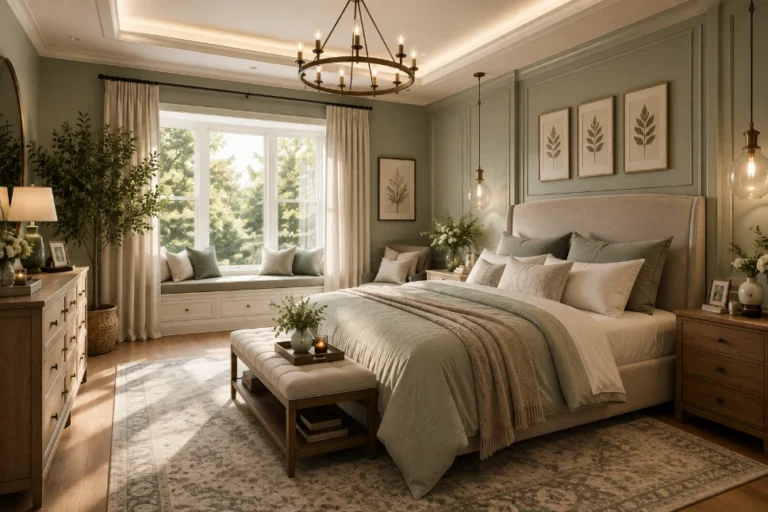
Forest green becomes warmer beside walnut and oat. Pine green gains character from terracotta. Bottle green looks cleaner against cream, while black iron gives it definition. Even softer shades such as eucalyptus and sage can create a moody atmosphere when their undertones, textures, and lighting are carefully considered.
Before changing the entire bedroom, start with samples. Place your chosen green beside the wood, bedding, flooring, and metal finishes already in the room. Check everything during daylight and again under your evening lighting.
Ask yourself: does the room still feel comfortable after the sun goes down? Can you clearly see the different layers, or are the darker surfaces blending together?
Those simple checks can prevent expensive color mistakes.
Conclusion
Creating a beautiful moody green bedroom is less about making the room as dark as possible and more about finding the right balance between depth, warmth, contrast, and comfort.
Start with the green shade that suits your room’s natural light, then choose one supportive neutral and one warm or grounding accent. Forest green with oat and walnut creates natural warmth, while charcoal green with brass feels more dramatic. Sage or eucalyptus can provide a gentler option for brighter or smaller rooms.
Whichever combination you choose, test the colors together before making major changes. When green, wood, textiles, lighting, and accent finishes relate naturally to one another, the bedroom can feel calm, cohesive, and distinctly your own.