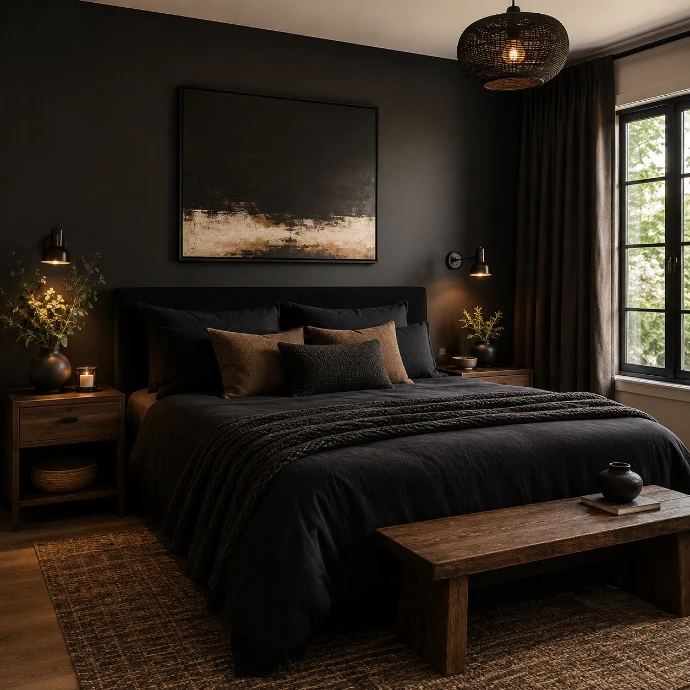
Moody Teal Bedroom Ideas That Blend Depth, Calm, and Quiet Luxury
A bedroom can feel dramatic without being dark and heavy. Teal makes that balance possible. It carries the calming character of blue, the grounded quality of green, and enough richness to make an ordinary bedroom feel more considered.
The best moody teal bedroom ideas are not about covering every surface in one dark color. They rely on contrast, texture, warm lighting, natural materials, and carefully chosen furniture to give teal room to make an impact.
You might pair saturated teal walls with oatmeal bedding, soften them with walnut furniture, or use brass details to introduce a subtle glow. Even small choices—such as curtain fabric or the height of a bed—can change how sophisticated the finished room feels.
Below are ten practical ways to create a moody teal bedroom that feels calm, comfortable, and quietly luxurious.
Why Moody Teal Bedroom Ideas Work So Well for Calm and Sophisticated Spaces
Teal sits between blue and green, which gives it an unusual amount of flexibility. Depending on its undertone and the surrounding light, it can appear cooler and more aquatic or warmer and closer to a rich green.
For a moody bedroom, deeper and slightly muted versions usually work particularly well. Think petrol teal, blue-green, peacock teal, or a smoky dark teal rather than a bright tropical shade.
The color also creates an effective background for natural materials. Walnut, oak, linen, wool, leather, stone, and aged brass all gain definition against a saturated teal wall.
Lighting matters just as much as the paint itself. A north-facing bedroom may make teal appear cooler, while warm artificial lighting can emphasize its greener side. Test a generous paint sample on more than one wall and look at it during the morning, afternoon, and evening before committing.
Another advantage is that teal does not need many decorative colors around it. A restrained palette can be enough:
- Deep or muted teal for the main color
- Oat, ivory, or cream for softness
- Walnut for natural warmth
- Charcoal for depth
- Aged brass for small highlights
This limited palette helps the room feel intentional rather than overly decorated.
10 Moody Teal Bedroom Ideas for a Calm and Quietly Luxurious Interior
1. Create Immersive Moody Teal Bedroom Ideas with Matte Teal Walls and Ceiling

Painting both the walls and ceiling teal can create a cocoon-like effect that works beautifully in a bedroom.
Instead of stopping the paint at the ceiling line, carrying the same shade overhead reduces strong visual boundaries. This can make the architecture feel softer and the room more enveloping.
A matte or low-sheen finish is especially effective because it absorbs rather than strongly reflects light. It also helps the color appear richer.
This approach can work in a large primary bedroom, but it can be equally appealing in a compact room. Dark paint does not automatically make a small bedroom unsuccessful. The result depends on lighting, furniture scale, contrast, and how much visual clutter is present.
Keep the remaining elements controlled. For example, pair the teal envelope with a simple upholstered or wooden bed, light bedding, and one substantial rug.
If painting every surface feels too intense, use teal across the walls and choose a ceiling color one or two shades softer. You will retain much of the enveloping quality without creating quite as much saturation.
2. Balance Moody Teal Bedroom Ideas with Oatmeal and Cream Bedding

Once teal becomes the dominant color, the bed provides an ideal place to introduce relief.
Cream, warm white, oatmeal, flax, and light beige bedding can prevent a dark teal bedroom from becoming visually dense. These colors are softer than brilliant white, which can sometimes create an unnecessarily sharp contrast against dark walls.
Texture is important here.
Rather than buying every layer in exactly the same fabric, combine materials with slightly different surfaces. Linen sheets, a cotton duvet cover, a woven throw, and a small number of textured cushions can create dimension without adding more colors.
Imagine a dark petrol-teal wall behind an oatmeal upholstered bed. Add ivory sheets, a warm beige duvet, and a loosely folded charcoal throw at the foot. The palette remains simple, but the variation in texture keeps it interesting.
For a more relaxed bedroom, allow the linen to look naturally soft rather than perfectly arranged. Quiet luxury often comes from material quality and restraint rather than an excessive number of decorative pillows.
3. Add a Low Walnut Platform Bed to Ground a Moody Teal Bedroom

Teal and walnut make a particularly strong pairing because one brings cool depth while the other contributes natural warmth.
A low-profile walnut platform bed is useful when you want the bedroom to feel contemporary and uncluttered. Its horizontal shape visually grounds the room, while visible wood grain keeps the darker palette from feeling flat.
Look for a bed with relatively simple lines. Heavy carvings or an overly complicated frame can compete with a saturated wall color.
You can repeat walnut in one or two smaller areas, perhaps through a floating nightstand or shelf, but avoid matching every furniture piece perfectly. Too much identical wood can make the room look like a furniture showroom rather than a naturally developed interior.
The height of the bed also affects the mood. A lower bed leaves more visible wall above the headboard, allowing the teal color to become a stronger architectural feature.
Add warm-neutral bedding and a generous rug underneath, and the combination feels grounded without becoming severe.
4. Use Wall-Mounted Nightstands in Moody Teal Bedroom Designs to Reduce Visual Clutter

Dark rooms benefit from furniture that leaves some breathing room around it.
Wall-mounted nightstands are a clever choice because they keep the floor visible. That small gap underneath can make the bedroom feel cleaner and more spacious, particularly when the room is compact.
Walnut works naturally against teal, while matte black creates a sharper contemporary effect.
Keep the nightstand itself simple. A small drawer can hide chargers, glasses, and other everyday objects that would otherwise accumulate beside the bed.
Lighting can also be incorporated above or beside the nightstand. Wall-mounted reading lights or small pendants free the surface from bulky table lamps.
For a polished arrangement, try:
- One floating drawer
- One wall-mounted reading light
- A small book
- A ceramic dish or compact decorative object
There is no need to fill every available surface. Empty space is part of the design.
5. Warm Up Dark Moody Teal Bedroom Ideas with Soft Cove Lighting

Lighting can completely change how teal appears after sunset.
Cool, overly bright lighting may make a dark teal bedroom feel stark. Softer ambient light brings out the richness of the color while making the room more comfortable in the evening.
Cove lighting is one way to create this effect. Concealed light positioned around a ceiling detail, recessed area, or architectural ledge produces an indirect glow rather than a harsh visible beam.
However, it should not be the room’s only light source.
A comfortable bedroom usually benefits from layers of lighting. Combine general ambient light with bedside reading lights and, where needed, practical task lighting near a desk, wardrobe, or dressing area.
Dimmers are particularly useful because the lighting required for getting dressed is different from the lighting you may want before sleeping.
If architectural cove lighting is not realistic for your room or budget, similar softness can be achieved with shaded bedside lamps, discreet wall lights, or carefully positioned floor lamps.
6. Ground Moody Teal Bedroom Decor with a Large Charcoal or Oat Wool Rug

A rug has more influence on a bedroom than its decorative role might suggest.
It can soften acoustics, make the floor more comfortable, and visually connect the bed with the surrounding furniture. Against moody teal, charcoal and oatmeal are both strong options, but they create different results.
An oatmeal rug introduces contrast and helps brighten the lower half of the room. This is useful when the walls and ceiling are both dark.
Charcoal creates a more continuous, dramatic palette. It works especially well when lighter bedding provides enough contrast elsewhere.
Whichever color you choose, pay attention to scale.
A small rug sitting only at the foot of a large bed can look disconnected. A larger rug extending beyond the sides and foot of the bed usually makes the arrangement feel more complete.
Wool is particularly appealing because of its soft, substantial texture, but the best choice should also suit your maintenance needs and budget.
Ask yourself: Does the room need more contrast or more depth? Your answer can help you decide between a lighter oat rug and a darker charcoal option.
7. Frame Moody Teal Bedroom Ideas with Floor-to-Ceiling Heavy Linen Curtains

Curtains can make a room appear more finished before you add a single decorative accessory.
For a moody teal bedroom, floor-to-ceiling curtains create strong vertical lines and can make the windows feel larger. Mounting the curtain hardware higher than the window frame can enhance this effect.
Heavy linen or a linen-look fabric brings softness to the hard surfaces around windows.
You do not necessarily need teal curtains simply because the walls are teal. Oatmeal, mushroom, warm gray, or muted charcoal can provide subtle contrast while staying within the overall palette.
If you prefer a tonal look, choose curtains that are close to the wall color but not necessarily identical. A slightly darker or softer teal can add dimension.
Practical needs should guide the final fabric choice as well. If morning light is an issue, use lined curtains or combine decorative panels with an appropriate blind.
The goal is to make the window treatment look intentional while still performing its everyday job.
8. Refine Moody Teal Bedroom Ideas with One Statement Artwork in a Thin Brass Frame

A dark wall can tempt you to create an elaborate gallery display, but sometimes a single large artwork has more impact.
One oversized piece above the bed or dresser gives the eye a clear focal point while allowing plenty of teal to remain visible around it.
Choose artwork based on the room’s atmosphere rather than trying to match every color precisely. An abstract piece containing cream, rust, muted blue, black, or earthy neutrals can connect naturally with the surrounding palette.
A thin brass frame introduces a small warm highlight without overpowering the artwork.
Scale matters. Artwork that is too small can look lost on a broad dark wall. Before buying a piece, mark its approximate dimensions on the wall with removable tape or paper. This simple test can prevent an expensive sizing mistake.
For an especially calm room, resist the urge to decorate every remaining wall afterward. One strong piece may be all the visual interest the bedroom needs.
9. Add Quiet Luxury to Moody Teal Bedrooms with Aged or Unlacquered Brass Details

Brass and teal naturally complement one another, but moderation is what keeps the pairing sophisticated.
Instead of adding gold-colored accessories everywhere, use warm metal only at functional touchpoints. Cabinet handles, wall lights, curtain hardware, or a small bedside fixture can provide enough contrast.
Unlacquered brass is valued for the way its surface changes with time, developing a natural patina rather than maintaining a permanently polished appearance. If you prefer a more consistent finish, aged or brushed brass can create a related look with different maintenance characteristics.
Try limiting the metal to a few repeated details throughout the room.
For example, brass reading lights can relate to wardrobe handles and the thin frame around an artwork. That repetition creates continuity without turning brass into a theme.
Avoid mixing numerous shiny finishes in a small bedroom. Chrome, polished gold, copper, and black metal used simultaneously can make an otherwise restrained teal palette feel unnecessarily busy.
10. Complete Moody Teal Bedroom Ideas with Layered Teal, Oat, and Charcoal Bedding

Layering does not mean placing as many pillows and blankets as possible on the bed.
A more practical approach uses a small number of pieces with clear differences in tone and texture.
Start with the lightest color closest to the main bedding. Cream or oatmeal creates a calm foundation. Then introduce a muted teal throw or cushions to connect the bed with the walls. Finally, use charcoal sparingly to add definition.
For example:
- Warm ivory or oatmeal sheets
- Neutral linen duvet
- Two muted teal cushions
- One textured charcoal lumbar cushion
- A teal or charcoal throw folded loosely across the foot
This creates depth while keeping the bed comfortable enough for everyday use.
If your walls are extremely dark, let oat and cream dominate the bedding. If the walls are a softer, dusty teal, you can afford to introduce more charcoal.
The key is balance. Each color should have a purpose rather than appearing simply because it belongs to the palette.
Common Mistakes to Avoid When Styling Moody Teal Bedroom Ideas
A moody bedroom can quickly move from intimate to oppressive when every element is dark, heavy, and visually demanding.
Using only dark colors is one of the most common problems. Teal walls, black furniture, charcoal bedding, black curtains, and a dark floor can remove nearly all visual relief. Introduce warm neutrals through bedding, rugs, or upholstery.
Ignoring natural light can also lead to disappointing paint results. The same teal may look dramatically different between a sunny bedroom and a room with limited daylight. Always test the actual color in your space.
Another mistake is adding too many luxury-inspired details at once. Brass, velvet, marble, statement lighting, oversized art, decorative molding, and elaborate furniture do not all need to compete in one room.
Choose a few strong materials and repeat them thoughtfully.
Also pay attention to clutter. Saturated wall colors already provide considerable visual presence. Crowded shelves, overloaded nightstands, and numerous small accessories can make the room feel restless.
A useful rule is to finish the essential furniture and lighting first. Live with the room briefly before deciding which empty areas actually need decoration.
Let Moody Teal Bedroom Ideas Breathe with Simple Styling and Open Space
One of the easiest ways to make teal feel sophisticated is to give it enough visible space.
Not every wall needs artwork. Not every corner requires furniture. And not every shelf needs to be filled.
Allowing uninterrupted areas of teal wall to remain visible helps the color become part of the architecture rather than simply a decorative backdrop.
This is especially important when using rich materials such as walnut, wool, linen, and brass. Each material becomes easier to appreciate when it is not competing with dozens of accessories.
Consider how you actually use the bedroom before adding another chair, table, shelf, or decorative object. Does it solve a practical need? Does it improve comfort? Does it strengthen the overall composition?
If the answer is no, leaving that area open may be the better design decision.
A moody room should still feel restful. Thoughtful negative space, controlled contrast, and a limited material palette allow the richness of teal to stand out without overwhelming the person using the room.
Conclusion
The strongest moody teal bedroom ideas combine rich color with restraint. Teal can establish the atmosphere, but materials, lighting, texture, and contrast determine whether the finished bedroom feels heavy or quietly luxurious.
Start with the element that will make the biggest difference in your room. That might be a matte teal wall, warm neutral bedding, a walnut bed, or better evening lighting. Then build the remaining palette gradually.
You do not need to fill the bedroom with expensive furniture or decorative objects. A few well-chosen materials, comfortable textiles, warm lighting, and enough open space can make teal feel polished and inviting.
Most importantly, let the room remain a bedroom rather than turning it into a display. When comfort and function guide each decision, moody teal becomes more than a dramatic color choice—it creates a calm, grounded setting that can feel good at the beginning and end of every day.