Small Moody Bedroom Ideas That Make Tight Spaces Feel Intimate, Not Cramped
A small bedroom does not have to be bright white to feel comfortable. In fact, darker colors, warm lighting, and carefully chosen furniture can make a compact room feel surprisingly cozy and intentional.
The key to a successful Small Moody Bedroom is controlling visual clutter. Instead of filling limited floor space with decorative furniture, focus on rich color, smart storage, layered textures, and lighting that adds atmosphere without taking up valuable room.
These ideas can help you create a bedroom that feels intimate and stylish rather than dark, crowded, or uncomfortable.
Why a Small Moody Bedroom Can Work Beautifully in a Compact Space
There is a common belief that dark colors automatically make a small bedroom look smaller. While dark walls can reduce the sense of brightness, that is not always a disadvantage.
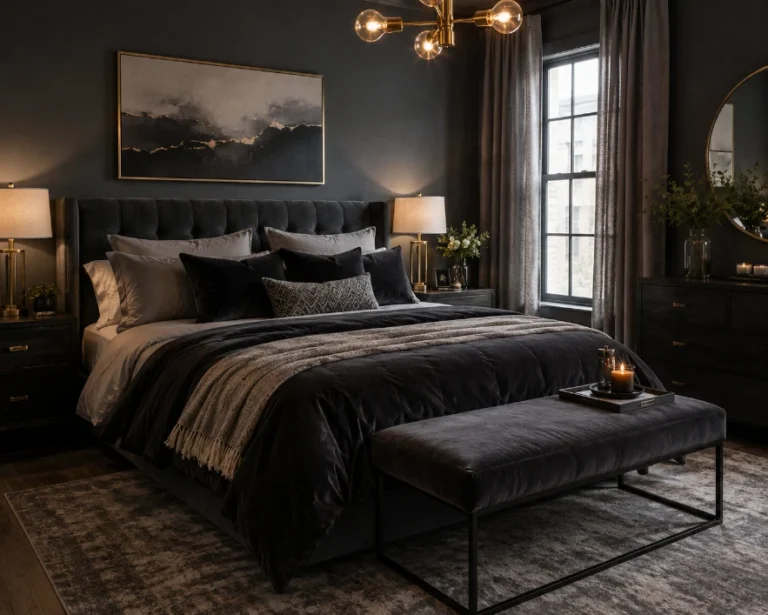
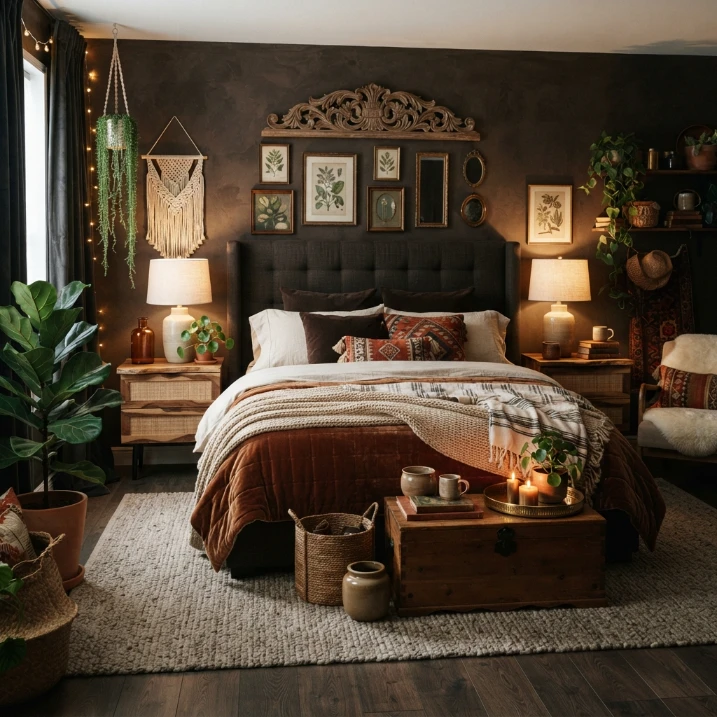
Charcoal, chocolate brown, muted olive, smoky blue, and warm black can soften corners and create a more enveloping atmosphere. When the walls, trim, or ceiling share similar tones, there are also fewer strong visual boundaries competing for attention.
The result can feel calmer than a small room filled with contrasting colors.
The real challenge is balance. A Small Moody Bedroom still needs adequate lighting, practical circulation, and furniture scaled to the available space. Lighter bedding, reflective surfaces, natural wood, and warm lamps can provide contrast without weakening the moody character.
11 Small Moody Bedroom Ideas That Make Tight Spaces Feel Intimate, Not Cramped
1. Create a Small Moody Bedroom with Warm Dark Walls and a Matching Ceiling

Color is one of the simplest ways to establish a moody atmosphere without using any floor space.
Instead of choosing a harsh jet black, consider warm charcoal, dark taupe, espresso brown, smoky olive, or brown-based gray. These shades provide depth while remaining comfortable enough for a sleeping space.
Taking the wall color onto the ceiling can also work surprisingly well in a compact bedroom. It reduces the sharp boundary created by a bright white ceiling and gives the room a more continuous appearance.
Before painting everything, test a large sample on different surfaces. Observe it in daylight and under your bedroom lighting, as dark colors can change noticeably throughout the day.
2. Save Floor Space in a Small Moody Bedroom with a Floating Platform Bed

Bulky bed frames can consume valuable visual and physical space.
A streamlined floating or wall-supported platform creates a cleaner outline around the largest piece of furniture in the bedroom. Leaving some visible floor beneath the frame can also make the layout feel less crowded.
Pair a dark wood or black platform with warm neutral bedding in oatmeal, stone, cream, or muted taupe. This gives the sleeping area enough contrast to remain visually defined against darker walls.
If you are considering a genuinely wall-mounted bed, make sure the installation and wall structure are professionally assessed. Style should never come at the expense of stability.
3. Make a Small Moody Bedroom Feel More Open with a Full-Length Mirror

A strategically positioned mirror can help distribute available light and create a stronger sense of depth.
In a narrow bedroom, consider mounting a full-length mirror on a closet door or an otherwise unused section of wall. This avoids sacrificing floor space to a freestanding mirror.
Placement matters more than size alone.
Positioning the mirror where it reflects a window, attractive lighting, or an uncluttered part of the room usually produces a better result than reflecting open shelving or a busy desk.
For a moody palette, slim black, bronze, or dark wood framing can keep the mirror connected to the rest of the design.
4. Use Soft Cove Lighting to Brighten a Small Moody Bedroom Without Bulky Fixtures

Good lighting becomes especially important when walls and furniture are dark.
Rather than depending entirely on one bright ceiling fixture, create several softer sources of illumination. Recessed cove lighting can wash light gently across a ceiling or wall without introducing a visually heavy fixture.
You can combine it with compact bedside sconces or discreet reading lights.
Warm-toned illumination generally complements charcoal, walnut, brown, olive, and other earthy colors better than extremely cool lighting.
Most importantly, plan lighting around actual activities. Your bedroom should still provide enough practical illumination for reading, getting dressed, and organizing belongings.
5. Add a Fold-Down Workspace to a Small Moody Bedroom Without Crowding the Floor

A bedroom sometimes has to function as a study or work area as well.
Instead of squeezing a conventional desk into an already limited layout, consider a wall-mounted surface that folds away when it is not being used.
Keep its design visually simple. A walnut surface against charcoal walls can introduce warmth, while a desk painted close to the wall color will attract less attention.
A nearby wall sconce can provide task lighting without requiring a table lamp.
Before installation, think about chair storage too. A beautiful fold-down desk loses much of its space-saving advantage if a bulky office chair permanently blocks the walkway.
6. Give a Small Moody Bedroom Character with a Full-Width Textured Headboard

In a compact bedroom, one substantial design feature can often look better than many small decorations.
A full-width upholstered or acoustic-felt headboard can become that feature.
Extending the headboard across most or all of the bed wall creates a deliberate architectural effect and reduces the need for multiple framed prints or decorative objects above the bed.
Consider charcoal felt, muted brown, olive, or warm gray depending on your overall palette.
Texture is particularly valuable in dark interiors because it prevents similarly colored surfaces from looking flat. Soft upholstery, natural linen, wood grain, and wool can create visual variation even when the color palette remains restrained.
7. Keep a Small Moody Bedroom Clutter-Free with Flush Closet Doors
Large wardrobes can easily dominate a compact room.

If possible, use simple closet fronts with minimal detailing. Painting them the same or a closely related color as the surrounding wall helps them blend into the architecture instead of appearing like another large piece of furniture.
Push-to-open doors can further simplify the appearance by removing protruding handles.
However, practicality matters. Fingerprints may show more easily on certain dark finishes, so choose a durable, easy-to-clean surface for frequently used doors.
Inside the closet, use shelves, hanging space, and organizers efficiently. Hidden clutter is still clutter if storage becomes difficult to use.
8. Choose Slim Nightstands with Charging Storage for a Functional Small Moody Bedroom

You do not need two oversized bedside tables to create a balanced bedroom.
Look for narrow nightstands, floating bedside shelves, or compact wall-mounted units that provide enough room for everyday essentials without reducing the walkway around the bed.
Built-in cable management or accessible charging points can also prevent cords from spreading across the floor and furniture.
Keep styling restrained. A small lamp, book, and tray may be enough.
If both sides of the bed have very little clearance, matching floating shelves can provide useful symmetry while taking up considerably less visual space than traditional bedside cabinets.
9. Anchor a Small Moody Bedroom with One Large Area Rug Instead of Several Small Rugs

It may seem logical to use a tiny rug in a tiny bedroom, but undersized rugs can make the room appear visually fragmented.
One larger rug placed beneath the bed can create a more unified foundation.
Choose a size that extends far enough beyond the accessible sides of the bed to provide a comfortable landing area. Exact dimensions should depend on your bed size and room layout rather than a universal rule.
For a moody interior, try a low-contrast pattern in charcoal, taupe, brown, faded olive, or cream.
A rug also introduces softness, which is useful when the bedroom contains hard finishes such as dark wood, metal, or polished flooring.
10. Make a Small Moody Bedroom Look Taller with Ceiling-Mounted Blackout Curtains

Curtains can influence how you perceive the proportions of a small room.
Mounting the curtain rod or track close to the ceiling and allowing the fabric to fall almost to the floor draws attention vertically. Extending curtains beyond the sides of the window can also expose more glass when they are open.
Choose fabric according to the amount of light control you actually need.
Charcoal, mushroom, dark olive, chocolate, or muted navy can reinforce a moody palette, while warm taupe or oatmeal curtains provide softer contrast.
If you need complete darkness for sleeping, use properly lined blackout curtains rather than assuming every heavy-looking fabric will block light effectively.
11. Create a Cohesive Small Moody Bedroom with One Consistent Color Story

A limited color palette is particularly useful when space is tight.
Too many unrelated colors can divide a small bedroom into separate visual sections. Instead, choose a dominant moody shade and support it with two or three complementary tones.
For example:
- Charcoal + walnut + warm cream
- Chocolate brown + oatmeal + aged brass
- Muted olive + black + natural linen
- Smoky navy + taupe + dark oak
- Warm gray + espresso + ivory
You do not need every object to match perfectly.
Variation should come through materials and texture. A charcoal-painted wall, black metal lamp, gray wool rug, and dark upholstered bed can all belong to the same color family while still looking distinct.
This approach allows the eye to move around the bedroom smoothly, helping a compact space feel intentional rather than crowded.
Common Small Moody Bedroom Mistakes and How to Fix Them
Creating atmosphere does not mean making everything dark.
One common mistake is combining dark walls, dark bedding, heavy curtains, dark flooring, and insufficient lighting without introducing any visual relief. The result may feel dull rather than cozy.
Balance darker surfaces with tactile and slightly lighter materials such as linen, wool, warm wood, cream upholstery, or a softly patterned rug.
Another mistake is overdecorating. Small bedrooms rarely need numerous framed prints, plants, baskets, cushions, lamps, and decorative objects at once.
Instead, ask a practical question before adding something: Does this improve comfort, function, or the atmosphere of the room?
Furniture scale matters too. Measure the bedroom before buying a wide nightstand, deep dresser, or oversized lounge chair. Leave enough clearance for doors, drawers, closets, and comfortable movement.
Finally, do not ignore everyday storage. A beautifully styled room will quickly feel cramped if clothing, chargers, books, and personal items have nowhere convenient to go.
Your Turn: Make Your Small Moody Bedroom Feel Personal
The best Small Moody Bedroom does not need to copy a perfectly styled room from a photograph.
Start with the element that will make the biggest difference in your own space.
Maybe that means painting the walls warm charcoal. Perhaps you need better closet storage first, or replacing bulky bedside furniture with floating shelves will create the extra clearance you need.
Then build the room gradually.
Choose a limited color palette, improve the lighting, add tactile bedding, and introduce only the furniture you genuinely use. Once those essentials work together, add a few personal details such as artwork, books, ceramics, or one meaningful decorative piece.
Ask yourself: What do you want the room to feel like when you enter it at the end of the day?
That answer is more useful than following every design trend.
Conclusion
A Small Moody Bedroom can feel intimate, sophisticated, and comfortable without feeling cramped. The difference comes from thoughtful choices rather than simply using darker colors.
Use vertical and wall-mounted space where possible, keep furniture proportional, hide unnecessary clutter, and layer warm lighting throughout the room. A consistent palette will bring everything together, while linen, wool, wood, upholstery, and other tactile materials provide the softness a darker bedroom needs.
Most importantly, do not try to fill every empty corner. In a compact bedroom, a little breathing room can be one of the most effective design decisions you make.