Moody Grey Bedroom Ideas That Turn Neutral Into Dramatic
Grey has a reputation for being safe, quiet, and sometimes a little predictable. But take it several shades darker, layer it with tactile fabrics, warm lighting, and natural materials, and the entire mood changes.
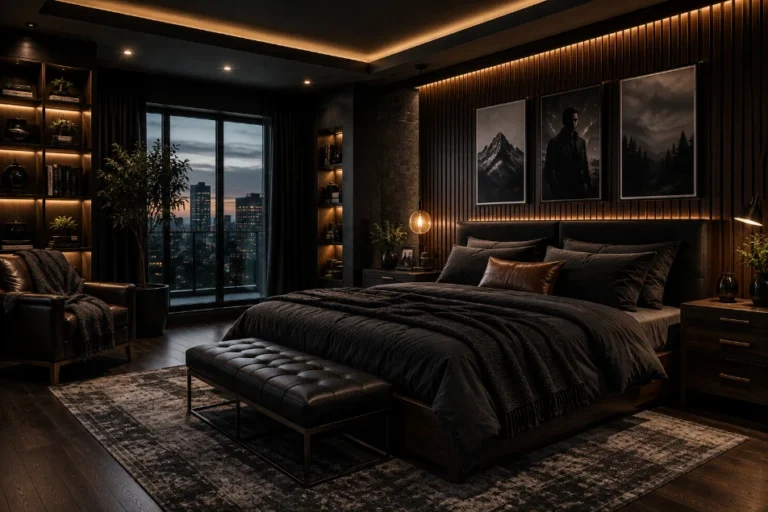
A moody grey bedroom can feel sophisticated and restful without looking gloomy. Charcoal walls create depth, soft textiles make the room inviting, and carefully chosen accents prevent the neutral palette from becoming monotonous.
The key is not simply adding as much grey as possible. A successful dark bedroom relies on contrast, texture, warmth, and thoughtful lighting.
Here are 12 ways to turn a neutral grey bedroom into a dramatic space that still feels comfortable enough for everyday living.
Why Moody Grey Bedrooms Work Beautifully
A moody grey palette sits somewhere between dramatic dark interiors and familiar neutral decorating. That balance makes it surprisingly versatile.
Unlike pure black, charcoal and graphite have enough softness to cover large surfaces without always dominating the room. They can also change noticeably throughout the day. A grey wall may appear cool and crisp in daylight, then richer and more intimate under warm lamps in the evening.
Grey also gives other materials room to stand out.
Natural walnut looks warmer beside charcoal. Brass becomes more noticeable against graphite. Cream bedding provides clearer contrast, while muted green, terracotta, and slate blue introduce color without disrupting the calm atmosphere.
This flexibility means a grey bedroom can lean modern, industrial, minimalist, contemporary, or even slightly rustic depending on the materials surrounding it.
The most successful rooms usually have another quality in common: they use several visual layers instead of relying on paint alone.
12 Moody Grey Bedroom Ideas for a Dramatic Interior
1. Create a Moody Grey Bedroom With a Charcoal Feature Wall

If covering every wall in dark grey feels like too much, start with one charcoal feature wall behind the bed.
This creates a strong focal point and gives the headboard, bedding, and bedside lighting a defined background. It can be particularly effective in bedrooms where the bed currently seems to disappear into pale walls.
Instead of pairing charcoal with stark white, consider a warmer off-white or soft ivory for the remaining walls and trim. The contrast will still be noticeable, but the room will feel less severe.
Pay attention to the undertone of your charcoal as well. Some greys lean blue, while others contain warmer brown or taupe notes. Look at paint samples during both daytime and evening before committing to a large area.
For extra dimension, choose a matte or low-sheen finish. Dark grey often looks richer when light falls softly across the surface rather than reflecting sharply from it.
2. Layer Graphite Velvet Bedding in a Moody Grey Bedroom

The bed occupies a large amount of visual space, making bedding one of the easiest places to develop a moody palette.
Graphite velvet can introduce both darker color and a subtle sheen. Rather than dressing the entire bed in matching velvet, use it selectively.
For example, combine:
- Soft grey cotton or linen sheets
- A charcoal duvet
- Graphite velvet cushions
- A lighter stone or taupe throw
- One patterned lumbar pillow for contrast
Mixing finishes keeps the bed from becoming one large block of grey.
Velvet is particularly useful because its appearance changes as light moves across the fabric. That variation gives a dark neutral more dimension than a completely flat material.
Keep comfort in mind, though. Decorative velvet cushions can provide the luxurious effect while breathable cotton or linen handles the bedding you actually sleep in.
3. Warm Up a Moody Grey Bedroom With Natural Wood Furniture

Grey can quickly feel cooler when it is surrounded only by black metal, glass, and other hard finishes.
Natural wood provides an easy counterbalance.
A walnut bed frame, oak nightstand, wooden bench, or vintage dresser introduces brown and amber tones that naturally soften charcoal and graphite shades.
You do not need to replace every piece of furniture. Even one substantial wooden element can change the balance of the room.
Try a walnut nightstand against a dark grey wall, for instance. The grain becomes much more visible against the darker background and prevents the overall design from feeling overly polished.
Medium and darker woods often suit dramatic grey interiors especially well. Very pale wood can work too, particularly when you want a Scandinavian influence, but stronger wood tones tend to create a richer contrast.
4. Add Mixed Metallic Accents to a Moody Grey Bedroom Design

Metallic finishes can bring a small amount of brightness into a dark room without requiring a bold color.
Brass, aged bronze, brushed nickel, and matte black are all suitable choices, but there is no need to make every fixture match perfectly.
A bedroom could include brass bedside lamps, black curtain hardware, and a brushed metal mirror frame while still looking coordinated.
The trick is repetition.
If you introduce brass once, repeat it somewhere else in a smaller detail. This might be a drawer pull, picture frame, lamp base, or decorative object.
Avoid covering the room in shiny finishes. In a moody interior, metallics are usually most effective as small highlights that catch the light rather than dominate the design.
5. Introduce Slate Blue Textiles Into a Moody Grey Bedroom

A grey room does not have to contain only neutral colors.
Slate blue is close enough to grey to maintain the subdued mood while adding subtle color variation. It works particularly well in cushions, blankets, upholstered seating, and patterned rugs.
Imagine charcoal walls paired with medium-grey bedding and two slate-blue cushions. The difference may be understated, but it gives the eye another layer to notice.
Blue-grey can also help connect different shades of grey throughout the room.
If your walls have slightly cool undertones, slate textiles can make that choice feel deliberate rather than accidental.
For balance, add something warmer nearby, such as walnut furniture, cream bedding, or a softly glowing lamp.
6. Style a Moody Grey Bedroom With Black and White Photography

Artwork can make a dramatic bedroom feel personal without introducing colors that compete with the palette.
Black-and-white photography is particularly suitable because it naturally relates to charcoal, silver, white, and graphite tones.
Instead of filling every available wall, create one intentional gallery area. The space above a dresser or beside the bed can work well.
Mixing frame sizes adds interest, but keep one characteristic consistent. You might use all black frames, for example, while varying their dimensions.
The photographs themselves do not need to match perfectly. Architecture, landscapes, abstract details, and personal photography can sit together when their tones are visually connected.
For a cleaner bedroom, one oversized black-and-white print above the bed can make an equally strong statement with less visual activity.
7. Frame a Moody Grey Bedroom With Dark Charcoal Linen Curtains

Curtains are often treated as a finishing detail, yet they cover a significant vertical area of the bedroom.
Dark charcoal linen curtains can extend the moody palette from the walls toward the windows while adding a softer texture.
Hang them close to the ceiling and allow the panels to reach the floor. This draws the eye upward and can make the room appear taller.
If the bedroom receives limited daylight, consider curtains with a lighter lining or combine dark decorative panels with sheer inner curtains. During the day, the sheers maintain privacy while allowing more natural light inside.
Linen and linen-look fabrics are especially effective because their slightly irregular weave prevents dark curtains from looking too heavy or formal.
8. Add Concrete or Stone Texture to a Modern Moody Grey Bedroom

Grey is closely associated with materials such as concrete, slate, and natural stone, making these surfaces a natural fit for a darker bedroom.
You do not necessarily need a real concrete wall.
A textured plaster finish, stone bedside table, concrete-look planter, or subtle limewash-style wall can provide a similar visual effect with less renovation.
The important element is surface variation.
A smooth grey painted wall and a textured grey wall may technically be almost the same color, yet they react to light very differently. Texture creates tiny highlights and shadows that give the room more depth.
If you use concrete or stone, soften the surrounding area with linen, wool, velvet, or warm wood. Too many hard materials can make a bedroom feel more like a commercial space than somewhere designed for rest.
9. Bring Terracotta Accents Into a Moody Grey Bedroom

Terracotta provides an effective contrast to cool and neutral greys because of its earthy orange-brown character.
You only need a small amount.
A terracotta cushion, ceramic vase, bedside lamp, throw, or piece of artwork can warm the entire palette without changing the room into a colorful bedroom.
Try using one main terracotta accent and repeating the tone subtly elsewhere. For example, a rust-colored throw could be complemented by a small clay planter on the dresser.
Muted versions tend to work better than highly saturated orange in a sophisticated grey interior.
This combination is especially appealing when natural wood is already present because the wood helps bridge the transition between cool charcoal and warmer earthy shades.
10. Choose a Low-Profile Platform Bed for a Moody Grey Bedroom

Furniture shape affects the mood of a bedroom just as much as color.
A low-profile platform bed gives a dark grey room a clean, grounded appearance. It is particularly suitable for modern and minimalist interiors where you want the bed to feel substantial without introducing an oversized frame.
A simple upholstered charcoal bed can blend into a dark feature wall, while a low walnut platform creates stronger contrast.
Keep the surrounding furniture proportionate.
Slim bedside tables and understated lamps can complement a low bed better than bulky pieces that visually crowd it.
You can also create height elsewhere with tall curtains, vertical artwork, or a floor lamp. This prevents all of the visual weight from sitting close to the floor.
11. Use Warm Ambient Lighting Throughout a Moody Grey Bedroom

Lighting can determine whether dark grey looks sophisticated or simply dull.
Relying on one bright ceiling fixture often creates harsh shadows while leaving corners poorly illuminated. Instead, use several smaller sources of light at different heights.
Consider combining bedside lamps, wall sconces, a floor lamp, and subtle overhead lighting.
Warm-toned bulbs generally complement charcoal and graphite more comfortably than very cool lighting. They also bring out warmer elements such as walnut, brass, taupe, and terracotta.
Think about what you actually do in each part of the room.
Bedside lighting should make reading comfortable. A dresser may need clearer task lighting, while a corner chair can benefit from a softer floor lamp.
Layering light this way makes a dark room functional during the day and atmospheric at night.
12. Refresh a Moody Grey Bedroom With Forest Green Plants

Dark green works naturally with grey and can make a neutral bedroom feel more alive.
Plants are one way to introduce that color without adding another permanent decorating commitment.
A taller plant can fill an empty corner, while smaller greenery works well on a dresser or shelf. Choose plants according to the actual light conditions in your bedroom rather than appearance alone.
The planter matters too.
Terracotta pots reinforce warm accents, matte black containers create a more contemporary look, and textured cream planters provide contrast against dark walls.
If caring for live plants is impractical, high-quality artificial greenery can still provide visual softness.
Avoid scattering small plants across every surface. One or two well-positioned pieces usually have more impact and keep the bedroom feeling calm.
Common Moody Grey Bedroom Mistakes and Simple Solutions
Even a beautiful grey palette can fall flat when every surface has the same temperature, texture, and depth.
One common problem is choosing a grey based only on how it appears on a screen or paint card. Undertones become much more noticeable once the color covers an entire wall. Test several samples in the actual bedroom and observe them in morning, afternoon, and artificial light.
Another mistake is using grey everywhere.
Grey walls, grey carpet, grey bedding, grey curtains, and grey furniture can leave very little visual separation. Introduce warm wood, ivory, muted blue, terracotta, green, or metallic details to create contrast.
Texture is equally important. Combine matte walls with linen curtains, velvet cushions, woven rugs, wood grain, and smooth metallic details.
Finally, do not underestimate lighting. A dark room needs thoughtful illumination, particularly when natural daylight is limited. Multiple warm light sources usually create a more inviting atmosphere than one powerful ceiling fixture.
Frequently Asked Questions About Moody Grey Bedrooms
What Grey Shades Make a Moody Grey Bedroom Feel Rich Rather Than Flat?
Charcoal, graphite, pewter, deep slate, and darker blue-grey shades can all create a dramatic effect.
Rather than searching for one universally perfect grey, consider the bedroom’s natural light, flooring, furniture, and existing finishes.
Rooms with warm wooden floors may suit slightly warmer charcoal shades, while a cooler grey can coordinate beautifully with slate, black, and blue accents.
Using two or three related grey tones also creates more dimension than repeating exactly the same shade throughout the room.
How Can You Keep a Moody Grey Bedroom From Feeling Cold?
Introduce materials and colors associated with warmth.
Natural wood is one of the easiest additions, but cream textiles, warm taupe, aged brass, terracotta, woven fabrics, and warm lighting can all help.
Texture matters just as much as color. A charcoal linen curtain feels visually softer than a flat dark blind, while a wool throw adds comfort to smooth grey bedding.
The goal is not to remove the grey but to give it warmer elements to interact with.
Can Moody Grey Bedroom Ideas Work in a Small Bedroom?
Yes. A small room does not automatically require white walls.
Dark grey can create a cozy, enveloping atmosphere, particularly when the palette is intentional. You can use charcoal on one feature wall if you are hesitant about painting the entire room.
Keep larger furniture appropriately scaled and avoid filling every corner with decorative objects.
Mirrors, layered lighting, lighter bedding, and curtains hung close to the ceiling can also help maintain visual openness.
Instead of trying to make the bedroom appear as large as possible, focus on making its actual proportions feel comfortable and cohesive.
Creating Your Moody Grey Bedroom Sanctuary
A memorable moody grey bedroom is rarely created by choosing one perfect shade of grey. It comes from how different elements work together.
Start with a strong foundation such as charcoal walls or graphite bedding, then gradually introduce contrast through natural wood, soft textiles, metallic details, greenery, and warmer accent colors.
Most importantly, pay attention to how the bedroom feels at different times of day. A palette that looks beautiful in afternoon sunlight should still feel comfortable when the curtains are closed and only the bedside lamps are on.
You do not need to make every change at once. Begin with one high-impact update—a feature wall, new bedding, curtains, or better lighting—and build the rest of the room around it.
The result can be dark and dramatic without sacrificing the quality that matters most in a bedroom: a comfortable place where you genuinely want to slow down and rest.