21 Organic Modern Bedroom Ideas for a Nature-Inspired Oasis
A bedroom can look beautifully styled and still feel cold or overly polished. The Organic Modern Bedroom takes a different approach. It combines the simplicity of modern interiors with the warmth, texture, and imperfections found in nature.
Think warm wood instead of glossy furniture, relaxed linen instead of stiff fabrics, and earthy colors rather than harsh contrasts. The goal is not to fill the room with rustic decor. It is to create a clean, contemporary space that still feels comfortable and lived in.
The best part is that you do not need to redesign everything at once. A wooden bed, textured rug, linen bedding, or sculptural stone table can begin shifting the room toward this style.
Below are 21 ideas grouped into 12 practical topics to help you create an organic modern bedroom that feels calm, balanced, and personal.
12 Organic Modern Bedroom Ideas
1. Start with a Natural Wood Bed Frame

The bed is usually the largest piece of furniture in a bedroom, making it a natural starting point for an Organic Modern Bedroom.
Choose a frame made from oak, walnut, ash, teak, or another wood with visible grain. Medium and light wood tones work especially well because they introduce warmth without making the room feel visually heavy.
A low-profile platform bed is a strong choice for a modern look. Its simple silhouette keeps the room clean, while the natural wood prevents the design from feeling too minimal.
Avoid furniture with overly glossy finishes. Matte, oiled, or lightly finished wood allows the natural grain and variation to remain visible.
Pair the bed with cream bedding, warm white walls, and a textured rug for an easy foundation that can evolve over time.
2. Layer Linen and Organic Cotton Bedding

Bedding plays a major role in making a minimalist bedroom feel inviting.
Linen works particularly well because its slightly irregular texture adds softness without requiring patterns or excessive decoration. Cotton, wool, and other natural-feeling textiles can be layered alongside it.
Instead of using one perfectly matched bedding set, combine closely related neutral shades.
For example:
- Warm white sheets
- Oatmeal duvet cover
- Taupe pillowcases
- Muted brown accent cushion
- Soft wool throw
Small differences in tone make a neutral bed look dimensional rather than flat.
You also do not need to make the bed look perfectly arranged. A loosely folded throw and relaxed linen can reinforce the comfortable character of organic modern design.
3. Add Woven Pendant Lights for Natural Texture

Lighting should contribute to the room even when the fixture is switched off.
A woven pendant made from rattan, bamboo, cane, or natural fibers introduces texture above the bed without occupying valuable floor or bedside space.
The open weave can also create a softer visual effect than a solid metal fixture.
Keep the shape fairly simple. A large rounded pendant, shallow dome, or gently tapered shade usually fits an organic modern room better than a highly decorative fixture.
For bedside lighting, consider small fabric-shade lamps, ceramic lamps, or compact pendants.
Use warm-toned bulbs rather than very cool white lighting. The warmer glow complements wood, linen, stone, and earthy colors while making the bedroom feel more restful in the evening.
4. Bring in Greenery with a Few Well-Chosen Plants

Plants are one of the most direct ways to connect a bedroom with nature, but more plants do not automatically create a better room.
Choose one or two plants that suit the available light and space.
A taller plant can soften an empty corner, while a smaller plant can work on a dresser or shelf. Simple ceramic or textured neutral planters usually blend naturally with this style.
If your bedroom receives limited daylight, choose plants appropriate for lower-light conditions rather than placing sun-loving varieties where they may struggle.
Not interested in maintaining several houseplants? A single leafy branch in a ceramic vase can provide a similar visual connection with much less maintenance.
The greenery should feel intentional rather than turning the bedroom into an indoor jungle.
5. Ground the Bedroom with a Jute, Sisal, or Wool Rug

Modern bedrooms often include clean furniture and plain walls. Without enough texture, those elements can make the room feel unfinished.
A large rug solves this problem while providing physical comfort.
Jute and sisal offer strong natural texture and work beautifully with wooden furniture. Wool is a softer alternative for bedrooms where comfort underfoot is more important.
Choose a rug in:
- Sand
- Oatmeal
- Beige
- Warm gray
- Natural brown
- Soft greige
Size is important. Ideally, the rug should extend beyond the accessible sides and foot of the bed instead of appearing like a small mat beneath it.
For extra softness, you can use a wool rug with a subtle woven or irregular pattern rather than introducing bold graphics.
6. Frame Windows with Organic Cotton or Linen Curtains
Window treatments have a major influence on how soft or structured a bedroom feels.

Heavy synthetic-looking curtains can work against an organic palette. Linen, cotton, and natural-look woven fabrics create a gentler appearance.
Warm white, flax, mushroom, oatmeal, or light taupe curtains are particularly versatile.
Hang the curtain rod or track higher than the top of the window and allow the fabric to fall close to the floor. This can emphasize vertical space and give the room a more finished appearance.
If privacy or darkness is important, pair decorative curtains with appropriate blackout lining or shades.
You can still maintain the airy organic look while getting the practical light control needed for comfortable sleep.
7. Introduce Character with a Reclaimed Wood Accent

An entire room of new furniture can sometimes feel too coordinated.
A reclaimed wood feature adds variation, age, and visible character.
You could use reclaimed timber for an accent wall behind the bed, but it does not have to cover a full wall. A reclaimed bench, bedside table, shelf, or large wooden panel can create the same sense of natural imperfection on a smaller scale.
Keep surrounding elements simple so the aged wood remains the focal point.
For example, combine a reclaimed wood headboard wall with:
- Warm off-white bedding
- Simple black sconces
- Neutral curtains
- A plain wool rug
- Minimal bedside furniture
This balance keeps reclaimed materials looking sophisticated rather than overly rustic.
8. Keep Artwork Minimal and Nature-Inspired

Wall decor in an Organic Modern Bedroom works best when it contributes to the calm atmosphere rather than competing for attention.
One large piece of artwork can often be more effective than several small frames.
Abstract landscapes, botanical sketches, earthy geometric compositions, and textural paintings work particularly well.
Look for colors already present in the bedroom, such as clay, charcoal, beige, cream, muted olive, or brown.
The frame matters too.
Natural oak can reinforce warmth, while a slim black frame introduces subtle definition. Frameless textured canvas can work if you want an especially understated result.
Leave some walls empty. Negative space is an important part of modern design and gives meaningful objects room to stand out.
9. Use Floating Wood Shelves Instead of Heavy Storage
Storage can easily make a bedroom feel crowded.

Floating shelves provide a lighter alternative to large bookcases, particularly in compact rooms.
Choose shelves in the same wood family as your bed or other major furniture. They do not need to match exactly, but their undertones should work together.
Avoid filling every inch of shelf space.
A balanced arrangement might include a ceramic vase, two or three books, a small plant, and one meaningful decorative object.
Leaving visible space between items makes the arrangement feel intentional.
Floating shelves can also be installed above a dresser or in an otherwise unused corner, allowing you to add storage without reducing valuable floor space.
10. Decorate with Handcrafted Ceramics and Woven Baskets

Organic modern interiors celebrate materials that show subtle evidence of how they were made.
Handcrafted ceramic vases, bowls, and planters are ideal for this reason. Slight variations in shape, glaze, and surface texture can make a simple object feel more interesting.
Choose matte or softly glazed ceramics in shades such as:
- Chalk white
- Sand
- Terracotta
- Mushroom
- Olive
- Charcoal
Woven baskets can provide another layer of texture while solving practical storage problems.
Use them for spare blankets, decorative cushions, books, or other everyday items that would otherwise create clutter.
The key is moderation. Two meaningful textured objects usually contribute more than ten small decorative pieces scattered throughout the bedroom.
11. Mix Leather, Stone, and Wood Furniture

A successful natural modern bedroom should not rely on a single material.
Combining different natural surfaces creates depth while allowing the overall color palette to remain restrained.
Consider pairing a wooden bed with a small stone side table and a leather or leather-look accent chair.
Travertine, limestone, marble, and other natural stones introduce a cooler, solid surface that contrasts beautifully with softer linen and warm wood.
If real stone is beyond your budget, use it selectively. One small side table or decorative object can be enough.
A tan or cognac accent chair can also bring warmth to an empty corner. Choose a clean-lined design rather than an oversized traditional chair so the modern character remains clear.
12. Finish with Sculptural Shapes and Layered Texture
The final layer is where an organic modern bedroom gains personality.

Instead of adding more color, introduce interesting forms and textures.
An irregular or softly curved mirror can break up the straight lines created by the bed, windows, wardrobes, and nightstands. A rattan or cane headboard can add another natural pattern without requiring colorful bedding.
Other useful finishing pieces include:
Macramé wall hanging: Use one simple, neutral design when a wall needs softness.
Wool throw blanket: Drape it loosely across the foot or corner of the bed for additional warmth and texture.
Wooden bench: Position a slim bench at the foot of the bed to create both seating and a practical place for folded bedding.
Natural wood ceiling fan: In warm climates, a simple fan with wood-toned blades can provide function without disrupting the design.
Textured wall treatment: Limewash, mineral-style finishes, subtle plaster effects, or wood paneling can give neutral walls more dimension.
These elements should support the room rather than overwhelm it. Once the bedroom feels balanced, you do not need to keep adding decor.
Tips for Achieving the Organic Modern Look
Creating this style is less about buying specific products and more about maintaining balance.
Start with the largest elements first: wall color, bed, rug, curtains, and major furniture. Smaller decorative pieces should come later.
Try following a simple principle: clean shapes + natural materials + tactile texture + restrained colors.
Another useful approach is to repeat materials around the room. If your bed is walnut, for example, introduce a similar warm wood through a bench, picture frame, or shelf.
Avoid making everything identical. Natural interiors benefit from slight variation.
You should also consider how the bedroom feels at night. During the day, sunlight may make beige, stone, and wood tones look beautiful. At night, harsh overhead lighting can completely change that atmosphere.
Layer several softer light sources and use dimmers where practical.
Ask yourself: Does the bedroom still feel comfortable when the main ceiling light is switched off?
If not, adding bedside lamps, sconces, or indirect lighting may make a bigger difference than buying more decor.
Color Schemes for Organic Modern Bedrooms
Neutral does not have to mean plain white.
Organic modern rooms often use colors inspired by earth, stone, wood, plants, and natural fibers.
| Color Palette | Overall Feeling | Works Well With |
|---|---|---|
| Warm white + oak + beige | Light and relaxed | Linen, jute, ceramics |
| Cream + walnut + taupe | Warm and sophisticated | Wool, leather, brass |
| Greige + black + natural wood | Modern and structured | Stone, cotton, minimal art |
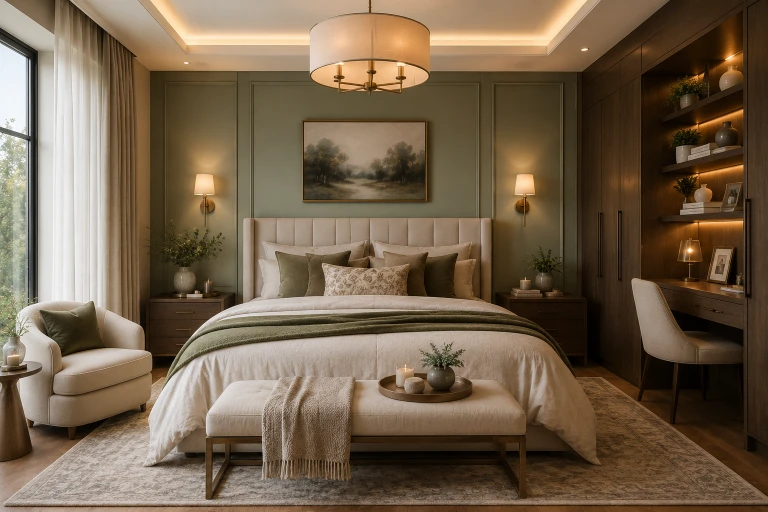
| Sage + cream + light oak | Fresh and calming | Plants, rattan, linen |
| Mushroom + walnut + ivory | Cozy and grounded | Bouclé, wool, ceramics |
| Clay + beige + dark wood | Earthy and warm | Terracotta, woven textiles |
You can also use darker shades.
An organic modern bedroom with chocolate brown, charcoal, olive, or muted black walls can look beautiful when balanced with lighter bedding, natural wood, and warm lighting.
The important factor is undertone rather than brightness. Warm, softened colors generally combine more naturally with organic materials than sharp, highly saturated shades.
Furniture and Decor Selection for a Natural Modern Bedroom
Before buying something, consider whether it provides function, texture, shape, or meaningful character.
If it does none of those things, the bedroom may not need it.
Furniture should generally have clean silhouettes with enough material variation to prevent the space from feeling sterile.
For example, you could combine:
- A low walnut platform bed
- Floating oak nightstands
- A textured wool rug
- A travertine side table
- Linen curtains
- One curved accent chair
- A large ceramic lamp
Not every item needs to come from an expensive designer collection.
Mixing new furniture with vintage, handmade, or reclaimed pieces can actually make an organic bedroom feel more authentic.
Before purchasing another decorative object, ask yourself: Would removing something improve the room more than adding something?
That question can prevent the clutter that often develops when decorating a neutral space.
FAQs
What Is the Difference Between Organic Modern and Mid-Century Modern?
Both styles appreciate clean lines, natural materials, and functional furniture, but their overall character is different.
Mid-century modern design is strongly influenced by furniture and architecture from the mid-20th century. It often features recognizable tapered legs, geometric forms, richer wood tones, and stronger accent colors.
Organic modern design is generally softer.
It combines contemporary simplicity with earthy palettes, irregular shapes, stone, linen, woven materials, natural wood, and tactile surfaces.
The two styles can also work together. A simple mid-century wooden dresser, for example, can fit comfortably into an organic modern bedroom when paired with linen bedding and restrained decor.
How Can I Add Personality to an Organic Modern Bedroom?
Personal style does not require filling the room with decorations.
Display a few objects that genuinely matter to you, such as a favorite artwork, handmade ceramic piece, travel object, books, framed photograph, or vintage furniture item.
You can also introduce personality through subtle color.
Muted rust, sage, terracotta, ochre, dusty blue, or chocolate brown can provide character while maintaining the nature-inspired palette.
Aim for a bedroom that looks collected over time rather than purchased as one matching set.
Do I Have to Stick to Light and Airy Colors?
No.
While cream, beige, warm white, and pale wood are common in organic modern interiors, darker colors can work equally well.
Smoky olive walls with walnut furniture, for instance, can create a warm and grounded bedroom. Charcoal walls can work with oatmeal bedding, oak furniture, and woven textures.
If you prefer darker colors, maintain balance by introducing lighter textiles, warm lighting, and enough variation in texture.
Conclusion
A beautiful Organic Modern Bedroom is built through balance rather than decoration alone.
Begin with simple modern furniture, then soften those clean lines with natural wood, linen, wool, woven fibers, ceramics, stone, greenery, and warm lighting. Keep the palette connected to nature and allow texture to provide much of the visual interest.
Most importantly, resist the urge to fill every empty wall and corner.
Choose fewer pieces with useful functions or meaningful character, and give natural materials enough space to stand out. Whether you begin with linen bedding, a wooden bed frame, or one textured rug, small thoughtful changes can gradually turn an ordinary bedroom into a calm, comfortable, nature-inspired retreat.