How to Create a Stylish and Cozy Neutral Bedroom
A neutral bedroom can feel calm, inviting, and effortlessly stylish. Soft shades such as cream, beige, taupe, warm white, gray, and light brown create a peaceful background that makes it easier to relax at the end of the day.
However, decorating with neutral colors requires balance. If every surface has the same shade and texture, the bedroom may look flat or unfinished. The goal is to combine complementary neutral tones with soft fabrics, natural materials, thoughtful lighting, and a few personal details.
The following neutral bedroom ideas will help you create a comfortable space without relying on bright colors or expensive furniture. Whether you are decorating a large primary bedroom, a guest room, or a small apartment bedroom, these practical tips can be adapted to your space and budget.
Why Are Neutral Bedroom Ideas So Popular?
Neutral bedrooms remain popular because they are calming, flexible, and easy to update. Unlike a strong color scheme that may limit future decorating choices, a neutral foundation works with many interior styles.
A neutral bedroom can suit:
- Modern interiors
- Farmhouse homes
- Scandinavian spaces
- Coastal bedrooms
- Bohemian rooms
- Minimalist designs
- Traditional homes
- Organic modern interiors
Neutral colors also help create visual continuity. When the walls, flooring, bedding, and furniture relate to one another, the room can feel larger and less cluttered.
Another advantage is that neutral décor does not have to be replaced whenever your preferences change. You can refresh the room by switching a throw blanket, cushions, artwork, or bedside accessories instead of purchasing new furniture.
The most successful neutral bedrooms are not completely colorless. They include subtle variations in tone, material, pattern, and shape. These details give the room warmth and personality while maintaining a restful atmosphere.
Practical Neutral Bedroom Ideas for a Cozy Space
1. Build the Room Around a Soft Neutral Foundation

Begin with one main neutral shade that will cover the largest areas of the bedroom. This usually includes the walls, flooring, curtains, or large pieces of furniture.
Warm white, ivory, oatmeal, light beige, greige, and soft taupe are useful foundation colors. They provide a lighter alternative to pure white while remaining easy to coordinate.
Before painting the entire room, test the color on more than one wall. Observe it during the morning, afternoon, and evening. Natural and artificial light can significantly change how a neutral color appears.
A beige with yellow undertones may feel warm in daylight but slightly darker under a warm bulb. A light gray may look balanced in a shop yet appear blue in a north-facing bedroom.
Use the sample-testing stage to choose a color that works with your actual lighting, flooring, and furniture.
2. Combine Several Neutral Shades

A neutral color scheme should not depend on one exact shade. Using cream on the walls, cream on the bed, and cream on every accessory can make the room appear flat.
Instead, select three or four related tones. For example:
| Main neutral | Supporting shades | Suitable accent |
|---|---|---|
| Warm white | Beige and camel | Walnut brown |
| Cream | Oatmeal and taupe | Muted olive |
| Light gray | Charcoal and soft white | Dusty blue |
| Greige | Ivory and mushroom | Matte black |
| Sand | Tan and warm brown | Terracotta |
Use the lightest color across large surfaces and introduce the deeper shades through bedding, furniture, rugs, and decorative pieces.
Small differences between the tones will make the bedroom feel layered without disturbing its calm appearance.
3. Add Interest with Layered Textures

Texture is one of the most important elements in a neutral bedroom. It creates contrast even when the colors are similar.
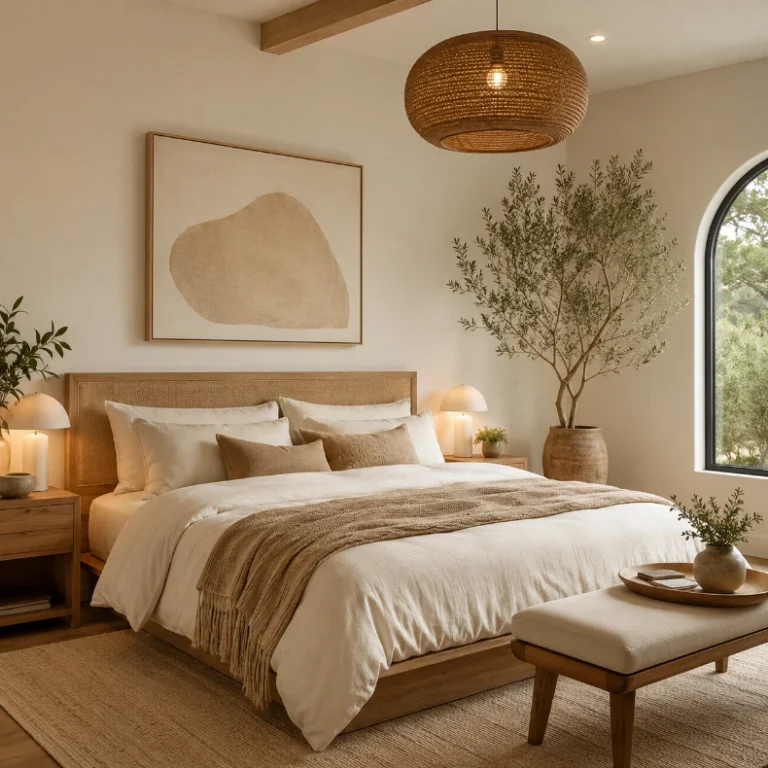
Combine smooth, woven, plush, and slightly rough materials. A simple arrangement may include cotton sheets, a linen duvet cover, a knitted throw, velvet cushions, and a natural-fiber rug.
Other useful textures include:
- Bouclé upholstery
- Woven baskets
- Wool blankets
- Cane furniture
- Quilted bedding
- Slatted wood
- Ceramic lamps
- Sheer curtains
- Brushed metal
- Soft upholstered headboards
Avoid adding every texture at once. Choose a few that complement the room’s style and repeat them carefully. For example, woven storage baskets can relate to a rattan lampshade, while a knitted blanket can soften a wooden bed frame.
4. Balance Warm and Cool Neutral Colors

Neutral shades may have warm or cool undertones. Warm neutrals include cream, beige, camel, tan, taupe, and brown. Cool neutrals include crisp white, silver-gray, charcoal, and blue-based gray.
Using only cool shades can sometimes make a bedroom feel formal or sterile. A room with gray walls, gray bedding, and chrome furniture may benefit from warm wood, cream fabric, or soft golden lighting.
Similarly, a room filled with yellow-based beige can appear overly warm. Adding a little greige, muted gray, black, or off-white can provide balance.
You do not need equal amounts of warm and cool colors. Allow one temperature to lead and use the other as a smaller supporting element.
5. Introduce Natural Wood

Wood adds warmth and visible grain, making it particularly valuable in a simple neutral bedroom.
A wooden bed frame can become the room’s main feature. If replacing the bed is not practical, introduce wood through bedside tables, a dresser, bench, mirror frame, tray, or picture frames.
Light oak and ash work well in Scandinavian and modern neutral bedrooms. Walnut creates a richer and more dramatic appearance, while distressed or reclaimed wood suits farmhouse and rustic rooms.
Try to keep the wood tones related, but they do not need to match perfectly. Combining two compatible wood finishes often looks more natural than purchasing a completely matching furniture set.
6. Plan Soft, Layered Lighting

A single ceiling light rarely creates a cozy bedroom. Use several light sources at different heights to make the room feel softer and more functional.
A balanced lighting plan may include:
- A central ceiling fixture
- Bedside lamps or wall sconces
- A floor lamp near a reading chair
- A small dresser lamp
- Subtle lighting inside a wardrobe
Choose bulbs with a warm or soft-white appearance for a restful atmosphere. Very bright, blue-toned bulbs can make beige and gray surfaces look cold.
Lampshades also affect the room’s mood. Linen, pleated fabric, frosted glass, and woven shades gently diffuse light and complement neutral interiors.
Dimmer switches are helpful when available because they allow you to adjust the brightness for reading, dressing, or relaxing.
7. Make the Bed the Main Cozy Feature

The bed usually occupies the largest visual area in a bedroom, so the bedding strongly influences the overall design.
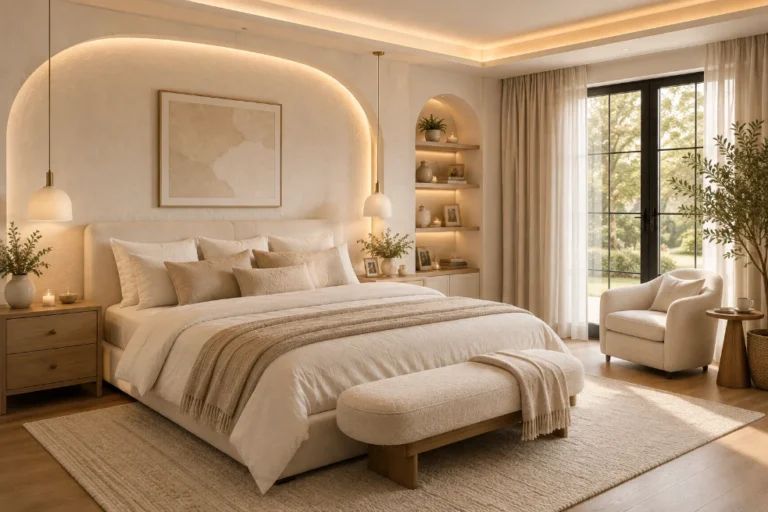
Begin with breathable sheets and a duvet or comforter in white, cream, oatmeal, or light gray. Add depth with two or three pillows, a lumbar cushion, and a throw folded across the lower part of the bed.
The bedding should look comfortable rather than overly arranged. Avoid covering the bed with so many cushions that using it becomes inconvenient.
For a relaxed appearance, combine slightly different neutral shades. White sheets, a beige duvet, taupe cushions, and a camel throw can look more welcoming than a perfectly matched bedding set.
Natural fabrics such as cotton and linen are especially suitable because their subtle creases give the room a softer, lived-in quality.
8. Use a Rug to Ground the Furniture

A rug can make a neutral bedroom feel quieter, warmer, and more complete. It also adds softness underfoot, which is particularly pleasant beside the bed.
Choose a rug that is large enough to relate to the bed. A small rug floating in the middle of the floor may make the arrangement feel disconnected.
For a subtle design, consider:
- A cream wool rug
- A beige low-pile rug
- A faded vintage-style rug
- A natural jute rug
- A greige patterned rug
- A soft rug with a simple geometric design
If jute feels too rough, layer a smaller washable rug over it or select a jute blend. The slight variation in material can add depth while keeping the palette understated.
9. Bring in Greenery Carefully

Plants provide gentle color and organic shape without overwhelming a neutral room. Their green tones naturally complement cream, beige, brown, and gray.
Place a medium plant in an empty corner, add a small plant to a dresser, or display one trailing plant on a shelf. Terracotta pots, stone planters, woven covers, and matte ceramic containers work particularly well.
Consider the room’s natural light before selecting a plant. Not every bedroom has suitable conditions for live greenery.
If caring for plants is difficult, a vase of dried branches, preserved stems, or a high-quality artificial plant can provide a similar visual effect. One or two well-positioned pieces are usually more effective than filling every surface with small pots.
10. Keep the Layout Simple but Comfortable

Minimalism in a bedroom does not mean removing everything. It means keeping items that support comfort, function, or personal meaning.
Start by identifying what the room genuinely needs. Most bedrooms require a bed, accessible lighting, clothing storage, window coverings, and at least one convenient surface.
Leave enough space to move around the bed and open wardrobes or drawers comfortably. Avoid placing extra furniture in the room simply to fill an empty wall.
Storage can help maintain a clean appearance. Use bedside tables with drawers, an upholstered storage bench, under-bed containers, or coordinated baskets.
The room should feel peaceful, but it should not appear empty or impersonal.
11. Add One Strong Statement Element

A neutral room can support a statement feature without losing its calm character. The feature adds focus and prevents the design from becoming forgettable.
Suitable statement pieces include:
- An oversized upholstered headboard
- A sculptural pendant light
- One large abstract artwork
- An arched wooden mirror
- A vintage dresser
- A textured accent wall
- An elegant bench at the foot of the bed
Choose one main feature instead of allowing several bold objects to compete. If the headboard is highly textured, keep the wall décor simple. If you use oversized artwork, avoid surrounding it with numerous small frames.
A statement piece can still follow the neutral palette. Its size, texture, age, or shape can provide interest without requiring a bright color.
12. Mix Subtle Patterns

Patterns help break up large areas of solid color. In a neutral bedroom, choose understated patterns that relate to the existing palette.
Thin stripes, small checks, soft geometrics, faded florals, and simple block prints are easy to combine. Use them on cushions, curtains, rugs, or a single upholstered piece.
To prevent the arrangement from becoming busy, vary the pattern scale. For example, pair a wide-striped throw with a cushion featuring a smaller geometric print.
Keep at least one shared color across the patterns. Beige, cream, charcoal, or warm brown can create a visual connection between different designs.
Solid bedding and curtains can provide resting space if the rug or wallpaper already includes a detailed pattern.
13. Create Personal Wall Art on a Budget

Wall décor does not need to be expensive. Simple DIY art can give a neutral bedroom more personality while keeping the colors controlled.
You could frame:
- Pressed leaves or flowers
- Pieces of textured fabric
- Black-and-white photographs
- Minimal line drawings
- Handmade paper
- Vintage postcards
- Pages from an old calendar
- Simple painted shapes
Use matching frames for a clean gallery wall or combine related wood finishes for a more relaxed appearance.
Another affordable option is to paint a large canvas with layered beige, taupe, cream, and brown shapes. The artwork does not need complicated details. Texture, scale, and placement can make a simple piece feel intentional.
14. Repurpose Furniture and Shop Thoughtfully

You do not need to purchase an entirely new furniture set to create a cohesive neutral bedroom.
An existing dresser can be painted warm white, greige, or muted taupe. Old drawer handles can be replaced with matte black, brass, or wooden pulls. A basic bedside table can gain character through paint, cane panels, or a new lamp.
Secondhand shops, local marketplaces, clearance sections, and outlet stores can offer useful pieces at lower prices. Focus on solid construction and suitable dimensions rather than the current finish.
Budget-friendly additions may include:
- Cushion covers
- Neutral throws
- Framed printable art
- Woven storage baskets
- Ceramic vases
- Secondhand lamps
- Simple curtains
- Small mirrors
Measure the available space before buying furniture or rugs. An inexpensive item is not a good purchase if it blocks movement or does not fit the room.
How to Keep a Neutral Bedroom Looking Fresh
Light-colored interiors can show dust, marks, and fabric wear more easily, so simple maintenance makes a noticeable difference.
Wash bedding according to the manufacturer’s instructions and rotate cushions to help them maintain their shape. Vacuum rugs regularly, including the areas beneath and beside the bed.
Keep a small basket or drawer for everyday items that might otherwise collect on the bedside table. Return books, chargers, and beauty products to their assigned places every few days.
Open curtains during the day when possible. Natural light can keep the room feeling bright and prevent heavier neutral tones from appearing dull.
You can also refresh the bedroom seasonally. Use lightweight linen, cotton, and pale shades during warmer months. Add wool, velvet, deeper brown, and heavier throws during colder seasons.
Small changes are usually enough because the neutral foundation remains suitable throughout the year.
Common Neutral Bedroom Decorating Mistakes
Even a simple color palette can feel unbalanced when a few design elements are overlooked.
Using Only One Shade
A completely beige or gray room may lack definition. Introduce lighter and darker tones to create visual depth.
Ignoring Texture
Color alone cannot create a layered interior. Include fabrics, wood grain, woven materials, ceramics, or subtle wall texture.
Choosing the Wrong Bulbs
Cool, harsh lighting can make a neutral bedroom feel clinical. Softer lighting generally creates a more comfortable evening atmosphere.
Purchasing Furniture Without Measuring
Large beds, benches, or armchairs can restrict movement in a small room. Measure the floor area and door openings before buying.
Adding Too Many Small Decorations
Numerous small objects may make the bedroom feel cluttered. A few larger, carefully selected pieces usually create a stronger result.
FAQs About Neutral Bedroom Ideas
Will a Neutral Bedroom Look Boring?
A neutral bedroom will not feel boring when it includes tonal variation, texture, thoughtful lighting, and personal details. Combine materials such as linen, wood, wool, glass, and ceramic to create interest.
You can also add one statement feature, such as an upholstered headboard, large artwork, or an elegant pendant light.
How Can I Add Color to a Neutral Bedroom?
Introduce muted color through items that are easy to replace. Cushions, blankets, artwork, flowers, and small decorative objects are practical choices.
Sage green, dusty blue, terracotta, muted pink, burgundy, and soft mustard work well with many neutral palettes. Repeat the chosen accent color two or three times so it feels intentional.
How Can I Prevent a Neutral Bedroom from Feeling Cold?
Use warm undertones, natural wood, soft fabrics, and layered lighting. Cream, beige, camel, and warm taupe can soften cool gray or white.
Curtains, rugs, upholstered furniture, and textured bedding also reduce the hard appearance that can make a room feel sterile.
Which Neutral Color Is Best for a Small Bedroom?
Warm white, light greige, pale beige, and soft cream are useful choices for small bedrooms. They reflect light while providing more warmth than brilliant white.
Do not assume that every surface must be very light. A medium wood tone or slightly darker headboard can give the room definition.
Can I Use Black in a Neutral Bedroom?
Yes. Black can provide structure and contrast when used in smaller amounts. Consider black picture frames, curtain rods, lamp bases, furniture handles, or one narrow bedside table.
Avoid using too many heavy black elements in a small or poorly lit room unless you intentionally want a darker atmosphere.
Conclusion
A stylish neutral bedroom depends on more than choosing beige or white paint. The room needs variation in tone, texture, material, lighting, and scale to feel warm and complete.
Start with a soft foundation and add natural wood, comfortable bedding, layered lighting, a suitable rug, and a small amount of greenery. Introduce patterns and statement pieces carefully so the bedroom remains restful.
You can achieve a polished result without purchasing everything at once. Work with your existing furniture, update smaller details, and add pieces gradually. A thoughtful arrangement will have a greater effect than filling the room with unnecessary décor.