Creative Attic Bedroom Ideas with Decorations You’ll Love!
Attic bedrooms have something ordinary rooms rarely offer: sloped ceilings, tucked-away corners, unusual windows, and a natural sense of privacy. The challenge is making those architectural quirks feel intentional rather than awkward.
The best attic bedroom ideas work with the shape of the room instead of fighting it. A low ceiling can become a cozy sleeping zone, an unused corner can hold a reading seat, and exposed beams can become one of the most attractive features in the entire space.
Whether you are converting an unfinished attic or refreshing an existing loft bedroom, the following ideas focus on comfort, practical layouts, storage, lighting, and decorations that suit real attic spaces.
1. Create a Calm Scandinavian Attic Bedroom

Scandinavian style is particularly well suited to attic bedrooms because it makes smaller, irregular rooms feel lighter and less crowded.
Start with a restrained color palette. Warm white, soft beige, pale gray, oatmeal, and muted taupe work beautifully against natural timber beams and wooden floors. If your attic receives limited daylight, avoid extremely cold whites, which can make the room appear slightly dull.
Keep the largest pieces of furniture simple. A low-profile wooden or upholstered bed fits comfortably beneath a sloped ceiling and leaves more visual space above it.
You could pair it with:
- Pale oak bedside tables
- Cream or linen bedding
- A textured wool rug
- Simple ceramic lamps
- Light cotton or linen curtains
- One or two understated art prints
Instead of filling every available wall with decorations, allow some empty space to remain.
If storage is limited, built-in drawers beneath the lowest part of the roof can make better use of areas where standing furniture would not fit.
Practical tip: Place the tallest furniture, such as a wardrobe, near the highest point of the ceiling. Reserve lower sections for the bed, drawers, baskets, or a bench.
2. Turn an Awkward Corner into a Reading Nook

That tiny corner under the eaves may look unusable at first, but it can become one of the most inviting parts of an attic bedroom.
A reading nook does not require much floor space. If the ceiling is too low for a chair, consider a built-in bench with a comfortable seat cushion. Add a few pillows and a small throw for softness.
A skylight or dormer window makes an especially good location because you can use natural daylight during the day.
For evening reading, install a wall-mounted lamp rather than placing a large floor lamp in the corner. This saves valuable floor space while providing focused illumination.
Complete the area with a few thoughtful details:
- A narrow floating shelf for books
- A small side table
- A soft rug
- One or two cushions
- A basket for blankets
- A warm reading light
The nook should feel connected to the rest of the bedroom, so repeat one or two colors from your bedding or rug.
This is also a practical way to give an unused architectural feature a clear purpose.
3. Give the Attic a Modern Industrial Look

An attic with exposed beams, brick, pipes, or structural details already has many of the ingredients needed for an industrial-style bedroom.
Instead of hiding every imperfection, allow selected architectural elements to become part of the design.
A brick feature wall can provide warmth behind a simple bed, while matte black lighting or metal furniture introduces an urban edge.
Balance is important, though. Too many dark and hard surfaces can make an attic feel smaller than it actually is.
Try combining industrial elements with softer materials:
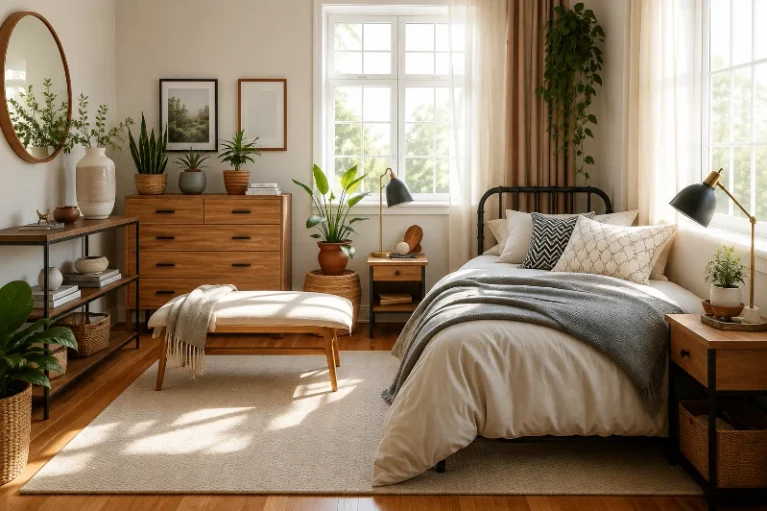
Black metal bed + warm wood nightstands + off-white bedding + charcoal rug + cognac leather chair
The light bedding prevents the darker finishes from dominating the space.
For lighting, black wall sconces, simple pendant lights, or track lighting can complement the style without consuming much floor area.
If the room already contains beautiful timber beams, you do not necessarily need to paint them black. Natural wood provides useful warmth against metal and gray finishes.
4. Build a Relaxed Bohemian Attic Bedroom

Sloped ceilings and exposed wood naturally complement the relaxed appearance of a bohemian bedroom.
The key is layering without creating clutter.
Start with an earthy foundation such as cream, sand, warm beige, muted terracotta, olive, or dusty rust. Then bring variation through materials rather than covering every surface with patterns.
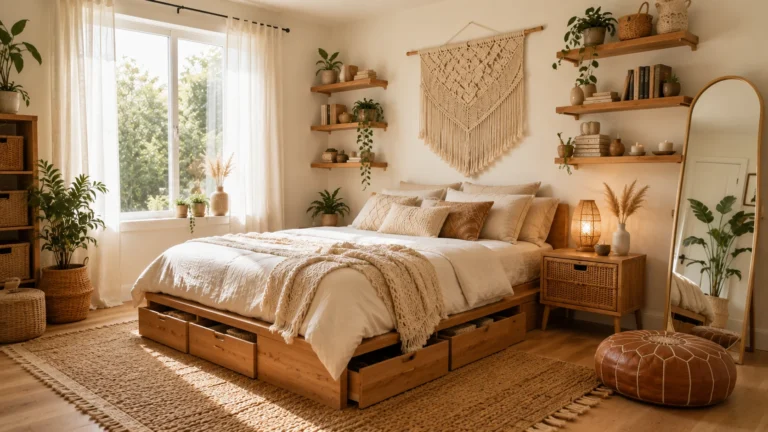
Consider combining linen bedding with a woven throw, patterned rug, rattan chair, wooden nightstand, and a few handcrafted-looking ceramics.
Plants can also soften angular attic architecture. Place them where they receive suitable light rather than choosing locations based only on appearance.
If the floor area is small, use hanging planters or a narrow shelf instead of several large pots.
One common mistake is assuming that bohemian design requires lots of objects. In a compact attic, a few larger decorative pieces usually work better than dozens of small accessories.
A patterned rug, woven pendant, large plant, and interesting textile above the bed may provide all the character you need.
5. Style a Light and Airy Coastal Retreat

An attic bedroom can feel surprisingly suited to coastal decor, particularly when it has skylights or plenty of natural light.
You do not need seashells, anchors, and nautical signs everywhere. A more subtle approach tends to feel calmer and more timeless.
Begin with warm white or soft ivory walls. Add sandy beige, pale blue, faded aqua, or muted navy in smaller amounts.
Natural textures reinforce the relaxed atmosphere. Think jute, linen, light timber, cane, seagrass, and woven cotton.
For example:
White walls + light oak bed + ivory bedding + pale blue throw + jute rug + woven pendant
This combination creates a coastal mood without turning the bedroom into a themed space.
Keep window treatments lightweight where privacy allows. Skylight blinds are useful because they control glare and heat without adding bulky curtains around unusual window shapes.
A framed coastal landscape or abstract ocean-inspired artwork can finish the room more effectively than multiple novelty decorations.
6. Add Soft French Country Character

French country style can bring warmth and character to an attic, especially when the room already has exposed wooden beams or aged flooring.
Instead of making everything look perfectly coordinated, combine elegant details with slightly rustic materials.
Soft cream, warm white, dusty blue, muted sage, faded rose, and pale taupe create a gentle foundation.
A painted wooden bed or upholstered headboard can become the focal point. Pair it with relaxed linen bedding rather than an overly formal matching set.
For decorations, consider:
- A vintage-style mirror
- Small floral prints
- A ceramic bedside lamp
- Linen curtains
- A weathered wooden bench
- Dried or fresh flowers
- A softly patterned rug
Floral patterns can work particularly well, but use them selectively. A floral cushion, wallpaper feature, or upholstered chair is often enough.
If you have original beams, allow them to remain visible. Their imperfections can provide the contrast that prevents a French-inspired attic bedroom from looking overly polished.
7. Keep Things Peaceful with Japanese-Inspired Simplicity

A Japanese-inspired attic bedroom focuses on simplicity, natural materials, and visual calm.
This approach can be particularly useful in a small attic because it avoids unnecessary furniture.
Choose a low bed or platform-style frame to emphasize the horizontal lines of the room. This also works well beneath a sloping roof.
Use a restrained palette based around natural tones such as warm white, beige, brown, charcoal, and muted green.
Wood should play an important role. A simple timber bed, slatted details, low bedside table, or wooden screen can provide enough texture without requiring many decorations.
Keep bedding relaxed and uncomplicated.
Rather than placing objects on every available surface, choose a small number of pieces with clear visual purpose—a ceramic vase, paper-inspired lamp, framed artwork, or carefully positioned plant.
Warm indirect lighting can make the room feel much more comfortable after dark. Hidden LED lighting along architectural lines may also work, provided the light source itself remains discreet.
The result should feel restful rather than empty.
8. Embrace the Warmth of a Rustic Mountain Lodge

If your attic contains exposed rafters, wooden walls, or a pitched roof, a mountain-lodge influence can highlight those features beautifully.
Warm timber should be balanced with soft textiles so that the room does not become visually heavy.
Consider wool, linen, cotton, faux fur used sparingly, and thick woven blankets. A large rug can soften wooden flooring while making the sleeping area feel more grounded.
Colors such as warm brown, cream, forest green, charcoal, rust, and muted burgundy suit this style particularly well.
You might combine:
Natural wood bed + cream bedding + forest green throw + vintage-style rug + warm brass lighting
Instead of adding numerous rustic signs or novelty cabin decorations, use genuine materials to create the atmosphere.
A substantial wooden nightstand, leather accent chair, wool rug, and framed landscape can communicate the idea far more naturally.
For a small attic, keep the darker colors concentrated in accents while allowing cream or warm beige to lighten the overall scheme.
9. Mix Comfort and Simplicity in a Modern Farmhouse Attic

Modern farmhouse design works well in attics because it combines clean contemporary lines with warm traditional materials.
Start with a light foundation. Warm white walls can help reflect daylight, while natural or medium-toned wood introduces contrast.
If your attic has structural beams, they can become one of the main decorative elements.
Choose furniture that feels substantial without being excessively ornate. A simple wooden bed, painted dresser, upholstered bench, and streamlined bedside tables are enough to establish the look.
Add texture through:
- Cotton or linen bedding
- A neutral patterned rug
- Woven baskets
- Ceramic lamps
- A quilt or knitted throw
- Black or aged-brass hardware
Built-in storage can be especially valuable here. Cabinets fitted beneath sloping walls provide storage while maintaining the tidy appearance associated with modern farmhouse interiors.
Try to avoid filling the bedroom with decorative signs. Natural textures, practical furniture, and architectural details generally create a more convincing farmhouse atmosphere.
10. Combine an Art Studio with the Bedroom

For anyone who paints, sketches, crafts, or works on creative projects, an attic bedroom can serve two purposes without feeling like two unrelated rooms.
The first step is zoning.
Keep the bed in one area and establish a small creative workspace near the best source of daylight. A dormer or skylight can provide useful natural illumination for drawing and painting.
A compact desk, adjustable chair, task lamp, and vertical storage may be enough for the studio section.
Use wall-mounted shelves or pegboards for frequently used supplies so that the work surface remains clear.
Artwork can become part of the bedroom decoration too. Instead of buying generic prints, display finished pieces in simple frames or create a rotating gallery wall.
However, avoid allowing supplies to spread into the sleeping area.
Closed cabinets, labeled boxes, drawers, and rolling storage carts can help maintain that separation.
When the workspace is organized, the room can still feel restful at night.
10. Combine an Art Studio with the Bedroom

11. Bring in Mid-Century Modern Style

Mid-century modern furniture is often a smart choice for an attic because many pieces have clean lines and raised legs that make the floor feel more open.
Look for walnut, teak-inspired finishes, tapered legs, streamlined dressers, and simple upholstered furniture.
The color palette does not need to resemble a 1960s time capsule.
Keep the foundation contemporary with warm white, cream, beige, or muted gray. Then introduce richer accents such as mustard, olive, burnt orange, dark teal, or walnut brown.
A low walnut bed can fit comfortably beneath a sloped ceiling, while a compact dresser can sit against a taller wall.
Lighting offers an easy way to reinforce the style. Consider a globe lamp, sculptural pendant, or simple brass fixture.
One vintage-inspired chair can also become a strong focal point without taking the theme too far.
The goal is to borrow recognizable shapes and materials while keeping the attic functional for modern living.
12. Create a Garden-Inspired Attic Retreat

A bedroom at the top of the house can feel surprisingly connected to nature, particularly when skylights provide views of trees and sky.
Build on that feeling with botanical colors and natural materials.
Sage, olive, moss, warm cream, earthy brown, and muted floral shades work well together.
Plants are an obvious addition, but choose them according to actual growing conditions. A bright skylight may suit certain plants, while a dark corner will require a different option.
If caring for several plants is unrealistic, use one larger healthy plant rather than filling the room with greenery that may struggle.
Botanical artwork, floral textiles, wooden furniture, and woven accessories can reinforce the garden theme without relying solely on living plants.
A small chair beside a dormer window can create a pleasant spot for morning coffee or quiet reading.
For a softer appearance, add linen curtains, botanical-print cushions, and a subtly patterned rug.
13. Design a Practical Loft Library Bedroom

Book lovers can turn an awkward attic wall into useful storage rather than allowing it to remain empty.
Custom shelving is particularly effective beneath a pitched roof because it can follow the ceiling line and use spaces that standard bookcases cannot.
If custom cabinetry is outside your budget, several low bookcases placed along the shortest wall can create a similar effect.
Avoid positioning tall freestanding shelves where the ceiling becomes narrow. Apart from looking crowded, furniture should always be stable and appropriately secured where necessary.
Add a comfortable reading chair or bench near a window and provide dedicated task lighting.
For a cohesive bedroom, repeat materials between the library and sleeping zones. For example, walnut shelves can coordinate with walnut bedside tables, while cream upholstery can repeat the bedding color.
Books already provide plenty of visual variation, so the surrounding decor can remain fairly simple.
A rug, reading lamp, comfortable chair, and one piece of artwork may be enough.
14. Turn the Attic into a Stargazer’s Paradise

Of all the attic bedroom ideas, this one takes particular advantage of what makes the room unique: its position directly beneath the roof.
A properly positioned skylight can provide a wonderful view of the evening sky from bed.
Arrange the bed so that you can comfortably see through the window without creating an impractical walkway. Keep in mind that skylights can also introduce strong daylight and additional heat, so suitable blinds or shades are worth considering.
Keep the bedroom itself relatively calm.
Dark blue, charcoal, muted gray, cream, and warm wood can create an evening-inspired palette without making the space feel like a themed children’s room.
For subtle decoration, consider astronomical prints, a moon-inspired lamp, or framed night-sky photography.
Layered lighting is especially important.
Use a main ceiling or wall light for practical tasks, bedside lamps for reading, and a dimmer source for relaxing before sleep. Warm lighting generally feels more comfortable than harsh blue-white light in a bedroom.
Avoid excessive glowing stars and novelty decorations unless that is genuinely the look you enjoy. The real sky can remain the most impressive feature.
How to Make Attic Bedroom Ideas Work in a Real Space
A beautiful attic bedroom is not only about choosing a decorating style. Attics have practical limitations that should influence the layout from the beginning.
Work with the Ceiling Height
Before buying furniture, measure both the floor area and ceiling height at different points.
Place activities that require standing—such as getting dressed—where headroom is greatest. Lower zones can accommodate the bed, storage drawers, benches, and other furniture you use while sitting or lying down.
Use Low Furniture Under Slopes
Low-profile furniture helps maintain comfortable clearance beneath angled ceilings.
Beds, benches, low bookcases, storage trunks, and compact dressers can often fit into areas where wardrobes cannot.
Plan Storage Around the Architecture
Attic bedrooms frequently lack conventional wall space, making standard wardrobes difficult to position.
Built-in storage under the eaves can solve this problem while using otherwise wasted space.
Depending on the room, consider:
- Under-eave cupboards
- Built-in drawers
- Under-bed storage
- Low bookcases
- Storage benches
- Wall-mounted shelves
- Baskets for occasional items
Keep frequently used belongings easy to reach rather than pushing everything into the deepest section of the eaves.
Pay Attention to Lighting
Even an attic with a large skylight can become dark after sunset.
Instead of relying on one central fixture, combine several light sources.
Bedside sconces are particularly practical because they preserve nightstand space. Task lighting can serve a desk or reading nook, while softer ambient lighting makes the room more comfortable in the evening.
Keep Temperature and Ventilation in Mind
Because attic rooms sit directly beneath the roof, temperature can be an important consideration.
Before spending heavily on decoration, make sure the space has appropriate insulation, ventilation, heating, and cooling for your climate.
Skylight shades or blinds may help control strong sunlight. Breathable bedding and curtains can also make the room more comfortable during warmer periods.
These practical improvements are less exciting than choosing pillows or artwork, but they can have a much greater effect on how much you enjoy using the bedroom.
Final Word
The most successful attic bedroom ideas do not try to disguise every slope, beam, window, or unusual corner. They make those features part of the design.
A low wall can hold built-in storage. A dormer can become a reading nook. Exposed timber can provide warmth, while a skylight can turn an ordinary sleeping space into a bedroom with a view of the night sky.
Start by solving the practical issues—layout, headroom, storage, lighting, and temperature. Then choose a decorating direction that suits both the architecture and your personal taste.
Whether you prefer Scandinavian simplicity, relaxed bohemian layers, modern farmhouse warmth, a book-filled loft, or a peaceful stargazing retreat, the goal is the same: create an attic bedroom that looks beautiful and remains comfortable enough to use every day.