11 Charming Farmhouse Kitchen Under-Cabinet Shelf Ideas for a Functional Space
A farmhouse kitchen feels most inviting when it looks beautiful without making everyday cooking harder. But when countertops start filling with spice jars, mugs, utensils, and cooking essentials, even a lovely kitchen can quickly feel crowded.
That is where farmhouse kitchen under-cabinet shelf ideas can make a noticeable difference.
The unused area beneath upper cabinets can provide convenient storage without requiring another full cabinet. A narrow wooden shelf can hold frequently used seasonings, while hooks beneath it can keep mugs within easy reach. Even a small under-cabinet rack can help free valuable countertop space.
The key is finding the right balance. You want storage that feels intentional and charming—not another place for clutter to collect.
Here are 11 practical ways to incorporate under-cabinet shelving into a farmhouse kitchen while keeping the room comfortable, organized, and easy to use.
1. Keep a Clean Kitchen with a Simple Under-Cabinet Shelf
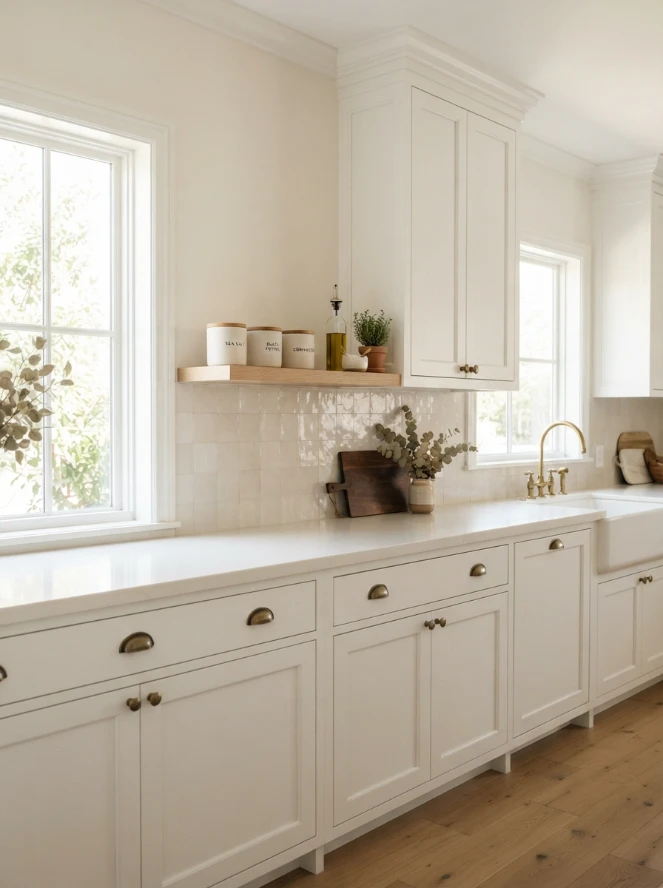
One of the easiest ways to make a farmhouse kitchen feel calmer is to keep most of the countertop visible.
Instead of lining the counter with everyday ingredients, install a slim shelf underneath an upper cabinet. It creates a convenient home for smaller items without taking away valuable preparation space.
For a classic farmhouse appearance, consider a natural or lightly stained wood shelf against white cabinetry. The warmth of the timber creates a gentle contrast with painted cabinets.
Keep the arrangement simple. You might place:
- Two or three ceramic spice containers
- A small salt cellar
- A frequently used oil bottle
- A tiny herb pot
- One decorative stoneware piece
Avoid treating the shelf as a display area for everything you own.
Leaving a little empty space around each item makes the kitchen look much more intentional.
Practical tip: Keep frequently used items near your main preparation area rather than placing them wherever the shelf happens to fit.
2. Pair Wooden Countertops with White Cupboards
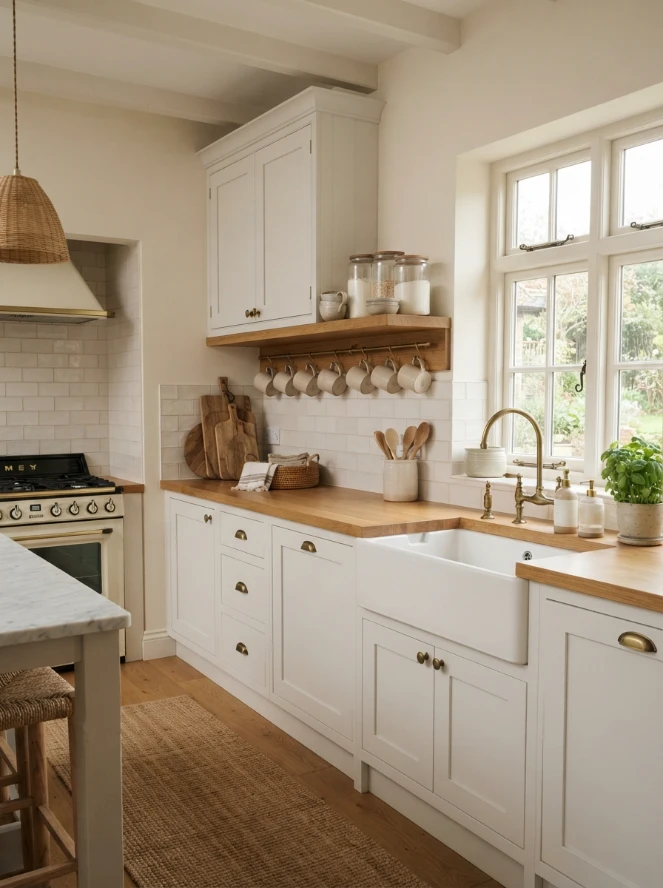
White cabinets and wooden countertops are a natural match for farmhouse interiors.
You can strengthen that relationship by installing an under-cabinet shelf in a wood tone similar to the countertop. Repeating the material at two different heights makes the room feel connected rather than pieced together.
For example, warm oak counters could be paired with a slim oak shelf mounted below simple white Shaker cabinets.
Style the shelf with practical farmhouse pieces such as stoneware mugs, small glass storage jars, or ceramic containers.
The wood does not need to match the countertop perfectly. In fact, slight variations can look more natural than an exact factory-style match.
Just keep the undertones reasonably similar. A very orange shelf beside a cool, pale wood countertop may look disconnected.
This approach works particularly well in kitchens where you want the warmth of open shelving without replacing traditional upper cabinets.
3. Install an Under-Cabinet Spice Rack
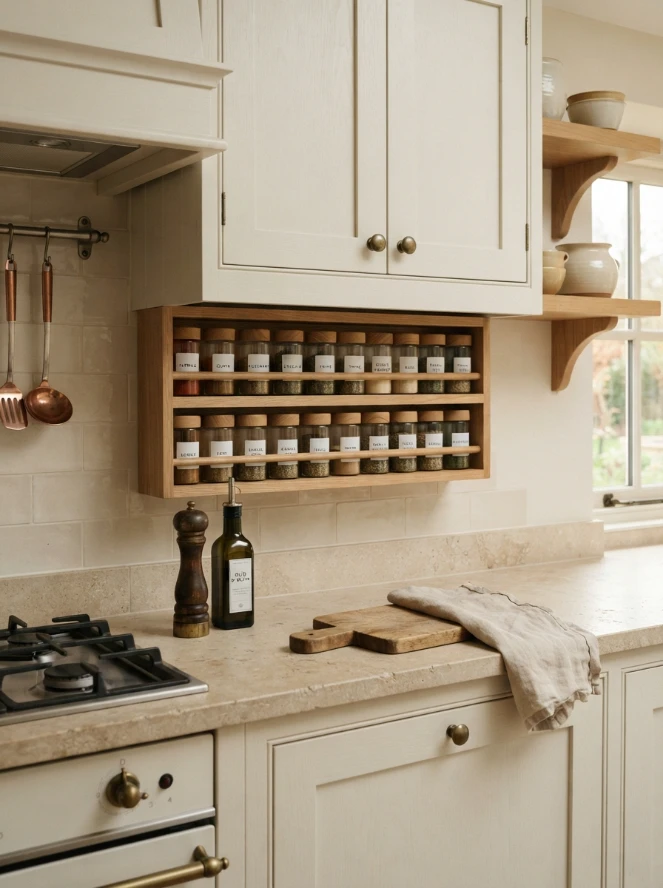
Spices are useful, but dozens of small containers can quickly consume countertop and cabinet space.
A dedicated under-cabinet spice rack can keep your most-used seasonings accessible while maintaining a cleaner cooking area.
Choose a shallow rack so jars remain visible and easy to reach. A small wooden rail along the front can also help prevent containers from slipping off.
For a farmhouse look, consider matching glass jars with simple labels and wood or metal lids.
You do not need to transfer every seasoning into decorative containers, though. Prioritize convenience over appearance.
Keep everyday spices near your primary cooking zone, such as:
- Salt
- Black pepper
- Paprika
- Garlic powder
- Oregano
- Chili flakes
- Cinnamon
Less frequently used seasonings can stay inside a cabinet or pantry.
Before installation, check the shelf depth carefully. It should hold the jars securely without projecting so far that it interferes with your workspace.
4. Soften White Cabinets and Marble Countertops with Wood
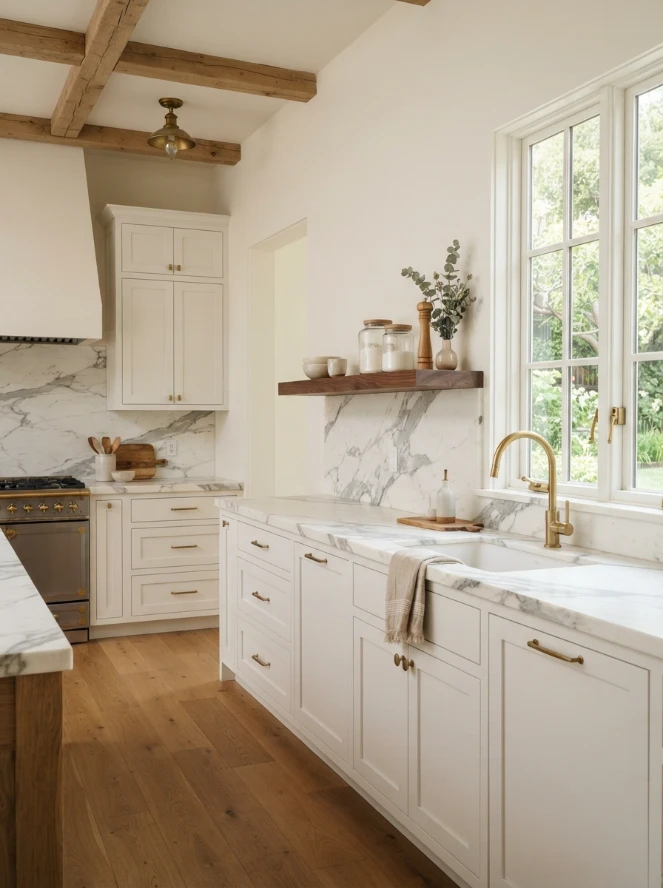
White cabinetry and marble or marble-look countertops can create an elegant kitchen, but an all-white palette sometimes needs warmth.
A natural wooden shelf beneath the cabinets provides an easy solution.
Choose a warm oak, walnut, reclaimed timber, or another wood finish that complements the rest of your kitchen.
You could style the shelf with cream stoneware, small glass jars, a wooden pepper mill, or a miniature vase containing a few simple stems.
The goal is contrast without visual noise.
If the countertop already has dramatic veining, keep the shelf arrangement particularly restrained. Too many colors and accessories can compete with the natural pattern of the surface.
You can also repeat the shelf material through cutting boards, stools, trays, or other small wooden details elsewhere in the room.
5. Create a Clear Countertop with Elevated Storage
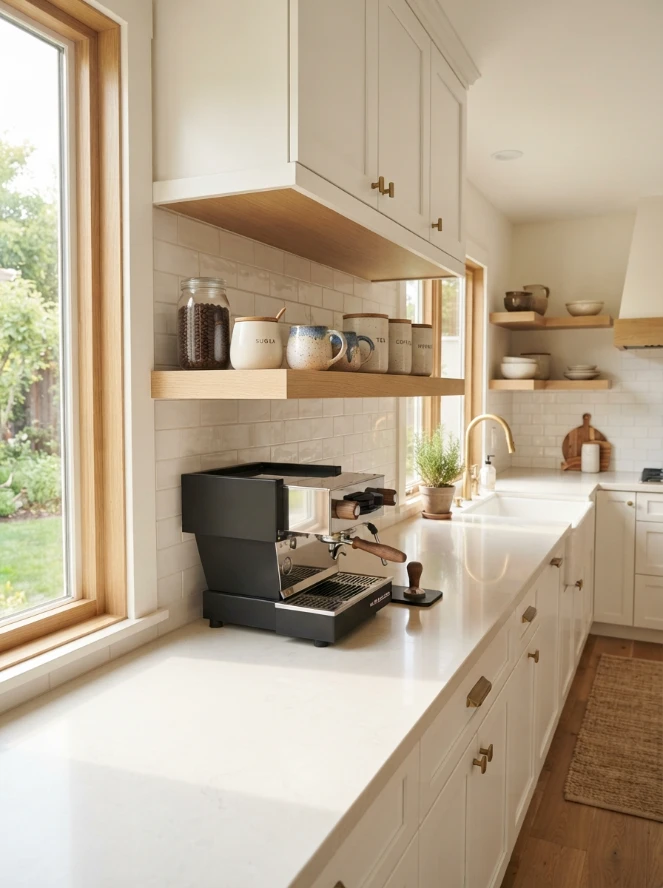
A beautiful kitchen countertop is more useful when you can actually work on it.
Instead of storing coffee supplies, seasonings, mugs, and small accessories directly on the worktop, move appropriate items onto a narrow shelf underneath the cabinetry.
This works especially well in smaller kitchens where every inch of counter space matters.
Think about the shelf as a practical extension of your cabinets rather than purely decorative storage.
For example, near a coffee station, it could hold:
- Coffee beans
- Sugar container
- Two favorite mugs
- Tea canisters
Near a food preparation area, it might instead hold salt, pepper, cooking oils, and frequently used seasonings.
Keep appliances and larger items on the countertop where they are stable and easy to operate.
A useful rule is simple: store upward, but don’t overcrowd upward.
If every available wall surface becomes storage, the kitchen can feel smaller rather than more organized.
6. Add Hooks Beneath the Shelf for Everyday Essentials
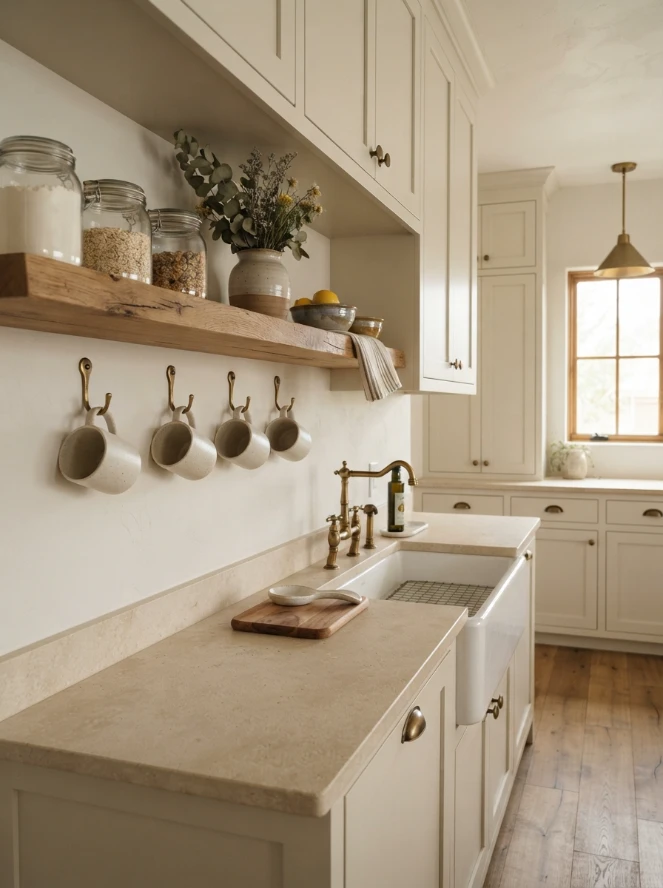
An under-cabinet shelf can provide more than one layer of storage.
Adding hooks underneath creates a convenient place for lightweight items such as mugs, measuring cups, or selected utensils.
This arrangement can be especially attractive in a farmhouse kitchen because hanging pieces bring a casual, lived-in quality to the room.
Try combining a wooden shelf with understated black, aged-brass, or iron-style hooks.
Above, place a few jars or pieces of stoneware. Below, hang matching mugs with enough spacing to prevent them from knocking together.
Make sure the hooks are securely installed and appropriate for the weight they will carry.
Also consider where you place them. Hanging mugs directly over a busy preparation surface may become inconvenient if they sit too low.
Measure your available vertical clearance before drilling any holes.
7. Warm Up Green Cupboards and a White Tile Backsplash
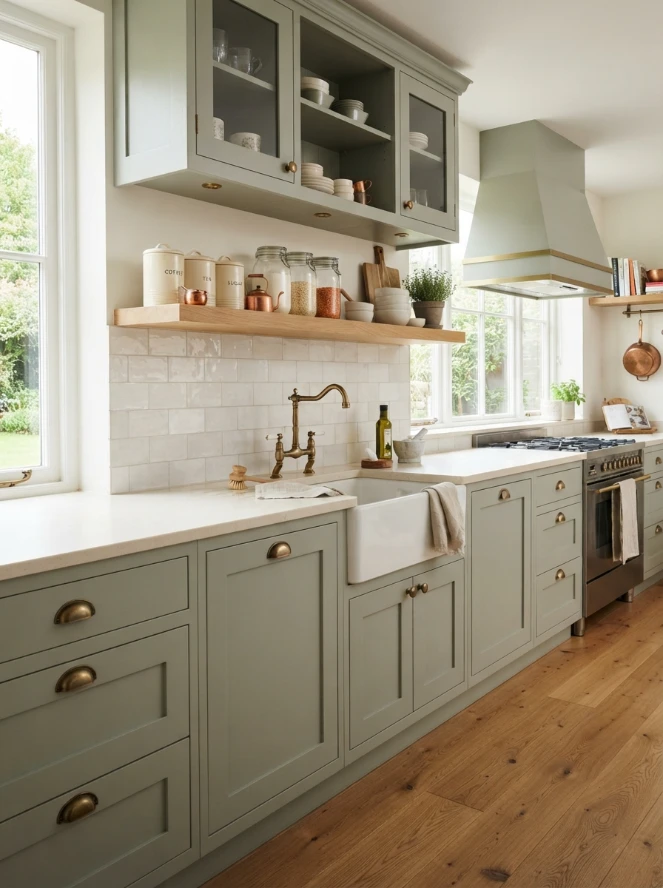
Farmhouse kitchens do not need to be completely white.
Muted green cabinetry can bring character and a connection to natural colors, particularly when combined with a crisp white backsplash.
An under-cabinet wooden shelf adds another warm layer to this combination.
Sage, olive, moss, and other subdued greens generally work beautifully with natural oak and medium brown woods.
Against white subway tile, the shelf becomes a subtle visual break between the cabinets and countertop.
Consider placing cream ceramics, glass storage jars, or a few copper accents on the shelf.
If your green cabinetry is already a strong feature, avoid decorating the shelf with many additional colors. Let the cabinetry remain the focus.
A simple combination could be:
Sage cabinets + white subway tile + oak shelf + cream stoneware + aged brass hardware
It feels unmistakably farmhouse without relying on overly themed decorations.
8. Combine Under-Cabinet Shelves with Smart Cabinet Organization
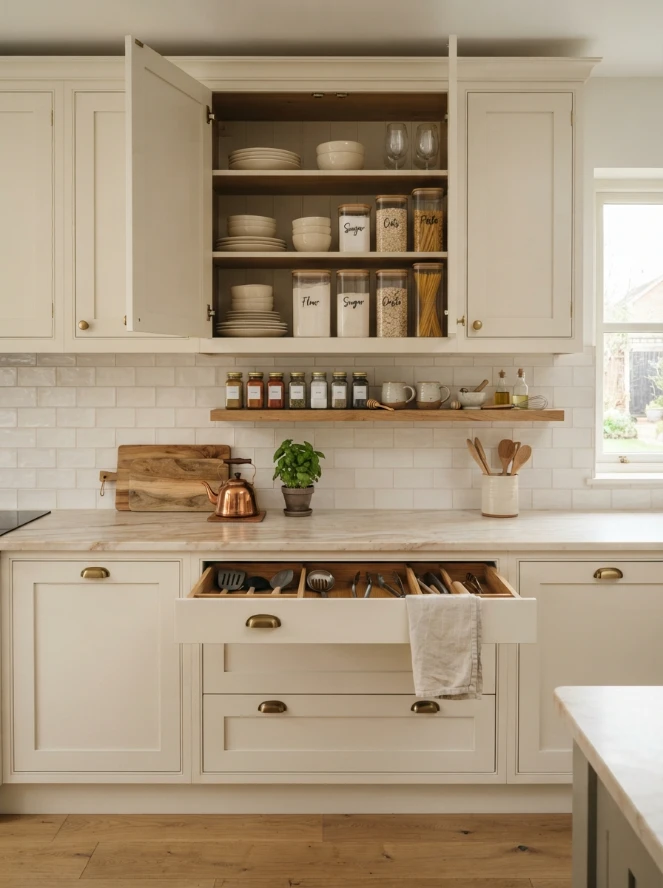
A shelf will not solve an organizational problem if the cabinets surrounding it are overflowing.
The most effective kitchen cabinet organization ideas consider the entire storage system.
Start by deciding which items actually need to be accessible every day.
Frequently used pieces can live on the under-cabinet shelf, while less attractive or occasional items stay behind closed doors.
Inside cabinets, consider shelf risers, drawer dividers, labeled containers, and pull-out organizers where appropriate.
A practical arrangement might look like this:
| Storage Area | Best Items to Store |
|---|---|
| Under-cabinet shelf | Everyday spices, mugs, small jars |
| Upper cabinets | Plates, bowls, glasses |
| Drawers | Cutlery, utensils, small tools |
| Lower cabinets | Pots, pans, larger appliances |
| Pantry | Dry goods and backup ingredients |
This approach keeps open storage attractive because you are not asking it to hold everything.
Before buying organizers, measure your cabinets carefully. Storage products that do not fit properly can waste more space than they save.
9. Coordinate White Cabinets, Wood Counters, and Open Storage
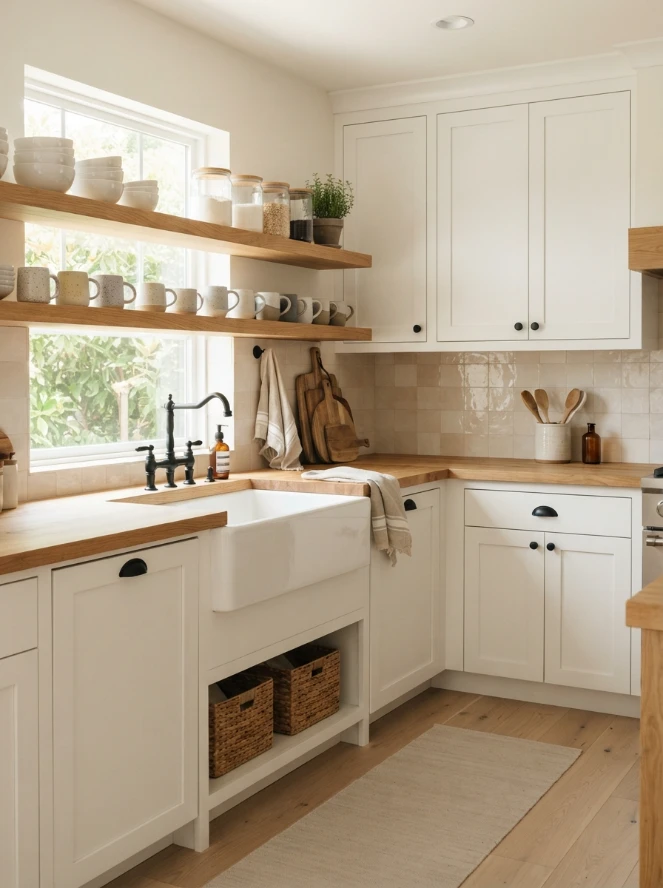
If your kitchen already combines white cabinets with wooden countertops, an under-cabinet shelf provides an opportunity to reinforce that farmhouse character.
Instead of introducing another finish, repeat the countertop material—or a visually similar wood—on the shelf.
This creates a simple rhythm throughout the room.
Try adding a few practical pieces that contrast gently against the wood, such as white ceramic bowls, clear glass jars, or a small stack of neutral mugs.
Black hardware can introduce definition if the overall palette feels too pale.
You might combine:
White Shaker cabinets + oak countertops + oak shelf + black hardware + ivory ceramics
The result is warm and approachable without requiring obvious farmhouse signs or decorative lettering.
In many cases, materials communicate the style more effectively than themed accessories.
10. Balance White Cabinets with Blue Countertops
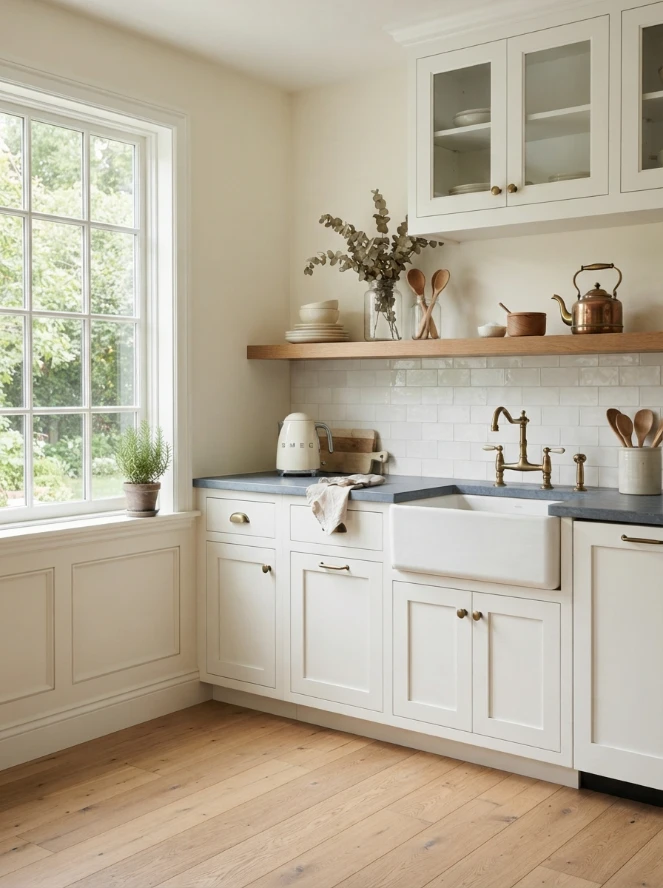
Blue countertops are less common than neutral stone or wood, which means they can give a farmhouse kitchen considerable personality.
The under-cabinet shelf should support that feature rather than compete with it.
If the countertop is a muted navy, slate blue, or blue-gray, try a medium natural wood shelf to introduce warmth.
Keep accessories mostly neutral—cream ceramics, transparent glass, natural wood, or simple metal pieces work well.
A pale wood can create an airy coastal-farmhouse influence, while darker timber produces a richer, more traditional appearance.
Before committing to the shelf finish, compare a wood sample directly against the countertop and cabinets in both daylight and evening lighting.
Colors can shift significantly depending on the light source.
11. Complement a Blue Tile Backsplash with Rustic Shelving

A blue backsplash can become one of the most memorable features of a farmhouse kitchen.
Whether you choose muted blue subway tile, handmade-look ceramic tile, or a subtle patterned design, a simple wooden shelf can provide contrast while keeping the wall practical.
With a decorative backsplash, however, restraint matters.
Avoid covering beautiful tile with a shelf packed with accessories. Instead, allow some of the backsplash to remain visible.
A few glass jars, cream ceramics, or a small wooden board may be enough.
You should also think carefully about mounting.
Drilling into tile can be more complicated than attaching shelving to a standard wall. The shelf needs appropriate support, and installation should account for the tile material, wall construction, shelf weight, and expected load.
If you are uncertain about safe installation, consult an experienced installer rather than risking damaged tile or an insecure shelf.
Designing Practical Charm with Shelves

The best farmhouse kitchen under-cabinet shelf ideas combine appearance with everyday usefulness.
Before installing anything, consider how you actually move through your kitchen.
Where do you prepare food? Which ingredients do you reach for most often? Where do you make coffee? Which countertops are constantly becoming cluttered?
Those answers should influence shelf placement.
Choose the Right Shelf Depth
Under-cabinet shelves generally work best when they are relatively shallow.
A shelf that projects too far can make the work area underneath uncomfortable.
Measure the available space and test the proposed depth before installation. You can even hold a piece of cardboard in position to understand how the shelf will affect your workspace.
Consider Height Carefully
There should be enough clearance underneath the shelf to use the countertop comfortably.
Remember to account for appliances as well.
If a coffee maker, mixer, or another tall appliance sits underneath the cabinet, measure it before choosing the shelf position.
Match Materials Thoughtfully
Wood is an obvious choice for farmhouse kitchens, but it is not your only option.
Depending on your particular style, you might consider:
- Natural oak for a light farmhouse look
- Walnut for richer contrast
- Reclaimed-style timber for rustic character
- Painted wood for a seamless cabinet look
- Wood with black brackets for an industrial-farmhouse touch
- Wood with brass hardware for a softer, refined appearance
Whatever material you choose should be suitable for kitchen conditions and easy to clean.
Keep Open Storage Selective
Ask yourself one important question: Do you really want to see everything you plan to put on the shelf?
Open storage works best when it holds a carefully edited selection.
Place practical but attractive everyday objects outside, and let closed cabinets hide mismatched packaging, backup supplies, and visual clutter.
Think About Cleaning
Kitchen shelves collect dust as well as airborne cooking residue.
Avoid filling them with dozens of tiny decorative objects that require constant cleaning.
Smooth containers and a simple arrangement are much easier to maintain.
Shelving close to a stove may need particularly frequent cleaning, so consider the cooking zone carefully before deciding on placement.
Prioritize Safety Around Cooking Areas
Do not position heat-sensitive, flammable, or unstable objects where they could be affected by a cooktop or another heat source.
Cooking-area clearances can depend on your appliances, ventilation system, cabinetry, materials, and local requirements.
Follow the manufacturer’s installation instructions and applicable building or fire-safety requirements rather than choosing shelf placement based only on appearance.
Frequently Asked Questions
Are under-cabinet shelves good for small farmhouse kitchens?
Yes. A narrow shelf can use vertical space that might otherwise remain empty and help clear frequently used small items from the countertop.
However, avoid installing shelving everywhere. Too much open storage can make a compact kitchen appear busier.
What should I put on an under-cabinet kitchen shelf?
Prioritize small items you use regularly, such as spice jars, coffee supplies, mugs, salt and pepper containers, or selected cooking essentials.
A small decorative piece can add personality, but practical storage should remain the main purpose.
What type of wood suits a farmhouse kitchen shelf?
Oak is a versatile option because of its warm, natural appearance. Walnut can provide richer contrast, while reclaimed-style wood creates a more rustic look.
Choose a finish that coordinates with your countertops, flooring, furniture, or other wooden details.
Can I install a shelf over a tile backsplash?
It may be possible, but installation depends on the tile and the wall behind it. Proper anchors, drilling methods, and support are important.
If you are unsure, professional installation can help prevent cracked tiles and unstable shelving.
How do I stop open kitchen shelves from looking cluttered?
Use fewer objects and repeat materials or colors.
For example, several clear glass jars beside cream stoneware will usually look calmer than a mixture of colorful packaging, unrelated decorations, and mismatched containers.
Leave visible gaps rather than filling every inch.
Should an under-cabinet shelf match the countertop?
It does not have to match exactly.
Repeating a similar wood tone can create cohesion, but contrast can work beautifully too. The important part is making sure the materials relate to the overall palette.
Bring Practical Charm to Your Kitchen
A farmhouse kitchen does not become more functional simply by adding more storage. The storage needs to be in the right place and serve the way you actually use the room.
Start with one area that regularly becomes cluttered.
Perhaps your spices are taking over the cooking area, your coffee supplies need a dedicated home, or a collection of mugs is occupying valuable cabinet space.
A thoughtfully positioned shelf may be enough to solve that specific problem.
Then style it simply.
Natural wood, warm ceramics, clear glass, understated metal hardware, and a restrained color palette can create farmhouse character without making the room feel staged.
Conclusion
The most successful farmhouse kitchen under-cabinet shelf ideas make storage feel like part of the kitchen’s design rather than an afterthought.
A slim wooden spice rack can free countertop space. A shelf with hooks can create an efficient mug station. Natural timber can soften white cabinetry and marble, while warm wood can complement green cabinets or a blue backsplash.
Before installing a shelf, measure carefully and think about clearance, cleaning, safety, and what you genuinely need to store.
Start small. Choose one troublesome countertop area, move a few frequently used essentials upward, and leave enough empty space for the arrangement to breathe.
That balance between practicality and warmth is what gives farmhouse kitchens their lasting appeal.