21 Genius Kitchen Storage Shelf Ideas for an Organized Space
A kitchen can have plenty of cabinets and still feel short on storage. The problem is often not how much space you have, but how effectively that space is being used.
An empty wall, the narrow area beside your stove, or even a forgotten cabinet interior can provide valuable storage when you add the right shelving.
The best kitchen storage shelf ideas do more than hold dishes and jars. They keep frequently used items within reach, make small kitchens easier to navigate, and can even turn practical objects into part of the room’s design.
Whether you have a compact apartment kitchen or a spacious family kitchen, these ideas will help you make better use of the space you already have.
1. Add Cozy Open Shelving Near a Sunny Window
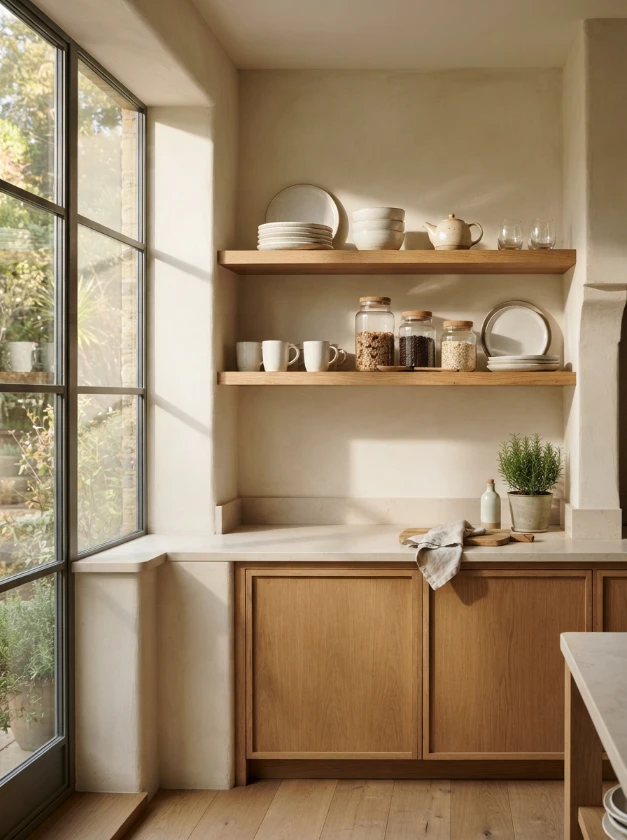
Open shelving works especially well in areas that receive plenty of natural light. Rather than filling a bright wall with bulky upper cabinets, a few simple shelves can keep the kitchen feeling open while providing useful storage.
Use these shelves for attractive items you reach for regularly, such as ceramic mugs, breakfast bowls, small plates, glass jars, or a favorite teapot.
Natural wood is particularly effective in a bright kitchen because sunlight emphasizes its grain and warm tones. White or cream shelves can create a lighter look if your kitchen already has darker cabinetry.
Try not to cover every inch of shelf space. Leaving small gaps between groups of objects makes the arrangement easier to use and visually calmer.
Practical tip: Place everyday dishes on lower shelves and decorative or less frequently used items higher up.
2. Install Wall-Mounted Shelves Around the Microwave
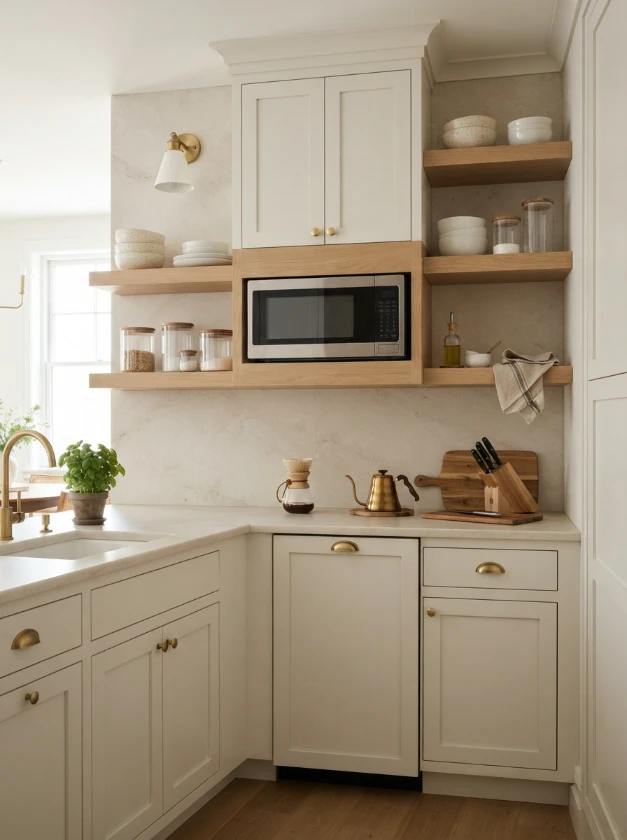
A countertop microwave can consume valuable preparation space, particularly in a small kitchen.
A strong wall-mounted shelf can provide a dedicated location for the microwave while additional shelving above or beside it can hold microwave-safe dishes, bowls, containers, or other everyday essentials.
Before installing this type of storage, check the appliance manufacturer’s ventilation and clearance requirements. Shelving should also be properly anchored and rated for the appliance’s weight.
Avoid surrounding a microwave too tightly with decorative objects.
The goal is to create a practical appliance zone rather than simply squeeze more items into a small area.
3. Use White Shelves for Everyday Essentials

White shelves are a simple choice for kitchens where you want additional storage without making the walls appear visually heavy.
Against white or pale walls, the shelving almost blends into the background. This allows colorful dishes, glassware, cookbooks, and food containers to become the focus.
For an organized arrangement, group similar items together.
For example:
- Plates and bowls in one section
- Drinking glasses together
- Mugs near the coffee maker
- Dry ingredients in matching containers
- Small serving pieces in baskets
You do not need identical containers for everything. A little variation can make open shelves feel more natural, but maintaining a consistent overall palette prevents them from looking chaotic.
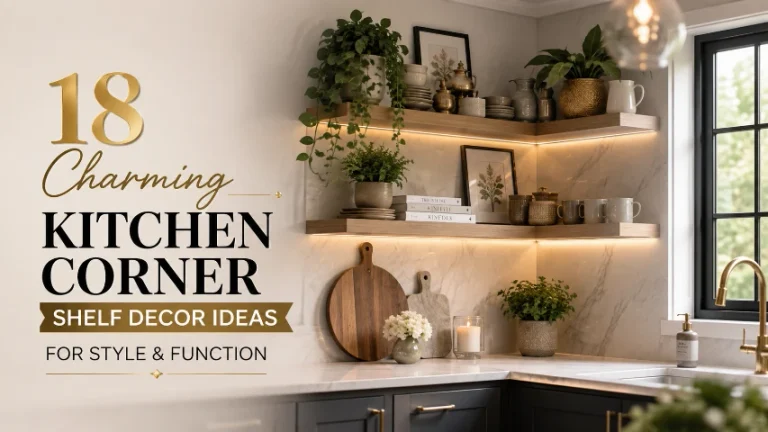
4. Bring Warmth with Wooden Kitchen Shelves

Wooden shelving can soften a kitchen filled with hard surfaces such as tile, stone, stainless steel, and painted cabinetry.
Oak, walnut, pine, and reclaimed wood all create different effects. Pale oak suits Scandinavian and organic-modern interiors, while darker walnut can add richness to a traditional or contemporary kitchen.
Use wooden shelves for ceramic bowls, cutting boards, pitchers, glasses, or frequently used cookware.
If the shelves are positioned near a sink or cooking area, choose a finish appropriate for kitchen conditions and follow the manufacturer’s care instructions.
A simple combination such as:
Warm wood shelves + ivory ceramics + clear glass + muted greenery
can create an inviting display without requiring lots of decorative accessories.
5. Make Colorful Cookware Part of Your Storage
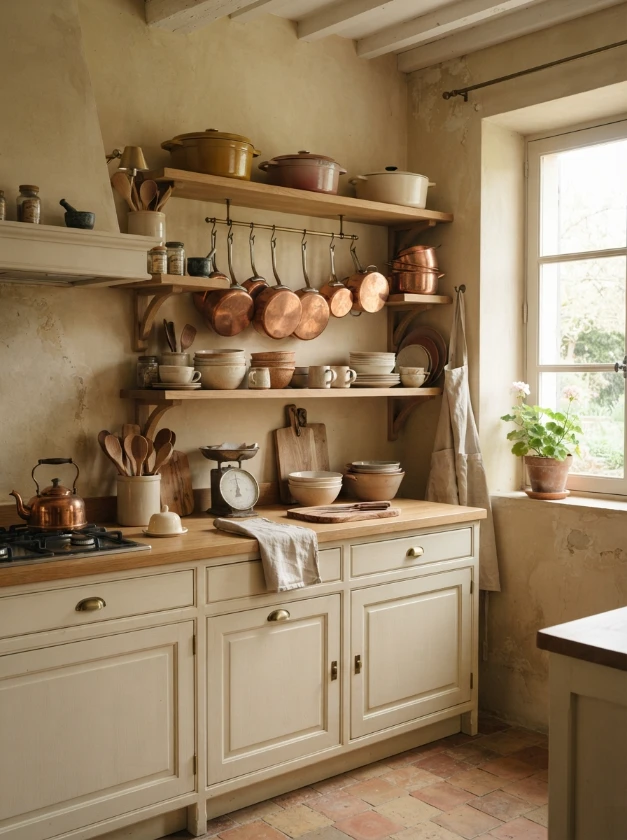
Storage does not have to disappear into the background.
If you own colorful pots, pans, bowls, or cookware, open shelving can turn these practical pieces into an intentional part of your kitchen’s color scheme.
For example, a warm yellow wall can create a cheerful backdrop for copper pans, colorful enamel cookware, wooden utensils, and handmade ceramics.
The key is repetition.
Choose two or three main colors and repeat them across the shelves rather than displaying every possible shade.
This approach is particularly useful when you already own beautiful cookware and would rather display it than buy additional kitchen decorations.
6. Use Shelving Above the Stove Carefully
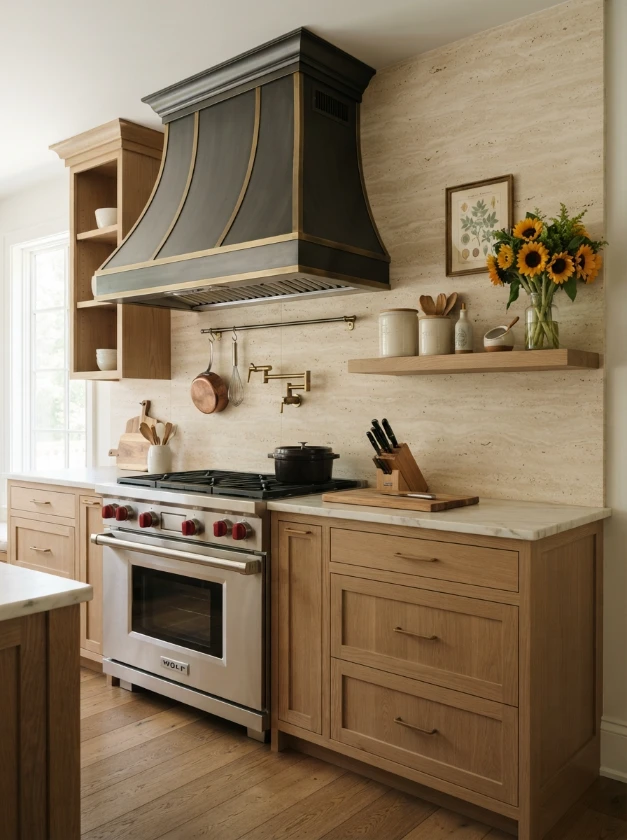
The wall around a cooking zone may offer extra storage, but it requires more planning than an ordinary kitchen wall.
A shelf positioned at an appropriate distance from the cooking surface can hold selected items such as oils, frequently used seasonings, or decorative kitchenware where permitted by the appliance and ventilation setup.
However, heat, grease, steam, ventilation, and fire safety must come first.
Always follow the required clearances for your stove, range hood, backsplash, and shelving materials. Avoid placing flammable decorations directly above cooking surfaces.
If your layout safely allows decorative shelving nearby, a vase of fresh or faux sunflowers placed away from heat can add a warm seasonal accent.
Safety tip: Never sacrifice manufacturer-required clearances just to gain another shelf.
7. Create an Elegant Dish and Glassware Display
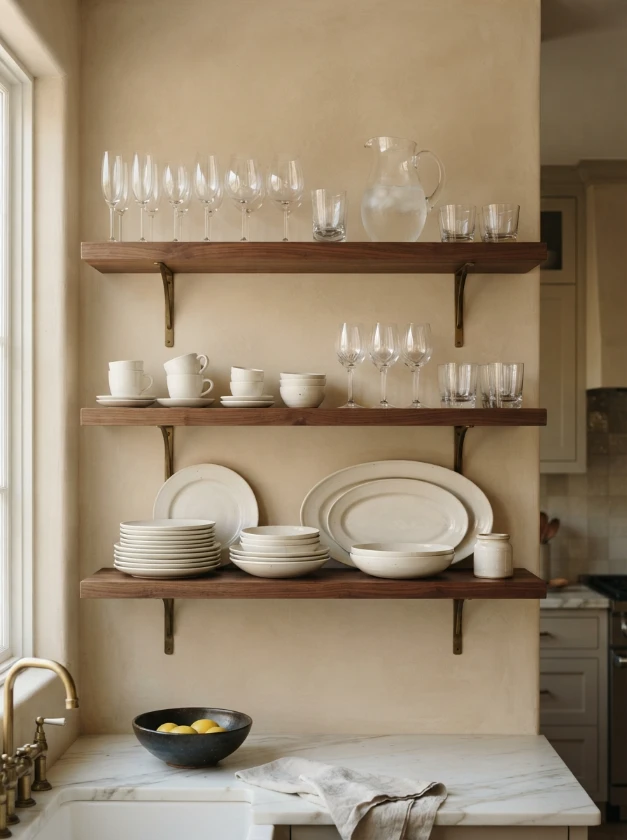
If your plates and glasses are attractive enough to display, open shelving can provide storage and decoration at the same time.
Place heavier dishes on lower shelves, where they are easier to lift safely. Glassware and lighter serving pieces can sit above.
Rather than lining everything in a single row, create small functional groups.
You might arrange:
- Dinner plates beside bowls
- Drinking glasses beside a water pitcher
- Coffee cups near a small sugar bowl
- Serving dishes beside folded linens
Repeated materials and colors help separate an intentional display from ordinary kitchen clutter.
8. Create Open Pantry Shelves for Food Storage
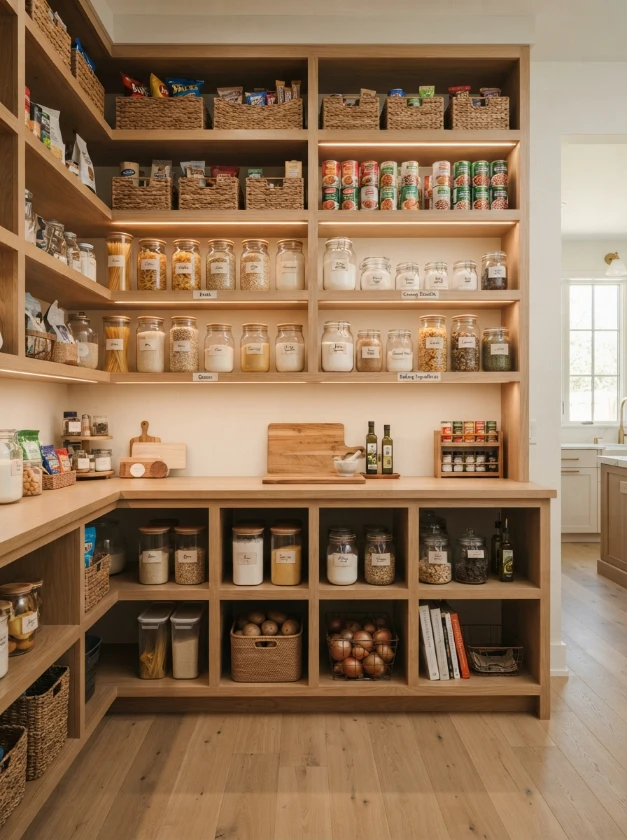
A walk-in pantry is useful, but you do not necessarily need one to create accessible food storage.
A blank kitchen wall or shallow recess can become an open pantry with several sturdy shelves.
Store dry goods such as pasta, rice, oats, flour, cereal, and baking ingredients in appropriate containers. Baskets can contain packaged snacks and other small items that otherwise make shelves look untidy.
Organize food according to how you use it rather than simply according to package size.
Possible zones include:
- Breakfast foods
- Baking supplies
- Pasta and grains
- Snacks
- Canned goods
- Tea and coffee
Keep food in suitable containers and follow product storage instructions. Labels can also help everyone in the household return ingredients to the right location.
9. Fit a Narrow Spice Rack Beside the Stove
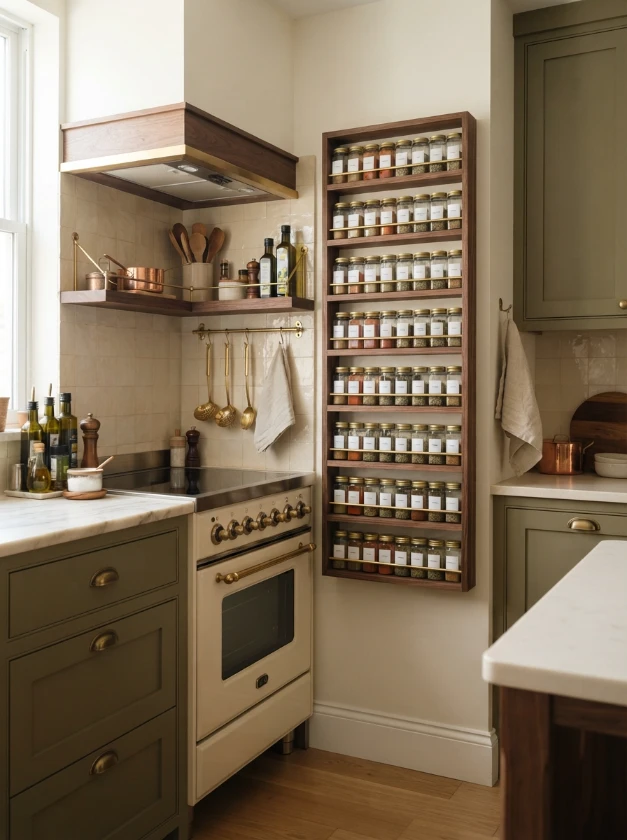
One of the smallest spaces in the kitchen can sometimes solve one of its most annoying storage problems.
A narrow wall beside the cooking area may be wide enough for shallow spice shelves.
Because spice containers are small, these shelves do not need the depth required for plates or cookware.
Arrange spices alphabetically, by cuisine, or according to how often you use them.
For example, salt, pepper, paprika, garlic powder, and everyday seasonings can occupy the most accessible section, while occasional baking spices can sit farther away.
Keep spices away from excessive heat, moisture, and direct sunlight where possible, as storage conditions can affect their quality.
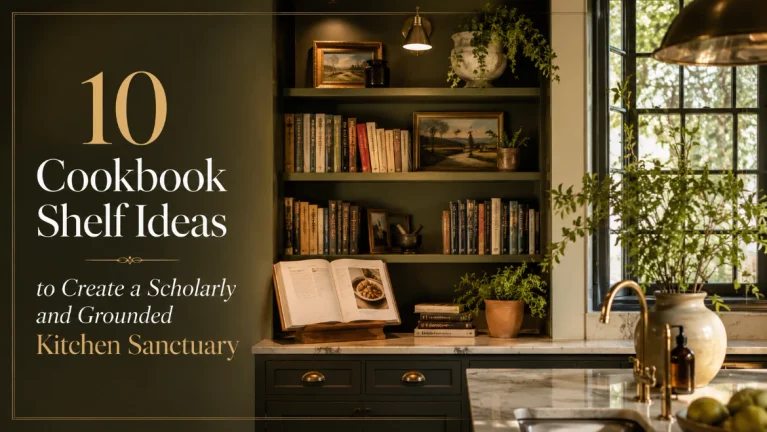
10. Turn One Shelf into a Mini Kitchen Library

Cookbooks deserve a convenient place if you actually use them.
Instead of storing every cookbook in another room, dedicate one section of kitchen shelving to your most useful titles.
Place the books vertically with bookends, or stack a few horizontally when shelf height allows. Keep them far enough away from sinks, splashes, steam, and cooking grease.
You can pair cookbooks with a small ceramic bowl, timer, recipe box, or another practical kitchen object.
The result feels personal without relying on generic decorative accessories.
Even a collection of five or six frequently used books can create a charming kitchen library.
11. Add Streamlined Shelves Near the Cooking Zone
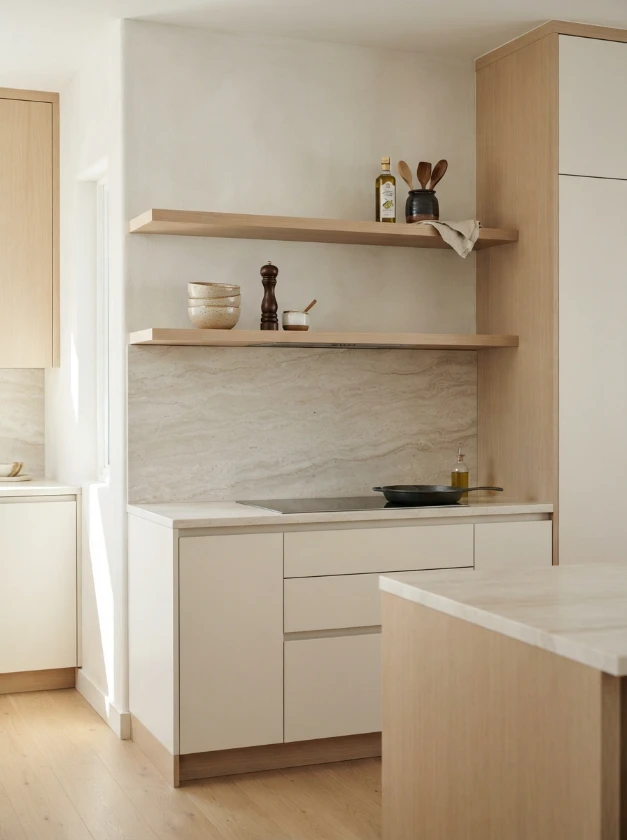
If you prefer a minimalist kitchen, storage shelves do not need elaborate styling.
One or two slim floating shelves can provide enough room for the things you reach for most often.
Think about what actually belongs near your cooking area.
A shelf might contain a small group of frequently used oils, a salt cellar, a pepper mill, and a few everyday bowls, provided the location is suitable and safely away from excessive heat.
Keeping the collection limited makes the area easier to clean.
This is important around cooking zones, where exposed surfaces can accumulate grease more quickly than shelves elsewhere in the kitchen.
12. Mix Practical and Decorative Objects on Open Shelves
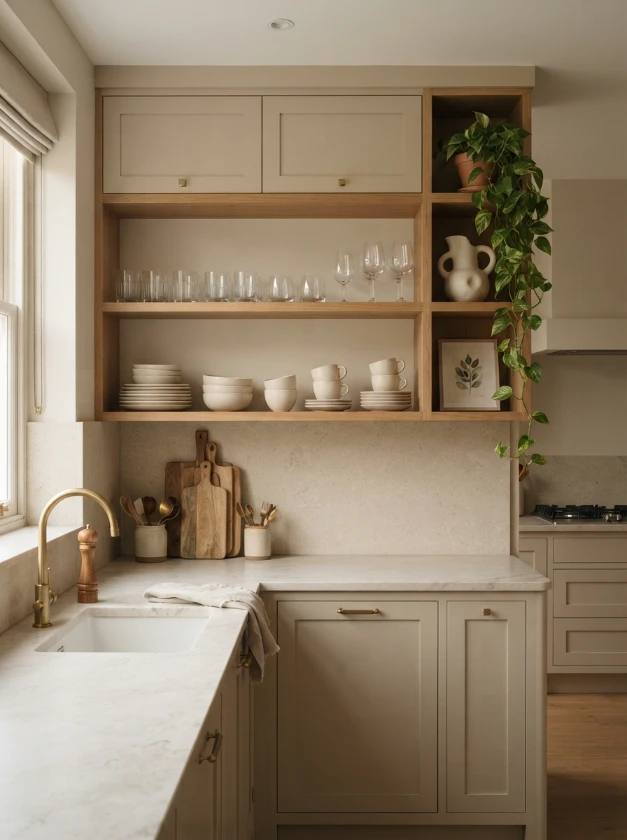
Not every kitchen shelf needs to contain only one category.
Open shelving can work beautifully when useful objects are mixed with a few decorative pieces.
For example, combine:
Stacked dishes + drinking glasses + wooden board + ceramic pitcher + small artwork
The dishes provide practical storage, while the pitcher, board, and artwork add character.
The secret is balance.
If every shelf contains numerous small accessories, the kitchen may start to feel crowded. Allow everyday kitchenware to make up most of the arrangement, then add only a few decorative accents.
Ask yourself: Would I still have room to put away the dishes I use every day?
If the answer is no, reduce the decorative pieces.
13. Arrange Plates for Easy Access and Visual Order

Plates are among the easiest items to organize on open shelves because their repeated shape naturally creates visual rhythm.
Stack everyday dinner plates, side plates, and shallow bowls in separate groups.
For deeper shelving, avoid creating very tall stacks that become difficult to access. Several smaller stacks are usually easier to manage.
A wall-mounted plate rack is another option for kitchens with farmhouse, cottage, or traditional character.
Choose a system that securely supports the dishes rather than treating valuable plates as decoration alone.
If you use your open shelves daily, practicality should always guide the arrangement.
14. Organize Jars and Pots for a Rustic Kitchen Look
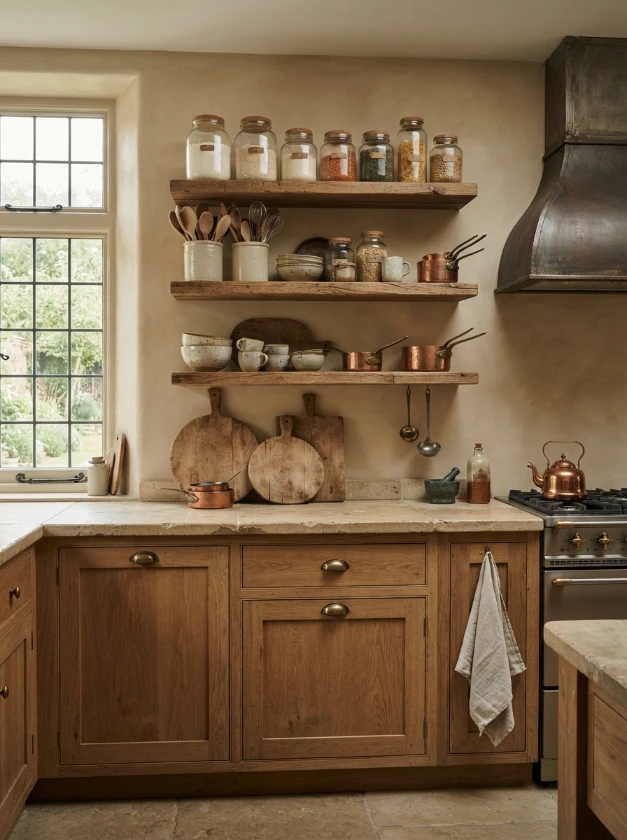
Glass jars, stoneware pots, wooden utensils, and simple ceramics can turn functional storage into a relaxed rustic feature.
Instead of buying numerous decorative containers, start with objects you already use.
Glass jars can hold suitable dry ingredients, while ceramic crocks can contain wooden spoons and other utensils.
Wooden shelves provide a natural background for this arrangement.
To keep the display cohesive, repeat a few materials throughout the space. Clear glass, warm wood, cream stoneware, and black metal can create a particularly effective combination.
Avoid filling open containers with foods that require different storage conditions simply for appearance. Function should remain the priority.
15. Give New Cookware a Dedicated Shelf
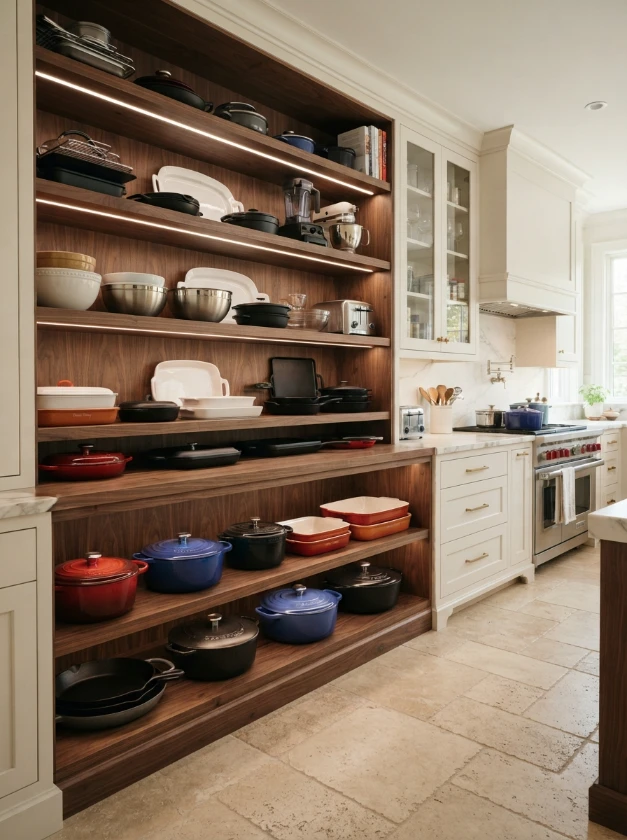
New pots, baking dishes, or small appliances often end up wherever there happens to be space.
A better solution is to reorganize storage before adding them to the kitchen.
First, remove cookware you rarely use. Then group the remaining pieces according to purpose.
For example:
- Everyday pots and pans
- Baking equipment
- Serving dishes
- Small appliances
- Specialty cookware
Open shelves can work for frequently used items, but heavy cookware requires appropriately rated shelving and secure installation.
Before buying additional storage, measure both the available wall space and the items you intend to store. This prevents installing attractive shelves that are too shallow or too weak to be useful.
16. Use Hanging Fruit Baskets to Free Counter Space

Bananas, oranges, onions, and other produce can occupy a surprising amount of countertop space.
A hanging basket system can move appropriate produce upward while leaving the worktop available for food preparation.
Tiered baskets are particularly useful because different items can be separated rather than piled together.
Install them in an area where they will not interfere with cabinet doors, walking paths, or cooking tasks.
Remember that different fruits and vegetables have different storage requirements. Only place produce in hanging baskets when room-temperature storage is appropriate for that item.
For small kitchens, vertical storage like this can make a noticeable difference.
17. Create a Calm, Curated Counter-and-Shelf Combination
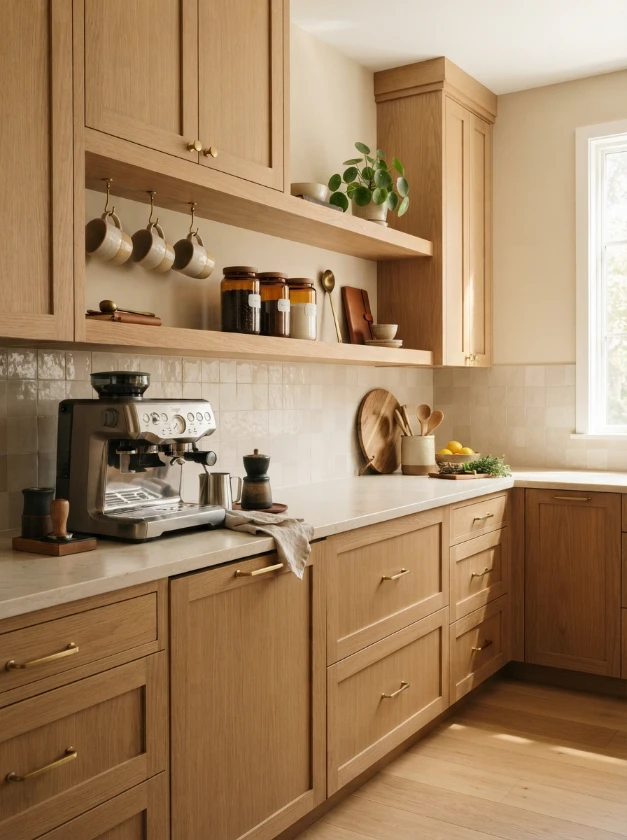
Sometimes improving shelf storage begins with looking at the kitchen as a whole.
Stand back—or even photograph your counter from above—to identify areas that feel overcrowded.
Then decide which objects should remain on the counter and which can move onto nearby shelves.
Items used several times per day usually deserve counter space. Objects used less often can move upward.
For example, your coffee maker may remain below while mugs, coffee containers, and filters sit on a shelf above it.
This creates vertical storage zones rather than spreading related objects across the entire countertop.
The result is not just prettier. It can make everyday kitchen routines faster.
18. Turn Cabinet Interiors into Better Storage Zones
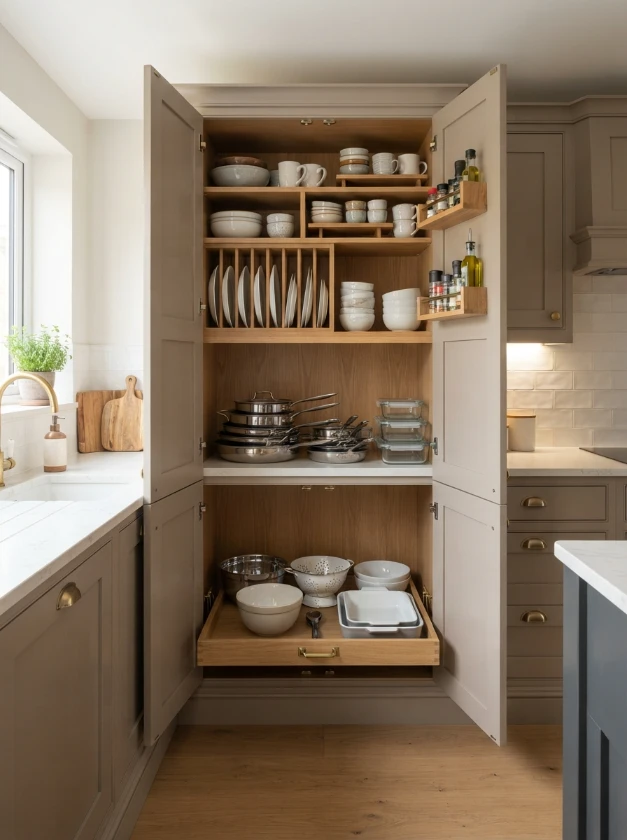
Kitchen storage shelves do not have to be visible.
Cabinet interiors often contain unused vertical space, especially when a tall cabinet shelf holds only one short row of cups or bowls.
Shelf risers can create another level, while appropriate pull-out organizers can make deep cabinets easier to access.
You might also use:
- Adjustable shelf inserts
- Plate organizers
- Under-shelf baskets
- Pull-out trays
- Lid organizers
Measure carefully before purchasing inserts because cabinet interiors vary considerably.
Do not overload adjustable shelves, and always consider the weight of dishes, appliances, or canned foods.
19. Stack Dishes According to Size and Use
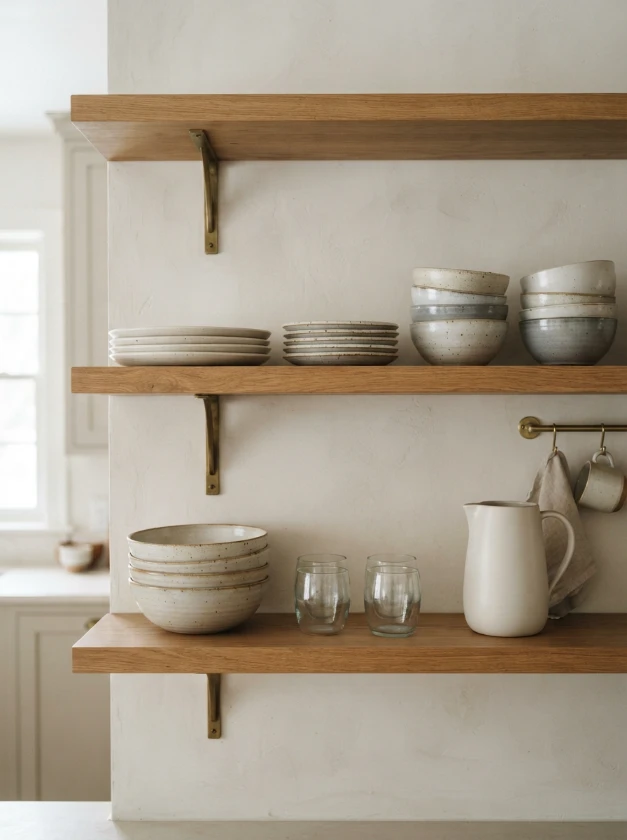
Simple changes can improve existing shelving without adding anything new.
Start by grouping dishes by type and frequency of use.
Place everyday dinnerware within comfortable reach. Special-occasion dishes can occupy a higher or less convenient shelf.
When stacking, keep larger plates at the bottom and smaller pieces above when appropriate.
You can also separate categories instead of creating one enormous stack.
For example:
Dinner plates | Side plates | Bowls | Serving bowls
This makes it easier to remove one item without disturbing everything else.
If several people use the kitchen, straightforward organization is often more effective than an overly complicated system.
20. Build a Dedicated Coffee Station with Shelves
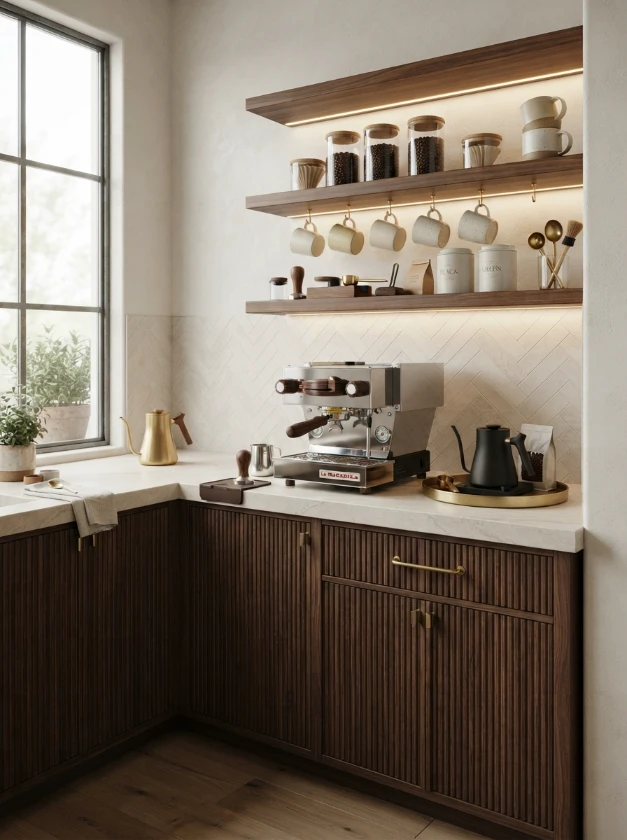
A coffee station is one of the easiest ways to turn an ordinary kitchen corner into a useful daily zone.
Place the coffee maker on the counter and install shelves above it for the items you regularly need.
These might include:
- Coffee mugs
- Coffee beans or grounds
- Tea
- Sugar
- Filters
- Small spoons
- Syrups used regularly
A tray on the counter can contain smaller items and make cleanup easier.
For a polished look, repeat materials already present elsewhere in the kitchen. Wooden shelves might coordinate with cutting boards, while brass shelf brackets could relate to cabinet hardware.
Keep the station focused on what you genuinely use. Too many decorative signs, jars, and accessories can quickly reduce its functionality.
21. Pair Green Cabinets with Natural Wood Shelves
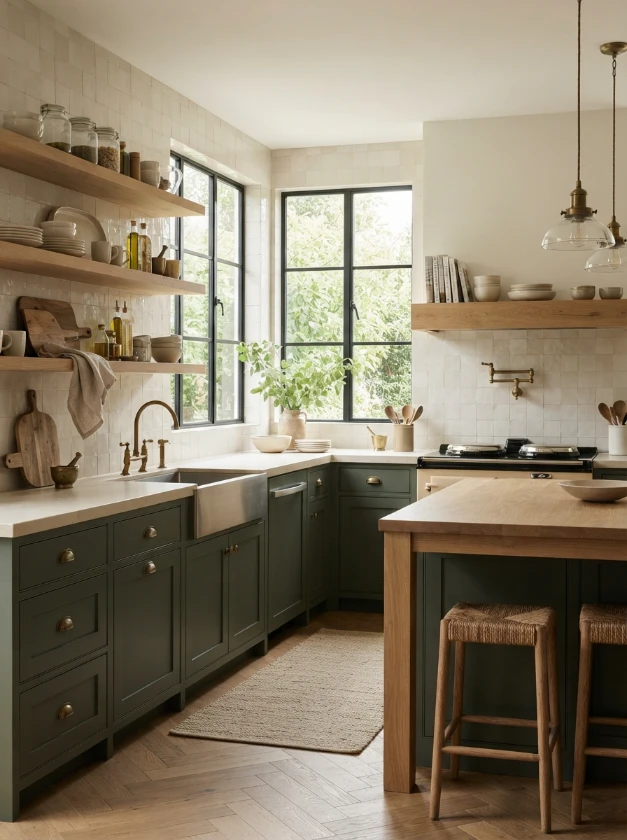
Green cabinetry and natural wood make an appealing combination because both colors connect easily with earthy, organic palettes.
Sage green creates a softer effect, while olive or forest green can make the kitchen feel richer and more dramatic.
Natural oak shelves can lighten darker green cabinetry, while walnut shelves can add warmth and contrast.
Complete the arrangement with simple materials such as:
- Cream stoneware
- Clear glass
- Wooden boards
- Brass or black hardware
- Neutral linens
You do not need to match the wood perfectly to every other wooden element in the room. Closely related tones often look more natural than an exact furniture-set match.
Bonus: Create a Dedicated Spice Shelf
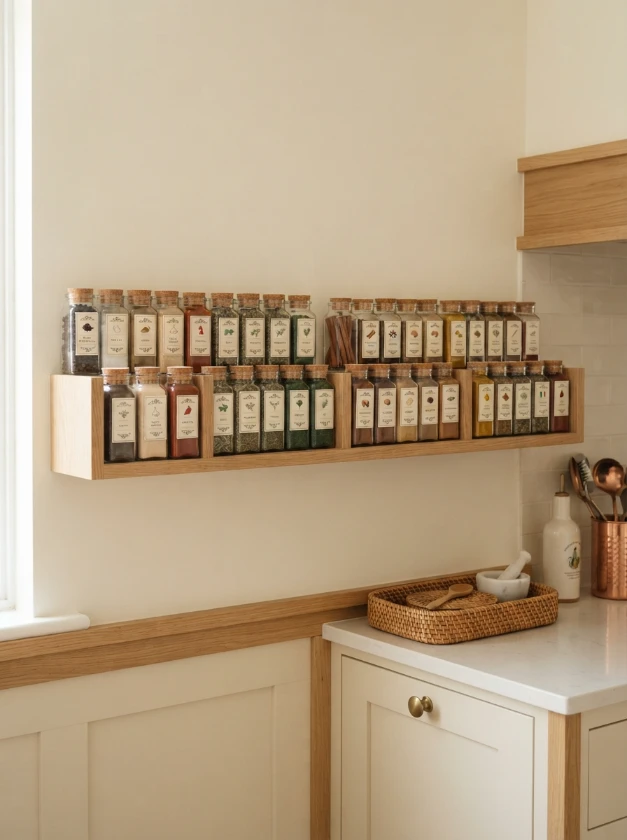
If your household uses many spices, give them more than a narrow rack.
A full shallow shelf can hold a larger collection while keeping labels visible.
Try arranging the jars alphabetically if you cook a wide range of recipes. Alternatively, group them according to use: everyday seasonings, baking spices, herbs, and specialty blends.
Uniform jars can make the collection easier to scan, but transferring spices is not essential. Clear labeling and sensible organization matter more.
Add dates when appropriate so older ingredients do not disappear at the back.
Most importantly, choose a location that protects your spices from unsuitable heat, moisture, and direct light.
Simple Rules for Calm and Organized Kitchen Shelves
Beautiful open shelving can quickly become cluttered when every available surface is treated as extra storage.
A few basic principles make shelves easier to maintain.
Keep Frequently Used Items Accessible
The things you use daily should be the easiest to reach.
Reserve higher shelves for lightweight items that you use less frequently.
Group Similar Objects
Instead of scattering mugs across several shelves, keep them together.
The same principle applies to plates, glasses, baking supplies, and pantry ingredients.
Leave Some Breathing Room
You do not have to fill every inch.
A little empty space helps individual groups remain visually clear and gives you room to put items away without rearranging the entire shelf.
Consider Cleaning
Open shelving requires more frequent cleaning than closed cabinets because objects remain exposed to airborne dust and cooking residue.
Shelves close to the stove may require particular attention.
Think About Weight
A shelf full of dinnerware can become extremely heavy.
Use suitable materials, brackets, anchors, and installation methods for the wall type and intended load. For heavy installations, consider professional advice.
Steps to Plan Your Ideal Kitchen Storage Shelves
Before drilling holes into the wall, spend a little time planning.
Step 1: Identify Your Storage Problem
What are you actually trying to fix?
Maybe your countertops are crowded, spices are difficult to find, mugs are taking over a cabinet, or pantry ingredients are scattered across several areas.
Solve that specific problem first.
Step 2: Find Underused Space
Look at:
- Empty kitchen walls
- Space above suitable counters
- Narrow wall sections
- Cabinet interiors
- Corners
- Pantry walls
- Coffee-station areas
You may already have more usable storage space than you realize.
Step 3: Measure Everything
Measure the wall and the objects you plan to store.
Consider shelf:
- Width
- Depth
- Thickness
- Spacing
- Height
- Load requirements
Also check that shelving will not interfere with cabinet doors, appliances, windows, ventilation, or walkways.
Step 4: Choose Materials That Suit Your Kitchen
Wood adds warmth, while painted shelves can blend into cabinetry or walls.
Metal can suit industrial and contemporary kitchens, and combinations such as wooden shelves with metal brackets can work across several styles.
Kitchen conditions matter too, so choose finishes and materials appropriate for the intended location.
Step 5: Organize Before You Style
Put practical items on the shelves first.
Once the storage works, add a small number of decorative pieces if there is room.
This prevents styling from taking over space you actually need.
Step 6: Live with the Arrangement
Use the kitchen normally for a week or two.
You may realize that your mugs need to move closer to the coffee maker or that everyday plates should be one shelf lower.
Good organization develops around real habits.
Frequently Asked Questions
Are open kitchen shelves practical?
Yes, open shelves can be very practical when they hold frequently used objects. Everyday plates, bowls, glasses, mugs, and selected pantry items are particularly suitable because they are regularly removed, used, cleaned, and returned.
However, open shelving generally requires more frequent cleaning than closed cabinets.
What should I put on kitchen storage shelves?
Prioritize items you regularly use, such as dishes, glasses, mugs, dry ingredients, cookbooks, serving pieces, or coffee supplies.
A few decorative objects can be included, but they should not prevent the shelves from functioning as storage.
How can I make open kitchen shelves look less cluttered?
Group similar objects, repeat a limited number of colors and materials, use baskets for small packaged items, and leave some empty space between groups.
Reducing the number of objects is often more effective than buying additional organizers.
Are kitchen shelves good for small kitchens?
They can be extremely useful in small kitchens because they take advantage of vertical wall space.
Shallow shelves, spice racks, cabinet inserts, and hanging storage can increase usable storage without occupying additional floor space.
How deep should kitchen shelves be?
There is no single depth that works for every kitchen. The appropriate depth depends on what you intend to store, the available wall space, the shelf material, and the installation system.
Measure your largest intended items before choosing shelving rather than relying only on a standard dimension.
What is the best material for kitchen shelves?
Wood is popular because it is versatile and warm, while metal can provide a clean industrial or modern appearance. Painted shelving can coordinate closely with walls or cabinets.
The best option depends on location, expected load, maintenance requirements, and your kitchen’s overall design.
How do I decorate kitchen shelves without losing storage space?
Start with useful objects that are already attractive: wooden cutting boards, ceramic bowls, glass jars, pitchers, and cookbooks.
Then add one or two decorative accents only where space remains. This creates personality without turning valuable storage into a display-only area.
Conclusion
The most successful kitchen storage shelf ideas are not necessarily the most elaborate. They are the ones that make your everyday kitchen routine easier.
A narrow spice rack can solve a frustrating cooking problem. A pair of wooden shelves can free an overcrowded counter. An open pantry wall can give dry goods a proper home, while a dedicated coffee station can keep an entire morning routine in one place.
Start by looking at how you currently use your kitchen. Identify the items that are difficult to reach, the counters that constantly become cluttered, and the walls or cabinet interiors that are doing very little.
Then choose shelving that solves those problems while complementing your kitchen’s style.
When function comes first and styling follows, even a small amount of additional shelving can make a kitchen feel calmer, more organized, and much easier to enjoy.