16 Earthy Kitchen Backsplash Ideas for a Warm, Natural Look
A backsplash may cover only a small part of your kitchen, but it can completely change how the room feels. Choose a glossy, cool-toned surface and the kitchen can feel crisp and modern. Bring in clay, stone, warm marble, or handmade tile, and the same space immediately feels softer and more grounded.
That is what makes earthy kitchen backsplash ideas so useful when you want a kitchen that feels warm rather than overly polished. Natural colors, imperfect surfaces, visible grain, and tactile materials add character while still working with modern cabinetry and appliances.
The good news is that an earthy kitchen does not have to look rustic. You can take the idea in many directions, from Mediterranean terracotta and handmade zellige to sophisticated soapstone and streamlined concrete.
Here are 16 backsplash ideas to help you find the right balance of natural texture, practical function, and personal style.
What Makes Earthy Kitchen Backsplash Ideas So Appealing?
Earthy interiors take inspiration from materials and colors commonly associated with nature. Think warm brown, sand, clay, cream, charcoal, muted green, natural wood, and softly aged stone.
In a kitchen, these tones can soften the harder surfaces that naturally come with cabinetry, countertops, metal appliances, and flooring.
Texture is just as important as color. A handmade tile with slight variations can feel warmer than a perfectly uniform factory-made surface, even when both are the same shade.
Earthy backsplashes also work with many kitchen styles, including:
- Modern organic
- Rustic
- Mediterranean
- Farmhouse
- Transitional
- Japandi
- Contemporary
- Industrial
- Cottage-inspired kitchens
Before choosing a material based only on appearance, consider how you actually use your kitchen. The backsplash behind a frequently used cooktop needs to tolerate heat, grease, splashes, and regular cleaning.
That practical detail becomes especially important with porous natural materials.
1. Warm Terracotta Tile for Rustic Charm
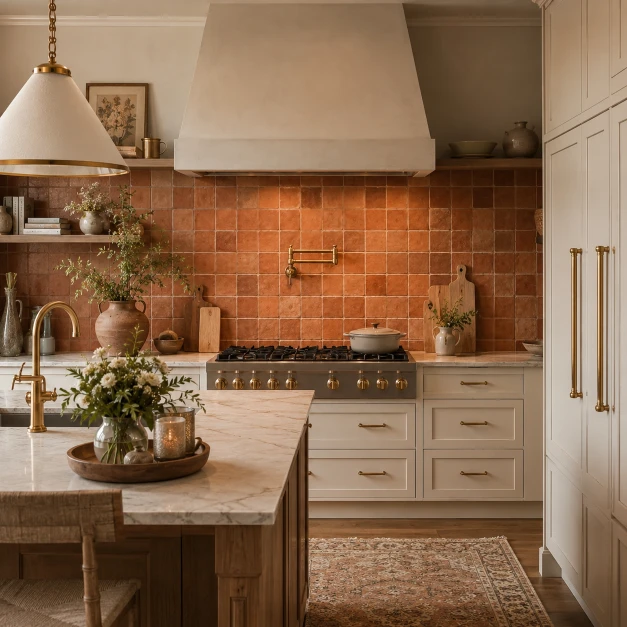
Terracotta is one of the most natural choices for creating an earthy kitchen. Its burnt orange, muted red, brown, and clay undertones bring warmth without needing lots of additional decoration.
Instead of limiting terracotta to traditional rustic kitchens, pair it with simple cabinetry for an interesting contrast.
Warm clay tiles can look particularly beautiful beside cream cabinets, walnut shelving, light oak, aged brass, and off-white stone countertops.
The natural variation between individual tiles is part of the appeal. Rather than creating a perfectly uniform surface, terracotta gives the wall movement and character.
Traditional terracotta can be porous, however. If you are installing it in a splash-prone area, check the manufacturer’s sealing and maintenance recommendations before installation.
Practical tip: Bring a tile sample into your kitchen and view it in both daylight and evening lighting. Terracotta can appear considerably more orange under some warm artificial lights.
2. Stacked Stone Veneer for Modern Texture

If you want the backsplash to feel architectural rather than decorative, consider stacked stone veneer.
The irregular edges and layered surface introduce texture that flat tile cannot easily replicate. Depending on the stone, you can create anything from a pale organic kitchen to a darker lodge-inspired interior.
For a contemporary result, keep the surrounding finishes restrained. A textured stone wall already provides plenty of visual detail.
Try pairing it with:
- Flat-panel wood cabinets
- Simple stone countertops
- Matte metal hardware
- Minimal open shelving
- Warm neutral walls
One important consideration is cleaning. Highly textured stone immediately behind a range may be more difficult to wipe down than a smooth tile or slab.
A practical approach is to use stacked stone on less splash-prone backsplash sections while selecting an easier-cleaning surface around the cooking zone.
3. Reclaimed Wood Planks for Cozy Spaces

Wood has a warmth that is difficult to reproduce with tile. Reclaimed planks add another layer through knots, grain patterns, weathering, and tonal variations.
They can work especially well in a coffee station, dry bar, breakfast area, or another part of the kitchen that is not constantly exposed to water and cooking splashes.
Pair weathered wood with warm white cabinetry to keep the room light. For a moodier kitchen, combine it with charcoal cabinets, soapstone-inspired surfaces, and aged metal hardware.
Wood does require more careful planning than conventional backsplash tile.
Water, heat, grease, and local building requirements should all be considered, particularly around ranges and sinks. A suitable protective finish may also be needed depending on the product and location.
If real reclaimed wood is impractical for your kitchen, wood-look porcelain tile can create a similar visual effect with easier maintenance.
4. Honed Marble Subway Tile for Natural Elegance

Marble does not have to feel formal or glamorous. A honed finish gives the stone a softer, less reflective appearance that fits beautifully into an earthy palette.
Rather than bright white marble with dramatic gray veins, consider warmer varieties with cream, beige, taupe, or subtle brown movement.
A subway format keeps the design familiar while the natural stone variation adds character.
For a balanced kitchen, pair honed marble with oak or walnut cabinetry, brushed brass fixtures, linen Roman shades, and simple ceramic accessories.
Because marble is a natural stone, it requires more care than many porcelain or ceramic alternatives. Acidic substances can affect its surface, and sealing requirements vary.
If you love the look but want simpler maintenance, consider a porcelain tile designed to resemble honed marble.
5. Handmade Zellige Tiles for Artistic Flair

Zellige tile is an excellent option when you want a backsplash that feels handmade rather than perfectly manufactured.
Its appeal comes from subtle irregularities. Individual tiles can vary slightly in tone, shape, thickness, and surface appearance, producing beautiful movement when light travels across the wall.
Earthy shades such as sand, ivory, olive, taupe, clay, and muted brown work especially well.
Even white zellige can suit an earthy kitchen because the handmade surface prevents it from feeling flat or clinical.
Keep other elements relatively simple and allow the tile to provide the texture.
Design idea: Try cream zellige with natural oak cabinets and warm stone countertops for an organic kitchen that still feels bright.
6. Pebble Mosaic Sheet for Organic Texture
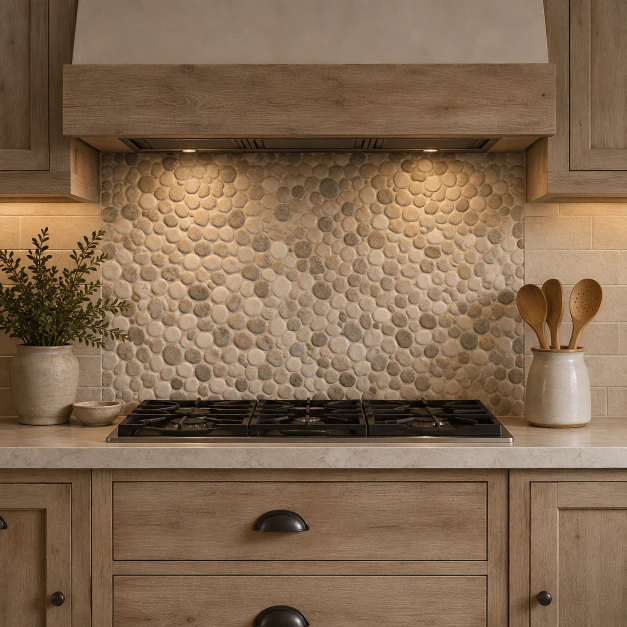
Pebble mosaics take the connection to nature more literally.
Their rounded forms and varied colors can bring a river-stone quality into the kitchen, especially in palettes containing gray, sand, beige, cream, and brown.
Because pebble mosaics have a strong texture, a little can go a long way. Rather than covering every backsplash wall, consider using them as a smaller feature area.
For example, a pebble mosaic could create an accent behind a prep station while a quieter tile covers the surrounding walls.
Keep grout maintenance in mind as well. Pebble installations typically contain numerous grout lines, making installation quality and appropriate sealing particularly important.
Ask yourself: Do you want the backsplash to be the room’s focal point, or simply add a subtle natural texture?
Your answer can help determine how extensively you use a material this
7. Slate Herringbone Pattern for Bold Geometry

Slate brings together two qualities that work especially well in an earthy kitchen: natural color variation and a slightly rugged surface.
Instead of installing slate in a standard horizontal layout, a herringbone pattern can make the backsplash feel more intentional. The geometric arrangement adds movement while the stone itself keeps the overall look grounded.
Charcoal, gray-green, muted black, and rusty brown slate tones pair particularly well with warm wood cabinetry. If your kitchen already has dark cabinets, consider a medium-gray slate rather than the darkest option so the backsplash does not make the room feel too heavy.
For a balanced palette, try slate alongside:
- Natural oak or walnut cabinets
- Cream or warm white walls
- Off-white countertops
- Aged brass or matte black hardware
- Woven and ceramic accessories
Slate is a natural material, so color and texture can vary from one piece to another. View several samples together rather than choosing based on a single tile.
Natural slate may also require sealing depending on the product and application. Check the supplier’s maintenance instructions before deciding whether it suits a busy cooking area.
Practical tip: Herringbone already creates plenty of visual movement. A grout color close to the slate will usually produce a calmer, more cohesive appearance.
8. Clay Brick Veneer for Industrial Warmth

Exposed brick can instantly make a kitchen feel established and full of character, but you do not necessarily need an original brick wall to achieve the effect.
Thin clay brick veneer provides the texture and color of traditional masonry without taking up as much space as full-size bricks.
Classic red brick works well, but it is not your only option. For a softer earthy kitchen, look for bricks with muted terracotta, sandy brown, weathered beige, or pale clay tones.
Brick is especially effective when paired with modern elements.
Imagine warm clay brick behind streamlined cream cabinetry, simple quartz countertops, and contemporary pendant lights. The contrast between old-looking texture and clean modern finishes prevents the kitchen from feeling too rustic.
For a darker approach, combine brick with walnut cabinets, black fixtures, and warm under-cabinet lighting.
Keep maintenance in mind before installing exposed brick near areas where grease and water are common. Brick and mortar are porous, so an appropriate protective treatment may be necessary.
9. Natural Cork Tiles for Soft Sustainability
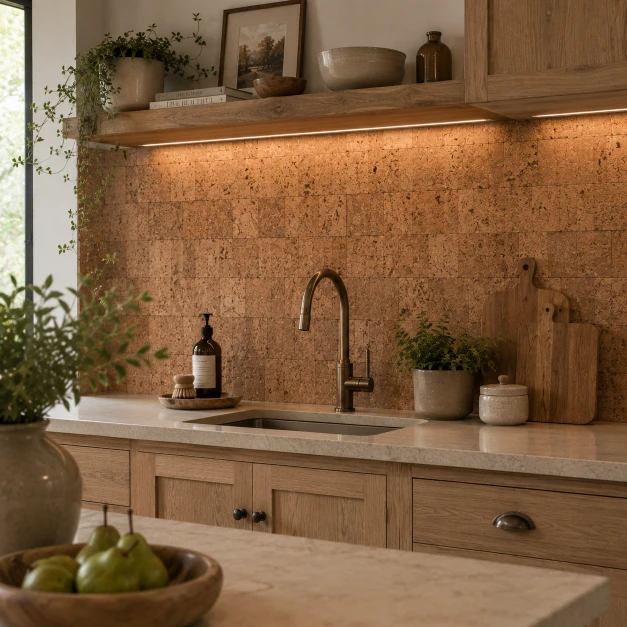
Cork is an unexpected backsplash material, which is exactly what can make it interesting in the right kitchen.
Its naturally warm brown coloring works beautifully with earthy palettes, while the subtle pattern adds texture without competing with cabinetry or countertops.
Cork can complement light oak, cream paint, muted green cabinetry, and simple stone surfaces particularly well.
It also has a softer visual character than stone, metal, or ceramic tile.
However, backsplash suitability depends heavily on the specific cork product and its finish. Untreated cork is not something you should simply place behind a sink or cooktop and expect to perform like porcelain tile.
If you like the idea, choose a product specifically suitable for the intended application and follow the manufacturer’s recommendations for sealing, moisture exposure, and cleaning.
Another option is to reserve cork for a dry-zone feature wall or coffee station where it can provide warmth without dealing with constant splashes.
10. Travertine Subway Tile for Timeless Appeal
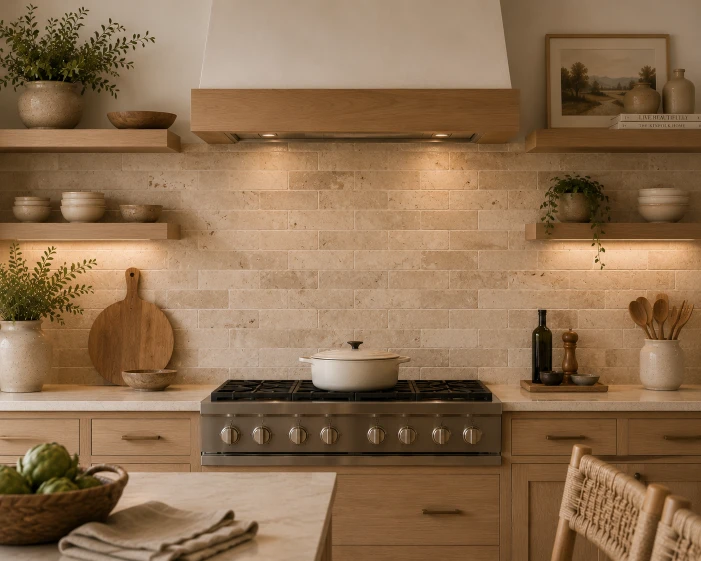
Travertine has returned to many contemporary interiors, and it is easy to see why. Its creamy beige, sand, tan, and subtle brown tones naturally complement the warm neutral palettes commonly used in organic kitchens.
A subway format is a simple way to use this distinctive stone without making the backsplash overly decorative.
For a modern organic look, pair pale travertine with white oak cabinets, an off-white countertop, and understated hardware.
You can also create a richer scheme using travertine beside walnut cabinetry and bronze or aged brass accents.
The stone itself already contains natural movement, so you rarely need complicated patterns or lots of decorative accessories around it.
Consider the finish as well. Honed travertine generally has a softer appearance than highly polished stone, making it particularly suitable for relaxed earthy interiors.
Travertine is porous, so maintenance should be part of your decision. Confirm appropriate sealing, cleaning products, and care requirements with your supplier or installer.
Design tip: Before choosing grout, place a sample between several tiles. A highly contrasting grout can emphasize every joint, while a close tonal match allows the natural stone to remain the main feature.
11. Soapstone Slab for Dark Sophistication

Not every earthy kitchen needs to be beige.
Dark natural surfaces can make a space feel equally grounded, and soapstone is a beautiful example. Its charcoal-to-dark-gray coloring can create a dramatic backdrop without the high-gloss appearance associated with some polished stones.
Using a slab instead of small tiles also reduces visual interruption from grout lines.
A soapstone backsplash can look particularly striking when the same material continues onto the countertop. This creates a simple, cohesive surface that lets wood cabinetry and decorative details stand out.
Pair it with warm walnut, medium oak, cream cabinetry, or muted green for a sophisticated natural palette.
If the room receives limited daylight, balance the darker backsplash with lighter flooring, walls, or upper cabinetry.
Soapstone develops changes in appearance over time, and its maintenance characteristics differ from engineered surfaces. If you prefer materials that always look perfectly uniform, make sure you are comfortable with the way natural soapstone ages before committing to it.
For homeowners who appreciate natural variation and patina, those changes can become part of its charm.
12. Limewash Painted Brick for Old-World Texture

Brick provides texture, while limewash can soften its stronger color and create a more relaxed, aged appearance.
This combination works beautifully when you want an earthy backsplash that feels inspired by an older cottage, farmhouse, or European kitchen.
Instead of covering the brick completely with opaque paint, a limewash-style finish can allow some variation underneath to remain visible.
Soft shades such as warm white, chalky beige, mushroom, and pale taupe can make a brick wall easier to combine with modern cabinetry.
The result can work with several styles. Pair it with shaker cabinets and antique-inspired hardware for a traditional room, or contrast it with flat-panel wood cabinetry for a more contemporary interpretation.
You can reinforce the natural look with:
- Wooden cutting boards
- Handmade pottery
- Linen textiles
- Aged brass details
- Stone countertops
- Small potted herbs
Backsplash areas still need to be practical. A decorative wall treatment suitable for a general kitchen wall may not automatically be suitable behind a cooktop or sink.
Choose finishes appropriate for the location and follow the product manufacturer’s instructions regarding moisture, heat, cleaning, and protection.
13. Bamboo Panel Backsplash for Eco-Friendly Style

Bamboo can introduce warm golden tones and linear texture without making the kitchen look overly rustic.
It works especially well in contemporary, Japandi-inspired, and minimalist spaces where natural materials are used sparingly but intentionally.
A bamboo backsplash can complement matte cream cabinetry, warm white walls, pale stone countertops, and simple black or brushed metal fixtures.
The key is restraint.
If you already have bamboo or strongly grained wood cabinets, adding another large wood-like surface may make the kitchen feel visually busy. Instead, use bamboo where it provides contrast to simpler cabinetry.
As with other plant-based materials, moisture, heat, and fire safety need careful consideration.
Do not assume every bamboo panel is suitable for use as a backsplash. Look specifically for products approved for your intended application, particularly if they will be installed close to a range or sink.
For a lower-risk approach, bamboo can be used around a dry beverage station or decorative kitchen niche.
14. Terrazzo Tile for Speckled Beauty
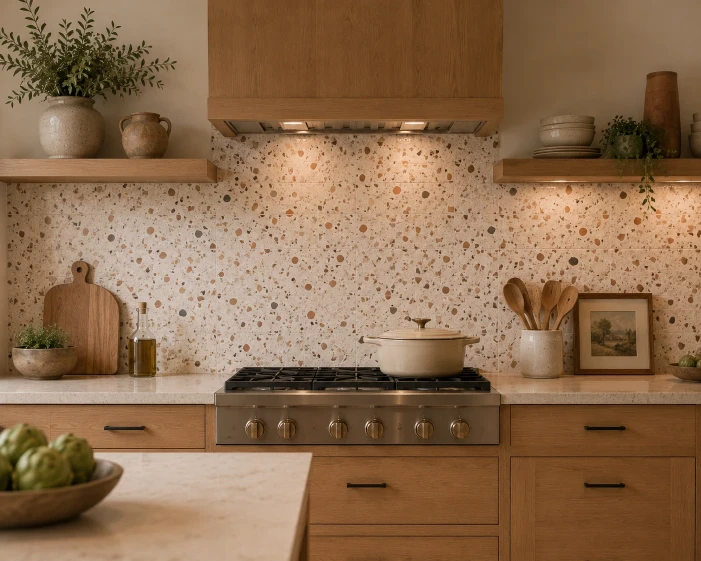
Terrazzo offers an earthy look in a more playful form.
Rather than relying on a single natural texture, terrazzo incorporates small chips that create a speckled surface. Depending on the design, these fragments can introduce shades of terracotta, beige, brown, cream, muted green, or charcoal.
The trick is choosing a restrained color palette.
Highly colorful terrazzo can become the dominant feature in the kitchen. If your goal is a warm, natural interior, look for a base color such as cream, sand, taupe, or warm gray with subtle earthy chips.
Terrazzo works particularly well with simple cabinetry because its pattern already provides visual interest.
For example, a cream terrazzo backsplash containing terracotta and brown flecks could sit beautifully behind flat-panel oak cabinets.
If you are using a patterned countertop, however, compare the two surfaces carefully. Two strong patterns next to one another can make a small kitchen feel unnecessarily busy.
Quick rule: Let either the countertop or backsplash carry the stronger pattern rather than asking both surfaces to compete for attention.
15. Suspended Slate Shelves for Minimalist Display

Sometimes the most interesting backsplash design comes from combining the wall finish with functional storage.
Slim slate shelves mounted against a warm neutral backsplash can introduce dark natural stone without covering the entire wall.
This works especially well in a minimalist or modern organic kitchen.
The contrast of charcoal slate against warm plaster, creamy tile, or pale stone can add definition while still keeping the palette connected to nature.
Use the shelves for a small selection of practical and decorative pieces, such as:
- Everyday ceramic mugs
- Small bowls
- Glass storage jars
- A few cookbooks
- A small herb pot
- Handmade pottery
Avoid filling every available inch. Open shelving tends to look more intentional when some empty space remains between objects.
Installation also matters. Stone is heavy, and kitchen shelving needs secure structural support. Work with appropriate mounting hardware and professional installation where necessary.
If shelves are positioned above a food preparation or cooking area, think about how easily both the shelves and displayed objects can be cleaned.
16. Grounded Concrete Tiles for Industrial Edge

Concrete-inspired surfaces are often associated with cool industrial interiors, but the right color can feel surprisingly warm.
Instead of blue-gray concrete, look for tiles in mushroom, greige, taupe, sand, warm gray, or clay-influenced shades.
These colors retain the raw simplicity of concrete while fitting much more naturally into an earthy kitchen.
Concrete tiles can provide an effective contrast to wood cabinetry. Oak brings warmth and grain, while the concrete offers a quieter, more solid background.
For a softer look, add warm lighting, creamy walls, woven counter stools, and a few handmade ceramics.
If you want a stronger industrial influence, introduce matte black hardware and darker wood.
Material performance varies significantly between genuine cement-based products and porcelain tiles designed to imitate concrete. Some cement tiles are porous and may require sealing and ongoing care.
Porcelain can be a useful alternative when you want the appearance of concrete with relatively straightforward maintenance.
Before making your final choice, ask yourself one practical question: How much maintenance are you realistically willing to handle?
A beautiful backsplash should work with your daily routine, not make cooking and cleaning unnecessarily difficult.
Frequently Asked Questions
What colors work best for an earthy kitchen backsplash?
Warm and nature-inspired shades generally work best. Popular options include cream, beige, sand, terracotta, clay, taupe, brown, charcoal, olive, muted green, and warm gray.
You do not need to use brown to make a kitchen feel earthy. A creamy handmade tile paired with oak cabinetry can create just as much warmth as a darker natural stone.
What backsplash looks best with wood cabinets?
The answer depends on the wood species and undertone.
Light oak works beautifully with warm white zellige, pale travertine, soft concrete tones, and cream marble. Walnut can handle richer materials such as soapstone, slate, terracotta, and warm natural stone.
Always compare physical samples against your cabinetry. Two materials described as “warm” can still have undertones that clash when placed side by side.
Are earthy kitchen backsplashes suitable for modern kitchens?
Absolutely. An earthy palette does not require rustic styling.
A slab of dark soapstone, simple travertine subway tile, handmade cream zellige, or warm concrete-look porcelain can all work in a contemporary kitchen.
Combine natural textures with clean cabinetry and restrained accessories to keep the overall appearance modern.
What is the easiest earthy backsplash to maintain?
Glazed ceramic and porcelain tiles are generally practical options because many are resistant to everyday kitchen splashes and easy to wipe clean.
They are also available in convincing stone, concrete, terracotta, and handmade-tile looks.
Natural stone, unglazed clay, brick, cork, and some cement-based products may need additional sealing or care. Always check the exact manufacturer’s instructions because maintenance requirements vary between products.
How can I make a neutral backsplash feel less boring?
Focus on texture rather than adding more colors.
Handmade tiles, irregular edges, subtle veining, tonal grout, herringbone layouts, or natural stone variation can add interest while keeping the palette calm.
Under-cabinet lighting can also emphasize a textured surface and make subtle material variations easier to see.
Should the backsplash match the countertop?
They do not need to match exactly.
A more natural result often comes from choosing materials that share compatible undertones while providing some contrast.
For instance, a creamy stone countertop can pair beautifully with muted terracotta because both contain warmth even though their colors are different.
If your countertop has dramatic veining or a strong pattern, a quieter backsplash will usually create better balance.
Are natural backsplash materials worth the extra maintenance?
That depends on your priorities.
Natural stone, clay, wood, and other organic materials can develop character and variation that manufactured surfaces may not replicate perfectly. However, some require sealing, specialized cleaning, or greater care around stains and moisture.
If easy maintenance matters more to you, porcelain and ceramic products that imitate natural materials can provide a similar visual direction with fewer upkeep concerns.
Conclusion
The best earthy kitchen backsplash ideas are not simply about choosing beige tile. A truly natural-feeling kitchen comes from combining color, texture, material, light, and practicality in a way that suits the rest of the room.
Terracotta and brick can introduce rustic warmth. Travertine, marble, and zellige provide a softer and more refined approach. Slate and soapstone can create a darker, sophisticated palette, while terrazzo and concrete offer contemporary alternatives.
Before ordering your final material, bring samples into the kitchen and compare them with the cabinets, countertop, flooring, and wall color at different times of day. Then consider cleaning, sealing, heat resistance, moisture exposure, and the amount of maintenance you are comfortable with.
You do not need to fill the kitchen with natural materials to achieve an earthy look. One thoughtfully chosen backsplash can provide enough warmth and texture to make the entire space feel more comfortable, grounded, and inviting.