10 Cookbook Shelf Ideas to Create a Scholarly and Grounded Kitchen Sanctuary
A kitchen can hold more than cookware, ingredients, and everyday dishes. Add a thoughtfully arranged collection of cookbooks, and the room begins to feel warmer, more personal, and surprisingly sophisticated.
The best cookbook shelf ideas turn books you actually use into part of the kitchen design. A row of worn recipe books beside handmade pottery can bring character to a modern kitchen, while a tall wall of culinary volumes can give an otherwise empty corner the atmosphere of a small home library.
The goal, however, is not simply to fill shelves with books. Cookbooks need to remain accessible, protected from obvious kitchen hazards, and visually connected to the rest of the room.
Whether you have three treasured cookbooks or an entire culinary collection, these ten ideas can help you create a kitchen that feels both practical and pleasantly scholarly.
1. The Literary Clearing: White Cabinets and Open Shelving

White kitchens provide an excellent background for displaying colorful cookbook spines.
Instead of filling every open shelf with matching plates and glassware, dedicate part of the shelving to books. The contrast between crisp cabinetry and slightly varied book covers makes the kitchen feel less like a showroom and more like a lived-in home.
Try arranging a small collection beside practical objects such as:
- White or cream stoneware
- Wooden cutting boards
- Ceramic serving bowls
- Clear glass jars
- A small vase or potted herb
You don’t need to color-coordinate every cookbook. In fact, a little variation often makes the arrangement more convincing.
If the covers feel too visually busy, keep the surrounding objects restrained. Neutral ceramics and natural wood allow the books to provide most of the color.
Keep Everyday Cookbooks Within Reach
Place the books you use most frequently somewhere you can reach without a stool. Less-used volumes can occupy higher shelves.
Avoid positioning valuable books directly beside the sink or cooktop. Water splashes, cooking oils, steam, and heat are not friendly to paper.
Practical tip: Leave some open space around your books instead of filling the entire shelf. The negative space helps both the books and surrounding objects stand out.
2. The Artisan Archive: Wire Baskets and Textured Storage
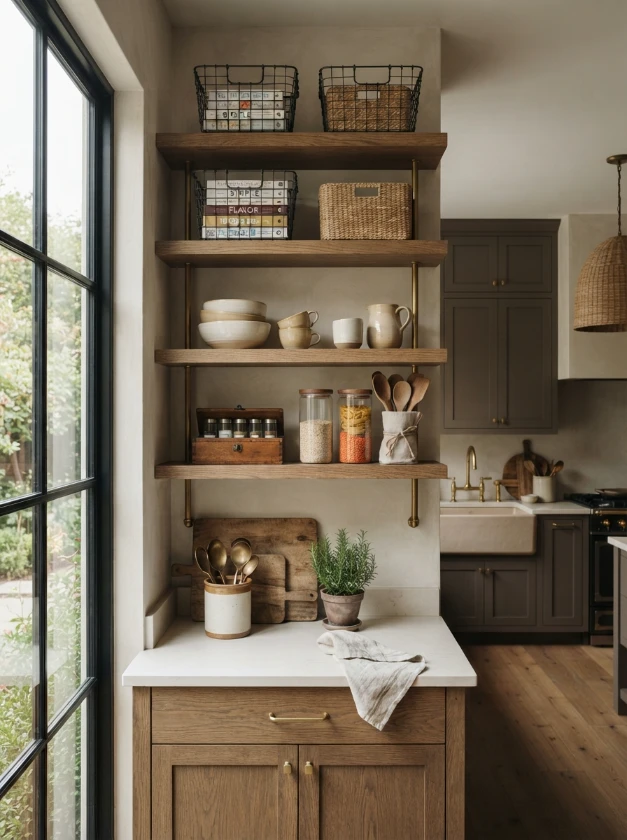
Not every cookbook collection needs to stand in a perfect row.
Wire baskets, wooden crates, and open-front storage bins can give smaller collections a relaxed, collected-over-time appearance. This approach works particularly well in farmhouse, rustic, cottage, industrial, and vintage-inspired kitchens.
A black or aged-metal wire basket filled with a handful of cookbooks can sit on an open wooden shelf alongside pottery and pantry jars.
For a softer look, consider natural materials such as:
- Woven seagrass baskets
- Light wooden boxes
- Rattan storage
- Small vintage-style crates
There is a practical benefit too. A basket can keep thin magazines, recipe booklets, and smaller books from constantly falling sideways.
Don’t pack books so tightly that you have to pull several out to reach one title. Kitchen storage should make cooking easier, not create another chore.
For a cohesive arrangement, repeat the basket material elsewhere in the room. A woven cookbook basket, for example, can relate nicely to counter stools, pendant shades, or pantry baskets.
3. The Botanical Library: Books Draped in Greenery
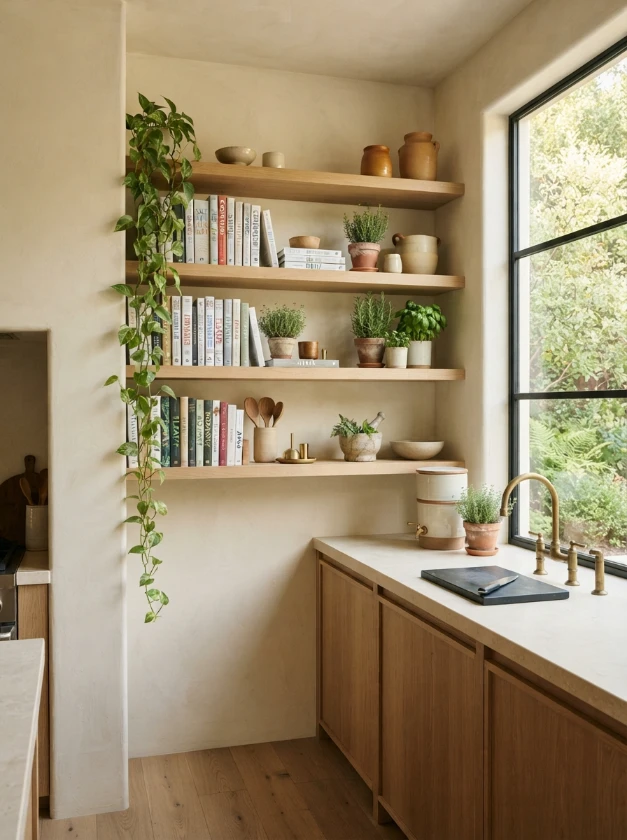
Cookbooks and greenery make an especially natural pairing.
Plants soften the straight edges created by books and shelves, while the books introduce height, color, and personality. Together, they can transform ordinary kitchen shelving into something resembling a small botanical library.
Place a trailing plant near one end of the shelf and allow the foliage to fall gently beside—not over—the books.
You could also combine cookbooks with small pots of culinary herbs such as rosemary, basil, or thyme when the location provides suitable growing conditions.
For a low-maintenance display, realistic faux greenery or dried botanical stems can create a similar visual effect without watering near paper.
Protect the Books From Moisture
Beauty shouldn’t come at the expense of your collection.
Avoid putting frequently watered pots directly on top of cookbooks. Use waterproof saucers and leave enough separation that damp soil, condensation, or drainage cannot reach the books.
A good arrangement might include five or six upright cookbooks, a small ceramic planter at one end, and a wooden bowl or mortar and pestle at the other.
The result feels organic without becoming cluttered.
4. The Focused Study: The Dedicated Wooden Book Stand

Sometimes the best cookbook display isn’t a shelf full of books at all.
A wooden cookbook stand allows one favorite volume to become the focal point while keeping the recipe visible during meal preparation.
Place the stand on a spacious section of countertop or on a shelf where the displayed book can be seen easily. Warm woods such as oak, walnut, or acacia pair beautifully with both traditional and contemporary kitchens.
This approach is particularly useful for:
- A frequently used recipe book
- A beautiful vintage cookbook
- A family recipe collection
- A seasonal baking book
- A visually striking culinary volume
Change the displayed book throughout the year. Baking books can appear during the holiday season, grilling books during summer, and soup or comfort-food collections during colder months.
When using the stand while cooking, position it away from direct splashes and active burners.
It gives the kitchen the atmosphere of a working culinary study rather than turning the cookbook into decoration alone.
5. The Full-Horizon Shelf: Floor-to-Ceiling Culinary Wisdom

Serious cookbook collectors eventually encounter a familiar problem: there are simply too many books for one floating shelf.
If you have the space, consider treating an unused kitchen wall like a genuine library.
Floor-to-ceiling shelving can accommodate a substantial cookbook collection while adding architectural interest to the room. Built-in shelves look especially striking around a doorway, breakfast nook, or transition between the kitchen and dining area.
You don’t have to fill every shelf with books.
Mix culinary volumes with:
- Serving bowls
- Vintage pottery
- Framed food illustrations
- Wooden boards
- Decorative vessels
- Small baskets
- Collected kitchen objects
Keep heavier and frequently used books on lower or middle shelves. Higher shelves are better suited to lighter objects and books you rarely need.
For tall installations, secure shelving appropriately to the wall and follow the manufacturer’s installation requirements.
Good lighting can make a large cookbook wall feel even more intentional. Nearby sconces or integrated shelf lighting can turn it into an architectural feature after dark.
6. The Kitchen Island Library: Cookbooks Below the Counter
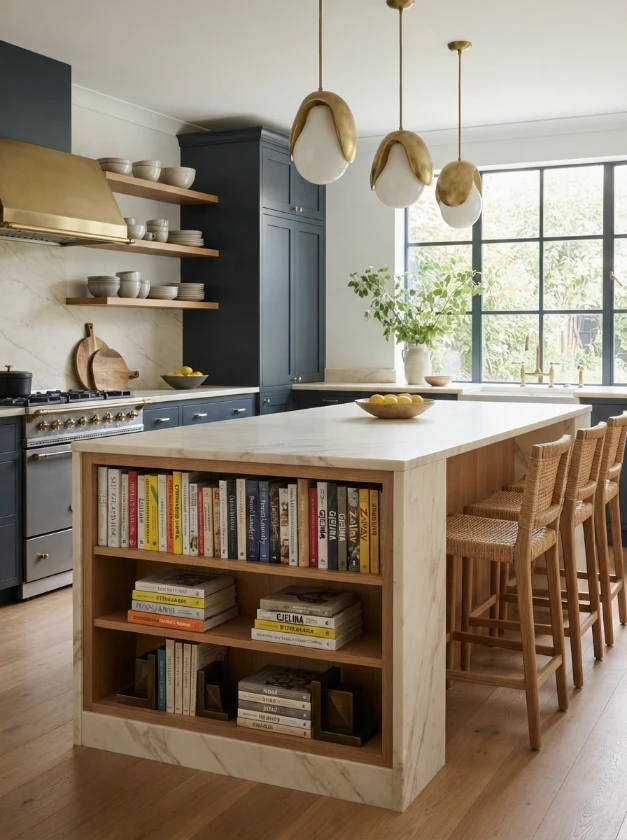
The end or side of a kitchen island is often overlooked storage territory.
Built-in open shelving beneath the countertop can turn this unused area into a compact cookbook library without taking up additional wall space.
This is particularly useful in kitchens where upper cabinets leave little room for open shelves.
Arrange frequently used books vertically and use a sturdy bookend to keep them upright. Larger volumes can be stacked horizontally if shelf height permits.
An island bookshelf also keeps recipes reasonably close to the main workspace.
However, placement matters. Avoid storing valuable books directly beneath a sink or in an area regularly exposed to spills, wet towels, or messy food preparation.
For a built-in appearance, match the shelf finish to the island cabinetry. Alternatively, natural wood shelving against a painted island can create a subtle contrast.
7. The Cozy Reading Nook: Cookbooks Near a Breakfast Corner
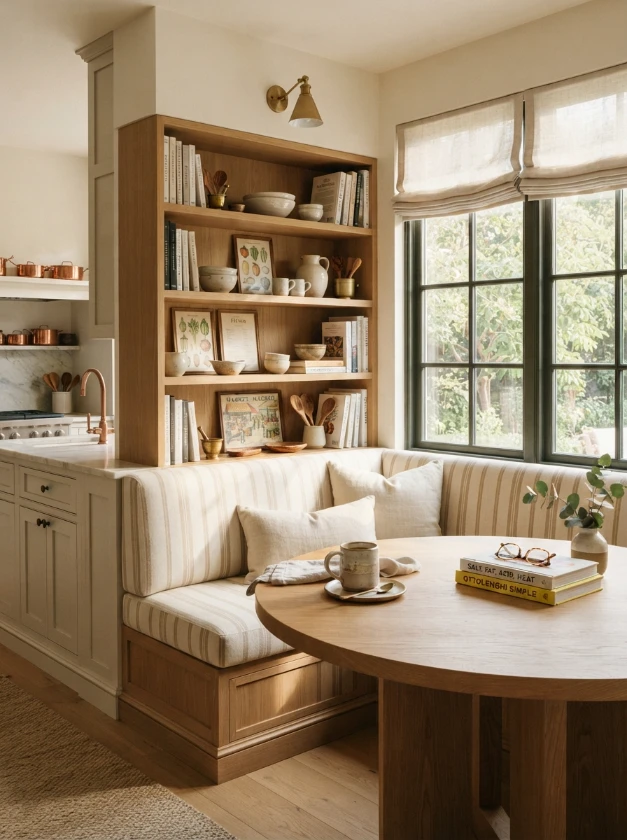
If your kitchen includes a breakfast nook, banquette, or small dining corner, use nearby shelving for cookbooks.
This separates the collection slightly from the messier cooking zone while keeping it connected to the kitchen.
Imagine a comfortable built-in bench beside a wall of warm wooden shelves containing cookbooks, ceramics, and a few framed prints. The arrangement encourages you to actually browse your collection over coffee rather than treating the books as static décor.
A small collection can work just as well.
Install one or two shelves above a dining bench and combine books with a few carefully selected objects. Keep enough clearance above seated areas so shelves don’t feel intrusive.
This arrangement works especially well for cookbooks that are enjoyable to read beyond their recipes—books about culinary history, regional food traditions, baking, gardening, or food photography.
8. The Vintage Recipe Corner: Antique Shelves and Collected Cookbooks

A kitchen library doesn’t have to look new.
An antique wall shelf, reclaimed wooden cabinet, or vintage freestanding bookcase can give cookbooks a sense of history. This is particularly appealing when your collection includes inherited recipe books or older editions.
Instead of styling everything perfectly, allow the shelf to feel collected.
Pair books with items such as:
- A ceramic pitcher
- An old-fashioned kitchen scale
- Stoneware crocks
- Framed handwritten recipes
- Wooden utensils
- Small copper pieces
Use restraint. Too many vintage accessories can quickly make the area feel crowded.
One or two meaningful objects beside the books usually have more impact than a shelf packed with unrelated décor.
If using genuinely old furniture in a working kitchen, make sure it is stable and suitable for the weight of your books. Older shelves may need reinforcement before holding a substantial collection.
9. The Minimalist Cookbook Ledge: A Small Collection on Display
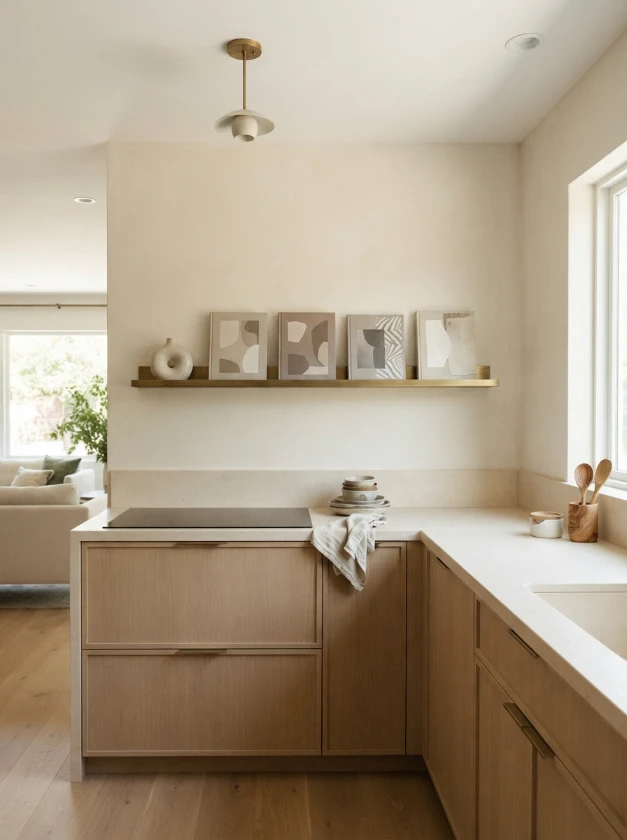
You don’t need dozens of cookbooks to create an attractive display.
A narrow picture ledge or shallow floating shelf can hold a carefully selected collection with the covers facing forward. This works especially well in small kitchens where a traditional bookcase would consume valuable space.
Front-facing books also function almost like artwork.
Choose three to five covers that complement the kitchen’s overall palette or simply display the books you love most. You can rotate them whenever you want a visual change.
A slim ledge can fit:
- Above a low sideboard
- On an unused wall
- Near a breakfast table
- At the end of cabinetry
- In a small pantry
Check the ledge depth and weight capacity before adding large hardback books.
For a clean appearance, resist the temptation to fill every remaining inch with ornaments. A few books and perhaps one small ceramic object may be all the shelf needs.
10. The Pantry Reference Library: Recipes Where Ingredients Live

A pantry can be one of the most logical places for cookbook storage.
If your pantry has open shelving, reserve one dry, easily accessible section for recipe books. Having cookbooks close to ingredients makes it simple to check a recipe while planning meals or preparing a shopping list.
Use shelf dividers or bookends to prevent books from leaning into food storage.
You can organize the collection by subject, such as:
| Section | Examples |
|---|---|
| Everyday Cooking | Quick meals, family recipes, weeknight dinners |
| Baking | Bread, cakes, pastries, desserts |
| World Cuisines | Italian, Mexican, Middle Eastern, Asian cuisines |
| Seasonal Cooking | Holiday meals, summer recipes, winter cooking |
| Reference | Techniques, ingredients, culinary fundamentals |
The system doesn’t need to be complicated. Organize your collection according to the way you actually cook.
Keep cookbooks away from pantry areas where liquids could leak. Oils, syrups, sauces, and other spill-prone containers are better stored separately.
A well-planned pantry library can be one of the least decorative yet most genuinely useful cookbook shelf ideas in the entire kitchen.
Sacred Principles for a Kitchen Library
A beautiful cookbook collection should still work within the realities of a kitchen.
Before installing shelves or moving your entire collection, consider a few basic principles.
Prioritize Accessibility
Your favorite books should be easy to retrieve.
If you constantly use three cookbooks, don’t place them on the highest shelf simply because they look attractive there. Reserve prime shelf space for the books that support your everyday cooking.
Consider Heat, Steam, and Water
Paper and moisture don’t mix particularly well.
Avoid cookbook storage immediately above a sink, beside an active cooktop, or anywhere frequently exposed to steam and grease.
If your kitchen is small, a breakfast area, pantry, cabinet end, or nearby dining space may provide safer storage.
Give Heavy Books Proper Support
Large cookbooks can be surprisingly heavy when grouped together.
Choose shelving designed to support the intended load, install it correctly, and use suitable wall fixings for the wall type. If you’re unsure about a large installation, particularly floor-to-ceiling shelving, seek appropriate professional advice.
Mix Books With Functional Kitchen Objects
You don’t need decorative accessories on every shelf.
Wooden bowls, pitchers, serving pieces, cutting boards, and attractive cookware can provide visual variety while remaining useful.
This keeps the kitchen grounded in its actual purpose.
Leave Some Breathing Room
One of the easiest mistakes is filling every available space.
An open section between a stack of cookbooks and a ceramic bowl can make the entire shelf look calmer. Negative space also makes it easier to remove and replace books.
Let Your Collection Feel Personal
A kitchen library becomes interesting when it reflects the person who cooks there.
A pristine new cookbook can sit beside a stained family recipe book. A sophisticated baking volume can share a shelf with the inexpensive cookbook that taught you your first reliable dinner.
That mixture gives the room authenticity that carefully purchased décor cannot easily imitate.
Frequently Asked Questions
Where is the best place to store cookbooks in a kitchen?
Choose a dry, accessible location away from direct heat, grease, steam, and frequent water splashes. Open shelving, an island bookcase, a pantry shelf, or shelving near a breakfast nook can all work well depending on your kitchen layout.
How do you style cookbooks on open shelves?
Combine upright books with occasional horizontal stacks, then add a small number of practical objects such as ceramics, bowls, cutting boards, or herbs. Leave some empty space so the arrangement doesn’t feel overcrowded.
Can cookbooks be stored near the stove?
It is generally better to keep them away from the immediate cooking zone. Heat, steam, oil, and food splatters can damage covers and pages over time. If you want books close to the preparation area, choose a nearby shelf that is reasonably protected.
How can I display cookbooks in a small kitchen?
Use spaces that don’t consume much floor area. A narrow wall ledge, a small open shelf, the end of a kitchen island, or one section of pantry shelving can accommodate a useful collection without requiring a full bookcase.
Should cookbooks be arranged by color?
Only if you enjoy the look. Organizing by cooking category or frequency of use is often more practical. You can still create visual balance by grouping similar heights or placing neutral objects between particularly colorful books.
Is it better to stack cookbooks or stand them upright?
Both methods can work. Upright storage makes individual books easier to retrieve, while horizontal stacks accommodate oversized volumes and add variation to shelf styling. Combining the two often produces the most natural arrangement.
Conclusion
The most successful cookbook shelf ideas do more than make a kitchen look attractive. They give the books you love a permanent, practical place in the room where they are actually used.
You might create a dramatic floor-to-ceiling culinary library, add books beneath the kitchen island, display a few favorite covers on a minimalist ledge, or simply place a small collection beside pottery on an open shelf.
Start with the space you already have. Move your most-used cookbooks somewhere accessible, protect them from obvious kitchen hazards, and surround them with objects that genuinely belong in your home.
A kitchen doesn’t need to resemble a formal library to feel scholarly. Sometimes a shelf of well-used cookbooks, a wooden bowl, and a trailing plant are enough to make the room feel more thoughtful, grounded, and distinctly yours.