20 Smart Kitchen Counter Shelf Ideas for a Neat and Functional Cooking Space
A kitchen counter can go from clean to crowded surprisingly fast. A few spice jars, cooking oils, mugs, cookbooks, and small appliances may be useful every day, but together they can leave very little room for actual food preparation.
That is where kitchen counter shelf ideas can make a noticeable difference.
Instead of spreading everything across one flat surface, a countertop shelf lets you use vertical space. Everyday items remain easy to reach while more of the worktop stays available for chopping, mixing, serving, and cooking.
The best setup, however, is not necessarily the shelf that holds the most things. It is one that stores the right things in the right place.
Here are 20 practical ways to make countertop shelving work beautifully in kitchens of different sizes and styles.
1. Create a Two-Tier Wooden Shelf for Everyday Dishes

A two-tier wooden shelf is a simple starting point when you want extra storage without making the kitchen look overly organized or commercial.
Use the lower level for frequently reached dishes, such as breakfast bowls or small plates. The upper tier can hold a trailing plant, a few favorite cookbooks, or another lightweight item.
Keeping most of the dishes white or within a similar color family helps the open arrangement look intentional.
The wood also adds warmth, particularly in kitchens dominated by white cabinets, pale stone, or stainless-steel appliances.
Practical tip: Leave some empty space around the objects. A shelf filled edge to edge can make the counter feel more crowded rather than less.
2. Use a Small Counter Shelf for Daily Essentials

Not every kitchen needs a large shelving unit.
A compact wooden riser can organize a few objects that otherwise wander around the countertop. Try grouping salt and pepper shakers, a small bowl, and a potted herb or plant.
This arrangement works especially well near a food-preparation area because frequently used seasonings stay within reach.
It can also help visually separate everyday essentials from the rest of the counter.
Before choosing a shelf, measure both its footprint and height. You want enough usable storage to justify the counter space it occupies.
3. Organize a Busy Counter with a Three-Tier Shelf

If you have several pantry ingredients that need to remain accessible, consider moving upward instead of outward.
A three-tier countertop shelf can provide dedicated levels for different categories.
For example:
- Top: lightweight spice jars and small containers
- Middle: tea, coffee, sugar, or dry-goods canisters
- Bottom: cookbooks or heavier containers
Grouping similar items together makes it easier to find what you need and creates a calmer appearance.
Avoid turning every level into a display. The purpose is to make the kitchen easier to use, so prioritize ingredients and tools you actually reach for.
4. Add a Mug Rack Under a Rustic Wooden Shelf
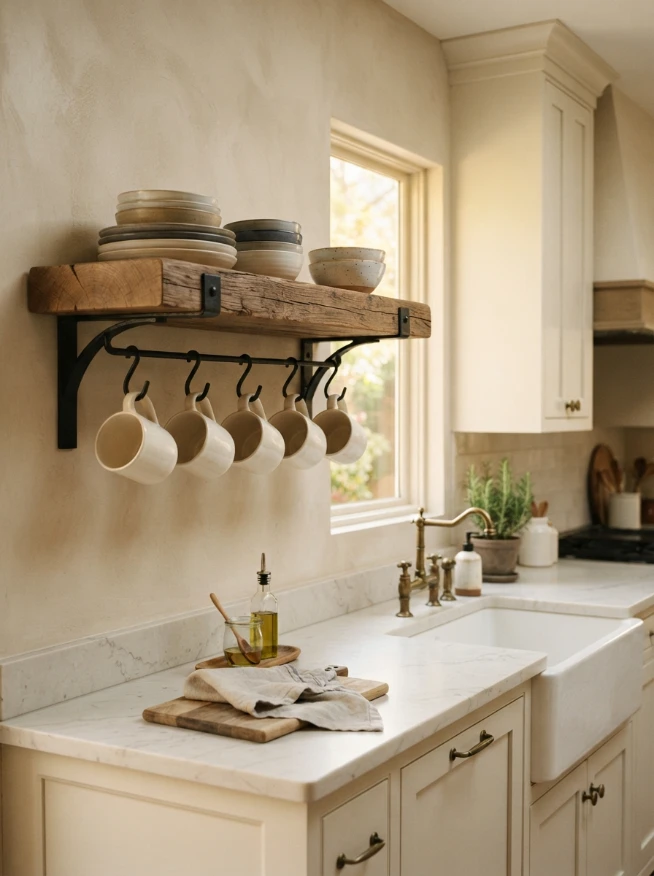
A shelf can do more than provide a horizontal surface.
Adding hooks beneath a wooden countertop shelf creates another useful storage layer for mugs. This can work particularly well near a coffee maker or kettle.
Place dishes, coffee supplies, or small serving pieces on the shelf above, then hang your most-used mugs underneath.
Rustic or reclaimed-looking wood suits farmhouse and cottage-inspired kitchens, while cleaner timber with simple hardware can produce a more contemporary result.
Make sure the shelf and hooks are stable enough for the weight of the mugs, and leave enough clearance underneath to remove them comfortably.
5. Keep It Calm with Matching Canisters

Open countertop storage becomes much easier on the eyes when containers share a consistent design.
Try a simple white shelf with matching canisters for items such as coffee, tea, sugar, or other frequently used dry ingredients.
A small herb plant can break up the repeated shapes and introduce natural color.
You do not need every kitchen container to match. Limiting the coordinated set to the objects displayed on the shelf is usually enough to create visual order.
Label containers when their contents are not immediately obvious, particularly if similar-looking ingredients are stored together.
6. Choose a Wire Shelf for Fruit and Vintage Dishes

Wood is not the only material that works on a kitchen counter.
A two-tier wire shelf has a lighter visual profile and can be useful when you do not want a solid unit blocking the backsplash.
Use one level for bowls of produce and the other for attractive everyday dishes.
Vintage plates, patterned bowls, or collected ceramics can make functional storage feel more personal.
For produce, remember that storage requirements vary. Some fruits and vegetables are better refrigerated, and certain produce should be separated to prevent faster ripening.
A wire design also allows air to circulate more freely than a closed container.
7. Fit a Narrow Bamboo Shelf into a Small Prep Area
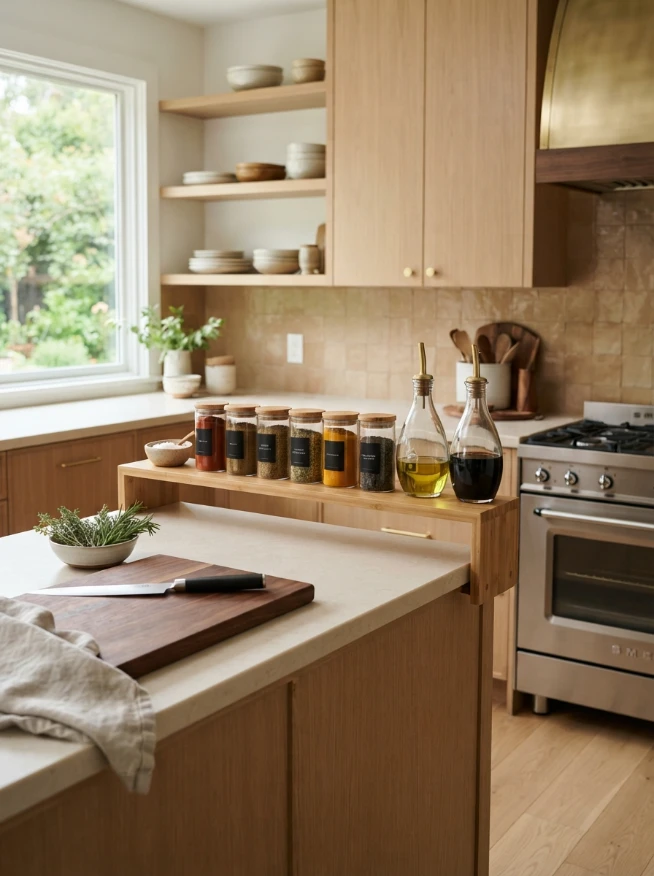
Limited counter depth does not automatically rule out shelving.
A narrow bamboo riser can hold frequently used spice jars, an oil cruet, or small condiment bottles while taking up relatively little workspace.
Bamboo brings a warm, natural texture that pairs easily with white, green, cream, black, and wood-toned kitchens.
This idea works particularly well beside a preparation area where seasonings are used regularly.
Keep bottles away from direct sunlight and excessive heat, and avoid positioning cooking oils immediately beside a hot burner.
8. Turn Cookbooks into Practical Counter Decor
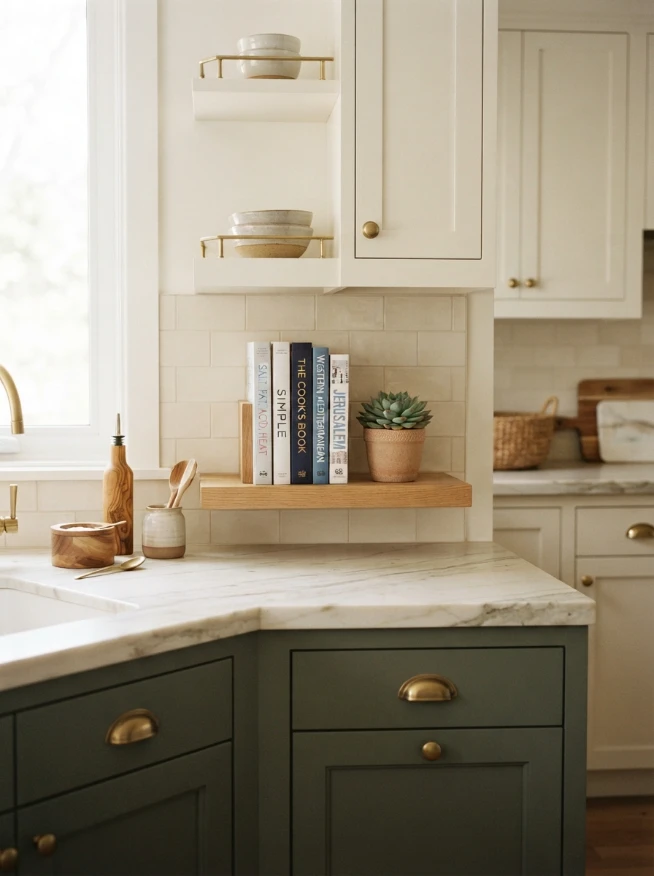
Cookbooks do not always need to live in a cabinet or bookcase.
A small countertop shelf can keep several favorites close to your cooking zone while adding color and personality to the room.
Arrange a limited selection vertically and use a small succulent or decorative object as a simple finishing detail.
Choose books you genuinely use rather than displaying an entire collection. Too many books can consume useful worktop space and are more likely to collect cooking residue.
Keep them away from the sink and areas where they could be exposed to splashes, steam, or grease.
9. Display White Pitchers with a Trailing Plant
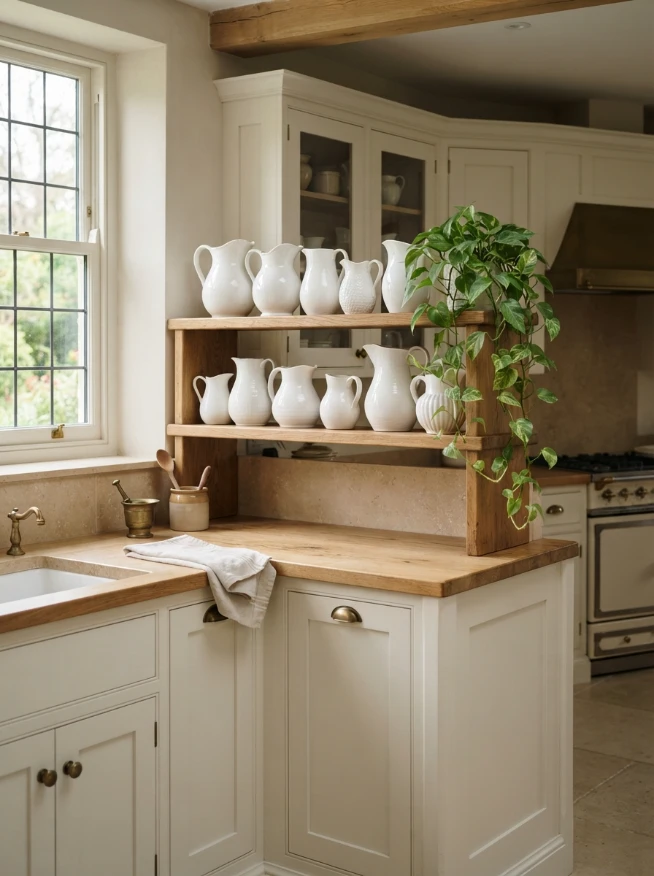
If you have enough functional storage elsewhere, a tiered shelf can become a restrained display area.
White pitchers are particularly effective because repeated color connects pieces of different shapes and sizes. Add a trailing plant to soften the straight lines of the shelving.
The result can suit farmhouse, transitional, cottage, or relaxed contemporary kitchens.
However, decorative shelving should not interfere with meal preparation.
A good rule is to keep displays concentrated in sections of the counter that are not essential work zones.
10. Build Storage Around the Microwave
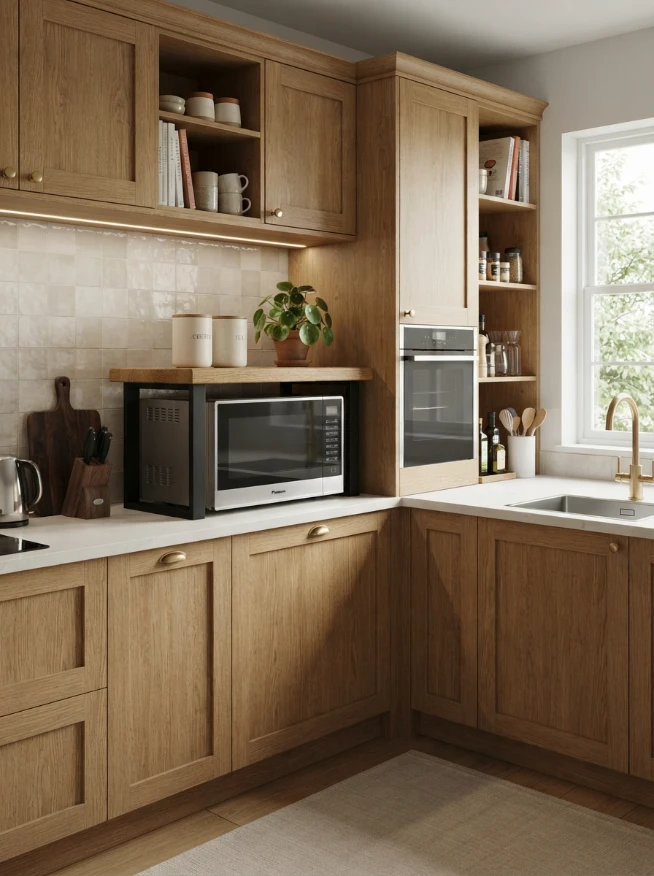
A microwave can occupy a significant amount of counter space, especially in a small kitchen.
Instead of treating the area above it as completely lost, consider a sturdy microwave shelving unit designed to create an additional level.
Depending on the appliance and shelf specifications, the extra surface might hold lightweight canisters, a plant, or other kitchen supplies.
The important issue here is safety rather than appearance.
Always follow the microwave manufacturer’s required ventilation clearances. Do not cover vents, crowd the appliance, or place heat-sensitive objects where warm air is released.
Measure the microwave—including its depth and door clearance—before buying any shelf.
11. Use a Metal Shelf as a Mini Produce Station
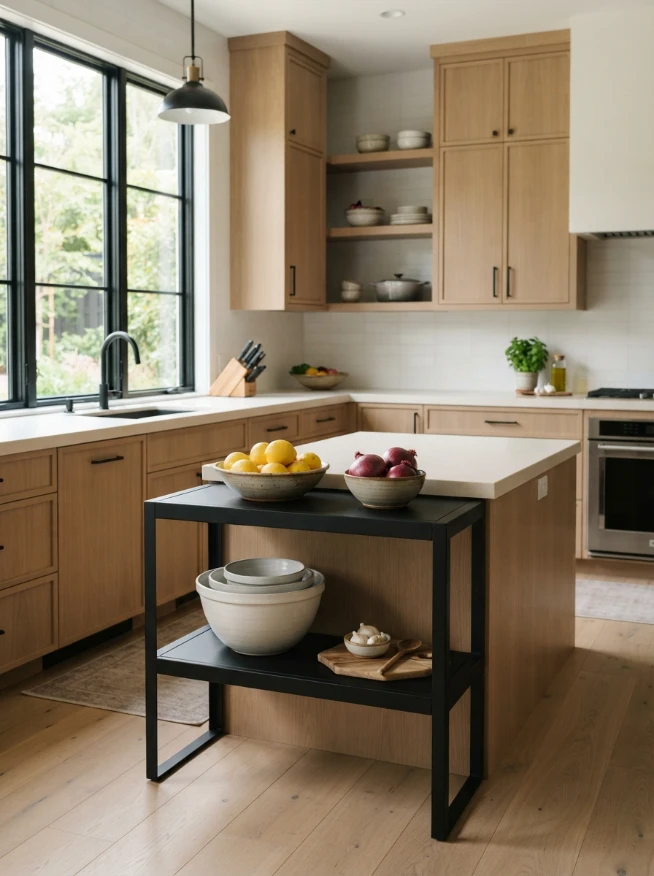
A two-tier metal shelf can create a convenient produce station while introducing a subtle industrial element.
Use baskets or bowls to keep suitable room-temperature produce organized, and reserve another level for mixing bowls or kitchen accessories.
Metal is a useful choice in hardworking kitchens because many designs are relatively easy to wipe clean.
Still, avoid overloading lightweight shelving.
Place heavier bowls on the bottom whenever possible. This lowers the center of gravity and can make the unit more stable.
12. Create a Compact Spice Station

Spices are small, but a large collection can quickly consume counter and cabinet space.
A small tiered wooden shelf can keep your everyday seasonings visible without requiring a large organizer.
Arrange jars so labels are easy to read rather than placing several rows directly behind one another.
A ceramic garlic keeper can sit alongside the spices if garlic is something you use frequently.
Keep spices away from significant heat, moisture, and direct sunlight, all of which can affect their quality over time.
For less frequently used seasonings, a drawer or cabinet may still be the better location.
13. Design a Countertop Coffee Shelf with Mug Hooks
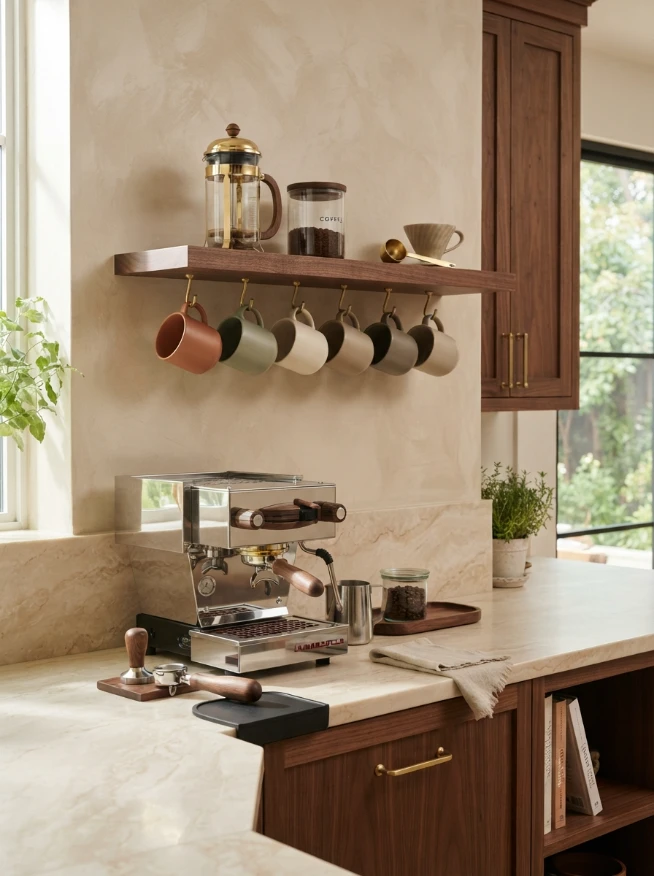
Coffee supplies are easier to manage when everything has a defined home.
Place a compact wooden shelf above or beside your coffee machine. A French press, coffee container, filters, or tea can sit on top while mugs hang from secure hooks underneath.
This turns several separate countertop objects into one organized station.
Keep the setup practical rather than overly styled. Leave enough open counter space to fill the machine, pour drinks, and clean spills.
If you use an electric kettle, make sure rising steam is not constantly hitting the shelf or items above it.
14. Give Everyday Cookware an Accessible Home
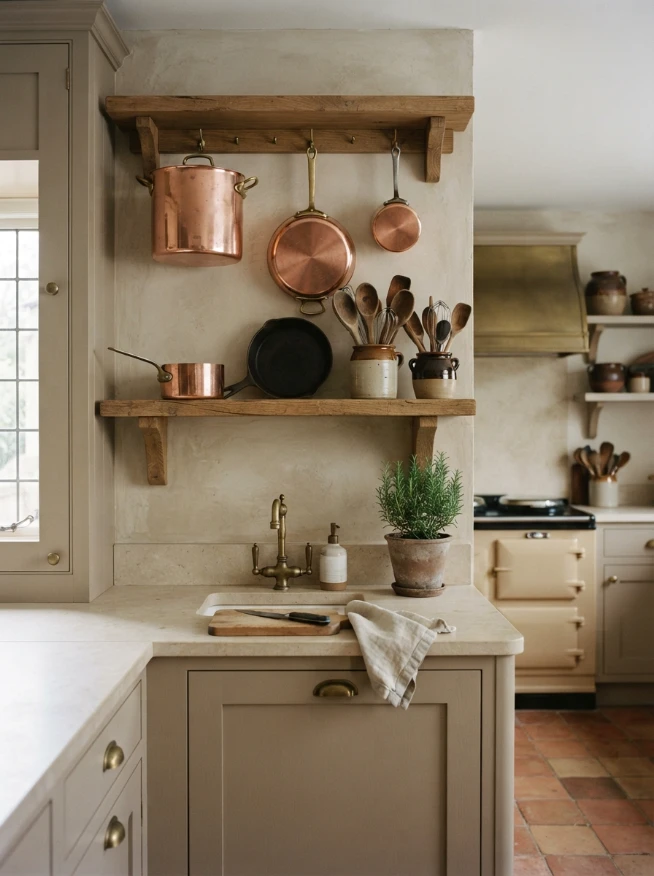
Pots, pans, and cooking tools are often hidden behind cabinet doors, but frequently used pieces can sometimes justify more accessible storage.
A strong rustic shelf placed in an appropriate section of the kitchen can hold selected cookware, utensils, or serving pieces.
The key word is selected.
Displaying every pan you own is likely to look cluttered and may put too much weight on the shelf. Choose a few pieces you use regularly and store the rest in cabinets.
Wooden spoons, a small skillet, and a favorite saucepan can create a functional, lived-in appearance without overwhelming the counter.
15. Keep Cooking Oils Organized Beside the Stove

Cooking oils and vinegars often end up scattered beside the range because they are used so frequently.
A narrow shelf can gather them into one defined zone and leave more usable space around them.
Add a salt pig or frequently used seasoning container to create a practical cooking station.
However, avoid putting the shelf directly against a hot cooking surface. Heat can affect oil quality, and bottles placed too close to burners can create unnecessary safety risks.
Position the organizer within convenient reach but outside the immediate heat and splatter zone.
A washable tray underneath the bottles can also make cleanup easier.
16. Pair Wooden Utensils with a Small Herb Plant

Sometimes one shelf is enough to make a counter look more organized.
Place a crock filled with wooden spoons, spatulas, and other everyday utensils on a simple timber shelf. Add a small culinary herb for a natural touch.
Basil, thyme, mint, or parsley may work depending on the light conditions in your kitchen.
The combination of wood, greenery, and simple ceramics creates a warm arrangement without requiring purely decorative accessories.
Just make sure the plant receives appropriate light and that watering does not damage the shelf or surrounding countertop.
17. Make a Microwave Shelf Work Harder

There are several ways to organize the area around a countertop microwave.
A two-tier unit can create storage above the appliance, while some expandable designs provide additional side organization.
Potential uses include:
- Lightweight dry-goods containers
- Tea and coffee supplies
- Small serving bowls
- Kitchen linens
- Frequently used accessories
Before focusing on styling, check three measurements: appliance width, shelf clearance, and total available counter depth.
You should also verify the shelf’s weight capacity and your microwave manufacturer’s ventilation instructions.
The best microwave counter shelf is one that adds storage without making the appliance harder or less safe to use.
18. Coordinate a Wooden Shelf with Warm Cabinetry

Countertop organizers look more integrated when their material relates to the rest of the room.
In a kitchen with wooden cabinets and a black stove, for example, a simple wood shelf can visually connect the preparation area to the cabinetry.
Use it for a carefully edited collection of oils, spices, and cooking essentials.
Black labels, dark ceramics, or metal accents can subtly relate to the stove without making everything perfectly matched.
This is a useful reminder that organization does not have to look separate from interior design. Practical storage can contribute to the overall palette and material scheme.
19. Combine Counter Storage with Open Wall Shelves

If the countertop itself is already crowded, the better solution may be to move some storage onto the wall.
Open shelves above a counter can hold cookware, serving bowls, utensils, or dishes while keeping the work surface clearer.
Arrange heavier and frequently used pieces on easily reachable shelves. Reserve higher positions for lighter or less frequently used objects.
Do not install shelves where they interfere with appliances or create unsafe clearance around a range.
Because wall-mounted shelves carry significant loads, appropriate fixings and correct installation are essential. When in doubt, use a qualified installer.
The goal is not simply to add more shelving. It is to move items to locations that make everyday cooking easier.
20. Keep a Modern Farmhouse Counter Shelf Simple
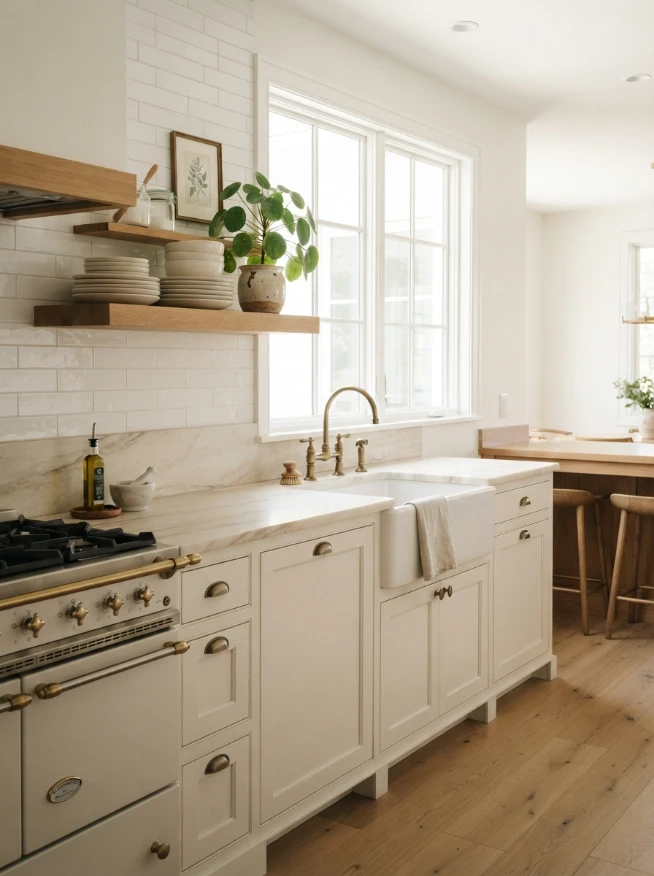
Modern farmhouse kitchens usually look best when warmth and simplicity are balanced.
Try a natural wooden shelf with a small stack of white dishes and one leafy plant. The wood introduces texture, while the restrained palette keeps the counter from becoming visually busy.
You could add one additional practical item—a small bowl, salt cellar, or serving board—but resist filling every available inch.
This approach works because the objects have breathing room.
It is also easy to maintain. When fewer things are displayed, wiping the counter and shelf takes less time.
The Tiered Pantry Method: Five Rules for Better Counter Shelving
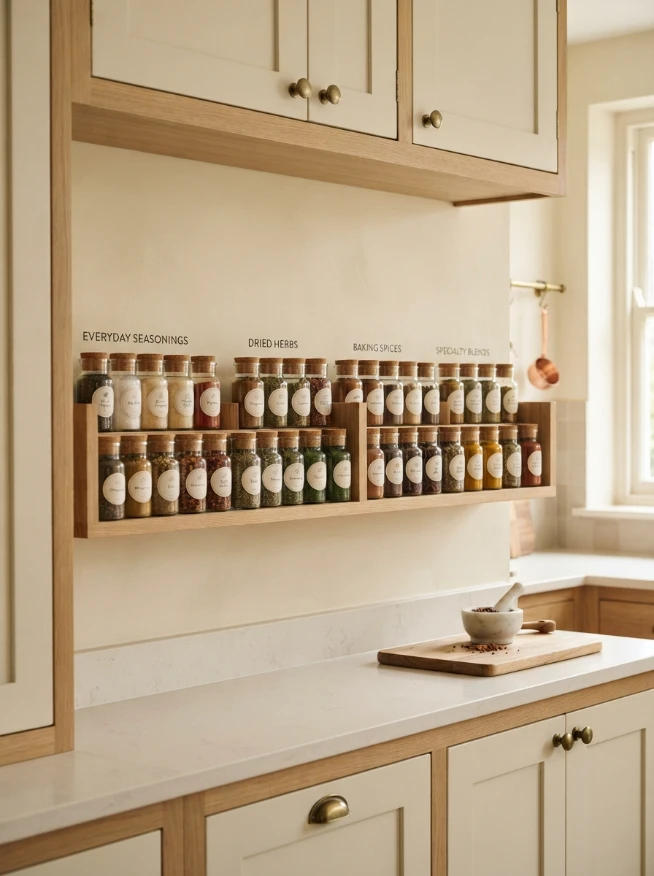
A beautiful shelf is useful only when it improves how your kitchen functions.
Before styling one, use these five principles.
1. Store According to Frequency
Items used every day deserve the easiest positions.
Coffee, salt, cooking utensils, or breakfast dishes might belong on the counter. Appliances or ingredients used once a month probably do not.
2. Think Vertically
The main advantage of a counter shelf is that it adds a second or third storage level without necessarily consuming more horizontal space.
Use that advantage rather than choosing an oversized unit that dominates the worktop.
3. Put Heavy Items Lower
Heavy bowls, appliances, or containers should generally sit on the lowest appropriate level.
Lightweight jars and decorative pieces can go higher.
Always respect the manufacturer’s stated weight capacity.
4. Group Items by Task
Instead of organizing only by appearance, organize around activities.
For example:
Coffee zone: mugs + coffee + filters + French press
Cooking zone: oil + salt + frequently used spices + utensils
Breakfast zone: bowls + cereal containers + tea
This can reduce unnecessary movement while preparing food.
5. Protect Your Working Space
Counter storage should never consume all of the counter.
You still need comfortable areas for chopping, mixing, preparing ingredients, and setting down hot or heavy items.
If an organizer leaves you with less usable space than before, reconsider its size or contents.
The Morning Prep Ritual: Seven Steps to Set Up Your Kitchen Counter Shelf
You do not need to reorganize the entire kitchen at once.
Use this simple process to build a countertop system around your actual routine.
Step 1: Clear the Area
Remove everything from the section of counter you want to organize.
Starting with an empty surface makes it easier to see how much room is genuinely available.
Step 2: Identify What You Use Daily
Separate everyday objects from things that simply happen to be sitting on the counter.
Be selective.
Step 3: Group Items by Activity
Create groups for coffee, cooking, baking, breakfast, or food preparation.
This helps you decide where the shelf should actually go.
Step 4: Measure the Space
Measure width, depth, and available height.
Also check nearby cabinet doors, appliance doors, outlets, switches, and ventilation requirements.
Step 5: Choose the Right Shelf Material
Consider how the material will perform in your kitchen.
Wood and bamboo add warmth. Metal can feel lighter or more industrial. Painted shelving can blend with cabinetry.
For areas exposed to moisture or grease, prioritize surfaces that can be cleaned easily.
Step 6: Arrange Practical Items First
Put essential objects on the shelf before adding plants or decorative pieces.
If there is no room left for decoration, that is perfectly fine. Function should come first.
Step 7: Test the Setup for a Week
Use the kitchen normally.
Do you constantly move the shelf out of the way? Can you reach the spices easily? Does the coffee station make mornings faster?
Adjust the arrangement based on what actually happens rather than how it looked on the first day.
Frequently Asked Questions
Are countertop shelves good for small kitchens?
Yes, provided the shelf has a relatively small footprint and uses vertical space effectively. A narrow or two-tier organizer can increase accessible storage without covering as much counter as several separate containers.
What should I put on a kitchen counter shelf?
Prioritize items you use regularly. Depending on where the shelf is located, this might include spices, mugs, dishes, coffee supplies, cooking oils, utensils, cookbooks, or suitable produce.
A few decorative objects can be added, but they should not displace essential kitchen items.
How do I keep open counter shelves from looking cluttered?
Limit the number of objects, group similar items together, and repeat a few colors or materials.
Matching containers can help, but they are not mandatory. Leaving some visible empty space is often more effective than buying additional decorative organizers.
Are wooden shelves suitable for kitchens?
They can be, but the finish and location matter. Kitchen surfaces may encounter moisture, food splashes, grease, and frequent cleaning.
Choose a shelf with an appropriate finish and follow its care instructions. Avoid leaving standing water on wood.
Can I place a shelf over my microwave?
Only when the shelving arrangement allows the ventilation and clearances required by the microwave manufacturer.
Do not assume that empty space above a microwave is automatically safe storage space. Check the appliance manual and shelf specifications first.
How tall should a countertop shelf be?
There is no single ideal height. It depends on what you intend to store, the cabinets above the counter, and the dimensions of nearby appliances.
Measure before buying. Make sure objects can be removed without hitting upper cabinets or shelves.
How can I decorate a counter shelf without losing functionality?
Start with useful objects and add only one or two decorative elements.
A small herb plant, attractive bowl, framed print, or trailing plant may be enough. Keeping the display restrained makes cleaning easier and preserves working space.
Conclusion
Good kitchen counter shelf ideas are less about squeezing more possessions into the kitchen and more about making frequently used items easier to reach.
A narrow bamboo spice riser may be enough for one kitchen. Another might benefit from a two-tier coffee station, microwave shelf, produce rack, or open wall shelving.
Start with your daily routine rather than the shelf itself. Decide what genuinely needs to stay on the counter, group those items according to how you use them, and then choose storage that fits the available space.
Most importantly, protect your work surface. A well-organized kitchen should give you more room to cook—not simply more places to put things.