15 Kitchen Shelf Organization Ideas That Make Your Space Feel Beautiful
A kitchen can have beautiful cabinets, stylish countertops, and expensive finishes, yet still feel messy when everyday items have nowhere sensible to go.
The good news is that better organization does not always require a remodel or more cabinets. A few thoughtfully arranged shelves can make ingredients easier to find, free valuable counter space, and give the entire kitchen a calmer appearance.
The best kitchen shelf organization ideas combine storage with everyday convenience. Instead of filling shelves simply because space is available, think about what you use, where you use it, and how quickly you need to reach it.
Whether you have open shelving, a compact pantry, floating shelves, or a few shelves squeezed between cabinets, these 15 ideas can help you make better use of the space you already have.
1. Countertop Kitchen Shelf Organization Ideas

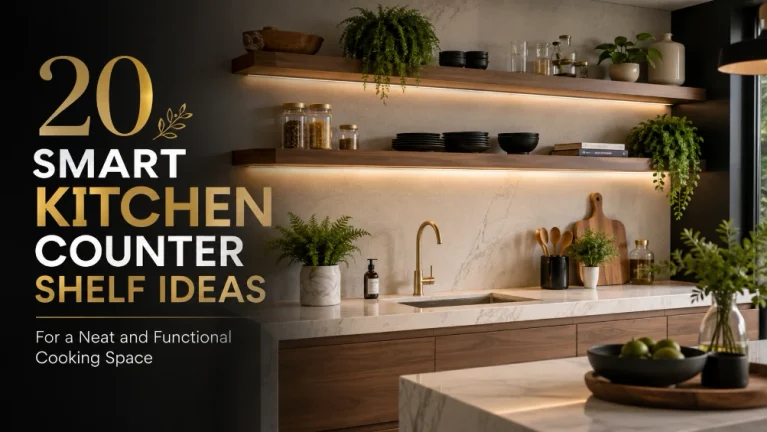
Countertops often become the default landing place for everything from coffee supplies to cooking oils. Adding a small countertop shelf can create an extra storage level without taking over the entire work surface.
A two-tier shelf, compact wooden riser, or narrow metal organizer works especially well beside a coffee station or food-preparation area.
Use the lower level for frequently reached items and reserve the upper level for lighter objects.
For example, a coffee corner could include:
- Mugs on the upper shelf
- Coffee beans or pods in a container
- Sugar in a covered jar
- A small tray for spoons
- The coffee maker underneath or beside the shelf
Try not to use a countertop shelf as an excuse to keep everything visible. If an item is used only occasionally, a cabinet or pantry is usually a better home for it.
Practical tip: Leave some open countertop around the organizer. Empty space is useful workspace, not wasted space.
2. Rustic Open Shelf Kitchen Organization

Open shelves are particularly suited to rustic kitchens because everyday materials such as wood, ceramic, glass, and metal naturally become part of the room’s character.
Start by keeping frequently used pieces within comfortable reach. Everyday plates, bowls, mugs, and glasses are good candidates because regular use prevents them from sitting untouched for long periods.
You can then mix in a few attractive functional pieces, such as:
- Wooden cutting boards
- Stoneware pitchers
- Glass storage jars
- Woven baskets
- Ceramic bowls
- Small serving boards
Rather than lining every object in a perfect row, create small groups. A stack of plates beside several bowls usually looks more relaxed than shelves packed edge to edge.
Rustic does not have to mean cluttered. In fact, natural textures stand out more clearly when they have a little breathing room.
If your shelves are reclaimed or unfinished wood, make sure the surface is appropriate for kitchen use and easy to clean.
3. Pot and Pan Kitchen Shelf Organization Ideas
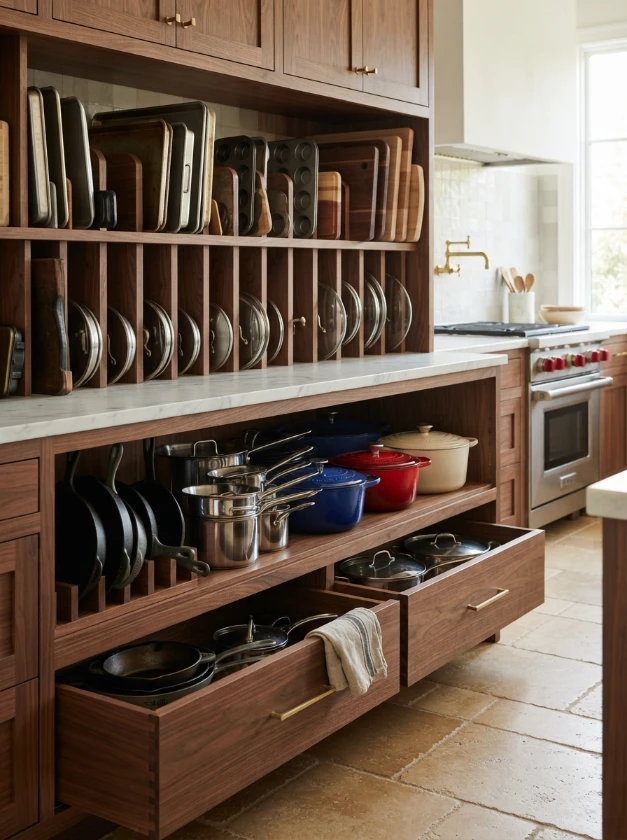
Pots and pans are some of the most awkward kitchen items to organize. They are bulky, have different shapes, and quickly become frustrating when several pieces are stacked together.
If you have strong lower shelves, consider arranging cookware according to frequency of use.
Keep everyday skillets and saucepans toward the front. Larger stockpots, roasting pans, and specialty cookware can go farther back or on a lower-priority shelf.
Vertical dividers are useful for:
- Frying pans
- Baking sheets
- Cutting boards
- Pot lids
- Muffin tins
Instead of stacking six pans and removing five every time you need the bottom one, a vertical system lets you pull out individual pieces.
Lids deserve their own storage plan as well. A dedicated lid rack or divider can prevent them from sliding around the shelf.
Safety tip: Heavy cast-iron cookware and large pots are generally better on sturdy lower shelves than high open shelving where lifting them could be uncomfortable.
4. Spice Jar Kitchen Shelf Organization Ideas
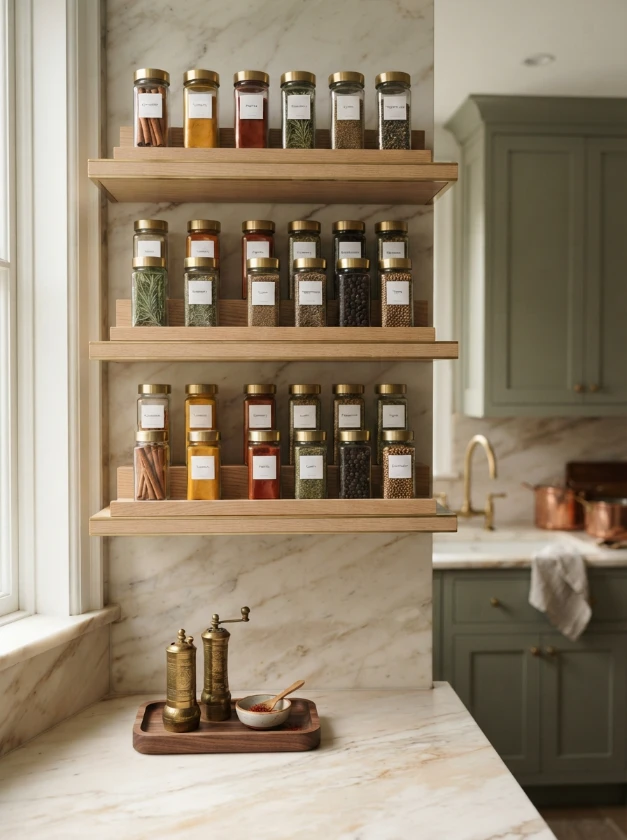
A collection of spice jars can look attractive, but good organization matters more than matching labels.
First, check what you actually have. Remove empty containers and review older spices before reorganizing the shelf.
Then arrange the remaining jars according to how you cook.
You might organize them:
- Alphabetically
- By cuisine
- By frequency of use
- By sweet and savory spices
- In everyday and occasional-use groups
A tiered shelf riser can make jars in the back easier to see. A small turntable is another practical choice for a deeper cabinet shelf.
If you transfer spices into matching containers, label them clearly. Beautiful identical jars become surprisingly inconvenient when cumin, coriander, and garam masala are difficult to tell apart.
Keep the system simple enough that you will actually maintain it after cooking.
5. Stove Area Kitchen Shelf Organization Ideas
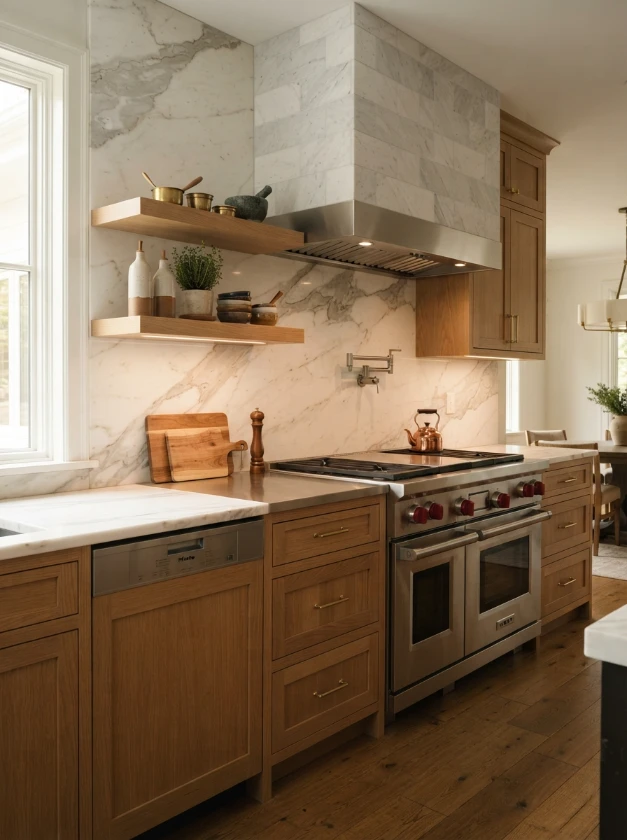
Shelving near the stove can be useful because it keeps cooking essentials close to the place where they are needed.
However, this area also collects grease, steam, and heat, so it should be organized more carefully than decorative shelves elsewhere in the kitchen.
Rather than filling the shelf with accessories, prioritize a small number of useful items.
Depending on your kitchen layout, these could include frequently used seasonings, a utensil container, or cooking-related essentials stored at an appropriate distance from the cooking surface.
Avoid positioning flammable décor, paper products, loose textiles, or heat-sensitive containers close to burners or other high-heat areas.
Grease can gradually coat exposed objects as well. Keeping the arrangement restrained makes regular cleaning much easier.
Design idea: If you want the shelf to look attractive, choose functional items with complementary finishes instead of adding unnecessary décor.
6. Spice Storage Kitchen Shelf Organization Ideas
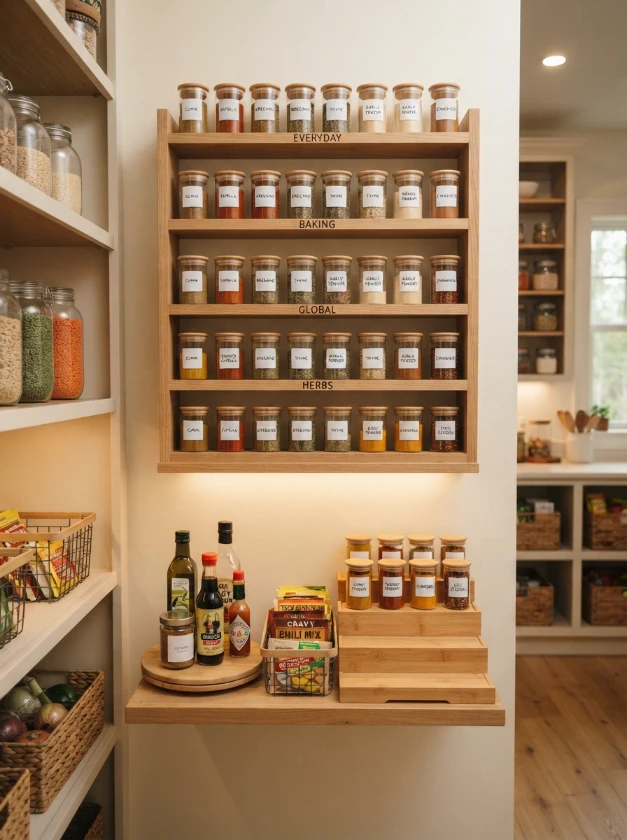
If your spice collection is too large for a single row of jars, give it a more structured storage system.
Shallow shelves are particularly useful because spices do not need the depth required for dinnerware or appliances.
Start by separating everyday seasonings from less frequently used ingredients. Salt, pepper, garlic powder, chili flakes, and other regularly used seasonings can stay in the easiest-to-reach area.
Less common spices can occupy an upper or secondary shelf.
For a large collection, create simple categories such as:
Everyday | Herbs | Baking | Spicy | Whole Spices | Specialty
The exact categories matter less than consistency.
Avoid storing multiple half-used packets behind jars if possible. Small bins can keep packets together so they do not disappear into the back of a shelf.
It is also worth checking labels periodically so older products do not remain forgotten for years.
7. Pantry Kitchen Shelf Organization Ideas
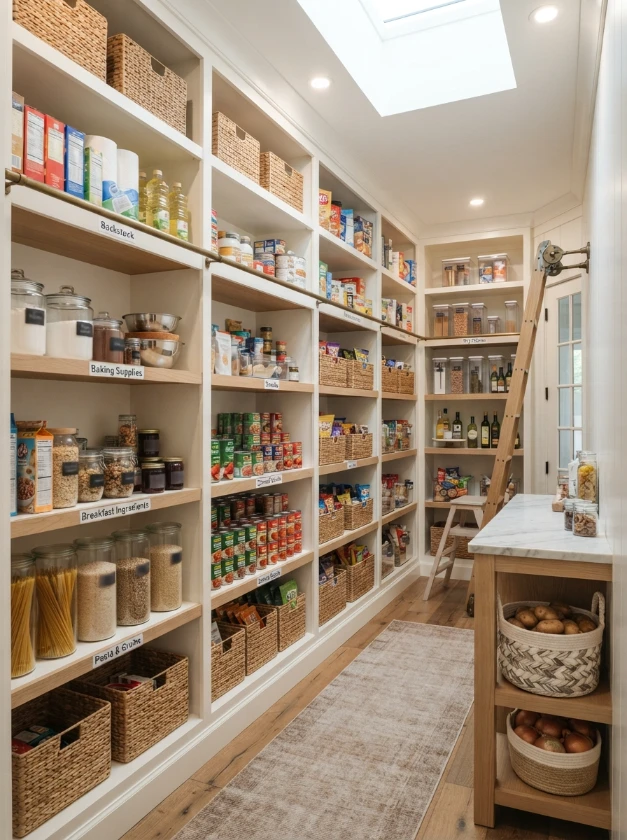
A well-organized pantry should make it easy to see what you own before you buy more groceries.
Begin by grouping similar foods together rather than organizing only according to package size.
Useful pantry zones can include:
| Pantry Zone | Examples |
|---|---|
| Breakfast | Cereal, oats, spreads |
| Baking | Flour, sugar, baking ingredients |
| Snacks | Crackers, bars, packaged snacks |
| Cooking | Pasta, rice, grains |
| Canned Goods | Beans, tomatoes, soups |
| Backstock | Unopened extras |
Clear containers can be useful for dry foods when they genuinely make ingredients easier to identify and manage. However, you do not need to transfer every grocery item into a matching container simply for appearance.
Bins are especially useful for loose packets and small items that would otherwise spread across a shelf.
Place frequently used foods between roughly waist and eye level when your pantry layout allows it. Less frequently used supplies can occupy higher or lower shelves.
Most importantly, avoid creating a system so complicated that groceries become difficult to put away.
8. Wooden Pantry Kitchen Shelf Organization Ideas
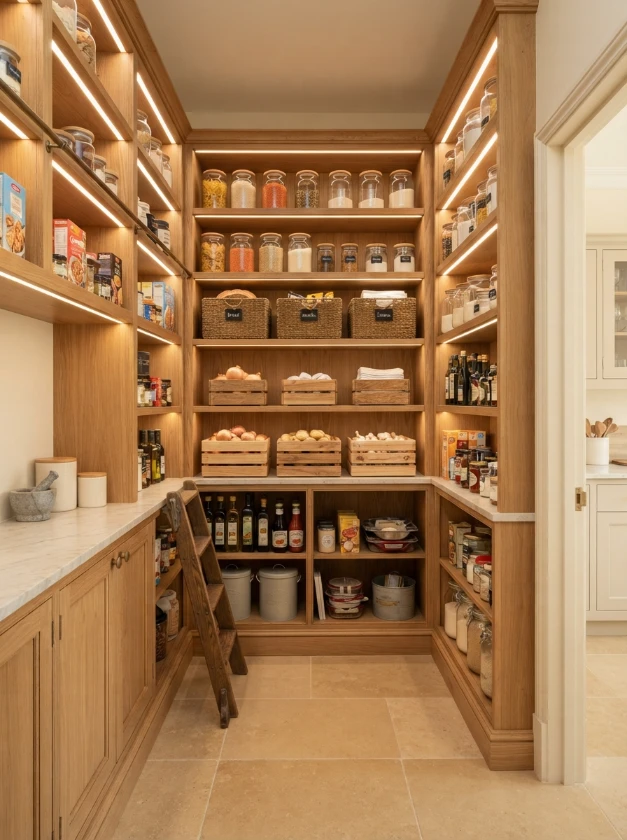
Wooden pantry shelves bring warmth to a kitchen and can look beautiful even with simple storage.
Instead of covering every inch with plastic containers, consider combining practical materials such as glass jars, wooden boxes, woven baskets, and simple bins where appropriate.
Large baskets can contain lightweight packaged foods, while smaller bins work well for baking supplies, snacks, or packets.
Keep heavier items on strong lower shelves and lighter supplies higher up.
You can also create visual consistency without purchasing an entirely new storage collection. Repeating two or three materials throughout the pantry is often enough.
For example:
Natural wood + clear glass + neutral baskets
This combination feels coordinated without making the pantry look overly staged.
Always consider cleanability when selecting containers. Kitchen storage needs to handle crumbs, spills, and frequent use.
9. Sink Area Kitchen Shelf Organization Ideas
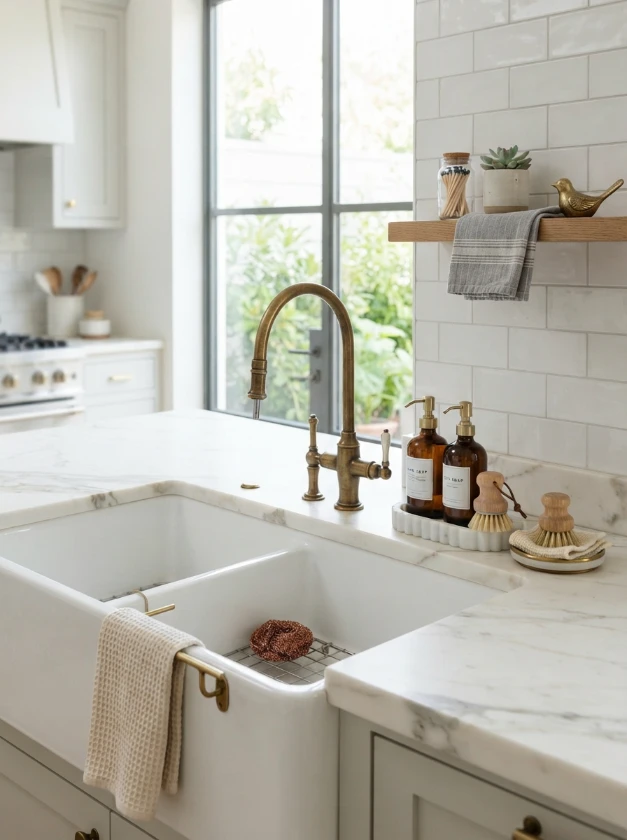
The sink area can become cluttered very quickly because dish soap, brushes, cloths, gloves, and cleaning products all compete for limited space.
A narrow shelf above or beside the sink can help move some items away from the countertop.
Keep the most frequently used supplies easy to reach, but avoid overcrowding the shelf.
A practical setup might include:
- Dish soap
- Hand soap
- A small brush holder
- Frequently used cleaning accessories
- A tray for containing drips
Moisture is the main consideration here. Choose shelf materials and containers that can tolerate occasional splashes, and avoid leaving constantly damp cloths trapped in poorly ventilated containers.
If you want to add decoration, one small object is usually enough. The sink is first and foremost a working zone.
10. Food Display Kitchen Shelf Organization Ideas
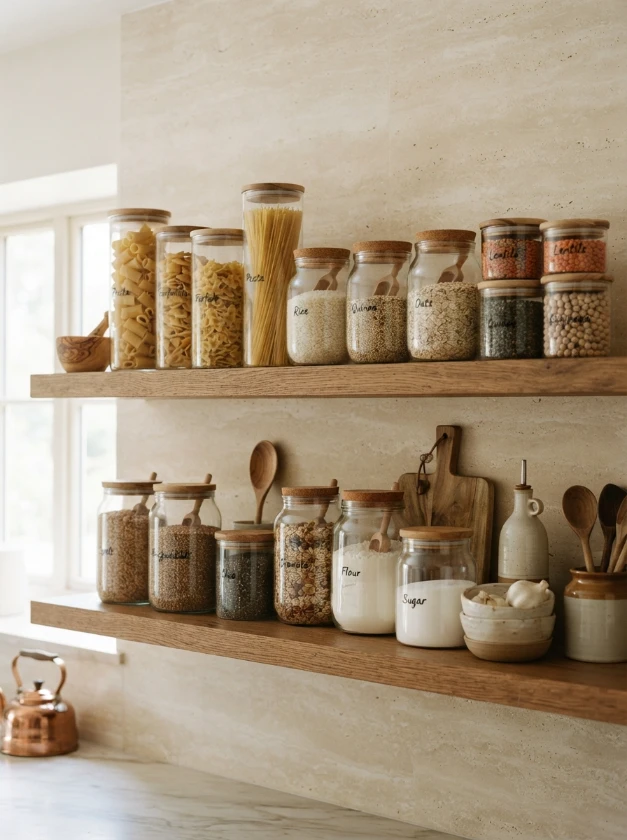
Not every ingredient needs to hide behind cabinet doors. Certain foods can become part of the kitchen’s visual character when stored properly.
Dry ingredients such as pasta, rice, oats, or other shelf-stable foods can look attractive in suitable containers.
The key is to avoid turning food storage into decoration at the expense of practicality.
Containers should be:
- Appropriate for the food being stored
- Easy to open and close
- Clearly identifiable
- Easy to clean
- Positioned away from unsuitable heat or moisture
If you transfer packaged foods into other containers, keeping useful preparation, allergen, expiration, or cooking information available can prevent confusion later.
A few well-organized containers often look better than an entire wall of identical jars.
Styling tip: Vary container heights slightly while repeating similar materials for a balanced shelf arrangement.
11. Minimalist Kitchen Shelf Organization Ideas
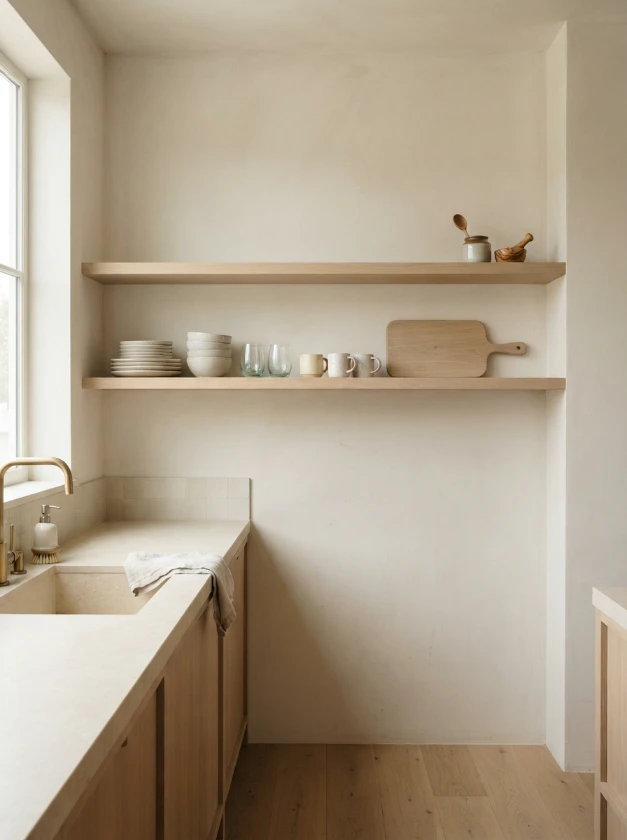
Minimalist kitchen shelving is less about owning a particular set of containers and more about deciding what deserves to remain visible.
Start by removing everything from the shelf.
Then ask a simple question about each item: Do I use this often enough to justify keeping it here?
Return the essentials first.
For an open shelf, that might mean:
- One stack of everyday plates
- A few bowls
- Regularly used glasses
- One serving piece
- A small functional accessory
Stop before the shelf feels full.
Maintaining some negative space makes individual pieces easier to reach and helps open shelving feel calmer.
Color can also affect the visual result. You do not need an all-white kitchen, but limiting the number of competing colors on one shelf can create a more cohesive appearance.
Minimalism should make the kitchen easier to use—not make you afraid to leave a mug in the wrong place.
12. Dish Storage Kitchen Shelf Organization Ideas
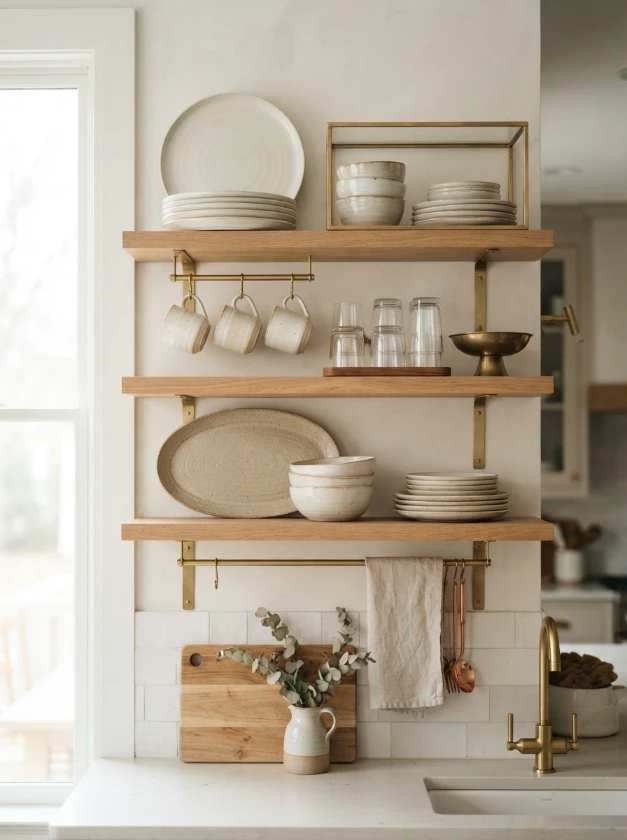
Plates and bowls are ideal for accessible shelving because they are used every day and have relatively simple shapes.
Place heavier plates on a sturdy shelf at a comfortable height. Stack similar sizes together rather than creating one unstable tower of mixed dishes.
Shelf risers can be helpful when there is a large gap between shelves. Instead of stacking mugs on top of bowls, a riser creates another usable level.
For example:
- Dinner plates below
- Side plates above
- Bowls in a separate stack
- Mugs grouped together
- Serving dishes on a less-accessible shelf
If you have open shelves, avoid displaying every dish you own. Keep your everyday collection visible and store occasional pieces elsewhere when possible.
This keeps the shelf practical while reducing visual clutter.
13. Bright Open Kitchen Shelf Organization Ideas

Open shelving can make a kitchen feel lighter when the arrangement does not visually weigh down the walls.
For a bright appearance, combine light-toned dishes with clear glass, natural wood, and a limited number of darker accents.
You could pair:
White ceramics + clear glassware + pale wood + a small green accent
Another option is to use warm cream dishes with oak shelves and brass details for a softer look.
Natural daylight can make glassware and pale ceramics especially attractive, so consider what the shelf looks like throughout the day.
Keep taller pieces toward the ends or back where practical and allow smaller objects to occupy the front without hiding everything behind them.
Remember that open shelves collect dust and cooking residue more readily than closed cabinets. They work best for items that are used and washed regularly rather than purely decorative objects that remain untouched.
14. Appliance Storage Kitchen Shelf Organization Ideas
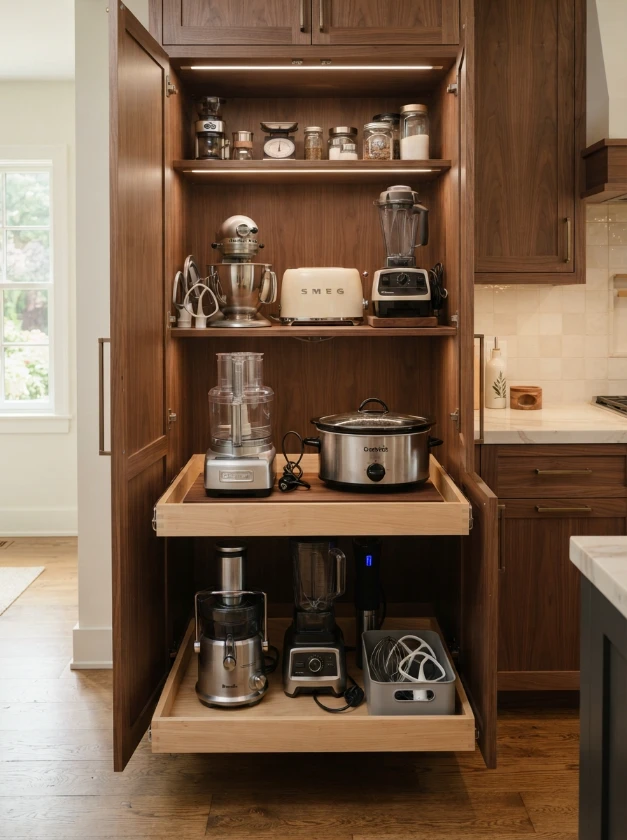
Small appliances are often responsible for crowded countertops.
To decide which appliances deserve permanent counter space, think about frequency of use.
A coffee maker used every morning probably belongs within easy reach. A waffle maker used twice a month probably does not.
Sturdy shelving can provide a home for less frequently used appliances, including:
- Blender accessories
- Food processors
- Stand mixer attachments
- Slow cookers
- Toasters when not used daily
- Specialty kitchen appliances
Check the shelf’s strength and dimensions before placing heavy equipment on it.
Avoid storing heavy appliances in locations that require awkward overhead lifting. A strong lower shelf is usually more convenient.
Keep cords contained rather than allowing them to hang over shelf edges.
For appliances that generate substantial heat or steam during operation, follow the manufacturer’s instructions regarding placement, ventilation, and clearance instead of assuming they can safely operate inside a shelving unit.
15. Neutral Dish Kitchen Shelf Organization Ideas

Neutral dishes are popular on open shelving because they can create a calm background while
allowing wood grain, stone surfaces, and metal accents to stand out.
But neutral does not have to mean plain white.
Consider mixing shades such as:
- Warm white
- Ivory
- Sand
- Beige
- Taupe
- Soft gray
- Muted stone
Texture keeps a neutral arrangement interesting. Smooth dinner plates can sit beside handmade-looking ceramic bowls, ribbed glassware, or a natural wood serving board.
Keep similar items together so the shelf remains easy to use.
For example, stack ivory plates in one area, place bowls beside them, and group glasses nearby. A wooden board or small stoneware pitcher can break up the repeated shapes.
Avoid adding decorative objects simply to fill every empty corner. The dishes themselves can provide enough texture and character.
Frequently Asked Questions
How do I organize kitchen shelves without making them look cluttered?
Start with the items you use most often and give those the easiest-to-reach positions. Group similar items together and leave some empty space instead of filling every available inch.
Using a limited mix of colors or materials can also make open shelves feel more visually consistent.
What should I put on open kitchen shelves?
Everyday plates, bowls, glasses, mugs, serving pieces, and frequently used kitchen items are usually practical choices.
You can add a few attractive pieces such as wooden boards or ceramic pitchers, but functionality should remain the priority.
How do I organize deep kitchen shelves?
Use containers, bins, turntables, or pull-out organizers to make items at the back easier to access. Group similar products together so you do not have to search through unrelated items.
Avoid placing small objects behind tall containers where they can easily be forgotten.
How can I organize a small kitchen with limited shelf space?
Use vertical space carefully. Shelf risers, narrow organizers, wall shelves, and cabinet-door storage can increase usable capacity without occupying more floor space.
Prioritize everyday essentials and relocate rarely used items to less accessible storage.
Should kitchen shelves be organized by appearance or function?
Function should come first.
An attractive shelf that makes cooking inconvenient will be difficult to maintain. Once items are positioned according to how frequently and where they are used, you can improve the appearance through grouping, coordinated containers, and thoughtful spacing.
How do I keep open kitchen shelves looking tidy?
Give each category a specific location and return items after use. Avoid adding unnecessary décor, regularly remove items you no longer need, and clean exposed shelving as part of your normal kitchen routine.
A simpler arrangement is generally easier to maintain than a heavily styled one.
Conclusion
Good kitchen organization is not about creating shelves that look untouched. It is about creating storage that supports the way you actually cook, clean, eat, and move through the room.
The most useful kitchen shelf organization ideas begin with everyday habits. Keep frequently used dishes close at hand, group pantry foods logically, give spices a clear system, move occasional appliances away from valuable counter space, and avoid filling shelves simply because they are empty.
You also do not need to reorganize the entire kitchen in one day.
Choose one problem area first. It might be the crowded spice shelf, the pile of pans under the counter, or the pantry where ingredients constantly disappear. Organize that space, use it for a week, and adjust anything that feels inconvenient.
A beautiful kitchen shelf should still work on a busy weekday morning. When storage is practical first and attractive second, keeping the kitchen organized becomes much easier.